
TL;DR: Only two drugs are FDA-approved to treat androgenetic alopecia: minoxidil (topical or oral) and finasteride (oral). Finasteride works better for most men, stopping loss in about 83-87% and regrowing hair in around 66%. Minoxidil works in roughly 60% of users. Everything else, from supplements to exotic peptides, lacks the evidence. Both require continuous use to maintain results.
What hair loss drugs actually exist and which are FDA-approved?
There are exactly two drugs with full FDA approval for androgenetic alopecia, the most common form of hair loss in both men and women. Minoxidil, first approved in 1988 as a topical solution, and finasteride, approved in 1997 as a 1 mg oral tablet for men. That's it. Everything else you'll see marketed, from biotin blends to saw palmetto capsules to platelet-rich plasma kits, does not carry an FDA approval for hair loss. [1][2]
That's not a conspiracy against alternatives. Earning an FDA approval for hair loss requires two adequate, well-controlled clinical trials showing statistically significant regrowth or loss prevention. Very few compounds have been run through that process, and fewer still have passed it.
Outside the US, ketoconazole shampoo (2% prescription strength) is sometimes prescribed off-label for its mild anti-androgenic effect on the scalp, and dutasteride is approved for hair loss in Japan and South Korea. Oral minoxidil, technically an off-label use in most countries since the pill was originally approved for hypertension, is now widely prescribed by dermatologists and has a growing evidence base. [3]
If you want to understand what causes hair loss at a biological level before choosing a drug, that's worth reading first. The short version: androgenetic alopecia is driven by dihydrotestosterone (DHT) shrinking hair follicles over years. The drugs that work best either block DHT or keep follicles in the growth phase longer.
How does finasteride work and how well does it actually work?
Finasteride blocks the type II 5-alpha reductase enzyme, which converts testosterone into DHT. Lower DHT means less follicle miniaturization, which means you keep more hair and, in a meaningful portion of men, regrow some. It doesn't cure anything. It manages the hormone environment. Stop taking it and DHT returns, follicle miniaturization resumes, and the hair you kept will likely be gone within 12 months. [4]
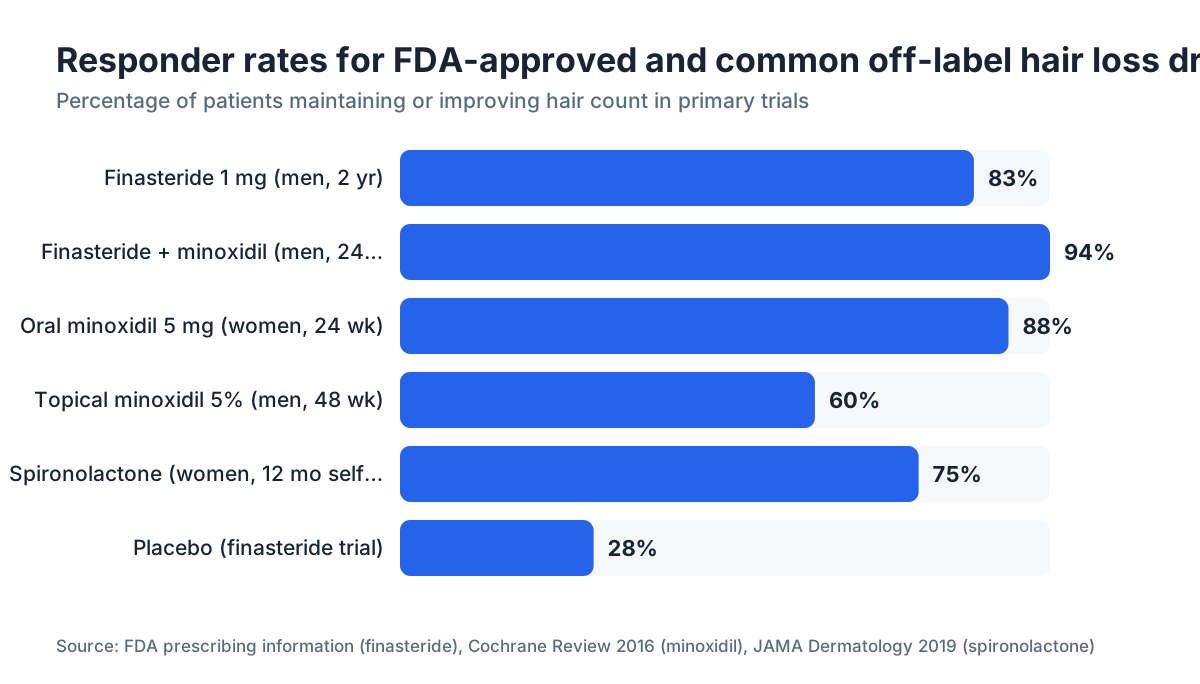
The registration trials that won FDA approval enrolled men aged 18-41 with mild to moderate vertex thinning. After two years, 83% of men on 1 mg finasteride daily maintained or increased their hair count, versus 28% on placebo. Hair count in the vertex area rose by a mean of 107 hairs per inch squared at year two in the finasteride group. [4] A five-year follow-up found 66% of men had visible improvement and 48% had clinically significant regrowth.
For the frontal scalp and temples (a receding hairline), finasteride is less dramatic. It works, but the effect size is smaller than at the vertex. Most men on finasteride describe the frontal zone stabilizing more than visibly filling in.
The standard dose is 1 mg per day. The 5 mg dose (branded Proscar, approved for benign prostatic hyperplasia) isn't meaningfully better for hair at double or triple the amount, because 1 mg already blocks type II 5-alpha reductase close to the maximum. Some dermatologists prescribe 1.25 mg or 2.5 mg if the 1 mg tablet is unavailable or unaffordable, but the extra benefit is small.
For a much deeper breakdown of dosing, side effects, and what the sexual side effect data actually shows, read the full finasteride article.
How does minoxidil work and how effective is it?
Minoxidil's exact mechanism for hair growth is still not fully understood, which is a little embarrassing given how long it's been on the market. What's known: it's a potassium channel opener that widens blood vessels and appears to prolong the anagen (growth) phase of the hair cycle. It also directly stimulates follicle cells in ways researchers are still working out. [1]
Topical minoxidil (2% or 5%) applied to the scalp twice daily is the first-line OTC treatment for both men and women. The 5% foam version is often preferred for ease of use. In the original FDA registration trials, 5% topical minoxidil beat both 2% and placebo: after 48 weeks, men using 5% showed 45% more regrowth than the 2% group. About 60% of users get a noticeable response. [1]
Oral minoxidil is a different story. Low-dose oral minoxidil (typically 0.625 mg to 2.5 mg daily for women, 2.5 mg to 5 mg for men) appears more effective than topical in some studies and far better tolerated by people who hate applying liquid to their scalp. A 2022 randomized trial in the Journal of the American Academy of Dermatology found that 5 mg oral minoxidil was non-inferior to 1 mg finasteride in women with female-pattern hair loss. [3] That's genuinely exciting data for a drug that costs pennies per day as a generic.
The main side effects of oral minoxidil at low doses are fluid retention, a faster resting heart rate (usually 5-10 bpm), and hypertrichosis (unwanted hair growth on the face and body). Most people tolerate 2.5 mg fine. At 5 mg, the side effect profile gets more noticeable. Read more on oral minoxidil if you're considering it.
For minoxidil for men specifically, there's more on how to apply it, what to expect in the first shedding phase, and when to call it a failed trial.
What are the real side effects of hair loss drugs?
Let's be honest about finasteride first. The FDA label lists sexual side effects (decreased libido, erectile dysfunction, decreased ejaculate volume) occurring in roughly 1.3-3.8% of men in clinical trials, compared to 0.9-2.1% on placebo. [4] Those numbers come from registration trials with a younger, healthier study population. Real-world rates are harder to pin down because reporting bias runs in both directions.
Post-finasteride syndrome, a reported condition of persistent sexual, neurological, and psychological side effects after stopping finasteride, is contested in the literature. The FDA added a label update in 2012 noting reports of persistent sexual dysfunction, but causality hasn't been established in controlled trials. That doesn't mean affected men aren't experiencing real symptoms. It means the mechanism isn't proven. If you're risk-averse about this, that's a completely rational position.
Minoxidil's topical side effects are mostly local: scalp irritation, dryness, contact dermatitis in some users (often from propylene glycol in the liquid formulation, which the foam avoids). Initial shedding in the first 2-8 weeks is common and represents follicles transitioning out of telogen, not actual loss. It's alarming to experience and almost always temporary. See the full minoxidil side effects breakdown if this is a concern.
Oral minoxidil's cardiovascular profile deserves mention. The drug was originally approved at doses of 10-40 mg for resistant hypertension. The 2.5-5 mg doses used for hair loss sit far below that, but people with heart conditions, arrhythmias, or kidney problems should not start it without a full cardiovascular workup. This isn't a drug to order from a random website without a prescriber reviewing your history.
Ketoconazole 2% shampoo has minimal systemic absorption when used as a rinse-off shampoo. The main documented side effect at that application method is scalp dryness.
Can you use finasteride and minoxidil together?
Yes, and the combination beats either drug alone. A 2021 randomized controlled trial published in Dermatologic Therapy compared finasteride alone, minoxidil alone, and the combination in men with androgenetic alopecia. The combination group showed significantly greater improvement in hair density and hair thickness at 24 weeks than either monotherapy group. [5]
The logic makes biological sense. Finasteride attacks the hormonal driver (DHT), while minoxidil works on the follicle growth cycle through a separate pathway. They're not redundant. They stack.
In practice, the combination means either applying topical minoxidil in the morning (or evening) and taking a finasteride pill daily, or taking oral minoxidil plus finasteride. Some men also get a single compounded topical that contains both, which drops the burden to one application. Compounded topicals aren't FDA-approved products (they're made by a compounding pharmacy under a prescription), so quality varies by pharmacy.
For a thorough look at how to combine them and what to expect, the finasteride and minoxidil guide covers the trial data and practical protocols.
What about dutasteride, spironolactone, and other prescription options?
Dutasteride is the most interesting off-label option for men. It's a 5-alpha reductase inhibitor like finasteride, but it blocks both type I and type II enzymes, suppressing DHT by about 90-95% versus finasteride's 70%. [6] Several randomized trials, including a 2014 Korean study of 917 men, found 0.5 mg dutasteride daily was more effective than 1 mg finasteride for hair regrowth at 24 weeks. The FDA has not approved dutasteride for hair loss, but it's approved for BPH (as Avodart) and many dermatologists prescribe it off-label.
The tradeoff: dutasteride has a half-life of about five weeks, versus finasteride's six to eight hours. If you develop a side effect on dutasteride, it doesn't clear your system quickly. That asymmetry matters if you're worried about tolerability.
Spironolactone is the most commonly prescribed hair loss drug for women in the US. It's an aldosterone antagonist with anti-androgenic properties, used off-label for androgenetic alopecia in women at doses of 50-200 mg daily. A 2019 retrospective study in JAMA Dermatology found that 74.6% of women on spironolactone for hair loss self-reported improvement at 12 months. [7] It's not approved for hair loss, it's contraindicated in pregnancy, and it requires monitoring for potassium and blood pressure changes.
Finasteride in women is more complicated. It's FDA-approved only for men. Studies in postmenopausal women show mixed results. It's teratogenic and absolutely contraindicated in women who could become pregnant. Some dermatologists prescribe it to postmenopausal women off-label at doses of 1-2.5 mg.
Understanding the role of DHT in all of this is worth your time. The dht blocker article covers the mechanism and the full landscape of pharmaceutical and topical options.
Do hair loss supplements actually do anything?
Mostly, no, at least not at the level of FDA-approved drugs. The honest answer is that most hair loss supplements are built to correct nutritional deficiencies that may cause shedding, not to treat androgenetic alopecia.
Iron deficiency is a real and underdiagnosed cause of hair shedding in women. Correcting it helps. Biotin deficiency causes hair loss and supplementing reverses it, but true biotin deficiency is rare in people eating normally. Most people buying biotin supplements for hair loss are not biotin-deficient, so the supplement won't do anything visible for them. [8]
Viviscal and Nutrafol have small company-funded clinical trials showing improvements in hair count and thickness. The trials are real, but they're small (usually under 100 subjects), unblinded in some cases, or run by the manufacturer. The effect sizes are modest. That's not nothing, but it's not a reason to spend $80 per month expecting finasteride-level results.
Saw palmetto inhibits 5-alpha reductase weakly, and a 2002 study found modest benefit. The 2016 Cochrane review concluded the evidence is insufficient to recommend it. [11] If you're using it as a DHT-adjacent supplement, you're getting a fraction of finasteride's mechanism with a fraction of the evidence.
For a realistic picture of what supplements can and can't do, the hair loss supplements article goes through the evidence on the most popular ones without overselling any of them.
One related question comes up often: creatine. There's a single small study suggesting creatine raises DHT levels (by about 56% above baseline in one 2009 trial). The evidence is thin and hasn't been replicated at scale. Read does creatine cause hair loss if this worries you.
How much do hair loss drugs cost and is a prescription required?
Here's a practical breakdown of what you'll actually pay in the US:
| Drug | Rx required? | Monthly cost (generic) | Monthly cost (branded) |
|---|---|---|---|
| Minoxidil 5% topical | No | $10-20 (OTC) | $30-50 (Rogaine) |
| Finasteride 1 mg oral | Yes | $15-30 (generic) | $70-90 (Propecia) |
| Oral minoxidil 2.5 mg | Yes | $10-20 (generic) | N/A |
| Dutasteride 0.5 mg | Yes | $25-45 (generic) | $80-120 (Avodart) |
| Spironolactone 100 mg | Yes | $15-30 (generic) | N/A |
| Ketoconazole 2% shampoo | Rx for 2%; 1% OTC | $15-25 | Varies |
Generic finasteride has been available since 2006. The price gap between generic and Propecia is hard to justify. If your dermatologist writes a prescription for finasteride 1 mg, you can fill it at any pharmacy or use a discount card to bring it under $20 most places.
Telehealth platforms (Hims, Ro, Keeps, and several others) offer finasteride and oral minoxidil prescriptions starting around $20-30 per month, often including the consultation. The drug quality is the same as your local pharmacy. The tradeoff is less personalized follow-up and no in-person scalp exam.
Cost tends to be the wrong reason to skip treatment. A year of generic finasteride costs less than one session of low-level laser therapy or a single round of PRP, both of which have weaker evidence.
How long before hair loss drugs start working?
Three to six months before you'll see any change worth noticing. This is the number one reason people quit too early.
With finasteride, DHT levels drop within a few weeks of starting. But the hair follicle runs on a multi-month growth cycle. Miniaturized follicles that DHT has been shrinking over years don't suddenly recover. The first visible improvement at the vertex typically appears at four to six months. Full response is usually assessed at 12 months. The two-year mark gives you a good picture of your maximum benefit.
With topical minoxidil, the first six to eight weeks often bring a shedding phase. This is expected: follicles in the resting phase get pushed into growth phase, and they shed the old hair first before growing new ones. Most people who go through this shedding respond well later. Quit at week six because of the shed and you've paid the cost without getting the benefit.
For both drugs, if you haven't seen any response at 12 months, a late response is unlikely. At that point it's worth reassessing, maybe adding the other drug if you started on only one, or discussing alternatives like a hair transplant for areas that won't respond to medication.
One thing worth flagging: sudden rapid shedding, especially diffuse shedding across the whole scalp rather than the usual crown and temple pattern, should be evaluated as telogen effluvium rather than androgenetic alopecia. TE responds to entirely different treatment.
Are there hair loss drugs for women specifically?
Women have fewer FDA-approved options than men, and this is genuinely unfair. Minoxidil 2% topical was FDA-approved for women's use in 1991. The 5% foam was later approved for women as well. Female-pattern hair loss (androgenetic alopecia in women) progresses differently, usually as diffuse thinning across the crown rather than the receding front line men see.
Spironolactone is the most widely prescribed off-label systemic option in the US. It works on the anti-androgen mechanism and has reasonable observational data behind it. The JAMA Dermatology study mentioned earlier reported that 74.6% of women self-reported improvement, which is real-world data, not a randomized trial, but it lines up with clinical experience. [7]
Oral minoxidil is increasingly used in women, particularly at doses of 0.625 mg to 1.25 mg to keep body hair side effects down. The 2022 trial comparing oral minoxidil to finasteride in women is promising and has shifted some prescribing patterns.
For postmenopausal women, the hormonal picture changes. Estrogen loss speeds up androgenetic alopecia, and some dermatologists consider low-dose finasteride or dutasteride once pregnancy risk is gone. There's no large randomized controlled trial supporting finasteride specifically in women the way there is for men. Hormone replacement therapy may also improve hair density, though it's not prescribed for hair loss alone.
A full workup for women with hair loss should include a thyroid panel, ferritin, CBC, and sometimes androgens (DHEAS, free testosterone), because correctable causes are common and treating them makes medication much more effective.
When is medication not enough and should you consider a hair transplant?
Drugs maintain and sometimes regrow hair in follicles that are still alive and functional, just miniaturized. They cannot resurrect follicles that have been completely destroyed. If someone with a Norwood 6 pattern has bare scalp with no follicle activity, finasteride and minoxidil will not restore it.
The practical threshold: if you've had a genuine 12-month trial of finasteride (or finasteride plus minoxidil) and still have substantial areas of thin or bare scalp that bother you, a consultation with a hair transplant surgeon makes sense. The two approaches complement each other. Most transplant surgeons recommend continuing finasteride after a procedure to slow native hair loss and preserve the result.
Transplant eligibility depends on donor density in the back and sides of the scalp, the extent of loss, age, and whether loss has stabilized. Young men in their early 20s with aggressive loss are often advised to wait: transplanting into an active loss pattern means the transplanted area looks good while the surrounding native hair keeps receding. [10]
Medication first is the right order. Use drugs to stabilize and improve what you have. Reassess at 12-18 months. If you're still unsatisfied with areas that weren't responding, that's when a transplant consultation adds real information.
If you want to see a clear picture of your current loss pattern before deciding on any treatment, an AI-based scalp analysis like the one at MyHairline can map your hairline and give you a baseline before you spend money on anything.
The hair transplant article covers FUE versus FUT, realistic graft numbers, and what to ask surgeons.
What should you actually do if you're starting from scratch?
See a dermatologist. That's the honest first step, not because you can't start minoxidil OTC without one (you can), but because a scalp exam and basic bloodwork rules out correctable causes of shedding before you commit to years of androgenetic alopecia treatment. Iron deficiency, thyroid disorders, and seborrheic dermatitis can all mimic or worsen pattern loss, and treating the wrong thing wastes months.
If you're a man with early-to-moderate pattern loss and want to start something before that appointment, OTC 5% minoxidil foam is a reasonable interim step. The risk is low. Start with once daily if twice daily feels like too much.
For most men, finasteride is the more effective drug. If you're in your 20s or 30s with active loss, the expected benefit-to-risk ratio favors it. If sexual side effects are a dealbreaker before you start, that's legitimate, but make that call with real data rather than forum horror stories.
The combination of finasteride plus minoxidil beats either alone in head-to-head trials. If you're going to do one drug, finasteride alone likely preserves more hair over the long term than minoxidil alone.
Stop spending money on supplements as a primary treatment for androgenetic alopecia. Correct any actual deficiencies, but don't expect a $70 bottle of marine collagen to compete with a $20 prescription. [8]
For a personalized look at where your hairline actually stands, the free AI analysis at MyHairline is a good starting point before your dermatologist visit.
Sources
- FDA, Rogaine (minoxidil 5%) label
- FDA, drug approvals database
- Randolph M et al., Journal of the American Academy of Dermatology, 2022
- FDA, Propecia (finasteride 1 mg) prescribing information
- Hu R et al., Dermatologic Therapy, 2021
- Olsen EA et al., Journal of the American Academy of Dermatology, 2006
- Suchonwanit P et al., JAMA Dermatology, 2019
- Almohanna HM et al., Dermatology and Therapy, 2019 (PMC)
- American Academy of Dermatology, hair loss treatment guidelines
- van Zuuren EJ et al., Cochrane Database of Systematic Reviews, 2016
- Olsen EA et al., Journal of the American Academy of Dermatology, 2002