

TL;DR: Insulin resistance raises circulating insulin, which signals the ovaries and adrenal glands to make more androgens, including DHT. That extra DHT shrinks hair follicles in genetically susceptible people, worsening both PCOS-related hair loss and androgenetic alopecia. Treating the insulin resistance through diet, metformin, or GLP-1 drugs can lower androgens and slow shedding. It rarely works alone.
What is the connection between insulin resistance and hair loss?
Insulin resistance means your cells stop responding normally to insulin, so the pancreas pumps out more of it to compensate. That chronically high insulin level, called hyperinsulinemia, is the starting gun for a hormonal chain reaction that ends at your hair follicles.
High insulin suppresses a liver protein called sex hormone-binding globulin (SHBG) [1]. SHBG binds testosterone and keeps it biologically inactive. Less SHBG means more free testosterone floating around. Enzymes in the skin, particularly 5-alpha reductase in the scalp, convert that free testosterone into dihydrotestosterone (DHT), the androgen most directly tied to follicle miniaturization in androgenetic alopecia (AGA) [2].
High insulin also stimulates the ovaries (in women) and the adrenal glands to make more androgens on their own. So you get a double hit. More raw material arriving at the follicle, and less binding protein to neutralize it.
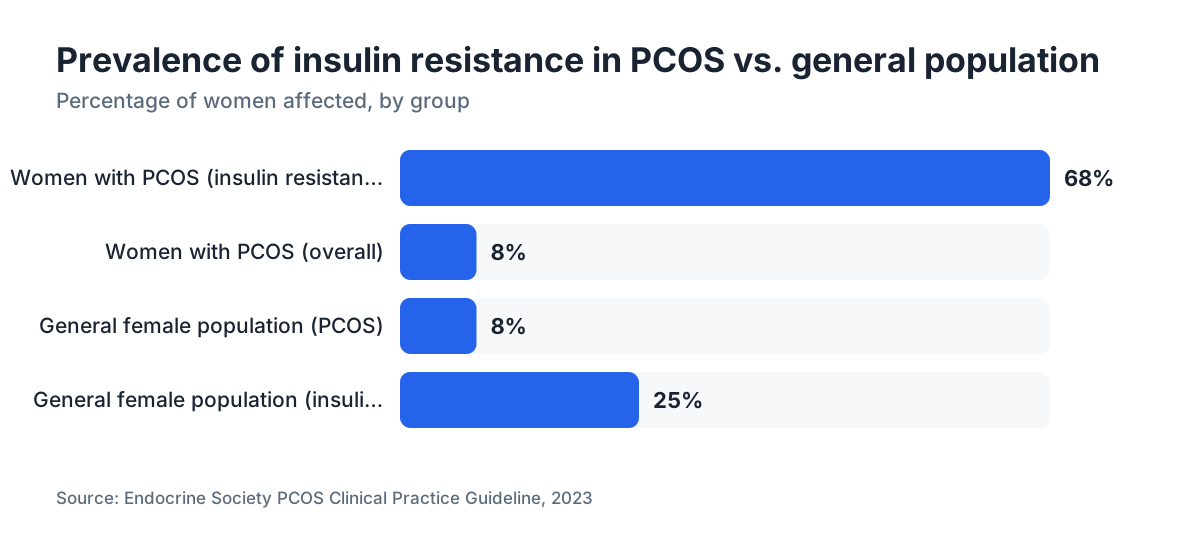
Someone with insulin resistance and a genetic predisposition to AGA sheds faster and earlier than they otherwise would. The mechanism shows up clearly in PCOS, where insulin resistance is present in roughly 65 to 70 percent of patients [3]. It also matters for men and women with plain metabolic syndrome who wonder why their hair is thinning even though nobody in their family went bald young.
How does PCOS cause hair loss, and how is that different from regular AGA?
PCOS (polycystic ovary syndrome) is defined by at least two of three features: irregular ovulation, elevated androgens, and the polycystic appearance of ovaries on ultrasound [4]. Insulin resistance is not part of the official diagnostic criteria, but it drives the androgen excess in most cases.
The hair loss pattern in PCOS usually looks like female pattern hair loss (FPHL): diffuse thinning across the crown and top of the scalp with the frontal hairline preserved. Some women with PCOS develop more pronounced frontal recession, closer to a male pattern. That variation depends partly on which androgen receptors they inherited and how sensitive their follicles are to DHT.
Regular AGA, in men and women without PCOS, is also driven by DHT acting on genetically sensitive follicles. The difference is where the androgens come from. In straightforward AGA, systemic androgen levels may be entirely normal. The follicles are just more reactive. In PCOS-related hair loss, the androgen levels themselves are genuinely elevated, so treating the root hormonal cause has a clearer path.
One more difference. Women with PCOS often have concurrent telogen effluvium, the diffuse shedding that follows any systemic stress. Irregular cycles, chronic inflammation, and nutritional gaps that come with PCOS can all trigger telogen effluvium on top of the pattern thinning, making the hair loss look worse and more sudden than classic AGA would suggest.
If you're a woman losing hair and you also have irregular periods, acne, excess facial hair, or unexplained weight gain, get a hormonal panel (free testosterone, DHEAS, SHBG, fasting insulin, and fasting glucose at minimum) before you assume it's just genetics.
What does the research say about insulin resistance and androgen levels in hair loss patients?
The evidence connecting hyperinsulinemia to elevated androgens is strong and consistent. A 2012 study in the Journal of Clinical Endocrinology and Metabolism found that in women with PCOS, insulin infusion acutely raised androgen secretion from the ovaries, confirming that insulin directly stimulates ovarian androgen production independent of LH [5].
On SHBG specifically, a review in Human Reproduction Update documented that each unit increase in fasting insulin tracks with a measurable drop in circulating SHBG, and this relationship holds in both sexes [1]. Lower SHBG means more bioavailable androgens even when total testosterone looks normal on a lab report. That's why clinicians should check free testosterone or calculate the free androgen index rather than lean on total testosterone.
For AGA, a 2018 cross-sectional study found higher rates of metabolic syndrome (which includes insulin resistance) in men with early-onset AGA compared to age-matched controls [6]. The association was strongest in men who began losing hair before age 35. That doesn't prove insulin resistance caused the baldness, but these conditions travel together and likely amplify each other.
Nobody has run a long-term randomized trial asking the direct question: fix insulin resistance, does hair regrow? The closest data come from metformin and weight-loss studies in PCOS populations, which show androgen levels dropping as insulin sensitivity improves, and some patients reporting subjective improvement in hair density. Those are surrogate endpoints, not controlled hair count data. Honest answer: the mechanism is solid, the clinical hair outcome data are thin.
What causes insulin resistance in the first place, and who is most at risk for hair loss from it?
Insulin resistance develops from a mix of genetics, excess visceral fat, physical inactivity, chronic sleep deprivation, and diets that keep insulin chronically elevated (particularly high in refined carbohydrates and ultra-processed foods). It sits on a spectrum. Most people who have it have no symptoms for years.
Who gets the worst hair consequences? People who have both insulin resistance and the genetic variant that makes follicles sensitive to DHT. That genetic susceptibility decides whether your follicles shrink when exposed to elevated androgens, or whether you stay bald-proof despite terrible metabolic health. The two factors multiply rather than add.
Women with PCOS are the highest-risk group. Around 5 to 10 percent of women of reproductive age have PCOS [4], and most of them have insulin resistance driving their androgen excess. Men with early-onset AGA and metabolic syndrome are a second high-risk group. And anyone, regardless of sex, who carries a lot of visceral fat and has a family history of early baldness probably has more going on metabolically than they've been told.
Ethnicity matters too, though the data are imperfect. South Asian and Hispanic women have higher rates of PCOS and insulin resistance than northern European women, which may partly explain differences in PCOS prevalence across populations [4].
Which lab tests should you ask for if you suspect insulin resistance is behind your hair loss?
A basic lipid panel and fasting glucose miss a lot. Fasting glucose only flags insulin resistance once it's progressed to near-prediabetic levels. You want fasting insulin alongside fasting glucose so you can calculate the HOMA-IR score (Homeostatic Model Assessment for Insulin Resistance). HOMA-IR above 2.0 to 2.5 suggests meaningful insulin resistance; above 3.0 is clearly abnormal, though lab reference ranges vary [7].
For the hair loss angle, ask for:
- Fasting insulin and fasting glucose (for HOMA-IR)
- Total and free testosterone
- SHBG
- DHEAS (dehydroepiandrosterone sulfate, an adrenal androgen)
- Prolactin (to rule out pituitary causes)
- TSH and free T4 (thyroid dysfunction causes hair loss on its own and worsens insulin sensitivity)
- A1C if fasting glucose is borderline
For women, timing matters. If you still have cycles, test on days 2 to 5 for the most accurate androgen picture. LH and FSH in that window help confirm or rule out PCOS.
These tests are generally covered by insurance with a referral from a primary care doctor or gynecologist. A dermatologist focused on hair loss or an endocrinologist can read the full picture. Don't accept "your hormones are normal" without asking to see the actual free testosterone and SHBG numbers.
Does treating insulin resistance actually help hair loss?
In theory, yes. In practice, the effect is real but modest and slow, and it works best when insulin resistance is a major driver of the androgen excess rather than incidental.
Metformin is the most studied drug here. In PCOS patients, metformin lowers fasting insulin, raises SHBG by roughly 20 to 50 percent in responders, and drops free testosterone [8]. Several small trials show improvement in hair loss scores after 6 to 12 months of metformin, but these trials are small (often under 100 participants), and none used rigorous hair count methodology. Metformin is not FDA-approved for hair loss. Its hair effects are a secondary observation from PCOS treatment trials.
Inositol, specifically myo-inositol combined with D-chiro-inositol in a 40:1 ratio, has gained real traction in PCOS management. A meta-analysis found it improved insulin sensitivity, reduced androgens, and restored ovulation at rates comparable to metformin with fewer GI side effects [9]. Its effect on hair specifically hasn't been well studied in isolation.
GLP-1 receptor agonists (semaglutide, liraglutide) cut insulin resistance substantially through weight loss and direct mechanisms. Case reports and small series suggest androgen levels drop in PCOS patients on these drugs. Controlled hair regrowth data don't exist yet.
Lifestyle changes (caloric deficit, strength training, cutting refined carbohydrate intake) are the most evidence-backed way to improve insulin sensitivity, and they're the cheapest. A 5 to 10 percent reduction in body weight in insulin-resistant women with PCOS consistently lowers androgens and raises SHBG [3]. That's not a small effect on the hormonal side, even if hair recovery takes longer to show.
The honest answer: treating insulin resistance is worth doing and addresses the actual cause, but you probably also need to attack the DHT at the follicle level for meaningful hair recovery. The two approaches work together, not instead of each other.
What hair loss treatments work when insulin resistance is involved?
The same treatments that work for standard AGA work here, and they combine with metabolic treatment for a better result.
Minoxidil is the most accessible starting point. It extends the anagen (growth) phase and increases follicle size, independent of androgen levels. It doesn't lower DHT, so it doesn't touch the root cause in an insulin-resistant, androgen-excess patient, but it can slow shedding and regrow some hair while you work on the metabolic side. Minoxidil for men and women is FDA-approved for hair loss; the topical 2% solution is approved for women, and the 5% foam is approved for men, though dermatologists often use the 5% off-label in women too [12]. Check the minoxidil side effects profile before starting, particularly the initial shedding phase that scares people in the first 6 to 8 weeks.
Anti-androgen medications are often the most logical choice for women with PCOS-related hair loss because they directly counter the elevated DHT. Spironolactone (50 to 200 mg/day) is the most commonly used in the US. It blocks androgen receptors at the follicle and reduces adrenal androgen production. It requires reliable contraception because it can feminize a male fetus. Spironolactone is not FDA-approved specifically for hair loss but has decades of use for it under dermatological care.
Finasteride, a 5-alpha reductase inhibitor that blocks DHT production, is FDA-approved for men and widely used off-label in post-menopausal women with AGA. For women of reproductive age, it carries a serious teratogenicity risk. Finasteride is generally not the first choice for premenopausal women with PCOS, though it's sometimes used with strict contraception. You can also read about DHT blockers more broadly for how these mechanisms differ.
Combining oral contraceptives with anti-androgens is common in PCOS management. The pill reduces LH stimulation of ovarian androgen production while spironolactone blocks what gets through. For women whose hair loss is PCOS-driven and who also need contraception, this pairing covers a lot of ground.
For severe or long-standing follicle miniaturization where medical treatment hasn't been enough, a hair transplant is an option, but stabilizing the underlying hormonal environment first is essential. Transplant into an unstable hormonal setting and the grafts risk being affected by ongoing DHT exposure over time.
Unsure where your hair loss sits on the spectrum? A free AI hair analysis at MyHairline (/scan) can help you see your pattern objectively before your first dermatology appointment.
Can diet changes actually slow hair loss caused by insulin resistance?
Yes, and this gets underrated because it doesn't fit into a "take this pill" story.
Diets that lower insulin levels reduce the hormonal pressure on hair follicles. The mechanisms are real. The open questions are magnitude and timeline.
Low glycemic index diets consistently lower fasting insulin in insulin-resistant patients. A randomized trial in PCOS patients comparing a low-GI diet to a standard healthy diet found lower HOMA-IR, lower free testosterone, and higher SHBG in the low-GI group after 12 months [10]. Those are exactly the hormonal changes you want for hair preservation.
A Mediterranean-style pattern, naturally lower in refined carbohydrates and higher in polyphenols and unsaturated fats, also improves insulin sensitivity and has documented anti-inflammatory effects that may matter for the chronic low-grade inflammation in AGA.
What this doesn't mean: no specific food regrows hair. Biotin, for instance, is one of the most purchased hair loss supplements on the market, but there's no evidence it helps hair loss in people who aren't biotin-deficient, and biotin deficiency is rare in people eating a varied diet. Biotin doesn't touch insulin resistance or DHT.
Practically: if you're insulin-resistant and losing hair, a diet shift that cuts ultra-processed food, refined grains, and sugar-sweetened drinks, paired with regular strength training, lowers your insulin, lowers your androgens somewhat, and creates a better environment for any topical or oral treatment to work in. Think of it as preparing the soil, not the single cure.
Is hair loss from insulin resistance reversible?
Partially, and it depends on how far the follicle miniaturization has gone.
Follicles that have been miniaturized but not yet permanently destroyed can recover function when the androgen stimulus drops. That's why women with PCOS sometimes see spontaneous improvement in density when their cycle regulates, or after starting hormonal treatment that lowers androgens. Those follicles were suppressed, not gone.
Follicles that have been fully replaced by fibrous tissue (follicular fibrosis, seen in long-standing AGA) don't grow back with any current treatment. That's why early intervention matters. A dermatologist doing a scalp biopsy or dermoscopy can tell you roughly where on that spectrum your follicles sit.
The practical answer for most people in the early to moderate stages: treat insulin resistance aggressively, add an anti-androgen or minoxidil, give it 12 to 18 months, and a meaningful minority see measurable improvement. "Measurable" means hair count studies, not looking in the mirror. Subjective improvement is often better than before and worse than 10 years ago, which is still a real win.
Don't expect a full reversal to your hair at 22. Expect a slowing of further loss and some density recovery in the still-active follicle zones. For a clear picture of your stage, the what causes hair loss framework and the Norwood or Ludwig scale for your pattern help set realistic expectations.
How is insulin resistance-related hair loss diagnosed?
There's no single test that says insulin resistance is causing your hair loss. Diagnosis is built from several pieces.
First, a clinical hair evaluation: pattern, density, pull test, dermoscopy. A dermatologist experienced in hair loss looks for the follicle miniaturization pattern typical of AGA or FPHL, versus the more diffuse acute shedding of telogen effluvium.
Second, the lab panel described earlier (fasting insulin, fasting glucose, SHBG, free testosterone, DHEAS, thyroid panel). High fasting insulin plus low SHBG plus elevated free testosterone in a woman with diffuse crown thinning and irregular cycles makes PCOS-related AGA very likely.
Third, ruling out other causes. Iron deficiency (check ferritin rather than hemoglobin; ferritin below 30 ng/mL is associated with increased shedding), thyroid disease, and telogen effluvium from rapid weight loss or illness all cause diffuse hair loss and can co-exist with PCOS.
Fourth, a PCOS diagnosis per Rotterdam criteria if applicable: two of three (oligo/anovulation, clinical or biochemical hyperandrogenism, polycystic ovaries on ultrasound) [4]. PCOS is a diagnosis of exclusion, meaning thyroid disease, hyperprolactinemia, and congenital adrenal hyperplasia need ruling out first.
The process isn't fast. Plan for multiple appointments across primary care, gynecology or endocrinology, and dermatology. The hair loss usually reveals years-old metabolic dysfunction that nobody connected to the scalp.
What should men know about insulin resistance and hair loss?
Men don't get PCOS, but insulin resistance still hits their hair through the same SHBG mechanism. A man with metabolic syndrome has lower SHBG, which means more free testosterone available for conversion to DHT by 5-alpha reductase in the scalp.
Population studies find that men with early-onset AGA (before 35) have significantly higher rates of metabolic syndrome, insulin resistance, and cardiovascular risk markers than men whose hair loss starts later or not at all [6]. The American Academy of Dermatology has noted this association, and some guidance suggests men presenting with early-onset pattern hair loss should get basic metabolic screening [11].
The treatment picture is a bit different for men. Finasteride and minoxidil remain the two FDA-approved options for AGA [2], and they work regardless of whether insulin resistance is a factor. But a man with early-onset AGA and insulin resistance has two reasons to take his metabolic health seriously: his hair and his cardiovascular risk. Fixing the metabolic side probably won't regrow hair the way finasteride does, but it may slow future progression and it clearly improves health outcomes elsewhere.
Men with AGA sometimes ask whether creatine supplementation is worsening their hair loss. Does creatine cause hair loss is a separate question with its own evidence, but the mechanism (potential DHT elevation) overlaps with this discussion. Worth reading if you supplement.
For men already on finasteride who want another layer, finasteride and minoxidil together have additive evidence behind them. Addressing metabolic health on top of that combination makes physiological sense even if direct trials of that three-way approach don't exist.
How long does it take to see hair improvement after addressing insulin resistance?
The hair cycle is slow. Anagen (active growth) for scalp hair lasts 2 to 6 years; telogen (resting/shedding) lasts about 3 months. Anything you start today won't show up as visible density change for at least 3 to 6 months, and peak effect of hormonal treatments generally lands at 12 months.
With metformin in PCOS patients, androgen levels start improving within weeks to months, but visible hair improvement, in the studies that measured it, took 6 to 12 months to become apparent [8]. Weight loss shows hormonal improvements faster in people who lose weight quickly, but hair density follows months behind.
Minoxidil works faster than anti-androgens on density because it acts directly on the follicle rather than changing the hormonal environment. Most guidelines say give minoxidil 4 months before judging efficacy, and 12 months for a full assessment.
The most honest framing: plan for a 12 to 18 month committed trial of whatever combination your dermatologist recommends before you decide whether it's working. Take baseline photos (top of scalp, same lighting, every 3 months). Your memory of hair density is unreliable. Photos aren't.
Don't stop treatment early because you're not seeing results at 2 months. The number one reason hair treatments "don't work" is inconsistent use over too short a period.
Sources
- Human Reproduction Update, Insulin and SHBG relationship review
- FDA, Finasteride (Propecia) label and prescribing information
- Endocrine Society, PCOS Clinical Practice Guideline 2023
- ACOG, Polycystic Ovary Syndrome Practice Bulletin
- Journal of Clinical Endocrinology and Metabolism, Insulin infusion and ovarian androgen secretion (2012)
- Journal of the American Academy of Dermatology, Early-onset AGA and metabolic syndrome in men
- NCBI/NIH, HOMA-IR calculator and reference ranges
- Fertility and Sterility, Metformin effect on SHBG and testosterone in PCOS
- European Journal of Obstetrics and Gynecology, Inositol meta-analysis in PCOS
- American Journal of Clinical Nutrition, Low-GI diet RCT in PCOS
- American Academy of Dermatology, Hair Loss Overview
- FDA, Minoxidil (Rogaine) prescribing information