

TL;DR: Rapid weight loss triggers a shedding pattern called telogen effluvium. Severe calorie cuts, low protein, or missing micronutrients shove hair follicles into a resting phase, and the shedding hits 2 to 4 months later. It almost always reverses on its own within 6 to 12 months once you eat properly again, though a few targeted steps can shorten the thin period.
Why does rapid weight loss cause hair loss?
Rapid weight loss causes hair loss because your body treats follicles as expendable when calories or protein crash. It runs them at roughly the same priority as fingernails and skin repair, so they get deprioritized fast under stress. A large batch of follicles shifts out of their active growing phase (anagen) into a resting phase (telogen) at once, and about 2 to 4 months later, all those hairs fall out together.
That's telogen effluvium, and crash dieting is one of the most common triggers. [1]
At any given moment, roughly 85 to 90% of your follicles are in anagen, with only 10 to 15% resting in telogen. A hard physiological shock flips those numbers. Studies on calorie-restricted patients report that up to 30% of follicles can enter telogen at once after major dietary disruption. [2]
The hair loss isn't from the weight loss itself. It's from the metabolic stress that caused the weight loss. That difference tells you exactly where to intervene: fix the input, not the scalp.
What is the difference between crash diet hair loss and genetic hair loss?
Crash diet hair loss is diffuse, spread evenly across the whole scalp, and temporary. Genetic hair loss concentrates at the temples and crown, produces finer hairs over time, and follows a family pattern. That single distinction settles most of the panic.
Telogen effluvium from dieting looks scary because the volume is high, often 200 to 400 hairs a day against a normal baseline of 50 to 100. [1] But it thins the entire scalp rather than carving out a receding hairline.
Genetic androgenetic alopecia follows a predictable map tied to DHT sensitivity. It leaves miniaturized hairs and visible scalp in specific zones. For more on how the two diverge, what causes hair loss covers it in full.
Here's the practical tell. Hold a shed hair up to the light. Telogen hairs have a small white bulb at the root. Broken hairs from styling damage have no bulb. Big numbers of bulbed hairs after a major diet point almost certainly to telogen effluvium.
The two can co-exist. A crash diet can unmask androgenetic alopecia that was creeping along quietly and hadn't shown itself yet. If your shedding hasn't slowed after 12 months of restored nutrition, see a dermatologist to check both.
How long after weight loss does hair loss start, and how long does it last?
Shedding usually starts 2 to 4 months after the weight comes off, and the rate slows 3 to 6 months after you fix the trigger. Full regrowth adds another 3 to 6 months on top. The honest total from trigger to restored density is often 9 to 18 months.
The delay confuses almost everyone. You lose the weight in, say, January. By March or April you're pulling clumps out in the shower. It feels unrelated, but the lag is just biology: that's how long a follicle takes to finish the telogen phase and release the old hair. [1]
Regrowth is slow because new hairs grow at roughly 1 cm per month. [3] There's no shortcut around that speed.
Chronic telogen effluvium lasts more than 6 months. It shows up when the dieting continues, or when a deficiency (iron, ferritin, zinc, or protein) stays uncorrected even after you normalize calories. If you've eaten adequately for 6 months and shedding hasn't slowed, get blood work before you assume nothing can help.
Which nutrient deficiencies actually cause hair loss, and how severe does the deficit need to be?
Not every low-normal lab value causes shedding. The deficiencies that keep showing up in the research are specific, and a few of the popular ones (looking at you, biotin) are mostly marketing.
Iron and ferritin. Low serum ferritin is the most studied. A 2006 paper in the Journal of the American Academy of Dermatology linked ferritin below 30 ng/mL to telogen effluvium in women. Some dermatologists aim for 70 ng/mL or higher in patients with active shedding. [4] Women on calorie-restricted or plant-heavy diets are most at risk.
Protein. Hair is roughly 95% keratin, which is protein. Drop total protein far below the recommended dietary allowance of 0.8 g per kilogram of body weight and your body rations amino acids away from follicles. Very low-calorie liquid diets under 800 calories a day almost always create a protein deficit big enough to trigger shedding. [2]
Zinc. Zinc deficiency causes diffuse hair loss, and the link to dieting is well established. Cut meat and legumes, common in rapid-loss diets, and zinc intake drops fast. The RDA is 8 mg/day for women and 11 mg/day for men. [5]
Biotin. It's in nearly every hair-loss supplement on the shelf, yet true biotin deficiency is rare in anyone eating a normal variety of food. The FDA has warned that biotin supplements can skew thyroid and cardiac lab results. Its safety communication states that biotin "can significantly interfere with certain lab tests and cause incorrect test results." [6] Don't supplement it unless a deficiency is confirmed.
Vitamin D. Serum 25-hydroxyvitamin D below 20 ng/mL is tied to shedding in several observational studies, though the causal case is weaker than for iron and protein. [7] Very low-fat or very low-calorie diets often cut vitamin D absorption.
| Nutrient | Threshold linked to hair loss | Primary food sources lost in crash diets |
|---|---|---|
| Ferritin | < 30 ng/mL serum [4] | Red meat, legumes, fortified grains |
| Protein | < 0.8 g/kg/day RDA [5] | Meat, fish, dairy, eggs, legumes |
| Zinc | Below RDA (8-11 mg/day) [5] | Meat, shellfish, seeds |
| Vitamin D | < 20 ng/mL serum [7] | Fatty fish, fortified dairy, sunlight |
| Biotin | True deficiency (rare) [6] | Eggs, liver, nuts |
Does GLP-1 weight loss drug use (Ozempic, Wegovy) cause hair loss?
Yes. Semaglutide (Wegovy) reported alopecia as an adverse event in about 3% of participants in the STEP 1 trial, against under 1% on placebo. [8] The likely cause isn't the drug attacking follicles. It's telogen effluvium from rapid weight loss and low calorie intake, the same mechanism as any crash diet.
GLP-1 agonists kill your appetite, and many users unknowingly undereat protein and calories. That's the real culprit.
The fix is the same as any diet-driven shed: hit your protein target. Many clinicians suggest 1.2 to 1.6 g/kg/day for people on GLP-1 medications to protect muscle and hair during fast loss.
If you're seeing this and tracking your intake, running a free scan at MyHairline can help you tell whether the pattern matches diffuse shedding or something else is happening at the same time.
How do you stop hair loss from a crash diet?
The single most effective move is removing the trigger. Restore adequate calories and protein. Full stop. Everything else is secondary.
Here's what that looks like in practice.
First, calculate your protein needs and hit them. For recovery from telogen effluvium, most dermatologists suggest 1.0 to 1.2 g of protein per kilogram of body weight per day as a floor, spread across meals for better absorption. Leucine-rich sources (chicken, fish, eggs, Greek yogurt, legumes) are better because leucine is the amino acid most directly tied to keratin synthesis.
Second, get blood work. Ask for a complete blood count, serum ferritin (more sensitive than hemoglobin for this), zinc, vitamin D, and a thyroid panel. Hypothyroidism mimics and compounds diet-induced shedding, and it's common enough to rule out. Correct any confirmed deficiency under medical supervision.
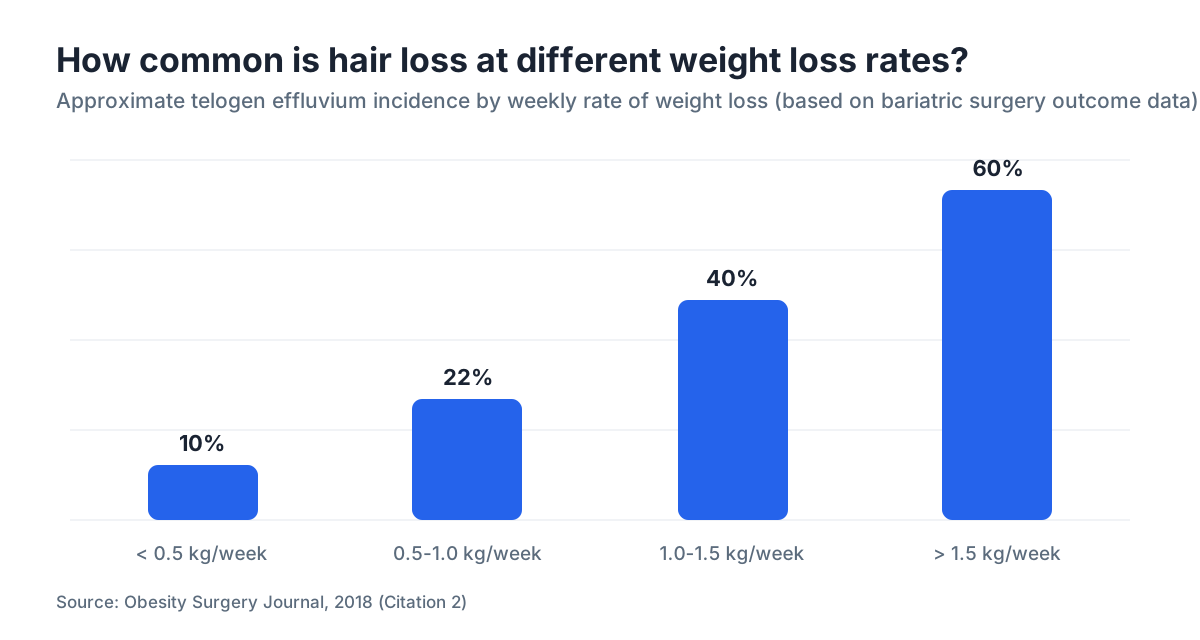
Third, if you're still cutting for weight loss, slow down. Losing 0.5 to 1.0 kg (about 1 to 2 lbs) a week disrupts follicles far less than faster rates. The clearest evidence comes from bariatric surgery data, where telogen effluvium rates jump sharply in patients losing more than 1.5 kg per week in the months after surgery. [2]
Fourth, ease off mechanical stress while the hair is fragile. Tight ponytails, chemical processing, and heavy heat styling cause breakage that makes the shedding look worse than it is. It won't change regrowth speed, but it changes what you see in the mirror.
For supplements with actual evidence behind them, hair loss supplements sorts out what's worth the money and what isn't.
Does minoxidil help with diet-related hair loss?
Minoxidil can help. It's FDA-approved for hair regrowth and it speeds follicles from telogen back into anagen, which can shorten the thin period after a crash diet. [9] The American Academy of Dermatology includes minoxidil in its guidance for telogen effluvium, while noting the evidence is strongest for androgenetic alopecia. [3]
The case for trying it during diet-related shedding: if your follicles are healthy (not miniaturized, not scarred), a push back into growth can cut the perceived severity and duration. The case against: diet-driven telogen effluvium usually resolves on its own, and once you start minoxidil you have to keep going or risk a rebound shed when you quit.
Topical minoxidil at 5%, applied once or twice a day, is the common approach. Oral minoxidil at low doses (0.625 to 2.5 mg/day for women, 2.5 to 5 mg for men) is used off-label more and more by dermatologists and may cover the scalp better. oral minoxidil compares the two routes. Before you start, minoxidil side effects is a full breakdown.
Finasteride and DHT blockers are the wrong tool here. They target androgen-driven miniaturization, not telogen effluvium. If a dermatologist confirms androgenetic alopecia is co-occurring, that's a separate conversation. See finasteride or DHT blocker for that.
Will the hair grow back, and will it come back the same as before?
In most cases, yes. Diet-triggered telogen effluvium, where the follicle isn't structurally damaged or miniaturized, is reversible. The follicle re-enters anagen, grows a new shaft, and given time, density returns to baseline. [1]
The caveats are real. If the nutritional insult dragged on for months or years rather than a single crash, some miniaturization can accumulate. Severely underweight people and those with eating disorders sometimes develop persistent diffuse thinning that doesn't fully reverse even after weight restoration.
Texture can change on regrowth. New hairs sometimes come in finer, curlier, or a different color than before, most often after chemotherapy or severe illness. It's less common after dietary telogen effluvium, but it happens, and it usually normalizes over later growth cycles.
Use the 12-month rule as a benchmark. If you've had fully adequate nutrition for 12 months and shedding hasn't slowed, or density hasn't started recovering, a dermatologist visit and possibly a scalp biopsy make sense to rule out other diagnoses.
What blood tests should you get if you're losing hair after dieting?
A good panel covers the likely suspects without turning into a fishing trip. Ask for:
- Complete blood count (CBC) to check for anemia
- Serum ferritin (the most sensitive iron marker for hair loss; request this by name, more than serum iron)
- Serum zinc
- 25-hydroxyvitamin D
- TSH and free T4 for thyroid, which both crash diets and autoimmune conditions can affect
- Total protein and albumin as a rough read on protein status
- Basic metabolic panel if you've been on a very restrictive or unusual diet
If you're a woman with hair loss and irregular cycles, adding total and free testosterone, DHEA-S, and prolactin is reasonable to screen for hormonal causes that dieting can expose or worsen.
A "normal" range doesn't always mean optimal. Ferritin in the low-normal band (under 30 to 40 ng/mL) is worth treating even when the lab reference range doesn't flag it. Serum ferritin is the most sensitive marker of iron stores, which is why it beats serum iron for a hair workup. [10] Talk through the actual numbers with your doctor instead of accepting a green checkmark.
Can bariatric surgery cause permanent hair loss?
Hair loss after bariatric surgery (gastric bypass, sleeve gastrectomy) is common. Studies report 30 to 70% of patients hit significant telogen effluvium in the first 3 to 6 months. [2] The causes stack up: severe calorie restriction, protein malabsorption (worst after Roux-en-Y bypass), zinc and iron malabsorption from bypassed intestinal segments, and the shock of rapid loss.
For most bariatric patients, the shedding is temporary. It peaks around 3 to 4 months post-surgery and slows by 6 to 9 months. High protein intake (bariatric programs often target 60 to 80 g daily as a floor, some go higher) plus lifelong iron, B12, zinc, and vitamin D supplementation is standard of care and directly affects hair outcomes. [2]
Permanent hair loss is uncommon but possible in patients with lingering deficiencies, pre-existing androgenetic alopecia, or prolonged low protein intake. If you're prepping for surgery, fixing your nutrient status before the procedure matters more than scrambling after.
If post-bariatric shedding is still heavy after 9 to 12 months of corrected nutrition, see a dermatologist with bariatric experience. For what treatments might apply at that stage, minoxidil for men covers one common option.
What about hair loss from eating disorders like anorexia?
Eating disorders deserve their own mention because the mechanism is similar but the severity and timeline are worse. Prolonged severe restriction, as in anorexia nervosa, causes telogen effluvium plus lanugo (fine body hair the body grows against cold once insulating fat is gone) and structural damage to hair shafts from micronutrient loss.
Hair recovery after anorexia takes longer than after a single crash diet, sometimes 18 to 24 months or more, and tracks weight restoration rather than calorie count alone. A recovering body sends nutrients to organ function before hair. That's smart biology and deeply frustrating for the person in recovery.
If hair loss is part of an eating disorder, the resource that matters is the National Eating Disorders Association (NEDA). Hair recovery follows body recovery. No topical product touches the underlying biology until nutrition is stable.
If you suspect your hair loss has several overlapping causes, a MyHairline AI scan can at least clarify the visual pattern, which helps steer the right specialist conversation.
What actually helps versus what is a waste of money?
Here's the honest breakdown.
Worth doing: Correct confirmed deficiencies (iron, zinc, vitamin D) through food and targeted supplementation. Push dietary protein to at least 1.0 g/kg/day. Slow your rate of loss if you're still cutting. If shedding is severe and dragging on, topical minoxidil has real evidence for pushing follicles back into growth. A dermatologist visit with the blood panel above is worth the copay.
Probably fine but not evidence-based: Biotin at normal doses won't hurt unless you need lab work (it skews results). Collagen peptides may add amino acids to the pool but haven't been shown to reduce telogen effluvium specifically.
Mostly a waste: Hair-loss shampoos do almost nothing for a physiological shedding process. Scalp serums with trendy peptides have next to no trial data for diet-related shedding. Laser combs (low-level laser therapy) have weak evidence even for androgenetic alopecia and almost none for telogen effluvium. Those 15-ingredient supplement stacks have never been studied as combinations.
Premature: Finasteride, hair transplants, and PRP (platelet-rich plasma) injections are built for different diagnoses. A hair transplant on an actively shedding scalp is contraindicated, because the surgeon needs a stable baseline. Finasteride addresses androgen-driven miniaturization, not nutrition-driven telogen effluvium.
Sources
- StatPearls (NCBI Bookshelf) - Telogen Effluvium
- Obesity Surgery Journal - Hair Loss After Bariatric Surgery
- American Academy of Dermatology - Hair Loss
- Journal of the American Academy of Dermatology - Serum Ferritin and Hair Loss
- NIH Office of Dietary Supplements - Zinc Fact Sheet
- U.S. Food and Drug Administration - Biotin Safety Communication
- International Journal of Dermatology - Vitamin D and Hair Loss
- New England Journal of Medicine - STEP 1 Trial (semaglutide 2.4 mg)
- MedlinePlus (NIH) - Minoxidil Topical
- NIH Office of Dietary Supplements - Iron Fact Sheet