
TL;DR: The first 14 days after a hair transplant decide your result. Grafts are not anchored until roughly day 10 to 14, so sweat, friction, and physical trauma can dislodge them before then. Follow a strict sleep, washing, and activity protocol for two weeks, then ease restrictions month by month. Most patients see their final result between 12 and 18 months post-op.
Why post-op care matters more than the surgery itself
A hair transplant is only half the work. The surgeon extracts follicular units from your donor area and places them into tiny recipient sites in your scalp. Those grafts have no blood supply for the first few days. They sit in channels held by nothing but a small clot and the tissue around them. Disturb them before they anchor, and you lose them for good.
This is not a procedure where you push through discomfort and get back to normal in a day. Surgeons who do thousands of transplants a year say the most common reason grafts fail, outside of technical error, is patient non-compliance in week one. Blunt, but true.
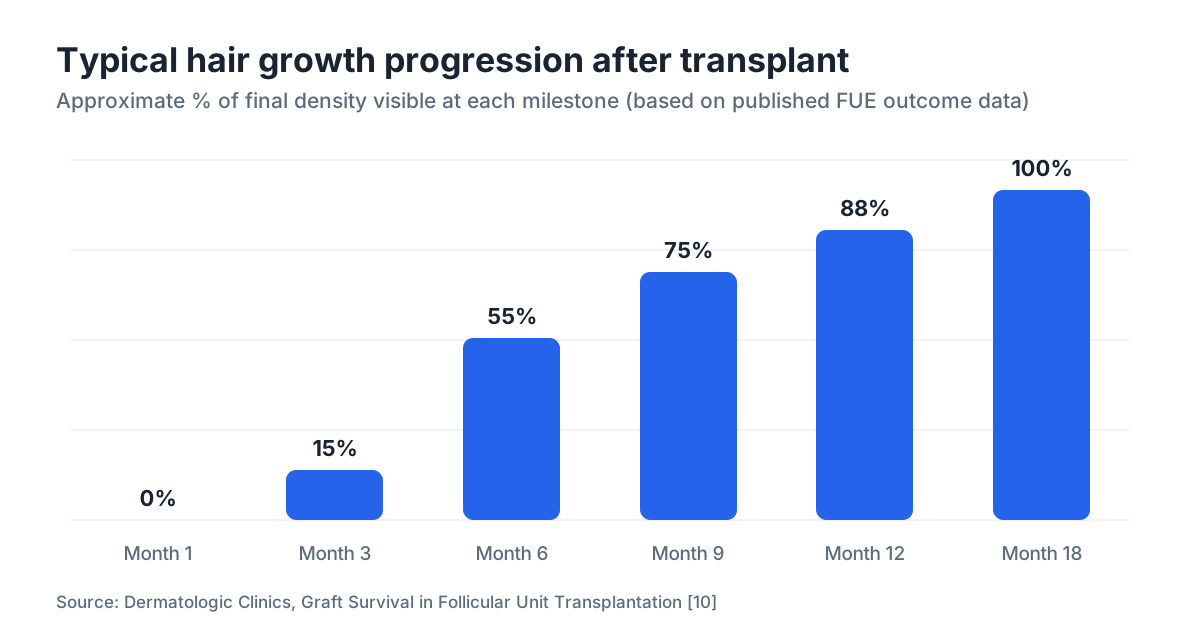
The other reason aftercare gets underestimated is the timeline. You will shed most of your transplanted hairs around weeks three through eight, which is normal and temporary (a form of telogen effluvium). Real growth starts around month three. Visible density takes six months. The full result takes a year to eighteen months. If you do not understand that going in, you will panic, and panicked patients make bad calls like restarting medications too early or booking another procedure too soon.
The protocol below reflects standard guidance from the American Academy of Dermatology, published post-operative instructions from major transplant centers, and the biology of follicular graft healing documented in peer-reviewed literature [1][2].
What should I do in the first 24 hours after surgery?
The day of surgery and the first night are almost entirely about not touching anything. Keep your head elevated, mist with saline, and leave every dressing alone unless your clinic tells you otherwise.
Your clinic will bandage the donor area and may put a headband or light dressing around the forehead to limit swelling. Do not remove any dressing without instruction. Expect some oozing at both the donor and recipient sites for the first 12 to 24 hours. Normal.
Sleep is the main challenge. Keep your head elevated at roughly 45 degrees for the first three to five nights. This reduces swelling and keeps scalp blood pressure from rising enough to push grafts out. Most surgeons recommend a recliner or two to three firm pillows. The satin or clean cotton pillowcase your clinic may suggest is not vanity. It cuts friction against the graft area.
Do not touch your recipient area at all on day one. No rubbing, no scratching, no poking with fingertips to see how it feels. You will notice swelling and tightness, and that is expected. Some patients report numbness that lasts days to weeks as the small scalp nerves recover.
Most clinics send you home with a saline spray. Start misting the recipient area lightly every one to two hours as instructed. This keeps the grafts from drying out, which can crack the clots holding them in place. Do not press the nozzle against your scalp. Hold it six to eight inches away and mist gently [3].
Avoid alcohol for the first 24 to 72 hours. It dilates blood vessels and raises bleeding risk. Most clinics also ask you to stay off blood-thinning supplements (fish oil, vitamin E, aspirin unless medically required) for a week before and after surgery.
How do I wash my hair in weeks 1 and 2?
Patients get washing wrong more than anything else, and the stakes are real. For the first 24 to 48 hours, do not wash at all. After that, most protocols start a very specific routine that runs through the end of week two: dilute a gentle shampoo, pour it over the recipient area, pat, never rub.
The general approach: mix a sulfate-free or baby shampoo into a cup of lukewarm water (not hot). Pour or dab the diluted solution gently over the recipient area with your fingertips in a soft patting motion. Do not rub, do not use a washcloth, do not let a shower stream hit the graft area directly. Let it sit for one to two minutes, then rinse by slowly pouring lukewarm water over the scalp from a cup. Pat, never rub, dry with a clean towel or a low-heat hairdryer held at least 12 inches away.
You can wash the donor area (the back and sides of the scalp for FUT or FUE) more normally, but still avoid hard rubbing in the first week.
By days five through seven, most clinics let you start softening the scabs around each graft with a diluted shampoo soak. Apply a small amount of conditioner or shampoo, let it sit a minute, then very gently roll (not scratch) the softened crust away. Never pick at a dry scab. Pulling a dry scab can pull the graft with it [2][3].
By day ten, grafts are generally considered anchored. Most clinics clear patients to wash more normally after day 14, though a direct high-pressure shower stream on the recipient area should still wait another week or two.
Hot water is the enemy in week one. Heat means vasodilation and swelling. Lukewarm, always.
Week-by-week recovery timeline: what to expect and when restrictions lift
The table below lays out the main milestones. Individual surgeon protocols vary, and your clinic's specific instructions override this general guide.
| Timeframe | What happens biologically | Key restrictions | What is generally cleared |
|---|---|---|---|
| Days 1-3 | Grafts held by clot only; swelling peaks around day 2-3 | No washing, no touching, no exercise, no alcohol | Saline misting, gentle walking indoors |
| Days 4-7 | Clots firm; early vascular connections begin forming | Gentle patting wash only, no direct water stream, no hats with friction | Returning to desk work (no physical labor) |
| Days 7-10 | Grafts anchoring; scabs softening | No rubbing, no swimming, no saunas | Very light walking outside |
| Days 10-14 | Grafts largely secure | Avoid high-impact activity; still avoid pools and direct sun | More normal washing; driving if not on sedating meds |
| Weeks 3-4 | Transplanted hairs enter telogen; shedding begins | No intense scalp massage | Light cardio (no heavy lifting) |
| Weeks 5-8 | Most transplanted hairs shed (shock loss period) | Nothing to restrict mechanically | Swimming may be cleared by most clinics |
| Months 2-3 | Follicles in anagen; tiny new hairs emerge | Protect from prolonged sun | Most normal activity; can restart minoxidil if prescribed |
| Months 3-6 | Visible growth; density builds gradually | Wear sunscreen on scalp outdoors | Contact sports, weight training |
| Months 6-12 | Density and texture mature | Nothing specific | Hair styling, coloring (check with surgeon) |
| Months 12-18 | Final result visible | N/A | Full assessment of outcome |
The shedding between weeks three and eight is the moment most patients call their clinic in a panic. It is called shock loss, or post-transplant telogen effluvium, and it happens to almost everyone. The trauma of transplantation sends the transferred hairs into a resting phase. The follicle itself is alive and will regrow. This is not graft failure [4][5].
What activities are off-limits and for how long?
Exercise is the restriction people underestimate most. Anything that raises your heart rate significantly raises scalp blood pressure, which risks bleeding and can physically push unanchored grafts out of their channels. The line is not casual walking. A brisk 20-minute walk is probably fine after day seven for most patients. A 45-minute run is not.
Activity restrictions by category:
Cardiovascular exercise (running, cycling, HIIT): avoid for at least two to three weeks. Most surgeons say two weeks minimum, with many recommending four weeks to stay conservative.
Weight lifting and straining: the Valsalva maneuver (the breath-hold under heavy load) sharply spikes intracranial and scalp blood pressure. Avoid heavy lifting for at least three to four weeks.
Contact sports and anything with helmet friction: helmets press right on the recipient zone. Wait at least four to six weeks, and confirm with your surgeon that the graft area is fully healed before wearing any headgear that applies pressure.
Swimming pools, hot tubs, ocean: chlorine and bacteria are the hazards. Pool water is especially bad because of its pH and chemical load on healing tissue. Most protocols say four weeks minimum, some ask for six [3].
Saunas and steam rooms: heat and steam dilate scalp vessels and can cause swelling. Avoid for at least four weeks.
Sex: the question patients are embarrassed to ask. The honest answer is that anything strenuous enough to spike heart rate and blood pressure follows the same rules as cardio. Most clinics say wait five to seven days for light activity and two to three weeks for anything more vigorous.
Direct sunlight on the recipient area is a longer-term restriction that catches people off guard. UV on a healing scalp can cause hyperpigmentation in the scars and may stress follicles during early anagen. Wear a loose, non-friction hat or use a high-SPF sunscreen on the scalp from around week three, and keep that habit for at least six months outdoors.
When can I start or restart finasteride and minoxidil after a transplant?
It depends on which drug we are talking about, and the answer matters a lot for your long-term result. In short: keep taking finasteride through surgery if you were already on it, and restart topical minoxidil once the scabs clear, usually two to four weeks out.
Finasteride: if you took finasteride before surgery, most surgeons tell you to continue through the procedure and recovery without a break. Stopping abruptly can trigger a shed of your existing native hairs, the opposite of what you want post-op. If you were not on finasteride and your surgeon recommends starting, most clinics wait until around weeks two to four post-op [6].
Topical minoxidil: most surgeons pause topical minoxidil for men for about two weeks because applying it to a raw, healing scalp causes irritation and inflammation. The standard restart window is after the scabs have fully resolved, typically weeks two to four. Some surgeons are fine with a restart at two weeks, others prefer four. Ask your clinic.
Oral minoxidil (oral minoxidil) follows a similar restart timeline, generally two to four weeks, though some surgeons who prescribed it pre-op continue it through recovery with no break, since systemic exposure does not irritate the scalp directly.
If you were on no medical therapy before surgery and you are losing native hair outside the transplant zone, this is the moment for a real conversation about maintenance. A transplant moves existing follicles. It does not stop ongoing loss in other areas. Most patients who want durable results pair the procedure with ongoing treatment. Finasteride and minoxidil together have the most evidence for holding onto what you have.
Not sure whether you need maintenance? MyHairline's free AI hair scan gives you a baseline read on your current loss pattern to bring to that conversation.
How do I manage pain, swelling, and itching after surgery?
Swelling peaks around days two through four and usually settles by day seven. It travels forward with gravity, so you may wake on day three with puffy eyelids or a swollen forehead even when the recipient area looks fine. That is gravity-dependent edema, not infection. Sleeping elevated helps a lot. Some clinics prescribe a short methylprednisolone pack to cut swelling, others manage it conservatively.
Pain is usually modest after FUE and more noticeable after FUT (strip) procedures, where the donor area involves a linear incision. Most patients get by on over-the-counter acetaminophen (paracetamol). Avoid ibuprofen and aspirin for the first week because of their blood-thinning effect, unless your doctor clears them [7].
Itching is common from about day three through the end of week two. It is a sign of healing and also maddening, because you cannot scratch. The saline spray helps. So does very light patting. If itching gets severe, some surgeons suggest an oral antihistamine (cetirizine or loratadine) at bedtime, which also helps you sleep. Never put a fingernail on the recipient area in the first two weeks.
Call your clinic if you get a fever above 38.5C (101.3F), spreading redness with warmth, green or yellow discharge, or pain that worsens instead of improving after day three. Infection after a transplant is uncommon but real. Better to call early.
What do the scabs, redness, and pimples mean and when do they go away?
Scabs form around each graft within the first 24 to 48 hours. Normal healing. By day three to five they start to soften with washing. By day ten to fourteen most patients have shed the majority through gentle washing. Full scab resolution usually lands between days ten and twenty depending on graft density and how fast you heal.
Redness in the recipient area can hang around four to eight weeks in lighter-skinned patients, and is sometimes faintly visible up to three months. It fades on its own. Camouflage makeup is generally safe once scabs are fully gone, but check with your surgeon before putting anything on the recipient zone.
Pimples or small folliculitis bumps around months two to four are a good sign. They often mean new hairs are pushing through the skin. They look like small whiteheads around the follicle. Do not pop them. If they multiply or turn painful, flag it at your follow-up. Folliculitis after transplant occasionally needs a short antibiotic course [2][3].
Foreign-body granuloma is a rarer problem: a persistent nodule that forms when the body reacts to a buried hair fragment. If you feel a firm lump that does not clear in a few weeks, have your surgeon look at it.
What should I eat and avoid to support graft survival?
No peer-reviewed trial has found a specific diet that meaningfully improves graft survival over a normal healthy diet. What we do have is reasonable mechanistic evidence that certain nutrients matter for follicle biology. Eat enough protein, correct real deficiencies, and skip anything that thins your blood or chokes off circulation.
Protein is the building block of keratin. On a very low-protein diet, your body may deprioritize hair growth. A target of 1.2 to 1.6 grams of protein per kilogram of body weight per day during recovery lines up with general wound-healing recommendations [7].
Zinc and iron deficiencies are linked to hair loss on their own, and correcting them is well supported by the literature. Whether supplementing above normal levels adds anything is unclear. If you are not deficient, loading up on zinc can actually block copper absorption and cause its own trouble. If you think a deficiency might factor into your broader hair loss, a basic bloodwork panel before or after surgery is sensible [8].
Alcohol: past the first 72 hours, moderate drinking is generally tolerated, but heavy drinking in the first month is not helping you. It worsens swelling, wrecks sleep, and at higher amounts has immunosuppressant effects.
Smoking: nicotine causes vasoconstriction, literally cutting blood flow to the grafts during the window when they are trying to build a new vascular supply. Most surgeons ask patients to stop smoking at least two weeks before and four weeks after surgery. The evidence that smoking impairs wound healing is strong [9].
Some patients ask about hair loss supplements in the post-op period. Saw palmetto, biotin, and similar products have weak evidence at baseline. In the immediate post-op window the priority is avoiding anything that thins blood or has unpredictable systemic effects. Wait at least four weeks post-op before adding new supplements, and run them by your surgeon.
When is it safe to cut and style my hair again?
Most patients can get a haircut in the donor area as early as three to four weeks post-op. The recipient zone is more delicate. Most surgeons clear a light trim (scissors only, no clippers close to the scalp) of the recipient area around week four to six, once scabs are fully gone and the skin has healed.
Electric clippers directly on the transplanted zone: most surgeons say wait three months minimum, since the vibration and guard contact can traumatize emerging follicles.
Hair dye and bleach: the chemicals in permanent color and bleach are genuinely harsh on a healing scalp. Wait at least three months, and test a small area first. Some surgeons say six months to be safe.
Heat styling (blow dryer on high, straighteners, curling irons): from about six weeks on, a blow dryer on low or cool is generally fine. High direct heat on the recipient area is best avoided until month three.
Hair products (gel, pomade, hairspray): once scabs are fully gone (usually by week three), light products applied without rough scalp massage are fine for most patients. Skip anything with strong alcohols in the first six weeks.
The native hair outside the transplant zone can be cut and styled normally whenever you feel up to it, even the first week, as long as the tools never touch the recipient area.
What are realistic expectations for results at 3, 6, and 12 months?
Understanding this timeline prevents regret and bad decisions. Roughly half your result shows by month six, and 80 to 90% by month twelve. Anyone selling faster than that is selling.
At three months: the transplanted hairs have mostly shed and are regrowing. The new hairs are very fine, almost peach fuzz. Many patients here feel like the surgery did nothing. Normal. Photos from month one next to month three often show new hairs the patient cannot see in the mirror.
At six months: roughly 50 to 60% of the final result is visible for most patients. Density is clearly up from the pre-surgery baseline in most cases. Hair caliber is still thinner than it will end up.
At twelve months: 80 to 90% of the final result. For many patients this is essentially it. Some, particularly those with coarser or curlier hair, keep improving through month 18 [10].
Graft survival is the number that matters most clinically. In experienced hands, published FUE graft survival averages roughly 85 to 95% when the clinic follows proper storage and handling protocols [10]. FUT has historically shown similar or slightly higher survival in some studies, largely because the follicles spend less time outside the body.
Nobody can guarantee a specific number of grafts will survive. Any clinic that promises a precise final density is overstating certainty. What they can show you is a portfolio of 12-month results and honest numbers on their average graft survival.
If your result at 12 months falls well short of what was planned, the first conversation is with your surgeon. Document with photographs from multiple angles in the same lighting. A legitimate clinic will do a fair post-op assessment. Some patients do need a second procedure to fill gaps, which is normal in advanced receding hairline cases or higher Norwood stages where the donor supply was stretched.
To track progress or check whether your native hair keeps receding, MyHairline's free AI scan gives you an objective read on your hairline and density to compare against your pre-op baseline.
What are the warning signs of a complication I should not ignore?
Most complications after a hair transplant are minor and clear on their own. A few are not, and those deserve a phone call the same day.
Infection signs that need prompt contact with your clinic or a doctor: fever over 38.5C (101.3F), rapidly spreading redness or warmth, cloudy, green, or yellow discharge from either site, and pain that increases after day three instead of easing. Infections after a transplant are uncommon, estimated under 1% in most published series, but when they happen they need antibiotics and occasionally drainage [2].
Cyst formation: small cysts can form when a hair is trapped under the skin during healing. Common, and usually they resolve on their own or with minor intervention. Do not try to drain them yourself.
Donor area numbness or scarring: a small amount of numbness in the donor region, especially after FUT, can last months and occasionally longer. Hypertrophic or widened donor scars show up more in patients who went back to strenuous activity too early or who scar poorly by genetics.
Nerve pain (anaesthesia dolorosa or persistent scalp dysesthesia): rare, and usually resolves within weeks to months.
Unnaturally high hairline or visible plugginess: not a medical emergency, but a technical outcome to raise with your surgeon at the 12-month mark if the pattern looks off. This is a design and technique issue, not a post-op care one.
Anything that feels urgent to you is worth a call. The barrier to calling should be low. A legitimate transplant practice keeps staff available for exactly this.
Sources
- American Academy of Dermatology, Hair loss: Diagnosis and treatment
- International Society of Hair Restoration Surgery, ISHRS Practice Standards
- American Society of Plastic Surgeons, Hair Transplant recovery guidance
- Journal of Dermatology (Wiley)
- National Library of Medicine / NCBI, Telogen Effluvium StatPearls
- MedlinePlus, Finasteride
- NIH Office of Dietary Supplements, Zinc Fact Sheet for Health Professionals
- NIH Office of Dietary Supplements, Iron Fact Sheet for Health Professionals
- CDC, Smoking and Tobacco Use
- Dermatologic Clinics (Elsevier)
- JAMA Dermatology