
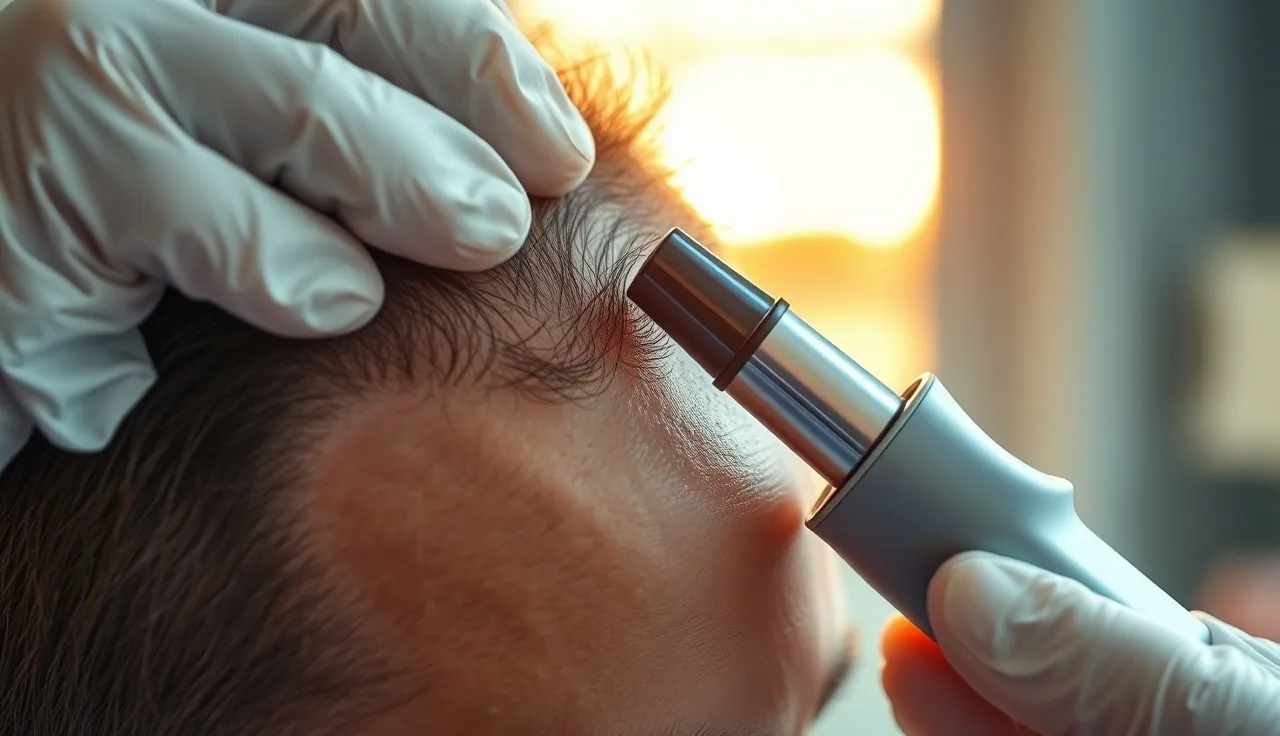
TL;DR: Shock loss is temporary shedding of transplanted or native hairs triggered by surgical trauma, usually starting 2-8 weeks post-op and resolving within 3-6 months. Graft failure is permanent: grafts that never survived and will not regrow. The difference comes down to timing, pattern, and whether regrowth appears by month 4-5. Both can happen at once, which is what makes the early months so confusing.
What is shock loss after a hair transplant?
Shock loss, formally called post-transplant telogen effluvium, is a shedding response to the physical trauma of surgery. The scalp takes a beating: incisions, needle passes, suction, implantation. Native hairs near the recipient area, and sometimes the donor zone, get rattled enough to drop into the telogen (resting) phase early and fall out. So do many of the newly transplanted hairs, whose follicles are alive but shed the shaft before settling in.
The shedding usually starts between 2 and 8 weeks after surgery [1]. It looks alarming because you can lose hairs that were growing fine before the procedure, plus the grafts themselves. FUT strip patients sometimes see shock loss in the native hair along the incision line. FUE patients can see it scattered across the recipient zone.
Here is the part that matters. Shock loss is self-limiting. The follicle is still alive underground. Regrowth in the affected area typically resumes around months 3 to 4, with meaningful density visible by months 6 to 9 [1]. If you are seeing widespread shedding in weeks 2 through 6, you are far more likely dealing with shock loss than graft failure.
To understand why this happens at the follicle level, read about telogen effluvium, which shares the same mechanism: a stressor pushes hairs out of their growth cycle all at once.
What is graft failure after a hair transplant?
Graft failure means a transplanted follicular unit died before it could establish a blood supply in its new location. Dead follicles do not regrow. Ever. That permanence is the line between graft failure and shock loss.
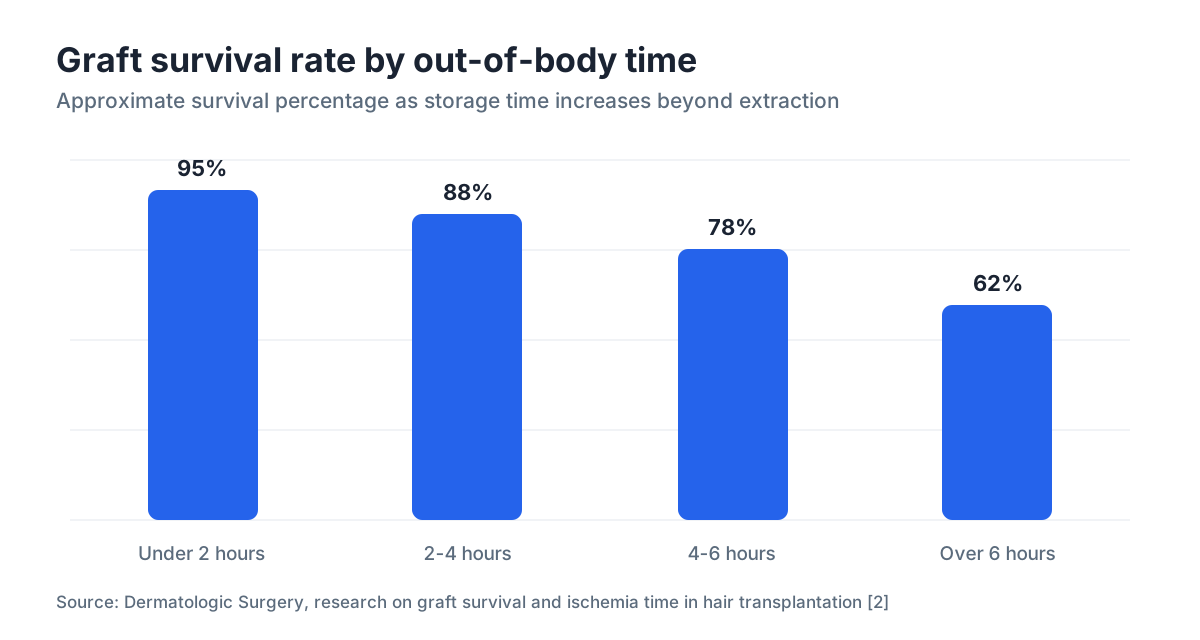
Grafts fail for a handful of reasons. Prolonged time outside the body before implantation is one of the most common. Research in Dermatologic Surgery found that graft survival drops when follicular units stay out of the body longer than 2 hours, and more sharply past 4-6 hours [2]. Poor storage solution, excessive drying, rough handling during extraction or implantation, and recipient site infection can all kill grafts before they take root.
Patient-side factors matter too. Smoking constricts blood vessels and is consistently linked to higher graft failure rates [3]. A tight scalp with poor vascularity, and resuming hard exercise too early (which raises blood pressure and can displace grafts), also contribute.
Here is the number clinics do not always volunteer. Even in experienced hands, some graft loss is normal. Published survival rates run around 90-95% under optimal conditions [2]. A 2,000-graft procedure might naturally lose 100 to 200 grafts, which rarely produces a visible problem. A failure rate above 20-30% is when you start seeing clear patchiness that was not there at the 3-month mark.
What does shock loss look like vs graft failure?
This is the question most people are actually asking, and the honest answer is that in the first two months, they can look identical. Both produce shedding. Both leave you staring at a thinner scalp than you expected. The visual differences sharpen over time.
Shock loss clues:
- Shedding starts 2-8 weeks post-op and is often diffuse across the whole recipient area
- The shed hairs often have a small white bulb at the root (telogen club hair), meaning the follicle released the hair normally
- Native hairs in the surrounding area may thin too, more than the grafts do
- By month 3-4, fine thin regrowth starts poking through, sometimes called the "peach fuzz" phase
- The regrowth pattern tends to mirror the original placement pattern
Graft failure clues:
- Specific zones stay completely bald at month 4-5, with zero peach fuzz
- The bald patches often match areas where implantation was hard (very dense packing, scarred tissue, uneven angulation)
- There is no shedding drama; the hairs simply never grew because the follicles were already dead
- Sometimes you see crusting or small pustules in the early weeks in those specific zones, which can signal folliculitis or infection that killed the grafts
The single most useful diagnostic window is weeks 14 to 20. If an area shows zero regrowth by then, the probability of graft failure in that zone is high. If thin hairs are present but sparse, shock loss recovery is still running and you should wait for the full 12-month mark before concluding anything [1].
| Feature | Shock Loss | Graft Failure |
|---|---|---|
| Onset | 2-8 weeks post-op | Hair never grows in |
| Appearance | Diffuse shedding, club hairs | Persistent bald zone, no growth |
| Native hair affected? | Often yes | Rarely |
| Regrowth by month 4-5? | Yes, fine hairs appear | No growth at all |
| By 12 months? | Full or near-full density | Permanent loss in zone |
| Reversible? | Yes | No |
Can shock loss and graft failure happen at the same time?
Yes, and this is exactly why self-diagnosis is so hard in the first few months. You can have a procedure where 85% of grafts survived but are currently shedding in shock loss, while 15% of grafts failed outright. From the outside, everything looks like a disaster at week 6.
The practical takeaway: do not panic, and do not demand a revision procedure before the 12-month mark. Experienced transplant surgeons and American Academy of Dermatology guidance on hair restoration both point to waiting a full year before judging results, because early evaluation cannot reliably separate temporary shock loss from true failure [4].
If you had before-and-after photos taken in clinic (you should have), compare them at months 6, 9, and 12 to map which zones are recovering and which are not. Zones with consistent zero growth at months 9 and 12 are candidates for a revision. Zones that look thin at month 6 may still fill in.
How long does shock loss last after a hair transplant?
The standard timeline clinics give is 3 to 6 months for shock loss to resolve in the recipient area. Some patients see complete recovery stretch to 9-12 months, especially if native hair around the hairline was affected [1].
Donor zone shock loss is less common but does happen, mostly with FUT. The follicles in the strip scar margins can drop into telogen, giving the look of a widened scar or a thinner band. Most of this resolves by month 6.
A few things seem to speed recovery. Starting or staying on minoxidil for men around the 2-4 week post-op mark (once the scalp has healed enough to tolerate it) is the main one. Keeping stress low and eating enough protein help. Minoxidil does not bring back dead grafts, but it can shorten the telogen phase and speed the recovery of living follicles in shock. Some surgeons also recommend finasteride post-transplant to protect native hairs from DHT-driven loss that could compound the look of shock loss. Read how those two work together in finasteride and minoxidil.
If you want the hormonal reasons native hairs thin and how that intersects with post-transplant recovery, the what causes hair loss article covers the full picture.
How do doctors diagnose the difference?
A dermatologist or hair restoration specialist has a few tools that go past eyeballing it.
Dermoscopy: A handheld dermoscope (10x to 70x magnification) lets the clinician look at individual follicular units. In shock loss, you can often see empty follicular orifices with visible follicle architecture, meaning the follicle is present and dormant. In graft failure, the orifice may be absent, scarred over, or show no follicular structure at all.
Trichoscopy: A more detailed follicular analysis that counts follicular units per square centimeter and compares them to your post-op implantation records. If the implanted density was 40 FUs per cm² and trichoscopy now shows 30 FUs with dormant orifices, that points to shock loss. If it shows only 25 FUs and smooth scalp where others should be, failure is more likely.
Timeline-based assessment: No imaging tool is definitive in the first 4 months. Most experienced surgeons make the preliminary call at the 6-month visit and the final call at 12 months.
Scalp biopsy: Rarely used, but a punch biopsy from a persistently bald zone can confirm whether follicular structures are present. The American Academy of Dermatology notes that biopsy is more often used to diagnose scarring alopecias than to evaluate transplants, but it is an option when graft survival is legally or clinically important [4].
If you are tracking your own recovery and want a baseline before your next clinic visit, a free AI hair scan from MyHairline (myhairline.ai/scan) can photograph and analyze your scalp density over time, giving you a concrete visual record to bring to your surgeon.
What factors increase the risk of graft failure?
Some of these sit on the clinic. Some sit on you. Being honest about both matters.
Clinic-side risks:
- Long graft out-of-body time. Published data suggests survival drops meaningfully past 2 hours and more sharply after 4-6 hours [2]. Ask your clinic what solution they store grafts in (saline is the minimum; ATP-enriched solutions like HypoThermosol or PRP-supplemented media show better outcomes in several trials).
- High session density. Packing more than 45-50 FUs per cm² in a single session raises the risk of vascular disruption and graft death from competition for blood supply [5].
- Inexperienced technicians. In most countries, including the United States, no federal law requires the technicians doing the actual extraction and implantation to be licensed surgeons. The surgeon may only supervise. This is a real issue and worth asking about directly.
Patient-side risks:
- Smoking. Multiple studies link active smoking to significantly reduced graft survival, estimated at a 2-4x increase in failure risk [3].
- Touching, scratching, or sleeping on the grafts in the first 7-10 days.
- Exercise that raises blood pressure above mild levels in the first 2 weeks.
- Alcohol in the first week (it causes vasodilation and can increase bleeding and swelling that dislodges grafts).
- Pre-existing scarring alopecias in the recipient zone (lichen planopilaris, frontal fibrosing alopecia). Active scarring conditions can destroy newly placed grafts. The FDA has not approved any transplant technique for active scarring alopecias, and placement in affected zones is off-label and high-risk [6].
If underlying DHT-driven loss was not addressed before or after the transplant, it can keep thinning native hairs and make the whole result look like graft failure even when grafts survived. A DHT blocker conversation with your dermatologist post-transplant is worth having.
What should you do if you think your grafts failed?
First: wait. Genuinely wait. The 12-month mark is not arbitrary. It is when the last wave of shock loss regrowth finishes and you can finally count what you have. Surgeons who offer revisions before 12 months are deciding with incomplete information.
Second, document systematically. Take standardized photos every 4 weeks under the same lighting, same distance, same wet or dry hair state. This matters more than you think, because human perception of hair density is unreliable and emotionally distorted after a procedure you paid thousands of dollars for.
Third, get a second opinion from a board-certified dermatologist or hair restoration specialist who was not involved in your original procedure. The International Society of Hair Restoration Surgery (ISHRS) has a member finder on their site where you can locate credentialed practitioners [7]. Bring your pre-op and post-op clinic photos.
If graft failure is confirmed, options include a revision procedure to fill the failed zones, scalp micropigmentation to blend the gaps, or adjusting your medical therapy to protect remaining native hair. What does not help: harsh shampoos, supplements with no clinical evidence, or heat styling on a recovering scalp. You can read which supplements have any actual evidence in hair loss supplements.
Review the side effects of any current medication too. Minoxidil side effects are usually minor, but worth knowing if you are starting it post-transplant for the first time.
Does minoxidil help with shock loss recovery?
Minoxidil is the most studied topical for speeding post-transplant regrowth. A randomized controlled trial in Dermatologic Surgery found that patients using topical minoxidil 5% starting shortly after a hair transplant had significantly earlier onset of regrowth and greater density at 6 months compared to controls [8].
The mechanism: minoxidil shortens the telogen phase and pushes hairs into anagen (active growth) sooner. For hairs stuck in shock loss, that means they wake up faster. For dead grafts, it does nothing, which is actually useful diagnostically. If an area responds to minoxidil by month 4-5, that zone had living follicles (shock loss). If it does not respond at all by month 6, that zone more likely failed.
Most surgeons suggest starting minoxidil no earlier than 2 weeks post-op to avoid disturbing healing grafts, though some wait until 4 weeks. The exact timing is not standardized and varies by surgeon. Minoxidil does not prevent failure that already happened; it supports the recovery of surviving follicles.
Oral minoxidil at low doses (0.625 mg to 2.5 mg daily) is increasingly used for this and can be more convenient than twice-daily topical application. Read the full breakdown of risks and benefits in oral minoxidil.
When is it safe to evaluate your final transplant result?
The 12-month mark is the medical consensus endpoint for judging a hair transplant result [4][7]. Some clinicians push this to 14-18 months for patients who started late on minoxidil, had a dense packing session, or showed slow early regrowth.
At 12 months, you should have:
- Mature hair shafts in most transplanted zones (more than fine vellus hairs)
- Visible density you can compare to pre-op photos
- Clarity on which zones, if any, show persistent bald patches with no growth
If your surgeon is pushing for a revision at month 4 or 6, that is a yellow flag. A small number of cases (persistent pustular infection, clearly dead zones confirmed by biopsy) warrant earlier action, but those are exceptions. The ISHRS recommends waiting 12 months before any revision [7].
One thing makes the wait productive: use it to protect your remaining native hair. A receding hairline around the transplanted area from ongoing androgenetic alopecia can undermine even a perfect transplant. Understanding your receding hairline progression, and whether medical therapy is indicated, is worth discussing at each follow-up visit.
What does the research actually say about graft survival rates?
The published data on graft survival is less consistent than clinics suggest in their marketing. Part of that is because definitions of "survival" vary across studies (some count hairs present at 6 months, others at 12 months), and part of it is reporting bias.
The most cited range in the peer-reviewed literature is 85-95% graft survival under controlled conditions [2][5]. A 2020 study in the Journal of Cutaneous and Aesthetic Surgery found that graft survival in real-world settings (non-research-grade practices) ranged from 75-92%, with the lower end tracking longer out-of-body times and larger session sizes [5].
The FDA does not regulate graft survival rates or require outcome reporting. The agency classifies hair transplantation as a surgical procedure, not a device, so there is no federal database of outcomes [6]. The ISHRS runs voluntary practice census surveys, but these are self-reported and not audited.
A 2022 ISHRS member survey reported average session sizes of 2,000-3,000 grafts for androgenetic alopecia procedures, with most surgeons reporting subjective patient satisfaction above 80% at 12 months [7]. "Subjective satisfaction" and "graft survival" are not the same metric, which is worth keeping in mind.
So ask your clinic for their documented, photo-verified graft survival rate, not a marketing number. If they do not track outcomes systematically, that tells you something.
Sources
- American Academy of Dermatology, Hair Loss: Diagnosis and Treatment
- Dermatologic Surgery (journal homepage), research on graft survival and ischemia time in hair transplantation
- Journal of the American Academy of Dermatology, research on smoking and hair loss
- American Academy of Dermatology, hair loss treatment and surgical restoration guidance
- Journal of Cutaneous and Aesthetic Surgery, graft survival in real-world hair transplant practice (2020)
- U.S. Food and Drug Administration, medical devices and surgical procedures regulatory information
- International Society of Hair Restoration Surgery, ISHRS Practice Census 2022
- Dermatologic Surgery (journal homepage), randomized controlled trial of topical minoxidil after hair transplantation
- Journal of the American Academy of Dermatology, PRP meta-analysis for hair transplant outcomes (2019)
- National Institutes of Health, MedlinePlus: Androgenetic Alopecia
- National Center for Biotechnology Information, StatPearls: Telogen Effluvium (National Library of Medicine)