
TL;DR: Transplanted grafts are most vulnerable in the first 7-14 days before they build their own blood supply. The main killers are physical trauma to the recipient area, picking scabs early, sun exposure, smoking, and rushed surgical technique. Good clinics report 90-95% graft survival. The mistakes that drop you below that are almost all avoidable, and most happen at home.
Why are hair transplant grafts so fragile after surgery?
A transplanted graft is a tiny plug of tissue, usually 1-4 hairs, that has just been cut away from its blood supply and slotted into a small incision in your scalp. For roughly the first 72 hours it survives on plasma imbibition, basically soaking up fluid from the surrounding tissue like a sponge. No real circulation. No anchoring. It is just sitting there. [1]
Around day 3-5, new capillaries start growing into the graft base in a process called inosculation. By day 7-10 a rough blood supply exists, but the grafts are still easy to dislodge. Real vascular integration, where the graft is locked in and perfused, takes closer to 14 days. [1]
This two-week window is the danger zone. Anything that disrupts blood flow, causes mechanical trauma, or introduces infection during those days can kill grafts that would otherwise have survived fine. Here is the uncomfortable part: the surgery can be done flawlessly and bad aftercare can still cost you 10-20% of your result.
What are the most common post-surgery mistakes that kill grafts?
Touching, picking, or rubbing the recipient area. This is the number-one cause of preventable graft loss. The first 48-72 hours are the worst window. Grafts that have not yet begun inosculation can be dislodged by a single hard rub. Sleeping face-down, catching your scalp on a pillowcase, or absent-mindedly scratching at crust all pull grafts out. Some clinics see patients arrive for their day-3 check with visible loss purely from sleeping position. [2]
Removing scabs too early. Scabs form around each graft site within 24-48 hours. They are protective. Pick them off before day 10-14 and you can extract the graft along with the crust. This is one of the most common self-inflicted injuries in recovery, usually because people read the crusting as a problem instead of part of healing. [2]
Getting the scalp wet the wrong way. Most surgeons allow gentle washing from around day 3-5, using a set technique: diluted baby shampoo applied with a soft spray or carefully dabbed on, never rubbed. Aim a full shower stream at the scalp in the first 10 days, or towel-dry hard, and you can shear grafts off or disturb the crust layer. [3]
Smoking. Nicotine constricts the small capillaries that are trying to grow into the graft base. A 2012 review by Sorensen in the Annals of Surgery found smoking significantly impairs wound angiogenesis, the same process grafts depend on for survival. [4] Most surgeons ask patients to stop at least two weeks before surgery and four weeks after.
Alcohol in the first week. Alcohol widens blood vessels and thins the blood, which increases swelling and bleeding around graft sites. Bleeding lifts grafts. Most clinics say none for 5-7 days.
Exercise and heavy lifting. A raised heart rate and blood pressure push more blood and sweat to the scalp. Sweat is mildly acidic and irritates fresh sites. More to the point, hard exercise moves the scalp and can dislodge unsettled grafts. Standard advice: no gym for 10-14 days, no contact sport for 4 weeks. [3]
Sun exposure. UV inflames fresh wounds and can leave pigment changes in healing sites. A cap is the right call for the first 3-4 weeks outdoors, but even hats need care in the first 10 days: loose, no tight bands pressing on the recipient area.
How does surgical technique affect graft survival?
Not everything is in your hands. Some of the biggest drivers of graft death happen before you leave the operating room.
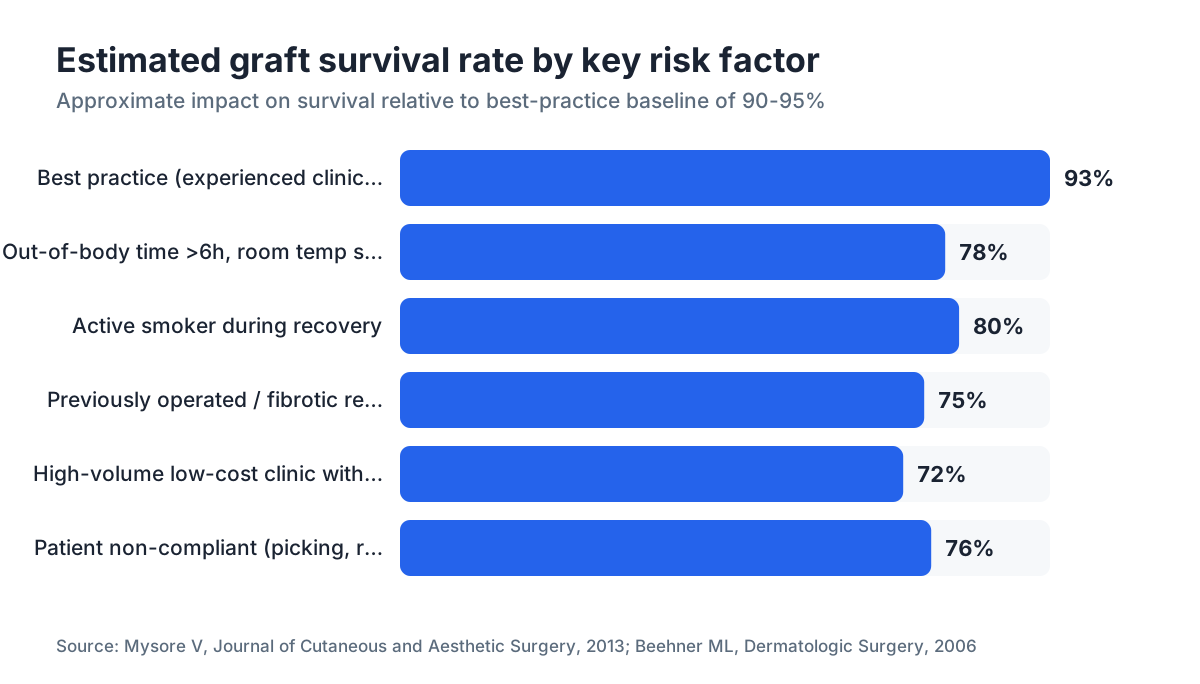
Time out of body. From the moment a follicular unit is harvested to when it goes back in, the clock is running. Grafts kept in saline at room temperature start losing viability after about 2 hours. High-volume clinics aim to keep out-of-body time under 6 hours, and experienced teams use chilled hypothermosol or similar solutions to stretch that window. A 2006 study by Beehner in Dermatologic Surgery found graft survival dropped meaningfully once out-of-body time passed 6 hours at room temperature. [5]
Drying out on the tray. Grafts sitting under surgical lights on dry gauze dehydrate fast. Keeping them moist in a chilled solution through the whole session is routine at good clinics and hit-or-miss at budget ones.
Recipient site density and angle. Pack sites too close (overpacking) and you compress blood vessels, starving grafts of circulation. Experienced surgeons balance density against physiology, generally staying under 40-45 follicular units per cm² in a single session. [6]
Rough handling. Grafts gripped too tightly with forceps, or crushed at the bulb during insertion, are damaged at the root. You cannot see it. It shows up as poor growth 3-6 months later.
This is why price-shopping to the bottom of the market is genuinely risky. You are buying more than grafts. You are buying the speed of the team, the quality of the holding solution, and the precision of every person who touches those grafts across a 6-8 hour session. If you are researching what a hair transplant involves before committing, the technique differences are the first thing to nail down.
What is shock loss and is it the same as graft death?
No, and this trips up a lot of patients.
Shock loss (post-transplant effluvium) is when existing, non-transplanted hairs in and around the recipient or donor area shed in the weeks after surgery. The trauma of surgery, plus disrupted local circulation, pushes these hairs into a telogen (resting) phase early. They fall out 2-8 weeks post-op. Most grow back within 3-6 months because the follicle itself is intact. [7]
Graft death is a different thing. The transplanted follicular unit has died and will never make a hair. No regrowth. The site may heal over invisibly or leave a tiny pit, but there is no recovery.
The distinction matters because people who see heavy shedding at 4-6 weeks sometimes panic and assume the grafts failed. Usually it is shock loss. The transplanted hairs also shed at this stage (normal, the shaft drops but the bulb stays alive), then regrow from about month 3-4. [7]
Shock loss to existing hair is worth knowing about before surgery, especially if you already have thin density. Some surgeons prescribe minoxidil for men or keep patients on existing finasteride through the post-op period to blunt shock loss, though the evidence for this is mostly expert opinion rather than large randomized trials. For the broader shedding mechanism, telogen effluvium covers the physiology well.
How long do grafts take to be fully secure?
Here is the honest timeline, with what is actually happening biologically at each stage.
| Timeframe | Graft status | What this means for you |
|---|---|---|
| 0-72 hours | Plasma imbibition only, no blood supply | Extremely fragile, any trauma = likely graft loss |
| Days 3-5 | Early inosculation begins | Slightly more stable, still no rubbing, gentle wash OK |
| Days 7-10 | Rough capillary network forming | Grafts resist moderate contact, scabs starting to fall naturally |
| Days 10-14 | Vascular integration mostly complete | Reasonably secure, most activity restrictions can lift |
| Weeks 3-6 | Grafts shed their shafts (normal cycle) | Looks like loss but is not |
| Months 3-4 | New hair shaft growth begins | First real visual progress |
| Months 9-12 | Full result visible | Final density assessment |
Two different questions, two true answers: grafts are physically secure at about 14 days, and the full result lands closer to 12 months. Do not confuse the two. [1][6]
Does blood supply to the scalp affect graft survival?
Yes, substantially. The scalp is one of the most vascular tissues in the body normally, which is why scalp cuts bleed so dramatically. Several things compromise that vascularity in ways that hurt graft outcomes.
Previous surgeries. Patients on their second or third transplant have scar tissue in the recipient zone. Scar tissue has fewer capillaries than healthy dermis. Grafts placed into a previously operated area face a harder environment for inosculation, and experienced surgeons plan for this by adjusting technique and density expectations.
Diabetes. Poorly controlled blood glucose causes microvascular disease, which impairs the tiny vessels feeding graft sites. The FDA prescribing information for finasteride notes that underlying health conditions can affect treatment outcomes, though graft-specific guidance comes from surgical literature rather than drug labels. [8]
Scalp fibrosis from traction or scarring alopecia. This one is tougher. Grafts placed into fibrotic scalp from conditions like central centrifugal cicatricial alopecia (CCCA) have much worse survival, and many surgeons decline to operate on actively scarring cases. [9]
Can infections kill transplanted grafts?
Yes, though true post-transplant infections are less common than patients fear. Folliculitis (infected follicles) affects roughly 1-2% of transplant patients in the weeks after surgery, showing up as red, pimple-like bumps in the recipient or donor zone. Most clear with topical antiseptics or a short course of antibiotics. [10]
A more serious bacterial infection spreading through graft sites can kill follicles by causing local tissue necrosis, or by an inflammatory response overwhelming the fragile new vessels. This is rare in clinics that use proper sterile technique, but it happens, more often where corners get cut on sterilization or where patients touch their scalp with unwashed hands in the first week.
Signs worth taking seriously: expanding redness beyond the graft sites, warmth, pus, fever, or pain that increases after day 3 (normal post-op pain should fade, not climb). Any of these means same-day contact with your surgeon, not wait-and-see.
What role does finasteride or minoxidil play in protecting grafts?
Transplanted grafts are generally considered resistant to DHT-driven miniaturization because they carry the genetic programming of the donor area (usually the back and sides), which is not susceptible to androgenetic alopecia the same way. [6] That resistance is the whole premise of transplantation.
Here is the catch: the existing, non-transplanted hairs in and around the recipient area are still vulnerable to DHT. Without ongoing medical treatment, a man who gets a transplant in his 30s can lose the native hairs around those grafts over the following decade, leaving the grafted islands ringed by bare skin. That looks unnatural and it upsets people who did not see it coming.
Finasteride and minoxidil together after a transplant do not directly improve graft survival, but they protect the overall result by holding onto native density. Some surgeons start or continue finasteride around surgery to reduce shock loss severity, though the evidence for that specific use is largely clinical observation. DHT blockers are the medical foundation that keeps a transplant looking good 5-10 years out.
If you want to map your current pattern before weighing surgery or medication, MyHairline's free AI scan (/scan) reads your Norwood stage from photos, which is useful context before any consultation.
For patients already on minoxidil for men, most surgeons advise stopping topical minoxidil 1-2 weeks pre-op (the vasodilating effect can increase bleeding during surgery) and restarting around 2 weeks post-op once grafts are secure.
How do you know if your grafts have actually died vs. just shedding?
This is genuinely hard to call before month 9-12, which is maddening.
By month 3-4 you should start seeing fine new hairs emerging from the graft sites. If a site shows no growth at all by month 6, it is more likely that graft died than that it shed and is coming back slowly. But some grafts, especially those in scar tissue or in slower healers, do not push visible hair until month 10-12.
A trichoscopy (dermoscopy of the scalp) done by a dermatologist can sometimes show whether a follicle is present but dormant versus gone. A scalp biopsy answers it definitively but is rarely done for this.
The practical answer: book follow-ups at 3-4 months and again at 9-12 months. Photograph the same areas under the same lighting each time. Compare systematically. Your surgeon should be doing this with you. If they are not, ask.
Understanding what causes hair loss in the first place helps here, because sometimes what looks like graft failure is really accelerating native hair loss in the surrounding area, a different problem needing a different fix.
What graft survival rate should you expect from a good clinic?
Reputable clinics report graft survival rates of 90-95% in published data, meaning 90-95 of every 100 transplanted units eventually produce hair. Some elite clinics claim higher, but independently verified numbers are scarce because outcome reporting is not standardized across the industry. [6][11]
A 2013 review by Mysore in the Journal of Cutaneous and Aesthetic Surgery noted that graft survival is affected by out-of-body time, storage medium, and implantation technique, and that rates below 80% should prompt a hard look at clinic protocols. [11]
Here is a simplified breakdown of what pushes you toward the high or low end:
| Factor | Toward 95% survival | Toward 80% or below |
|---|---|---|
| Out-of-body time | Under 4 hours, chilled storage | Over 6 hours, room temp saline |
| Clinic team | Experienced, small sessions | High-volume, rushed, technician-heavy |
| Patient aftercare | Strict no-touch protocol | Active, noncompliant patient |
| Patient health | Non-smoker, good circulation | Smoker, diabetic, compromised vasculature |
| Recipient scalp | Virgin scalp, no prior surgery | Previously operated or fibrotic area |
This is why a low-cost clinic offering a 2,000-graft session in 3 hours run by technicians should raise hard questions. The math does not favor graft quality at that pace.
What should you actually do in the first two weeks to protect grafts?
Follow your surgeon's instructions first. Everything below is general guidance, not a replacement for your specific post-op protocol.
Sleep elevated, 45 degrees or more, for the first 5-7 nights. This cuts forehead swelling and keeps your scalp off the pillow. A travel pillow around the neck holds position without pressing the recipient area.
Do not touch the recipient area with your fingers for at least 5 days. During washing, use the prescribed spray bottle technique. Pat dry with a soft towel, never rub.
Let scabs fall on their own. Saline soaks after day 5-7 soften crusting so it detaches naturally during washing. Do not pick.
Stay out of direct sun. A loose hat protects the donor and surrounding scalp but should not press on graft sites in the first 10 days.
Stop smoking before surgery and stay off it for at least 4 weeks. This is one of the highest-leverage things you can do for your outcome.
Skip the gym for 14 days. It is genuinely not worth the risk on a $5,000-$15,000 procedure.
Cut salt and alcohol for the first week. Both drive swelling.
If you feel a graft pop out (it happens, usually in the first 2-3 days), do not panic and do not push it back in. Drop it in saline if you have it, or wrap it in a damp cloth, and call your clinic right away. Some surgeons can reimplant within hours.
Still in the research phase and trying to work out whether a receding hairline is even at a stage where surgery makes sense? The receding hairline guide explains Norwood staging in plain terms, which frames a realistic conversation with surgeons.
Sources
- Khidhir KG et al., 'Plasma imbibition and vascularization of hair grafts', Dermatologic Surgery 2015 (via PubMed)
- International Society of Hair Restoration Surgery (ISHRS), Post-Operative Instructions Guidelines
- American Academy of Dermatology, Hair loss treatment and recovery guidance
- Sorensen LT, 'Wound healing and infection in surgery: the pathophysiological impact of smoking, smoking cessation, and nicotine replacement therapy', Annals of Surgery 2012
- Beehner ML, 'Effect of graft storage time and temperature on hair transplant results', Dermatologic Surgery 2006 (via PubMed)
- Bernstein RM et al., 'The art of repair in surgical hair restoration', Dermatologic Surgery 2002 (via PubMed)
- Headington JT, 'Telogen effluvium', Archives of Dermatology 1993
- FDA, Prescribing Information for Finasteride (Propecia) 1mg
- Callender VD et al., 'Central centrifugal cicatricial alopecia', Dermatologic Clinics 2014
- Unger WP, Shapiro R (eds), Hair Transplantation 5th edition, Informa Healthcare 2011
- Mysore V, 'Hair transplantation: standardizing the terminology and grading systems', Journal of Cutaneous and Aesthetic Surgery 2013