
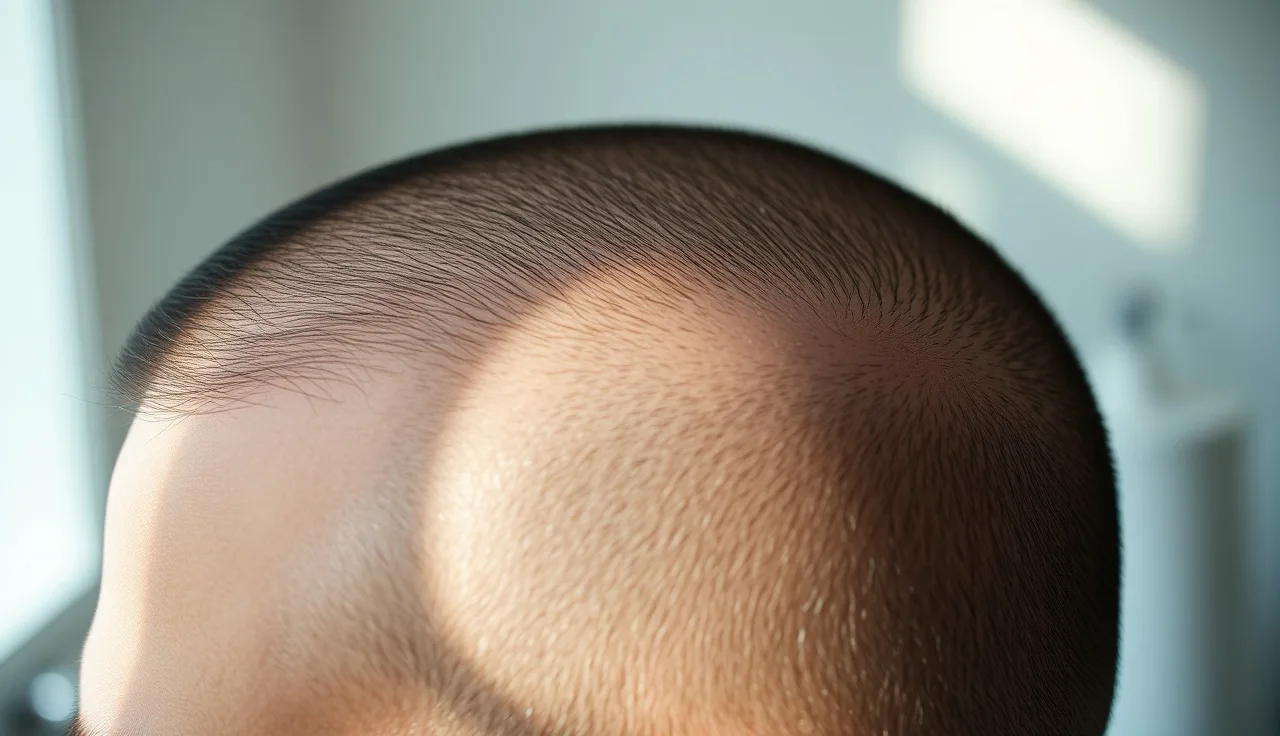
TL;DR: Most patients see noticeable scalp redness for 1 to 4 weeks after a hair transplant. FUE recipients usually clear faster (1 to 2 weeks) than FUT patients (2 to 4 weeks). Persistent redness beyond 3 months is uncommon and warrants a follow-up. Skin tone, sun exposure, and post-op care all affect how quickly color returns to normal.
What actually causes redness after a hair transplant?
The redness is a wound response. Every time a surgeon punches a graft site or makes a recipient incision, the body reads it as injury and sends blood flow to the area. Capillaries dilate, inflammatory mediators flood in, and the skin turns pink or red. That's not a complication. That's normal healing.
Two things happen simultaneously: the donor area (where follicles were harvested) heals, and the recipient area (where grafts were placed) heals. Both go red. The recipient zone tends to stay red longer because it has more total surface area disturbed, especially if the transplant covered the entire top of the scalp.
The depth of the incisions matters too. FUE (follicular unit extraction) punches are small, roughly 0.8 to 1.0 mm in diameter [1], and each heals independently. FUT (follicular unit transplantation) involves cutting a strip of scalp and suturing it closed, which is a single larger wound that takes longer to close completely. That structural difference is the main reason FUE recipients tend to look less red for a shorter period.
Your skin type matters more than most surgeons tell you upfront. Fair skin shows capillary dilation more obviously than darker skin tones. Someone with Fitzpatrick Type I or II skin may appear significantly redder than someone with Type IV or V, even if the biological healing is identical.
How long does redness last after FUE vs FUT?
The timeline differs enough between methods that it's worth treating them separately.
| Method | Typical redness duration | When most patients look "normal" |
|---|---|---|
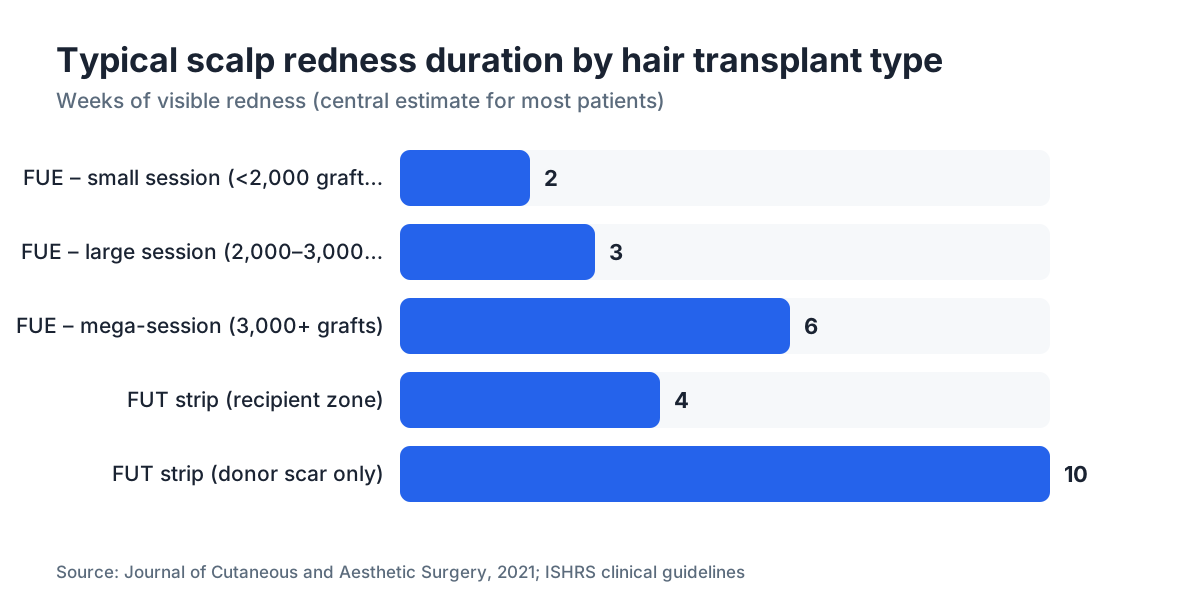
| FUE | 7 to 14 days (mild pink can persist to 4 weeks) | 2 to 4 weeks |
| FUT (strip) | 2 to 4 weeks at donor scar; recipient similar to FUE | 3 to 6 weeks |
| Combined / mega-session | 3 to 6 weeks | Up to 3 months |
A 2021 review in the Journal of Cutaneous and Aesthetic Surgery noted that recipient site erythema following FUE typically resolves within two to four weeks in most patients, though individual variation is wide [2]. Surgeons report the same pattern clinically.
For FUT, the linear donor scar along the back of the scalp can stay pink for two to three months before fading to its final color. That scar is a separate issue from the scalp-wide redness, which behaves more like FUE.
Mega-sessions, meaning 3,000 or more grafts placed in a single day, disturb more tissue. The cumulative trauma delays resolution, and some patients in that category report pinkness lasting close to three months across the transplanted zone. Nobody has great controlled trial data on this specific threshold. The figure comes from retrospective surgeon reports and patient series rather than randomized studies.
What does normal post-transplant redness look like week by week?
Knowing what to expect at each checkpoint reduces the panic of googling your scalp at day ten.
Days 1 to 3: The recipient area looks red, slightly swollen, and dotted with tiny scabs around each graft. The donor area is pink or red depending on method. Swelling can migrate down toward the forehead. This is peak inflammation.
Days 4 to 7: Scabs start to firm up. Redness begins softening at the edges. Some patients still look quite red in the central transplanted zone. Swelling usually resolves by day five [3].
Days 8 to 14: Most of the scabs have shed (or been gently washed away per your surgeon's protocol). The skin underneath is often pink rather than bright red. For FUE patients with a lighter session, this is when most people feel comfortable in public without a hat.
Weeks 3 to 4: Color is approaching baseline for most FUE patients. Some pink tinge can remain, especially in the hairline zone where incision density was highest.
Weeks 6 to 12: The FUT scar continues fading. Patients who had larger sessions may still notice a mild rosy hue on the scalp under direct light. After three months, persistent visible redness that hasn't been improving is worth a conversation with your surgeon.
One thing that trips people up: the shed grafts at around weeks two to three can make the scalp look inflamed again temporarily. That's actually telogen effluvium, the shock-loss phase where transplanted hairs fall out before regrowing. It's not an infection or a setback. It's expected.
Does redness mean my transplant is failing or infected?
Redness alone does not mean failure. Poor graft survival doesn't show up as redness. You'd know through hair not regrowing at months four through twelve, not from skin color.
The signs that redness is a problem, rather than normal healing, include:
- Increasing redness after the first week rather than decreasing
- Warmth and swelling that spreads beyond the surgical zone
- Pus, crusting that smells, or discharge from graft sites
- Fever above 38°C (100.4°F) [4]
- Pain that gets worse rather than better after day three
Infection after hair transplant surgery is uncommon. A 2019 review published in Dermatologic Surgery estimated post-operative infection rates at under 1% when standard sterile technique is followed [5]. But "uncommon" isn't "impossible", and the signs above mean call your surgeon today, not next week.
Another false alarm: folliculitis, or small pimples around emerging hair shafts at months three to five. This is extremely common, mildly itchy, and resolves on its own or with a brief topical antibiotic. It can make the scalp look red again after you thought you were done. It's annoying but benign.
What makes redness worse or lasts longer?
Several things extend the red phase well beyond the averages.
Sun exposure is probably the biggest controllable factor. UV light on healing skin triggers additional inflammation and can cause post-inflammatory hyperpigmentation in darker skin tones. Most surgeons say avoid direct sun on the transplanted area for at least four weeks [3]. A loose hat after the first few days is appropriate. Anything tight enough to rub grafts is not.
Alcohol causes peripheral vasodilation. Drinking in the first week keeps capillaries dilated and redness more visible. The standard advice is no alcohol for five to seven days post-op.
Strenuous exercise raises blood pressure and heart rate, which increases blood flow to the scalp and can extend redness and swelling. Most surgeons recommend avoiding heavy lifting and cardio for at least two weeks.
Minoxidil reintroduction too soon can irritate a healing scalp. If you were using minoxidil for men before surgery, your surgeon will tell you when to restart, usually after two to four weeks. The propylene glycol in topical minoxidil formulas can cause contact dermatitis even in non-surgical scalps. On a healing one, the risk of irritation is higher.
Skin picking or scratching is tempting because the scabs itch. Dislodging grafts in the first ten days or reopening healed tissue keeps the inflammatory cycle running. Don't touch.
Some medications and supplements affect healing time. Blood thinners, NSAIDs like ibuprofen, fish oil, and vitamin E all increase bleeding tendency. Most surgeons ask you to stop them two weeks before surgery. Continuing them after can prolong visible redness.
How can you reduce redness faster after a hair transplant?
You can't rush biology by much, but you can avoid extending it.
The basics: sleep with your head elevated at about 45 degrees for the first three to five days. This reduces fluid pooling and swelling faster, which indirectly reduces how long the skin looks angry. Many surgeons provide a travel pillow or neck pillow specifically for this.
Gentle saline spray on the recipient zone, typically recommended every few hours for the first three to five days, keeps grafts from drying out and crusting harshly. Softer scabs mean an easier shed and less skin disruption.
Cold compresses on the forehead (not the transplanted scalp itself) can reduce swelling migration. Cold directly on graft sites in the first 72 hours is generally discouraged because it can affect graft temperature.
Low-level laser therapy (LLLT) is marketed as a healing accelerator, and some data supports reduced inflammation with photobiomodulation [6]. The evidence is genuinely mixed. A 2014 randomized trial in Lasers in Surgery and Medicine found faster wound healing with LLLT versus controls, but the transplant-specific literature is thin. If your clinic offers it, it's unlikely to hurt. I wouldn't pay extra for it at an outside vendor based on the current evidence.
Some clinics apply platelet-rich plasma (PRP) at the end of the procedure, claiming it speeds healing and reduces redness. The data on PRP for healing acceleration is modest and inconsistent [7]. It may help graft survival marginally. It's not proven to meaningfully shorten the red phase.
Camouflage options: tinted sunscreens designed for the scalp exist and are safe to use after scabs have fully shed, typically after two weeks. They don't fix anything, but they make the pink phase socially manageable.
When should you see a doctor about redness that won't go away?
Three months is the practical threshold most hair restoration surgeons use. If your scalp still looks red at the three-month mark, specifically redder than baseline and more than the mild flush you might see on a warm day, you should go back in.
Conditions worth ruling out at that point:
Persistent folliculitis: Chronic low-grade infection around hair follicles that needs targeted antibiotic treatment.
Contact dermatitis: A reaction to shampoo, topical medication, or even the adhesive from postoperative dressings. This is treatable and more common than people expect.
Seborrheic dermatitis: Sometimes flares after the stress of surgery. It presents as redness plus scaling, often itchy. A mild steroid shampoo or antifungal typically clears it.
Arteriovenous malformation or vascular anomaly: Extremely rare, but persistent, localized redness that doesn't match the pattern of healing has occasionally turned out to be a vascular issue unrelated to the transplant itself.
For redness that genuinely persists beyond six months with no improvement, a dermatologist rather than just the hair transplant clinic may be the right next step. A board-certified dermatologist can do a skin biopsy if needed and rule out inflammatory conditions.
If you're unsure whether your redness looks normal for your stage of recovery, a photo-based assessment can help. MyHairline's free AI scan at /scan lets you upload scalp photos and get an initial read on what the skin looks like, which can at least tell you whether a surgeon visit is urgent.
Does skin tone affect how long redness is visible?
Yes. Significantly.
People with Fitzpatrick Type I or II skin (fair, burns easily, little tanning) tend to show redness for the full two to four weeks and sometimes longer. The contrast between pink healing skin and a pale baseline is just more visible.
People with Fitzpatrick Type IV through VI skin often don't show the same obvious red flush. The risk there is that redness-as-warning-sign is also harder to spot. If you're in this group, you need to pay more attention to touch (warmth, tenderness) and systemic signs (fever) rather than color alone when monitoring for infection.
Darker skin tones carry a higher risk of post-inflammatory hyperpigmentation, where the healed skin turns darker than the surrounding scalp. This is different from redness and usually fades over months. It's worth discussing with your surgeon before the procedure if this is a concern, particularly around the hairline where contrast is most visible.
Some surgeons adjust their technique, including shallower recipient site angles and lower graft density per session, for patients with higher Fitzpatrick skin types to reduce the duration and severity of post-op inflammatory changes. Ask specifically about this before booking.
Can medications like finasteride or minoxidil affect healing redness?
Most patients continue or start finasteride around the time of their transplant to protect existing hair from further loss. Finasteride doesn't appear to affect wound healing or post-op redness based on available data. It works on DHT levels systemically, not on local tissue inflammation [8]. If you're using a DHT blocker before surgery, there's no strong reason to stop it for healing purposes, though confirm with your surgeon.
Minoxidil is a different story at the local level. Topical minoxidil can irritate freshly healed skin, and some surgeons prefer you to pause it for two to four weeks post-op before reintroducing it. Oral minoxidil, which is increasingly used as an alternative, doesn't have the same local irritation concern since it acts systemically. To compare the two, finasteride and minoxidil together is a well-studied combination for post-transplant hair retention.
Oral minoxidil at low doses (1.25 to 2.5 mg in men) has a known side effect profile that includes fluid retention and, occasionally, facial flushing [9]. If you start oral minoxidil around the time of surgery, it theoretically could contribute to a more flushed appearance on the face and scalp, though this hasn't been studied in the transplant context specifically. Keep your surgeon informed of everything you're taking.
What are the realistic redness timelines for different patient types?
Putting together everything above, here's an honest picture by patient profile:
Young patient (20s, 30s), fair skin, small FUE session (1,500 to 2,000 grafts): Bright red for 5 to 10 days. Mild pink for another week or two. Looks basically normal to casual observers by week three. This is the best-case scenario.
Middle-aged patient (40s, 50s), medium skin, FUE mega-session (3,000+ grafts): Visible redness for 2 to 4 weeks. Some lingering pink under certain lighting for 6 to 8 weeks. Comfortable in public by week four.
Patient with fair skin, FUT strip procedure: Recipient zone clears similarly to FUE at 2 to 4 weeks. Donor scar at the back of the head stays pink for 8 to 12 weeks before fading toward white or skin-tone. Final scar appearance at 12 to 18 months.
Patient with darker skin (Fitzpatrick IV, VI), FUE: Less visible redness throughout, but higher risk of hyperpigmentation at the hairline. The "red phase" is shorter in appearance but requires the same healing time internally.
These are reasonable central estimates, not guarantees. The range in published case series is wide. A 2023 systematic review on FUE outcomes noted that healing timelines varied by more than 50% between patients even in controlled clinical settings, driven largely by individual biology rather than technique [10].
How do you plan your schedule around post-transplant redness?
This is a real practical question and most pre-op consultations underplay it.
For work: If your job is fully remote and you don't care about camera appearance, you could technically return within a week. If you work in person or frequently on video calls, two weeks is a more realistic minimum for FUE. After FUT, four weeks is sensible to look like yourself.
For social events: Most people don't want to be at a wedding or important event within six weeks of a large session. The pinkness, even when mild, reads differently under event lighting. If you have a specific date in mind, work backwards. Your surgeon should be part of that conversation before you book.
For travel: Many transplant clinics, especially international ones where people travel for cost reasons, want you to stay local for at least five to seven days post-op. Flying too soon increases dehydration, which affects healing, and removes you from immediate access to your surgeon if something looks wrong.
For fitness: Light walking after day three is usually fine. Running, weight training, contact sports: expect four to six weeks off from anything that significantly raises your heart rate or risks contact to the head.
If you're trying to understand what stage your existing hair loss is at before even booking a consultation, knowing your receding hairline pattern helps set realistic expectations for graft count, coverage area, and therefore healing time.
Sources
- International Society of Hair Restoration Surgery (ISHRS), FUE technique description
- Journal of Cutaneous and Aesthetic Surgery, FUE outcomes review 2021
- American Academy of Dermatology, Hair transplant surgery patient information
- U.S. National Library of Medicine, MedlinePlus, wound infection signs
- Dermatologic Surgery, review of hair transplant complications 2019
- Lasers in Surgery and Medicine, randomized trial of low-level laser therapy for wound healing 2014
- Journal of the American Academy of Dermatology, PRP for androgenetic alopecia systematic review
- FDA drug label, finasteride (Propecia) mechanism of action
- FDA drug label, minoxidil tablets (systemic) side effect profile
- Journal of Plastic, Reconstructive and Aesthetic Surgery, systematic review of FUE healing outcomes 2023