TL;DR: Finasteride blocks the enzyme that converts testosterone to DHT, so testosterone builds up and some of it converts to estrogen instead. Studies show estrogen (estradiol) rises roughly 10-15% on average in men taking 1 mg daily. For most men this stays within the normal male range, but in a minority it triggers side effects like breast tenderness or gynecomastia.
What does finasteride actually do to your hormones?
Finasteride is a 5-alpha reductase inhibitor. It blocks the enzyme 5-alpha reductase, which converts testosterone into dihydrotestosterone (DHT) [1]. DHT is the androgen mainly responsible for male-pattern hair loss and prostate enlargement.
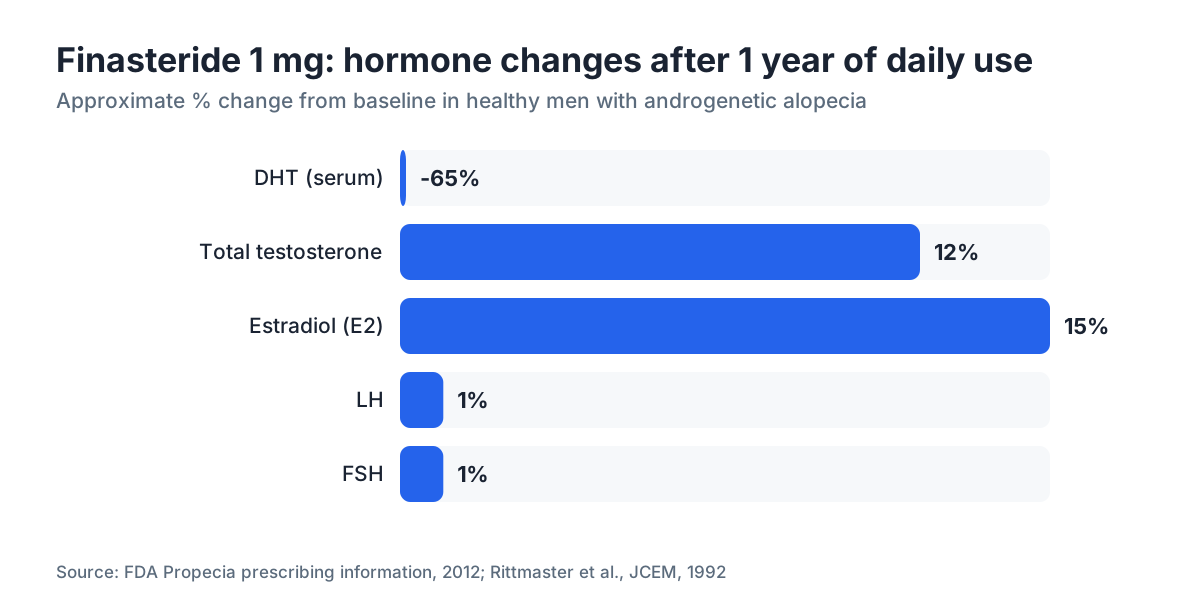
Block that conversion and DHT levels fall sharply. In men taking 1 mg finasteride daily (the dose sold as Propecia for hair loss), DHT drops by roughly 60-70% [1]. That is the mechanism behind the drug's effect on androgenetic alopecia.
Testosterone does not disappear, though. It has to go somewhere. With the DHT pathway partially blocked, serum testosterone rises, and some of that extra testosterone follows a different metabolic route: aromatization. The aromatase enzyme converts testosterone into estradiol, the main form of estrogen. So when finasteride raises testosterone, it indirectly raises estrogen too [2].
The key word is indirectly. Finasteride does not touch aromatase. It does not directly stimulate estrogen production. The estrogen rise is a downstream consequence of the testosterone increase, not a direct drug effect.
By how much does estrogen actually rise on finasteride?
The numbers are smaller than most men fear, but real enough to matter in some cases. A pharmacokinetic study in the Journal of Clinical Endocrinology and Metabolism found 1 mg finasteride daily raised serum estradiol by about 15% from baseline in healthy men [2]. A separate analysis of men on 5 mg finasteride (the prostate dose, sold as Proscar) showed similar proportional increases [3].
Put that in context. Normal serum estradiol in adult men runs roughly 10-40 pg/mL. A 15% rise from, say, 25 pg/mL takes you to about 29 pg/mL. That is still comfortably inside the male reference range. Estrogen-related side effects in men usually appear when estradiol climbs above 40-50 pg/mL, though individual sensitivity varies a lot.
| Hormone | Effect of 1 mg finasteride | Approximate magnitude |
|---|---|---|
| DHT (serum) | Decreases | ~60-70% drop [1] |
| Total testosterone | Increases | ~10-15% rise [2] |
| Estradiol (E2) | Increases | ~10-15% rise [2] |
| LH / FSH | Minimal change | Not clinically significant [3] |
The testosterone-to-estrogen ratio also shifts slightly toward estrogen, and that ratio matters as much as the raw numbers. Some researchers argue this shift, even within the normal range, may explain why certain men report sexual side effects that do not track cleanly with their absolute estradiol number [4].
Can finasteride cause gynecomastia?
Yes, it can. Gynecomastia (enlargement of breast gland tissue in men) is a listed side effect on the FDA-approved prescribing information for both Propecia (1 mg) and Proscar (5 mg) [1]. The mechanism is exactly what you would expect: a relative increase in estrogen activity compared to androgen activity in breast tissue.
How common is it? The original clinical trials for Propecia reported gynecomastia or breast tenderness in about 0.4% of men at the 1 mg dose [1]. That is fewer than 1 in 200. Observational data suggest rates may run somewhat higher in real-world use, but the signal stays small.
The 5 mg dose used for benign prostatic hyperplasia (BPH) carries a higher reported rate, around 0.5-1.4% in controlled trials, which fits with the higher systemic drug exposure [3].
If you notice breast tenderness or visible breast tissue while on finasteride, tell your prescriber right away. Gynecomastia caught early, with the drug stopped promptly, usually resolves on its own. Glandular tissue that has been present for more than a year tends to stick around and may need medical or surgical treatment.
Does the estrogen rise explain finasteride's sexual side effects?
This is the most contested question in finasteride pharmacology, and the honest answer is: partially, probably, but not completely.
The FDA label lists decreased libido, erectile dysfunction, and reduced ejaculate volume as side effects occurring in roughly 1.4-3.8% of men in controlled trials at the 1 mg dose [1]. Post-marketing reports, including cases described under the term "post-finasteride syndrome," describe persistent sexual dysfunction in a subset of men even after they stop the drug [4].
Elevated estrogen can contribute to low libido and erectile difficulty in men, but the picture is more complicated. DHT itself has neuroactive effects, and 5-alpha reductase produces neurosteroids in the brain, not only in the scalp and prostate. Blocking the enzyme reduces these neurosteroids, including allopregnanolone, which modulates GABA receptors [4]. Some researchers argue neurosteroid disruption drives sexual and mood side effects more than estrogen changes do.
So pinning all of finasteride's sexual side effects on estrogen would be an oversimplification. The estrogen shift is one piece of a bigger picture that involves DHT, neurosteroids, and possibly androgen receptor sensitivity.
Who is most at risk for elevated estrogen on finasteride?
Not every man responds the same way. A few factors push the estrogen rise higher.
Body fat is the biggest one. Adipose (fat) tissue is rich in aromatase. Men with higher body fat percentages naturally convert more testosterone to estradiol, and when finasteride raises their baseline testosterone, the aromatization effect gets amplified [2]. A lean man at 12% body fat and an overweight man at 30% body fat can have very different estrogen responses to the same dose.
Age matters too. Aromatase activity tends to climb with age, so older men may see a sharper estrogen rise than younger men on the same drug.
Genetics factor in as well. Variants in the CYP19A1 gene (which encodes aromatase) affect how aggressively any individual converts testosterone to estrogen. Most people are never tested for this before starting finasteride.
If your individual risk worries you, a baseline hormone panel before starting finasteride, and a repeat panel 3-6 months in, gives you real numbers to work with instead of guesswork.
Should you get your estrogen tested while on finasteride?
There is no universal clinical rule requiring estrogen monitoring for men on 1 mg finasteride for hair loss. Major dermatology guidelines, including the American Academy of Dermatology's guidance on androgenetic alopecia, do not mandate routine hormone panels for otherwise healthy men starting the 1 mg dose [5].
Testing is still reasonable and cheap if you have symptoms. Breast tenderness, low libido, mood changes, or water retention are all grounds for drawing an estradiol level. Ask for serum estradiol (E2), ideally a sensitive assay built for male reference ranges rather than the standard assay calibrated for women. The standard assay can underestimate or poorly discriminate low-normal male estradiol values.
If your estradiol comes back elevated on finasteride, your options with your doctor include reducing the dose (some men do fine on 0.5 mg every other day), timing the dose differently, working on body composition, or in some cases adding a low-dose aromatase inhibitor. That last one is off-label and carries its own risks.
If you are trying to work out whether your hair loss pattern even warrants finasteride, a tool like MyHairline's free AI scan gives you a baseline read on your hairline before you start any treatment.
Does finasteride affect estrogen differently than a DHT blocker like dutasteride?
Dutasteride blocks both type I and type II 5-alpha reductase (finasteride only blocks type II), so it suppresses DHT more completely, by around 90-95% versus 60-70% for finasteride [6]. More DHT suppression means more testosterone piles up, which means a larger substrate for aromatization.
In practice, dutasteride does raise estradiol somewhat more than finasteride, though both drugs' estrogen effects stay modest in most men. A study comparing the two found dutasteride produced greater serum testosterone elevation and a correspondingly larger estradiol increase [6].
For men researching DHT blockers more broadly, this is worth knowing: the more completely you block DHT conversion, the more testosterone is left to aromatize. It is a consistent pattern across this drug class.
Saw palmetto, the supplement marketed as a natural DHT blocker, has weaker and less consistent evidence for 5-alpha reductase inhibition. Its effect on estrogen in men has barely been studied in clinical trials.
Can you manage or reduce the estrogen rise from finasteride?
A few approaches get used in practice, though the evidence for most is thin.
Losing body fat is the single most evidence-backed way to cut aromatization. If you carry excess fat and start finasteride, even modest fat loss (5-10% body weight) can meaningfully reduce how much testosterone converts to estradiol.
Some men and their doctors consider low-dose aromatase inhibitors like anastrozole or exemestane to counter the estrogen rise. This is off-label, and it brings a new set of risks. Estrogen in men is not the villain it gets painted as: it supports bone density, cardiovascular function, and libido when it sits in the right range. Crash it too low and you get joint pain, low libido, and mood problems. The risk of overcorrection is real.
Certain foods get mentioned for modulating estrogen, including those high in phytoestrogens (like soy) or cruciferous vegetables. The evidence that dietary tweaks meaningfully move serum estradiol in men on finasteride is essentially nonexistent. Do not organize your diet around it.
The most practical strategy: start with baseline labs, retest at 3-6 months, and decide based on your actual numbers rather than fear of what might be happening.
What does the FDA label actually say about finasteride and hormones?
The FDA-approved prescribing information for Propecia (finasteride 1 mg) states the drug decreases serum DHT by approximately 65% and increases serum testosterone by approximately 10% after one year of treatment in men with androgenetic alopecia [1]. The label notes that follicle-stimulating hormone (FSH) and luteinizing hormone (LH) are not significantly changed at the 1 mg dose.
The label also notes, in the adverse reactions section, that gynecomastia and breast tenderness have been reported, and that post-marketing reports include breast enlargement and breast tenderness [1]. It does not quantify the estradiol rise in the main prescribing information, which is part of why men are surprised to learn estrogen increases at all.
For Proscar (5 mg finasteride), the FDA label gives more detail on hormonal changes because the drug was studied more heavily in BPH populations, but the direction of the effects is the same [3].
The FDA also runs a MedWatch database of post-marketing adverse event reports. Gynecomastia reports for finasteride are documented there, though spontaneous reports cannot establish causation or precise incidence rates [8].
Is the estrogen rise from finasteride dangerous long-term?
For most men, no. The estrogen rise at 1 mg finasteride stays within the normal male reference range, and the clinical trial data show no evidence that modest estradiol elevations in men cause cardiovascular harm, cancer risk, or other serious long-term outcomes at these levels [1][5].
The worry that elevated estrogen raises prostate cancer risk in men has not held up in finasteride trial data. The Prostate Cancer Prevention Trial, which studied 5 mg finasteride over seven years, found a 24.8% reduction in prostate cancer incidence in the finasteride group versus placebo, though there was a noted increase in high-grade tumors whose clinical significance has been debated [7].
Men with pre-existing gynecomastia, a history of hormone-sensitive conditions, or those on other medications that affect sex hormones should talk through finasteride carefully with a doctor before starting.
The better-documented long-term concern for some men is persistent sexual side effects after stopping finasteride, which seems to involve neurosteroid pathways more than estrogen itself. This is still an active research area [4][9].
If you are weighing finasteride against other options like minoxidil for men, or looking at finasteride and minoxidil in combination, realistic expectations about both benefits and side effects are the starting point.
How long does it take for hormone levels to normalize after stopping finasteride?
Finasteride has a half-life of roughly 5-6 hours at the 1 mg dose, but its effect on DHT lasts longer because the drug inhibits 5-alpha reductase for some time after a single dose [1]. In clinical studies, DHT returns to baseline within about 14 days of stopping.
Estradiol, which rose as a consequence of higher testosterone, normalizes on the same rough timeline as testosterone comes back down over a few weeks.
For the minority of men who develop gynecomastia, the breast gland tissue does not always regress when the drug stops, especially if it has been present for more than six to twelve months. Glandular tissue is more stubborn than fatty tissue. Catch it early and stop quickly and spontaneous resolution is more likely.
Hair loss, unfortunately, returns after stopping. Most of the hair kept or regrown while on the drug is lost within 9-12 months of stopping [1]. Factor that into your long-term planning. It is one reason some men look at whether a hair transplant makes sense alongside or instead of ongoing medical therapy.
Does finasteride affect women's estrogen? (and why women should avoid it)
This comes up because finasteride is occasionally studied and used off-label in postmenopausal women with androgenetic alopecia. In women, the hormonal picture is different.
Postmenopausal women have very low estrogen to begin with and relatively low androgen levels. The testosterone-to-estradiol conversion that matters so much in men is less relevant here, because women's testosterone baseline is much lower.
In premenopausal women, finasteride is contraindicated, and this is explicit in the FDA label [1]. The drug causes abnormalities in male fetuses (feminization of external genitalia) because DHT is required for normal male fetal development. The label states: "Finasteride is contraindicated for use in women when they are or may potentially be pregnant." Crushed or broken tablets should not be handled by pregnant women, because the drug absorbs through skin.
For women considering finasteride off-label for hair loss, the estrogen question matters less than contraception reliability and liver metabolism. Any woman considering it should have this conversation directly with a dermatologist or endocrinologist.
Sources
- FDA, Propecia (finasteride 1 mg) full prescribing information (DailyMed / FDA)
- Rittmaster RS et al., Journal of Clinical Endocrinology and Metabolism, 1992
- FDA, Proscar (finasteride 5 mg) full prescribing information (DailyMed / FDA)
- Melcangi RC et al., Journal of Steroid Biochemistry and Molecular Biology, 2017
- American Academy of Dermatology, androgenetic alopecia clinical guidance
- Clark RV et al., Journal of Clinical Endocrinology and Metabolism, 2004
- Thompson IM et al., New England Journal of Medicine, 2003 (Prostate Cancer Prevention Trial)
- FDA MedWatch, adverse event reporting program
- Traish AM et al., Reviews in Urology, 2011
- National Library of Medicine, MedlinePlus, Finasteride drug information