
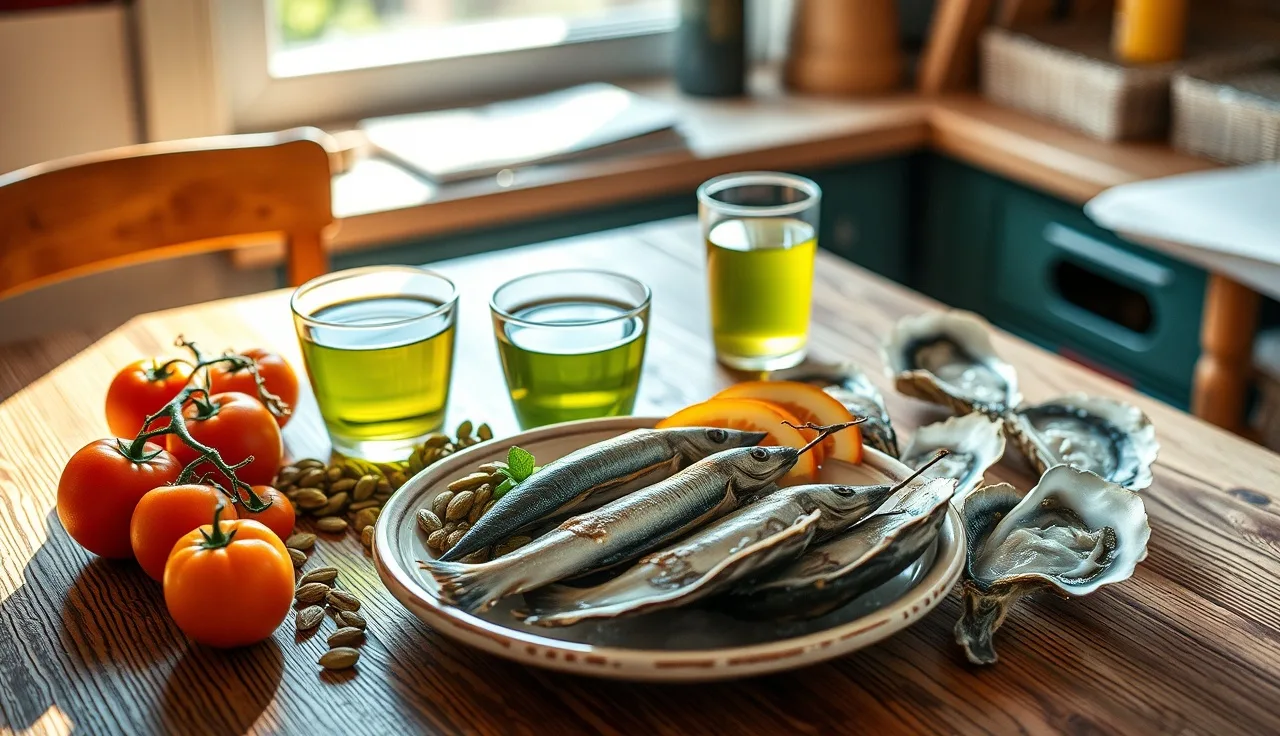
TL;DR: Diet moves DHT levels a little and may slow early male pattern baldness, but it can't stop genetic androgenetic alopecia on its own. Zinc, some plant compounds, and cutting sugar all affect 5-alpha reductase, the enzyme that turns testosterone into DHT. The effect is real. It's also small next to finasteride, which cuts scalp DHT by 60 to 70 percent.
What is DHT and why does it cause hair loss?
DHT is dihydrotestosterone, a hormone your body makes when the enzyme 5-alpha reductase converts testosterone into a stronger androgen. Hair follicles on the top and front of your scalp carry androgen receptors that are genetically sensitive to it. When DHT binds those receptors, it shortens each follicle's growth cycle over years. The hairs get finer and shorter with every cycle until the follicle quits making visible hair. That's androgenetic alopecia, better known as male pattern baldness. [1]
Two forms of the enzyme matter. Type I lives in skin and liver. Type II sits in the hair follicle and drives most scalp loss. Finasteride blocks Type II, which is why it works so well for pattern baldness. [2]
Read this part before anything else in the article: your genetic sensitivity to DHT is fixed. Two men can have identical DHT levels and one goes bald while the other keeps a full head. Diet changes DHT production and enzyme activity. It does nothing to your receptor sensitivity. So even a real dietary drop in DHT won't cancel out strong genetic androgenetic alopecia. The margin still matters, though, and for some people diet may slow things down.
Can diet actually change DHT levels in your body?
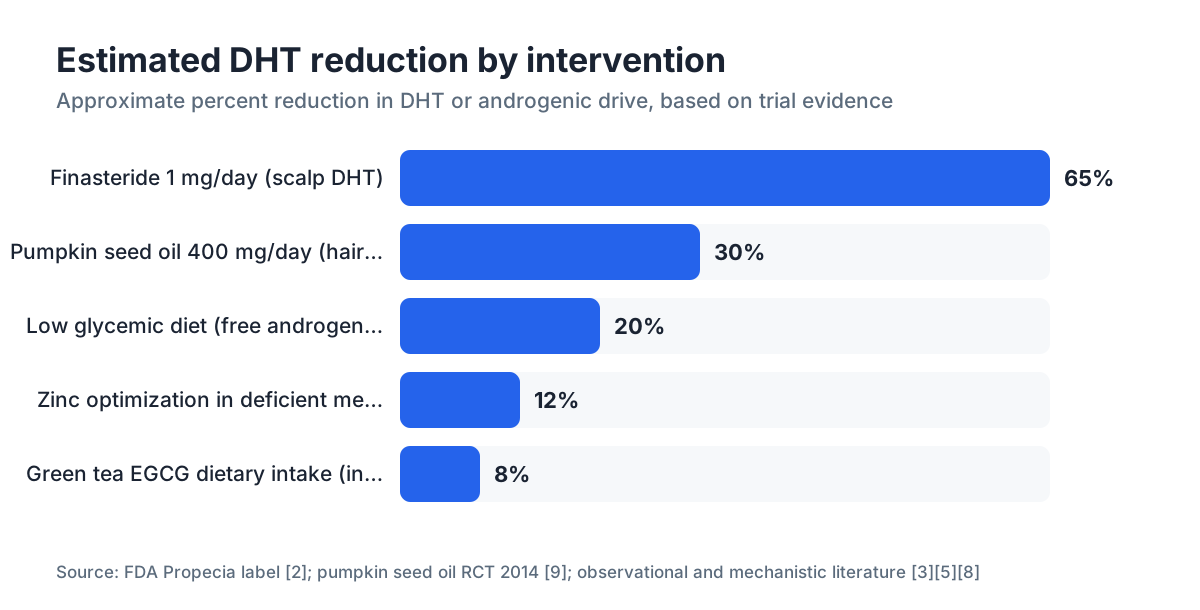
Yes, but the changes are small next to medication. Finasteride reduces scalp DHT by roughly 60 to 70 percent [2]. The best dietary interventions probably move it 10 to 20 percent, maybe less. Small isn't zero, and over years that gap can add up.
The mechanisms are real. Diet touches DHT through a few channels: how much testosterone is around as a precursor, how active 5-alpha reductase is, and how much sex hormone-binding globulin (SHBG) your liver makes, which sets how much testosterone stays free to convert. High insulin, excess visceral fat, and low zinc all push the system toward more DHT. A diet that keeps insulin steady, holds a healthy body composition, and covers your micronutrients pushes the other way. [3]
Body fat deserves a closer look. Fat tissue converts androgens to estrogens through aromatase, which sounds like it should lower DHT. But excess fat also comes with insulin resistance and lower SHBG, which frees up more testosterone for conversion. The net effect of obesity leans androgenic, not the opposite. [4]
Nobody has good long-term randomized data showing diet slows hair loss specifically. The closest we have are mechanistic studies on food compounds inhibiting 5-alpha reductase, observational studies linking diet patterns to hormone levels, and extrapolation from wider androgen research. That's the honest state of the evidence.
Which foods are linked to higher DHT or faster hair loss?
| Food / Pattern | Mechanism | Evidence quality |
|---|---|---|
| High glycemic carbohydrates (white bread, sugary drinks) | Raises insulin, lowers SHBG, increases free testosterone | Moderate (observational) |
| Excessive saturated fat | May raise 5-alpha reductase activity | Low-to-moderate |
| Alcohol (heavy use) | Impairs liver metabolism, lowers SHBG | Moderate |
| Very high animal protein | Increases IGF-1, which amplifies androgenic signaling | Low |
| Selenium in very high doses | Can worsen hair at toxic levels | Low |
High glycemic diets have the strongest indirect case against them. A 2012 study in the journal Nutrition found a low-glycemic diet reduced the free androgen index and improved acne in young men, and acne, like hair loss, is androgen-sensitive. [5] That doesn't prove a hair benefit, but the mechanism holds together.
Alcohol earns its own callout. Heavy drinking cuts the liver's SHBG production, so more free testosterone circulates and more substrate is around for DHT conversion. It also blocks zinc absorption. If you're losing hair and drinking heavily, cutting back helps for reasons well beyond your scalp.
Creatine comes up constantly. A frequently cited 2009 trial found college rugby players taking creatine had roughly a 40 percent jump in their DHT-to-testosterone ratio after three weeks [6], though total testosterone barely moved. Whether that speeds up hair loss is unproven. The full breakdown lives in our article on does creatine cause hair loss.
Which foods may lower DHT or protect hair follicles?
Several food compounds show 5-alpha reductase inhibition in lab work or small human studies. These are real findings, not label copy.
Green tea (EGCG). Epigallocatechin gallate, green tea's main catechin, inhibited 5-alpha reductase in vitro across several studies. One trial found topical EGCG cut hair shedding, though oral evidence in humans is thin. [7]
Lycopene-rich foods (tomatoes, watermelon). Lycopene showed 5-alpha reductase inhibition in prostate research, which makes sense because the prostate and hair follicles share the Type II enzyme. The hair evidence is indirect but the mechanism is credible.
Zinc-rich foods (oysters, pumpkin seeds, beef). Zinc is a cofactor that appears to inhibit 5-alpha reductase, and zinc deficiency shows up in some androgenetic alopecia patients. A 2013 study found serum zinc ran significantly lower in men with alopecia than in controls. [8] That doesn't prove supplements help zinc-sufficient men, but getting enough from food is easy sense.
Pumpkin seed oil. A randomized, double-blind trial published in Evidence-Based Complementary and Alternative Medicine in 2014 found men taking 400 mg of pumpkin seed oil daily for 24 weeks gained 40 percent more hair count, versus 10 percent in the placebo group. The researchers credited cucurbitacin, which has 5-alpha reductase inhibitory properties. [9] It's one small trial that needs replication, but it's real data.
Soy isoflavones. Genistein and other soy isoflavones inhibited 5-alpha reductase in cell studies. Low pattern-baldness rates in high-soy Asian populations are interesting but confounded by genetics.
Omega-3 fatty acids (fatty fish, walnuts, flaxseed). Anti-inflammatory effects may protect follicles indirectly. A 2015 study found omega-3 and omega-6 supplementation with antioxidants reduced hair loss and improved density in women. [10] Data in men is weaker.
Honest summary: none of these stops genetic hair loss the way finasteride does. But eating more of them costs nothing extra and helps your health broadly.
Does a Mediterranean diet help with hair loss?
The Mediterranean diet has more hair evidence behind it than any single food. It leans on vegetables, legumes, olive oil, fish, and moderate wine. A 2018 observational study in the Journal of the American Academy of Dermatology found men who followed it more closely had lower odds of developing or progressing androgenetic alopecia. Eating raw vegetables and fresh herbs more than 3 days a week tracked with a protective effect. [11]
This is observational, so reverse causation and confounding are real. Healthier men may just eat better and carry better hair genetics. But the pattern has solid mechanistic backing: it keeps insulin low, delivers antioxidants, provides omega-3s, and lowers systemic inflammation, all of which likely help follicles.
If you want one framework instead of chasing individual foods, the Mediterranean pattern is the most defensible choice on current evidence. It's also the easiest to keep up long term, which counts because hair is a slow game measured in years.
What it doesn't do: match a DHT blocker medication. If you're already seeing real recession, food won't reverse that.
Does protein intake affect hair loss and DHT?
Protein cuts both ways for hair. Severe deficiency causes hair loss directly, the diffuse shedding called telogen effluvium that shows up during crash diets or starvation. Hair is keratin, a protein, and follicles are among the first things your body deprioritizes when protein runs short. The FDA's daily value for protein is 50 grams on a 2,000-calorie diet, though athletes and larger people need more. [12]
At the far end, very high animal protein raises IGF-1 (insulin-like growth factor 1). IGF-1 amplifies androgenic signaling and has been tied in some research to more aggressive androgenetic alopecia. This is where bodybuilders eating 250-plus grams of protein daily alongside anabolic steroids build a worst-case scenario for hair.
For most people eating normal amounts (0.7 to 1.0 gram per pound of body weight), protein isn't driving DHT up or down in any real way. Get enough to support follicle health without going extreme. Keep iron on your radar too: iron deficiency anemia is a documented cause of diffuse shedding, especially in women, and doctors miss it often.
If you're weighing supplements to fill gaps, our article on hair loss supplements covers what has trial data versus what's marketing.
Does sugar and insulin resistance affect DHT?
This link is more direct than most people expect. Insulin resistance and chronically high insulin suppress SHBG production in the liver. Lower SHBG means more free testosterone. More free testosterone means more substrate for 5-alpha reductase to convert into DHT. The whole chain is well established in the endocrinology literature. [3]
Polycystic ovary syndrome (PCOS) is the clearest human example. Women with PCOS have insulin resistance, low SHBG, high androgens, and a high rate of androgenetic alopecia and diffuse thinning. The same cascade that drives female pattern hair loss in PCOS looks a lot like what a chronically high-sugar diet builds, just at a lower level.
For men, a 2020 study found those with metabolic syndrome had significantly higher DHT and more severe androgenetic alopecia than metabolically healthy men. [4] Metabolic syndrome is largely diet-driven, coming from excess visceral fat, high blood sugar, and high triglycerides, all of which dietary changes can improve.
Cutting refined sugar and ultra-processed carbs is probably the single most useful dietary change for lowering androgenic drive through food. It helps your heart too, so the case doesn't rest on hair alone.
Can you get enough DHT-lowering effect from diet to skip medication?
Probably not, if your loss is moderate or worse. Diet is genuinely useful as a supporting factor and maybe for slowing early loss, but the math doesn't back diet replacing medication for established androgenetic alopecia.
Finasteride cuts scalp DHT by 60 to 70 percent in clinical trials and either regrows hair or halts loss in roughly 83 to 90 percent of men who take it consistently. [2] The best dietary moves, stacked together, might reach a 10 to 20 percent DHT reduction, and that estimate is generous given the evidence.
If you're at a receding hairline stage where you can see change month to month, diet won't stop that alone. Prescription medication plus a solid dietary base makes the most sense. Diet without medication for real loss is slow-motion balding. Medication without dietary attention leaves modest supportive benefit on the table.
At very early stages, say barely visible thinning with a strong family history, dietary changes plus close monitoring might buy time before medication becomes necessary. A photo-based analysis like the MyHairline AI scan can track whether what you're doing shows up over months, so you're not guessing.
Our finasteride and minoxidil article covers the gold-standard medical approach if you decide diet alone isn't enough.
What nutrients are most important for hair follicle health?
Beyond DHT, several micronutrients have documented roles in how follicles cycle and hold their structure.
| Nutrient | Role | Deficiency risk | Best food sources |
|---|---|---|---|
| Iron | Ferritin supports follicle matrix cells | High in menstruating women, vegans | Red meat, lentils, spinach |
| Zinc | 5-alpha reductase inhibition, protein synthesis | Moderate in vegetarians | Oysters, beef, pumpkin seeds |
| Vitamin D | Receptor signaling in follicles | Very common globally | Fatty fish, fortified milk, sunlight |
| Biotin | Keratin infrastructure | Rare unless raw egg white overconsumption | Eggs, nuts, liver |
| Selenium | Antioxidant defense in follicles | Low risk in diverse diets | Brazil nuts (1-2/day), fish |
| Omega-3 fatty acids | Anti-inflammatory, membrane integrity | Common in Western diets | Salmon, sardines, walnuts, flaxseed |
Vitamin D deserves the closest look. Vitamin D receptors sit inside hair follicles, and multiple studies have found lower levels in people with androgenetic alopecia and alopecia areata. The American Academy of Dermatology recognizes vitamin D's role in follicle cycling, though it stops short of calling supplementation a treatment. [13] Given how widespread insufficiency is, a blood test to check your level is cheap and worth it.
Biotin gets marketed hard for hair. The reality: biotin deficiency causing hair loss is rare, and most people on a normal diet aren't deficient. Supplementing when you're already sufficient doesn't seem to help. The FDA has warned that high-dose biotin can throw off lab test results. [12]
Does being vegetarian or vegan affect DHT and hair loss risk?
The evidence is mixed and the question is genuinely interesting. Plant-based diets run higher in phytoestrogens, which have mild anti-androgenic effects, and lower in the saturated fats that might raise 5-alpha reductase. They also tend to support higher SHBG, which lowers free testosterone. On paper, that's a modestly friendly hormonal profile for hair.
But plant-based diets carry deficiency risks that can speed up hair loss through entirely different routes. Iron deficiency anemia is much more common in vegans, especially premenopausal women. Zinc absorbs poorly from plant sources thanks to phytates in legumes and grains. Protein can fall short without careful planning. Any of these can trigger telogen effluvium, a diffuse shedding that mimics early pattern loss but has a different cause and treatment.
If you eat plant-based and you're losing hair, blood work comes first: ferritin, zinc, vitamin B12, and vitamin D. Not DHT. Deficiency-driven shedding is more fixable than DHT-driven androgenetic alopecia, and it's worth ruling out before you reach for stronger treatments.
You can also consider minoxidil for men, a topical that works independently of DHT, so it stays relevant no matter your diet or hormones.
What does the research actually say about diet and pattern baldness?
The honest answer: research on diet and androgenetic alopecia specifically is thin. Most of what we know comes from three buckets: mechanistic studies (does a compound inhibit 5-alpha reductase in a test tube or animal), observational studies (do people eating certain diets have less hair loss), and extrapolation from androgen conditions like PCOS and prostate disease.
The 2018 JAAD Mediterranean diet study is probably the strongest diet-specific evidence for hair. [11] The 2014 pumpkin seed oil trial is the most rigorous single-food study. [9] The data on green tea, lycopene, and omega-3s rests mostly on mechanistic and indirect grounds.
Here's what's missing: long-term randomized controlled trials where men with androgenetic alopecia get assigned to specific diets and their loss is measured by standardized phototrichogram over years. Those trials are expensive, hard to blind, and no drug company will fund them. So the gap between what we know mechanistically and what we can say clinically is real and won't close soon.
The AAD's current guidance on androgenetic alopecia lists FDA-approved treatments (minoxidil, finasteride, low-level laser, platelet-rich plasma) and does not list dietary changes as a treatment. [1] That's not because diet is useless. It's because the bar for an official recommendation is higher than the evidence clears. Honest practitioners tend to say the same thing: eat well, it helps everything, don't expect it to stop genetic hair loss by itself.
Sources
- American Academy of Dermatology, Hair Loss: Diagnosis and Treatment
- FDA Propecia (finasteride) prescribing information
- NCBI / Journal of Clinical Endocrinology and Metabolism, Insulin resistance and SHBG
- NCBI / Dermatology and Therapy, Metabolic syndrome and androgenetic alopecia
- PubMed, Nutrition journal 2012, low-glycemic diet and androgens
- PubMed, Clinical Journal of Sport Medicine 2009, creatine and DHT
- PubMed, Phytomedicine 2007, EGCG and 5-alpha reductase inhibition
- PubMed, Annals of Dermatology 2013, serum zinc in alopecia
- PubMed, Evidence-Based Complementary and Alternative Medicine 2014, pumpkin seed oil RCT
- PubMed, Journal of Cosmetic Dermatology 2015, omega-3 and hair density
- PubMed, Journal of the American Academy of Dermatology 2018, Mediterranean diet and androgenetic alopecia
- FDA, Nutrition and Supplement Facts labeling guidance
- American Academy of Dermatology, Hair Loss resource center