
TL;DR: Alcohol doesn't directly cause male-pattern baldness. But it makes the conditions that drive hair loss worse. Heavy drinking raises estrogen and cortisol, drains zinc and B vitamins, and may briefly raise DHT by nudging 5-alpha-reductase activity. Moderate drinking has weak evidence of harm. If you're already losing hair, heavy alcohol use is one more thing working against you.
What does alcohol actually do to your hormones?
Alcohol gets processed mostly in the liver, and the liver is also where your body clears sex hormones. Drink heavily and liver function drops, so the enzymes that break down estrogen slow down. Circulating estrogen goes up in men [1]. That matters for hair because estrogen and androgens sit in a constant balance. Shift the balance, and you shift what your follicles are exposed to.
There's a more direct androgen story too. Some animal work and at least one human study show that alcohol can briefly raise activity of 5-alpha-reductase, the enzyme that turns testosterone into dihydrotestosterone (DHT) [2]. DHT is the main driver of androgenetic alopecia (the clinical name for male-pattern baldness). Anything that lifts its production is relevant to hair loss.
The picture isn't clean, though. Heavy chronic drinking eventually suppresses testosterone through testicular damage and disruption of the hypothalamic-pituitary-gonadal axis [1]. Less total testosterone means less raw material for 5-alpha-reductase, which could in theory hold DHT down. The body's hormonal response to alcohol depends on the dose and shifts over time. Light drinkers, weekend bingers, and long-term alcoholics are all in different physiological situations.
Cortisol is the other piece. Alcohol raises cortisol both acutely and chronically in heavy drinkers [3]. High cortisol is one of the recognized triggers for telogen effluvium, a diffuse shed where follicles drop into the resting phase early. It's reversible, but during an episode you can lose several hundred hairs a day.
Does alcohol raise DHT specifically?
Maybe, in certain situations, and the human data is thin. That's the honest answer to the question most people are actually asking.
The most-cited mechanism goes like this. Alcohol raises NADH (a coenzyme) relative to NAD+ inside liver cells. That shift in redox state changes steroid metabolism, including 5-alpha-reductase activity [2]. A 1984 study in healthy men given acute alcohol found short-lived increases in testosterone and its metabolites, including DHT, though this was a quick observation and not a hair-loss trial [4].
A separate line of research looks at men with alcoholic liver disease. In those men, the pattern flips: low testosterone, high estrogen, sometimes feminizing features like gynecomastia and reduced body hair. That's the endpoint of severe chronic damage, not the scenario for someone who drinks on weekends [1].
For men with early-to-moderate alcohol use, the data gets murky. Nobody has run a controlled randomized trial giving men alcohol and measuring scalp DHT over time. The closest evidence is mechanistic studies plus population data. What we can say with reasonable confidence: the 5-alpha-reductase pathway is sensitive to the liver's redox environment, and alcohol disrupts that environment.
If you're on finasteride (which blocks 5-alpha-reductase) or thinking about it, the interaction with alcohol hasn't been studied in hair-loss populations. Finasteride is processed by the liver, and heavy drinking changes hepatic enzyme activity. Raise it with your prescribing doctor rather than assuming it doesn't matter.
How does alcohol deplete the nutrients hair follicles need?
This is where the evidence beats the DHT question by a mile. Alcohol is a documented anti-nutrient in several specific ways that hit hair growth directly.
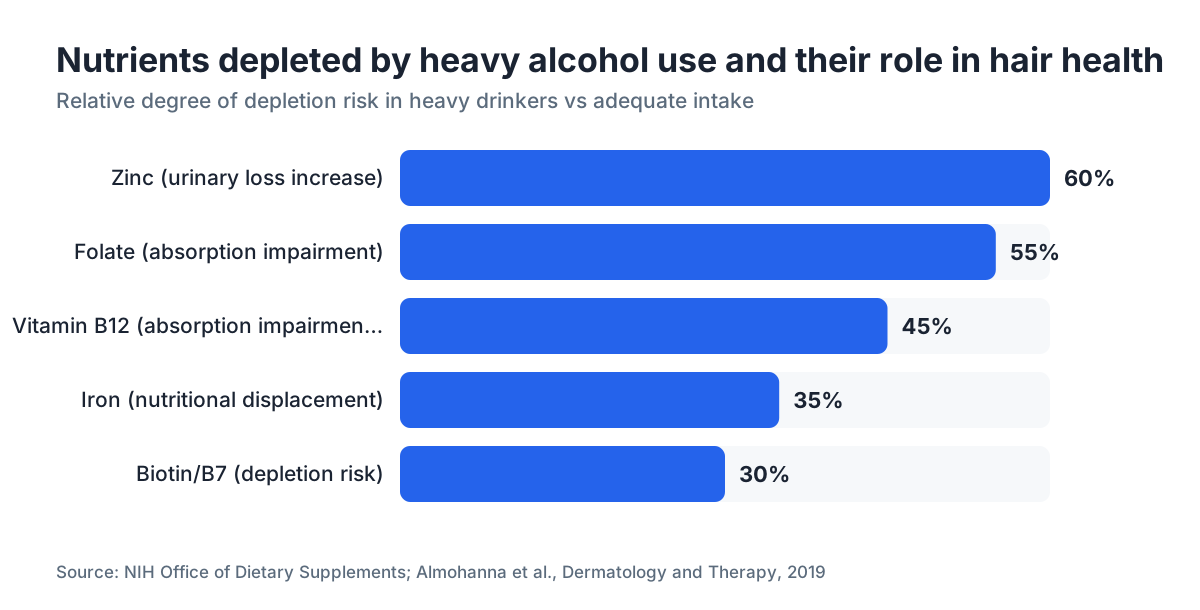
Zinc is the big one. Alcohol raises how much zinc you pee out [5]. Zinc is a cofactor for enzymes involved in DNA synthesis and cell division, and follicles need it constantly because they're among the fastest-dividing cells in the body. Zinc deficiency tracks with hair thinning and shedding, and studies in people with alopecia find lower serum zinc than in controls [6]. Supplementing helps if you're deficient. It does nothing if you're already topped up.
B vitamins take a similar hit. Alcohol interferes with the absorption and activation of folate, B6, and B12 [5]. These support red blood cell production, which carries oxygen to follicles. Biotin (B7) drops in heavy drinkers too, though biotin's role in hair loss for non-deficient people is overblown. The hair loss supplements industry runs hard on biotin, but if deficiency isn't your problem, the capsules do nothing.
Protein is the third piece. Alcohol blunts appetite and swaps real food for empty calories. Hair is almost pure keratin, which needs steady dietary protein. Chronic undernutrition from drinking is a genuine cause of diffuse thinning.
Iron gets disrupted too, though it's messier. Alcohol can actually raise iron absorption in some settings, but the broader nutritional chaos of heavy drinking often produces anemia through other routes. Iron-deficiency anemia is one of the more common reversible causes of hair loss, especially in women [6].
Can alcohol cause telogen effluvium?
Yes, and it's more common than most people think. Telogen effluvium is diffuse shedding set off by a physiological stressor that pushes a big batch of follicles into the resting (telogen) phase at once. Two to three months later they shed, which is when you notice.
Alcohol hits several known telogen effluvium triggers at the same time: high cortisol, nutritional gaps (zinc, protein, iron), wrecked sleep, and systemic stress if the drinking is heavy enough to strain the liver [3][6]. Shedding usually starts 2 to 4 months after the triggering period and clears once the stressor is gone, though full recovery can take 6 to 12 months.
Attribution is the tricky part. If you had a rough stretch of heavy drinking, stress, bad diet, and poor sleep all together, it's genuinely hard to pin the blame on alcohol alone. People online swear that quitting drinking stopped their hair loss, and that may well be true. It's also confounded by every other lifestyle change that comes with sobriety.
For the mechanisms behind stress-triggered shedding, the telogen effluvium reference goes deeper.
Does moderate drinking cause hair loss?
Probably not in any way that matters for most people.
The studies showing hormonal disruption and nutrient loss from alcohol are mostly in heavy or chronic drinkers. The nutritional literature is consistent on this: mild-to-moderate use (roughly one to two standard drinks a day) doesn't produce the severe zinc or B vitamin deficiencies seen in heavy users [5].
For men genetically wired for androgenetic alopecia (most men who go bald), the deciding factors are follicle-level DHT sensitivity and genetics, not lifestyle in most cases. A glass of wine with dinner isn't moving your hairline.
Moderate drinking starts to matter in combination. If you're managing androgenetic alopecia with minoxidil for men or finasteride, you want your liver working cleanly (drug metabolism), your nutrient levels solid (treatments work better when you aren't depleted), and your sleep and cortisol steady (both affect the hair cycle). Moderate drinking isn't catastrophic for any of that. It's just not helping.
What does the research actually show about alcohol and androgenetic alopecia?
There is no large randomized controlled trial on alcohol intake and androgenetic alopecia progression. That gap matters, and it's worth stating plainly.
Here's what exists: a handful of observational studies, mechanistic work in rodents, and hormone studies in men with alcohol use disorder. A 2020 study in JAMA Dermatology looking at lifestyle factors and male-pattern hair loss in a Chinese population found that smoking was significantly linked to hair loss, while alcohol showed a weaker and less consistent association [7]. The authors flagged that their sample may not have captured enough heavy drinkers to detect an effect.
A 1971 study in the Journal of Investigative Dermatology found 5-alpha-reductase present in human skin and responsive to androgen levels, but it predates the modern understanding of the enzyme's two isoforms (type I and type II) [8]. Current dermatology holds that type II 5-alpha-reductase in follicle dermal papilla cells is the main driver of DHT-mediated miniaturization, and we don't have good direct data on how alcohol affects that specific isoform in scalp tissue.
The American Academy of Dermatology's guidance on hair loss lists genetic predisposition and DHT as primary drivers of androgenetic alopecia. It doesn't name alcohol as a cause. It also doesn't say alcohol has no effect. The honest read: alcohol is probably a contributing factor in some people, mainly through nutrient depletion and telogen effluvium, rather than a primary driver of genetic hair loss [9].
If you want a clearer picture of your own pattern, and whether it reads more like diffuse shedding or genetic pattern loss, the free AI scan at MyHairline maps what you're dealing with before you start changing habits or shopping for treatments.
Does quitting alcohol help hair regrow?
If your hair loss runs through nutrient deficiency or telogen effluvium, then yes, cutting or stopping alcohol can reverse it. The timeline is the frustrating part.
Telogen effluvium set off by a heavy-drinking stretch usually starts clearing once the stressor stops. But the follicles that dropped into telogen don't flip back instantly. The growth (anagen) phase restarts, then you wait for those hairs to grow out, which takes months. Most people recovering from a telogen effluvium episode see real improvement within 6 to 12 months of the trigger going away [6].
Nutrient stores bounce back faster if you eat well. Zinc can normalize within weeks to a couple of months on adequate intake or supplementation. B vitamins recover faster still.
If your hair loss is mostly androgenetic alopecia (genetic pattern baldness, receding temples, crown thinning), quitting alcohol won't reverse the miniaturization that's already happened. You might see less shedding if alcohol was stacking a telogen effluvium component on top, but the underlying pattern loss needs actual treatment. What causes hair loss breaks down the difference between these two.
For pattern loss that needs treatment, the evidence-based options are minoxidil, finasteride, and, for permanent restoration, hair transplant surgery. These work whether or not you drink.
How does alcohol interact with finasteride or minoxidil?
This gets asked constantly and almost never gets a straight answer.
Finasteride is metabolized by liver cytochrome P450 enzymes, mainly CYP3A4 [10]. Alcohol in large amounts changes CYP450 activity. Acute heavy drinking can inhibit these enzymes; chronic heavy drinking induces them. So the drug's metabolism and blood levels could in theory shift with heavy alcohol use. The prescribing information for Propecia (finasteride 1mg) doesn't specifically contraindicate alcohol, but the drug wasn't studied in heavy drinkers [10]. Drink heavily on finasteride and you're in territory the trials never covered.
Minoxidil is less of a worry here. Topical minoxidil is barely absorbed into the bloodstream, and oral minoxidil at the low hair-loss doses (1.25 to 5mg) has a different hepatic profile. Still, if you're on oral minoxidil, know that alcohol can amplify its blood-pressure-lowering effect, causing dizziness or lightheadedness, especially if you stand up fast after drinking. That's a real interaction worth knowing, even if it isn't about hair directly.
For minoxidil side effects more broadly, including the cardiovascular ones, that's a separate reference worth checking if you're combining it with anything that touches blood pressure.
The practical advice most dermatologists give: on finasteride, keep drinking moderate, and tell your doctor if you're a heavy drinker. The interaction is plausible even though no dedicated trial has tested it.
Does alcohol affect DHT differently in women?
Women lose hair differently from men, and alcohol's hormonal effect differs too.
For women, androgenetic alopecia (female-pattern hair loss) tends to run more on overall androgen sensitivity than on DHT alone, though DHT still counts. Alcohol's effect on aromatase matters here: alcohol raises aromatase expression, which converts androgens to estrogens [1]. In men that tends to cause problems (estrogen high relative to testosterone). In women whose hair loss runs on androgen excess, that same shift might, in theory, ease the androgenic pressure on follicles.
But alcohol's broader disruption in women, especially high cortisol and broken sleep, absolutely triggers telogen effluvium. Women also sit at higher risk for iron-deficiency anemia, which heavy drinking makes worse. Female hair loss often shows up as diffuse rather than patterned, and telogen effluvium looks identical to early androgenetic alopecia from the outside, which makes attribution even harder.
There's essentially no female-specific trial data on alcohol and hair loss. Everything gets extrapolated from the male and general nutrition research. If you're a woman shedding diffusely and drinking heavily, the sober advice is the same: address the likely contributors (nutrition, sleep, cortisol, nutrient levels) before deciding it's purely genetic.
Are there specific types of alcohol that are worse for hair?
People want to know whether beer beats spirits, or whether wine is somehow protective. Ethanol is ethanol. How much and how often you drink matters far more than what's in the glass.
Beer contains phytoestrogens from hops, and there's been speculation that these could add to hormonal disruption. The amounts in normal beer drinking are low enough that most researchers don't count it as a meaningful clinical factor for healthy adults. No dermatology literature specifically ties beer's phytoestrogen content to hair loss.
Red wine contains resveratrol, which has been studied as a possible 5-alpha-reductase inhibitor in vitro [11]. Some people run with this as proof that red wine prevents hair loss. That's a very long jump from a cell-culture finding to a recommendation. Resveratrol bioavailability from wine is poor, and you'd need concentrations far higher than any wine delivers to match the in vitro effect. Don't drink wine to protect your hairline.
The does creatine cause hair loss article covers a similar case where a supplement-and-DHT question gets mangled by the internet, if you want a comparison for how these mechanisms get distorted.
What's the practical bottom line for someone worried about hair loss?
If you're watching your hairline and you drink regularly, here's the honest hierarchy of concern.
Genetics is doing most of the work on androgenetic alopecia. If you have first-degree relatives with real hair loss, your follicles' sensitivity to DHT is largely set. Alcohol won't save you from that, and modest drinking probably won't speed it up much.
Heavy chronic drinking is a different story. It adds real risk through several routes: nutrient depletion (zinc especially), high cortisol triggering telogen effluvium, possible DHT metabolism disruption, and compromised liver function that affects drug metabolism if you're on finasteride. These are documented, not hypothetical.
If you're already on a treatment plan, whether that's finasteride and minoxidil together (see finasteride and minoxidil for how they work in combination) or anything else, heavy drinking undercuts those treatments through the same mechanisms.
Here's what I'd actually do: if hair loss is a serious worry and you drink more than two a day most days, get your zinc, ferritin, and B12 tested. Those are cheap blood tests that tell you whether deficiency is stacking on top of your hair loss. Fix what's fixable. Then deal with the genetic component using the tools that work.
A receding hairline caught early is far more treatable than one caught late. If you want to know where you actually stand, MyHairline's free AI scan maps your hairline against Norwood staging from your photos, which gives you a concrete starting point.
On the androgen side, a DHT blocker breakdown covers the pharmacological options and what the evidence really says.
Sources
- National Institute on Alcohol Abuse and Alcoholism - Alcohol's Effects on the Body
- Gordon GG et al., Metabolism, 1979 - Effect of alcohol ingestion on hepatic steroid metabolism
- National Institute on Alcohol Abuse and Alcoholism - Alcohol and the Endocrine System
- Valimaki MJ et al., Alcoholism: Clinical and Experimental Research, 1984 - Acute effects of alcohol on androgens in men
- National Institutes of Health Office of Dietary Supplements - Zinc Fact Sheet for Health Professionals
- Almohanna HM et al., Dermatology and Therapy, 2019 - The Role of Vitamins and Minerals in Hair Loss
- Su LH et al., JAMA Dermatology, 2020 - Lifestyle factors and male androgenetic alopecia
- Sansone G and Reisner RM, Journal of Investigative Dermatology, 1971 - Differential rates of conversion of testosterone to dihydrotestosterone in acne and in normal human skin
- American Academy of Dermatology - Hair Loss
- U.S. Food and Drug Administration - Propecia (finasteride) prescribing information
- Shin S et al., Biological and Pharmaceutical Bulletin, 2017 - Resveratrol inhibits 5-alpha-reductase activity in vitro