

TL;DR: There is no strong clinical evidence that everyday EMF exposure from phones, Wi-Fi, or power lines causes hair loss in humans. The one exposure with real data is ionizing radiation from cancer treatment, which causes temporary or permanent hair loss depending on dose. Non-ionizing EMFs at normal levels have not been shown to damage hair follicles in any peer-reviewed trial.
What is electromagnetic field (EMF) exposure, and why do people connect it to hair loss?
EMF is a blanket term people use for everything from the magnetic field around a power line to the radio waves your Wi-Fi router sends out. The worry about EMFs and hair loss mostly spreads online. The claim is that constant exposure to smartphones, laptops, and 5G towers damages hair follicles or chokes scalp circulation.
The fear isn't completely irrational. Hair follicles divide fast, run hot metabolically, and react to environmental insults. Ionizing radiation, which includes X-rays and gamma rays, genuinely can damage follicles. That fact gets borrowed and slapped onto non-ionizing sources like your phone.
The electromagnetic spectrum runs from extremely low frequency (ELF) fields around power lines up through radio waves, microwaves, infrared, visible light, UV, X-rays, and gamma rays. One dividing line matters for biology: ionization. Does the radiation carry enough energy per photon to knock electrons off molecules and break chemical bonds in DNA? [1] Below that line, you have non-ionizing radiation. Above it, ionizing. Every consumer device you own sits well below the line.
This distinction is the single most useful thing to take from this article. Most EMF-and-hair-loss content online blurs the two categories together, and that blur is what makes the fear spread.
Does non-ionizing radiation from phones, Wi-Fi, or 5G actually damage hair follicles?
Short answer: no good evidence says it does at normal exposure levels.
The Federal Communications Commission sets radiofrequency (RF) exposure limits in the US using a measure called Specific Absorption Rate (SAR). The current limit for cell phones is 1.6 watts per kilogram averaged over any 1 gram of tissue. [2] That limit was set with safety margins built in, and phones sold in the US must stay under it. The FCC and FDA jointly oversee these standards, and neither agency lists hair loss as a known effect of RF exposure within these limits.
The World Health Organization's International Agency for Research on Cancer classified radiofrequency electromagnetic fields as "possibly carcinogenic to humans" (Group 2B) in 2011. That sounds alarming until you notice coffee and pickled vegetables sit in the same category. [3] Group 2B means the evidence is limited and uncertain, not that a risk has been shown.
On hair specifically, the experimental literature is thin. A handful of in-vitro and animal studies have looked at RF effects on skin cells. A 2012 review in the International Journal of Trichology examined electromagnetic radiation and hair disorders and found no mechanistic pathway by which non-ionizing radiation at ambient levels would shrink follicles or stall the hair cycle. [4] That's the closest thing to a dedicated look at the question, and it found no link.
Wi-Fi runs at 2.4 GHz or 5 GHz. 5G uses frequencies from below 6 GHz up to millimeter wave bands around 24 to 100 GHz. Even at millimeter wave frequencies, the energy is non-ionizing and stops at the outer surface of skin. It never reaches the follicle bulbs sitting 2 to 4 mm below. [5]
Does ionizing radiation cause hair loss? What the cancer treatment data shows
Yes, definitively. This is the part of the EMF conversation built on solid science.
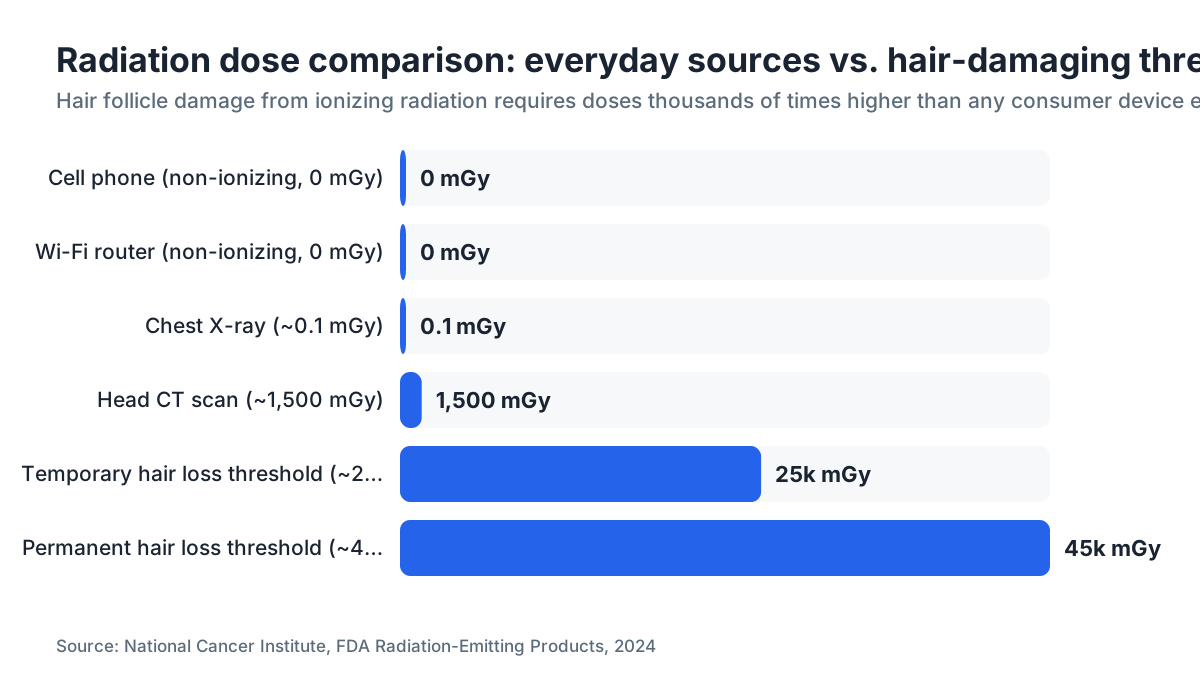
Radiation therapy for brain, head, and neck cancers often causes hair loss in the treated area. Whether that loss is temporary or permanent comes down almost entirely to dose. A dose below roughly 25 Gy (Gray, the unit of absorbed radiation dose) usually produces temporary hair loss, with regrowth starting within 3 to 6 months after treatment ends. Doses above about 45 Gy can destroy follicles permanently in the irradiated field. [6]
That matters for the EMF conversation because it sets a real biological benchmark. The doses that damage follicles are many orders of magnitude higher than anything a consumer device emits. A typical chest X-ray delivers about 0.1 mGy. A head CT scan delivers roughly 1 to 2 mGy. Radiation therapy fractions start in the thousands of mGy. Your phone delivers zero ionizing radiation.
The mechanism in radiation therapy is also nothing like anything proposed for non-ionizing EMFs. High-dose ionizing radiation creates free radicals that break DNA strands in rapidly dividing cells, which follicle matrix cells are. That's a specific, well-understood pathway. [6] No equivalent pathway exists for RF or ELF fields at consumer exposure levels.
If you've lost hair after cancer treatment, that's radiation alopecia, a recognized clinical entity, and it deserves real medical management, not a debate about Wi-Fi. Talk to a dermatologist or your oncologist about whether regrowth is expected and on what timeline.
Can occupational EMF exposure, like working near power lines or radar equipment, increase hair loss risk?
This is a fair question that occupational health researchers have looked at, and the evidence is still inconclusive.
People who work near high-voltage power lines, broadcast antennas, or military radar systems can have EMF exposures well above what a typical consumer sees. NIOSH and OSHA track occupational ELF exposure, and some studies have tried to find associations between high occupational EMF exposure and various health outcomes. [7]
For hair loss specifically, there's essentially no dedicated occupational cohort data. What exists is a scattering of reports noting that workers in some high-exposure environments describe diffuse thinning. Those reports don't control well for confounders like stress, nutritional status, or androgenetic alopecia that would have shown up anyway. Without a comparison group and proper controls, you can't say EMF caused anything.
Occupational exposure to ionizing radiation is a different matter. Radiation workers in nuclear power, radiology, and interventional cardiology wear dosimetry badges precisely because cumulative ionizing radiation carries documented health risks. That's the ionizing versus non-ionizing split again.
For most office workers, teachers, electricians, or people who just sit near a lot of electronics, current evidence doesn't support EMF as a meaningful contributor to hair loss. What causes hair loss in those groups is far more likely androgenetic alopecia, stress-related telogen effluvium, or nutritional factors.
What does low-level laser therapy (LLLT) tell us about light and hair follicles?
Here's the twist most people miss: one form of light energy actually grows hair.
Low-level laser therapy uses red and near-infrared light, usually at wavelengths between 630 and 670 nanometers, to stimulate follicles. The FDA has cleared several LLLT devices for hair growth, including laser combs and helmets, under the 510(k) pathway. [8] These are non-ionizing, low-power photons, technically a form of electromagnetic radiation.
The proposed mechanism is photobiomodulation. The light is absorbed by cytochrome c oxidase in the mitochondria of follicle cells, which raises ATP production and may extend the anagen (growth) phase of the hair cycle. A 2014 randomized controlled trial published in the American Journal of Clinical Dermatology found that an LLLT device produced a 39% increase in hair count versus baseline in men with androgenetic alopecia. [9]
This doesn't mean all EMF is good for hair. LLLT uses a specific wavelength and power level, aimed at the scalp, for a set duration. It says nothing about whether ambient RF from your router helps or hurts. But it does show the relationship between electromagnetic radiation and follicles is more layered than "EMFs bad."
LLLT is one of the FDA-cleared options for hair loss, alongside topical minoxidil for men and finasteride. It's not the strongest tool on the shelf, but it has real trial data behind it.
Could EMF stress the body indirectly and trigger hair shedding that way?
Some researchers have floated the idea that chronic EMF exposure might raise oxidative stress or wreck sleep, and either could theoretically feed hair shedding. This is a more careful argument than a direct follicle-damage claim, and it's worth taking seriously without overstating it.
There's reasonable evidence that prolonged poor sleep and chronic psychological stress can trigger telogen effluvium, a condition where a larger than normal share of hairs shifts at once into the resting and shedding phase. [10] Telogen effluvium usually causes diffuse shedding across the whole scalp, not the patterned recession of androgenetic alopecia.
The real question is whether EMF disrupts sleep enough to matter. Some studies suggest that light from screens (blue light, not RF) suppresses melatonin and throws off circadian rhythm. That's a real effect of visible-spectrum light, not radiofrequency. RF from a phone on your nightstand has not been shown to hurt sleep quality in controlled studies at normal-use levels.
So the indirect pathway looks like this. If you're genuinely sleep-deprived or chronically stressed partly because of device use, and that triggers telogen effluvium, you could loosely trace a line back to device-related behavior. That's a long way from the EMFs themselves damaging your follicles. Treating the stress or the sleep problem is what helps, not switching off the router.
If you're shedding diffusely and wondering whether stress is behind it, the telogen effluvium article is a better starting point than worrying about radiation.
What does the actual research quality look like? A summary of the evidence
Being honest about study quality matters here, because the EMF literature is genuinely messy.
Most human studies on EMF and hair are case reports (someone reported hair loss after living near a tower), ecological correlations (areas with more cell towers show certain health outcomes), or small in-vitro studies on cells in a dish. None of those designs can prove causation. Randomized controlled trials testing whether cutting EMF exposure prevents or reverses hair loss don't exist in the published literature as of 2024.
Animal studies are mixed. Some rodent studies using very high RF intensities, far above any realistic human exposure, found changes in skin cell behavior. Those findings don't map onto everyday human exposure.
For ionizing radiation and hair loss, the evidence quality jumps. There are decades of well-documented data from radiation oncology, Hiroshima and Nagasaki survivor studies, and nuclear industry workers, all showing dose-dependent hair and skin effects. [6]
| EMF Type | Source Examples | Ionizing? | Evidence for Hair Loss |
|---|---|---|---|
| Extremely Low Frequency (ELF) | Power lines, appliances | No | None at typical exposures |
| Radiofrequency (RF) | Cell phones, Wi-Fi, 5G | No | None at typical exposures |
| Microwave | Radar, microwave ovens | No | None at typical exposures |
| Infrared / Visible / UV | Sun, tanning beds | UV is borderline | UV can damage scalp skin over time |
| X-rays / Gamma rays | Medical imaging, radiotherapy | Yes | Well-documented dose-dependent alopecia |
| Low-level laser (LLLT) | FDA-cleared hair devices | No | Positive: stimulates growth in trials |
The table captures the honest state of the science. The more alarming the claim about everyday EMF and hair, the weaker the study design behind it tends to be.
What actually causes hair loss if EMFs probably don't?
Most adult hair loss has causes that are well-understood, treatable, and far more likely than EMF exposure.
Androgenetic alopecia (male and female pattern hair loss) accounts for the largest share. It's driven by genetic sensitivity to dihydrotestosterone (DHT), a metabolite of testosterone, and it follows predictable patterns: the Norwood scale in men and the Ludwig scale in women. If your hairline is creeping back at the temples or you're thinning at the crown, this is the most probable answer. DHT blockers like finasteride work by lowering DHT levels and are the most evidence-backed systemic treatment available.
Telogen effluvium, as above, is the second most common cause. Triggers include surgery, fever, childbirth, crash dieting, iron deficiency, and thyroid problems. Hair typically sheds 2 to 4 months after the triggering event.
Alopecia areata is an autoimmune condition where the immune system attacks follicles, causing patchy loss.
Nutritional deficiencies, especially iron, ferritin, vitamin D, and zinc, can feed shedding. Hair loss supplements help if you have a documented deficiency. Supplementing without one rarely produces a visible difference.
Some people also notice more shedding after starting certain medications, going through intense physical or emotional stress, or big hormonal shifts. If your hair is thinning and you want to know why, a blood panel checking ferritin, TSH, and androgens tells you far more than worrying about your router ever will.
For a faster first look, the free AI hair analysis at MyHairline can photograph your hairline and give you an initial read on pattern and severity before you see a dermatologist.
Should you take any precautions with EMF if you're concerned about hair health?
If the evidence doesn't fully settle the worry for you, a few low-cost, low-friction steps won't hurt and might help for unrelated reasons.
Keep your phone away from your head while you sleep. This costs nothing and may improve sleep quality, mostly because you stop checking the bright screen, not because of the RF. Better sleep is legitimately good for hair.
Use speakerphone or wired earbuds on long calls if you'd rather cut the RF your head absorbs. Your phone's SAR drops sharply when it's even a few centimeters off your body. [2] This is a reasonable personal choice with zero downside.
Don't buy EMF-blocking phone cases, anti-radiation patches, or "protective" supplements marketed around EMF. No evidence says they work for hair or anything else, and some EMF-blocking cases actually push your phone to increase output power to hold signal, which raises the SAR. [2]
Put your energy on the causes of hair loss that have clear fixes. If you're a man with a receding hairline, the combination of finasteride and minoxidil has far more trial evidence behind it than any EMF precaution. That's where the real payoff is.
My honest take: the people most worried about EMF causing their hair loss are often hunting for an external cause because the real one, androgenetic alopecia inherited from a family member, feels unfair. That's understandable. But accurate diagnosis leads to better treatment decisions. A dermatologist visit or a scalp analysis is a better use of your time than investigating your router.
What should you do if you're losing hair and want real answers?
Start with a dermatologist. A board-certified dermatologist can look at your scalp, read your pattern, run the blood work that actually matters (ferritin, TSH, free testosterone, DHEA-S if indicated), and rule out reversible causes before you start treatment. The American Academy of Dermatology has published clinical guidelines on diagnosing and treating alopecia, and they don't mention EMF as a diagnostic consideration. [11]
If you want a quicker starting point before you book, the free AI hair analysis at MyHairline can give you a pattern assessment from your photos. It won't replace a clinical exam, but it can help you understand whether what you're seeing looks like androgenetic alopecia, diffuse thinning, or something else, which shapes the conversation you have with your doctor.
If androgenetic alopecia is confirmed, the evidence-based treatment order runs roughly like this: oral finasteride (most effective for men, prescription required), topical minoxidil (over-the-counter, long track record), LLLT devices (mild-to-moderate benefit, FDA-cleared), and hair transplant for those who want a permanent surgical option. Minoxidil side effects are generally mild but worth reading before you start.
Don't let the EMF question pull you off this path. The research is clear. Electromagnetic field exposure from everyday sources almost certainly isn't why your hair is thinning. The causes that are well-established have treatments that actually work, and starting sooner beats starting later for hair retention every time.
Sources
- FDA - Radiation-Emitting Products: Radiation and Pregnancy
- WHO International Agency for Research on Cancer - IARC Monographs Volume 102
- International Journal of Trichology - Electromagnetic Radiation and Hair Disorders (2012)
- National Cancer Institute - Radiation Therapy Side Effects
- NIOSH - Extremely Low Frequency (ELF) Radiation
- FDA - 510(k) Cleared Devices for Hair Growth (LLLT)
- American Journal of Clinical Dermatology - LLLT Randomized Controlled Trial (2014)
- American Academy of Dermatology - Telogen Effluvium Overview
- American Academy of Dermatology - Hair Loss Diagnosis and Treatment Guidelines