TL;DR: Finasteride blocks testosterone from converting into DHT, so total testosterone rises modestly (around 10 to 15%) while DHT drops 65 to 70%. That shift does not reduce muscle strength or mass in healthy men. Most lifters on finasteride train and recover normally. A small minority report side effects worth knowing about before you start.
What does finasteride actually do to your hormones?
Finasteride is a 5-alpha reductase inhibitor. It blocks the enzyme (5-alpha reductase type II) that converts testosterone into dihydrotestosterone, or DHT [1]. DHT is the androgen most responsible for androgenetic alopecia, the technical name for male-pattern baldness.
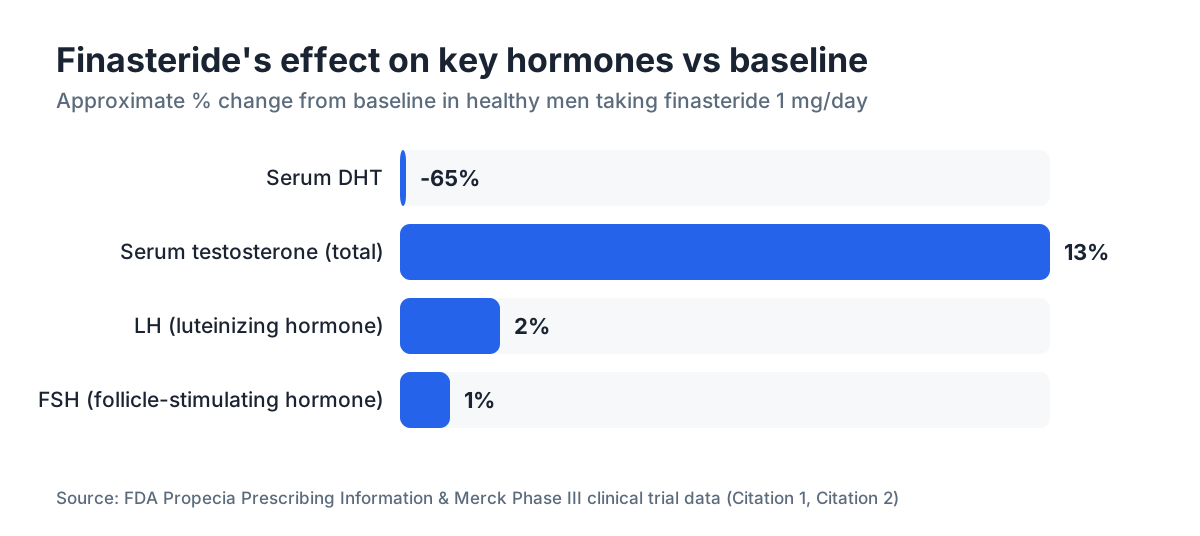
Block that conversion and DHT levels in the scalp and blood fall sharply. The FDA-approved prescribing information for finasteride 1 mg (Propecia) reports serum DHT drops by roughly 65% with daily use [1]. Studies using the higher 5 mg dose (Proscar, used for enlarged prostate) show serum DHT falling closer to 70 to 71% [7].
Here's the part that surprises most gym-goers. Because less testosterone is being converted downstream, testosterone itself accumulates a little. Clinical trials show serum total testosterone rises by roughly 10 to 15% above baseline during finasteride use [2]. That's a real hormonal shift, but it stays well inside the normal range for adult men. You are not suddenly running supraphysiological testosterone. You're just converting less of it.
LH and FSH, the pituitary signals that regulate testosterone production, don't change much either [2]. The hypothalamic-pituitary-gonadal axis keeps doing its job. Finasteride only changes what happens to testosterone after it's made.
Does higher testosterone from finasteride help or hurt gym performance?
The honest answer is probably neither. A 10 to 15% rise in total testosterone sounds meaningful, but the clinical evidence doesn't show it translating into measurable gains in strength, muscle mass, or recovery speed in otherwise healthy men [2].
Why not? Two reasons. Most men are not testosterone-limited in their ability to build muscle at baseline. Muscle protein synthesis responds to resistance training even when testosterone sits at the lower end of normal, and finasteride keeps you squarely in that range. DHT also contributes to androgen receptor activity in muscle tissue, so the drop in DHT partly cancels out whatever boost you might theoretically get from the small testosterone bump [11].
A 2001 study in the Journal of Clinical Endocrinology and Metabolism tested this head-on. Researchers gave healthy men finasteride alone, testosterone alone, or a combination, then measured body composition and strength. Finasteride alone did not significantly change fat-free mass, muscle size, or leg-press strength compared to placebo [3]. That's the closest controlled data we have, and it's reassuring for anyone worried about losing gains.
For lifters looking at DHT blocker therapies more broadly, the story is the same. Blocking DHT at typical clinical doses is neither anabolic nor anti-anabolic in any way that shows up in the gym.
Can finasteride reduce muscle mass or strength over time?
No. No well-designed long-term study shows finasteride causing real muscle loss in men who train normally. The 2001 JCEM trial, the most-cited controlled study on this exact question, found no significant change in muscle cross-sectional area or strength with finasteride alone [3].
DHT does have a role in muscle tissue. It activates androgen receptors in skeletal muscle, and some researchers have speculated that chronically suppressed DHT could theoretically impair hypertrophic signaling over very long timescales. The word "theoretically" is carrying a lot of weight in that sentence. No long-term human trial, meaning years rather than weeks, has actually shown this effect at the 1 mg/day hair-loss dose.
The men most likely to notice any performance change are competitive athletes already at the edge of their physiological ceiling, and even there the evidence is thin. For recreational lifters and gym regulars, the practical effect on strength and hypertrophy looks like zero.
Curious whether other supplements touch your hair? The article on does creatine cause hair loss covers another question lifters ask constantly.
What about sexual side effects, and do they affect motivation to train?
This is the real worry for most men, and it deserves a straight answer. The FDA label for finasteride 1 mg lists sexual side effects in roughly 3.8% of men in clinical trials: decreased libido (1.8%), erectile dysfunction (1.3%), and ejaculation disorder (1.2%) [1]. About 2% of men on placebo reported similar symptoms in those same trials, so the drug-attributable rate is lower than the raw numbers suggest.
For most men, these effects clear up after stopping the drug. A smaller group reports symptoms that persist after they quit, a syndrome sometimes called post-finasteride syndrome (PFS). The scientific community is still arguing about how common PFS is and what causes it. The data are genuinely uncertain, and you should know that going in [10].
Here's where it touches the gym. Low libido or fatigue can drain your motivation to train, which indirectly drags down performance. That's not a direct hormonal hit to muscle function. It's an energy and drive problem. If you land in the minority who feel these side effects, that matters in practice even when your testosterone number on paper looks fine.
The FDA strengthened the warnings on finasteride labels in 2012 to cover depression and sexual side effects more prominently [1]. That decision came from post-marketing reports, not trial data.
Does finasteride affect cortisol or recovery from training?
There's no strong evidence that finasteride changes cortisol levels or post-exercise recovery in healthy men. Cortisol comes from a different enzymatic pathway (the HPA axis, not 5-alpha reductase), so the drug's mechanism doesn't touch it directly.
One area of real scientific interest: 5-alpha reductase helps metabolize other steroids beyond testosterone, including neurosteroids like allopregnanolone, which comes from progesterone. Finasteride does lower allopregnanolone, and researchers have proposed this as part of the mechanism behind mood-related side effects in some users [4]. Whether reduced allopregnanolone changes how you feel after a hard session is something the current literature hasn't measured directly.
For the vast majority of men on 1 mg/day, subjective recovery, sleep, and energy stay unchanged. If you notice a lasting drop in recovery or mood after starting, report it to your prescribing physician instead of writing it off as something else.
How does finasteride compare to other hair loss options for active men?
Here's how the main evidence-backed options stack up and how they interact (or don't) with training:
| Treatment | Effect on testosterone | Effect on DHT | Muscle impact | FDA approved for hair loss |
|---|---|---|---|---|
| Finasteride 1 mg/day | +10 to 15% (modest rise) | -65% serum | None detected in trials | Yes (men, androgenetic alopecia) |
| Minoxidil topical | None | None | None | Yes (men and women) |
| Oral minoxidil (low dose) | None | None | None | Off-label |
| Dutasteride 0.5 mg | Modest rise | -90 to 95% serum | Unknown, no direct trials | No |
| Hair transplant | None | None | None | N/A (surgical) |
Dutasteride blocks both type I and type II 5-alpha reductase and suppresses DHT harder than finasteride [5]. If muscle performance and hormonal impact are on your mind, finasteride's gentler DHT suppression makes it the more conservative pick between the two oral drugs.
Minoxidil for men and other topicals don't touch the androgen system at all, so they carry no hormonal trade-off. If you're deeply worried about any hormonal effect at the gym, starting with topical minoxidil while you research finasteride is a reasonable move. You can also read about finasteride and minoxidil used together, which is the most common combination doctors prescribe.
Does the dose of finasteride matter for gym performance?
For hair loss, 1 mg per day is the approved dose, and that's what most people get [1]. The 5 mg dose (Proscar) treats enlarged prostate and produces similar or slightly larger hormonal effects, but it's rarely used for hair loss.
Some men and their doctors use 0.25 mg or 0.5 mg, sometimes every other day, trying to cut side effect risk while keeping some hair benefit. Whether these lower doses produce less hormonal impact is plausible but poorly studied in controlled trials, and nobody has good data tying sub-1 mg dosing to gym performance specifically. Finasteride's pharmacokinetics are dose-dependent, so lower doses do produce less DHT suppression. By how much at these sub-1 mg levels isn't well-characterized.
There's no evidence that 1 mg/day finasteride calls for any change to your training program, your protein intake, or your recovery routine. Train as you normally would.
What about women who lift and want to use finasteride for hair loss?
Finasteride is not FDA-approved for hair loss in women, and it's flatly contraindicated in women who are or may become pregnant because it can harm a male fetus [1][8]. That's a hard stop, not a nuance.
Some physicians prescribe finasteride off-label to postmenopausal women with androgenetic alopecia. The hormonal picture differs a lot in women. They have much lower baseline DHT and testosterone, and the androgenic environment driving female-pattern hair loss isn't the same as men's. The data on efficacy and hormonal effects in women are thinner.
For women worried about a receding hairline or diffuse thinning, the evidence points more strongly to topical minoxidil (FDA-approved for women at 2%) or oral minoxidil off-label. If finasteride is on the table for a woman who lifts, the hormone conversation belongs with a physician who knows her full history.
For the bigger picture on why hair loss happens at all, the article on what causes hair loss covers both male and female patterns.
Should you tell your doctor you lift weights before starting finasteride?
Yes. Not because lifting changes the pharmacology of finasteride, but because your doctor needs the full picture to give you useful guidance. If you take other supplements that affect hormones (DHEA, certain prohormones, high-dose zinc), that context matters. If you're a competitive athlete subject to drug testing, that matters even more.
Finasteride is not a prohibited substance on the World Anti-Doping Agency (WADA) list for performance enhancement. WADA has in the past flagged it as a masking agent in specific contexts, because athletes used it to try to hide anabolic steroid use in urine tests [6]. If you compete in a tested sport, check with your sport's governing body directly. The rules shift by sport and by year.
At myhairline.ai, the free AI scan helps you understand your current hair loss pattern before you even speak to a physician, so you walk into that appointment knowing your stage and what questions to ask. That's genuinely useful for deciding whether finasteride fits.
Go over your training load and supplement stack with your prescribing doctor. It's a five-minute conversation that heads off avoidable surprises.
What are the real-world reports from gym-goers on finasteride?
Forums like r/tressless and r/Hairloss hold thousands of posts from men combining finasteride with hard training. The common thread among regular gym-goers is no noticeable change in strength, endurance, or recovery. A subset report fatigue or lower libido, matching the clinical trial rates.
Anecdote isn't data. But note this: finasteride has been prescribed since FDA approval in 1997, and the medical literature shows no wave of documented muscle loss or performance decline that would trigger a safety signal. If the effect on lifting were clinically real, it would have surfaced in post-marketing surveillance or case series by now.
The men who report the most disruption to training tend to be those hit by mood or sexual side effects, which then chip away at motivation and consistency. Take that seriously as a real-world outcome, even though it isn't a direct hormonal effect on muscle.
Track your lifts for the first 12 weeks. If your numbers hold, they'll almost certainly keep holding. And if you notice a real change in energy, mood, or strength in the first few weeks, don't wait months to tell your doctor.
When does finasteride actually start working, and how long should you give it?
Slowly. Most clinical trials and the FDA label say it takes at least 3 months before any effect shows, and the full benefit often isn't clear until 12 months of consistent use [1][9]. The Merck Phase III trials showed continued improvement out to 2 years [1].
That timeline matters for lifters because people sometimes quit finasteride early, blame a perceived change in performance on the drug, and never give it long enough to judge whether the hair benefit was worth the trade-off. The hormonal changes (DHT suppression and the modest testosterone rise) happen within days of starting. Your body's adaptation to that new hormonal environment settles over weeks.
Stop finasteride and DHT returns to baseline within about two weeks [7]. Any hair you kept on finasteride typically sheds again within 12 months of stopping [9], because the drug never changed the underlying genetic program. It only suppressed the execution.
For men who decide finasteride isn't for them, a hair transplant is the other major route that can restore hair without ongoing systemic drug exposure. Understand the whole landscape before you commit to any one path.
You can get a clearer read on your current pattern and Norwood stage with a free AI analysis at myhairline.ai before deciding. Knowing where you stand makes the treatment decision far more concrete.
Sources
- FDA, Propecia (finasteride 1 mg) Prescribing Information
- Andriole G et al., New England Journal of Medicine, 2010 (PCPT finasteride data) / Merck Phase III clinical data cited in FDA label
- Page ST et al., Journal of Clinical Endocrinology and Metabolism, 2001
- Melcangi RC et al., Journal of Steroid Biochemistry and Molecular Biology, 2017 (post-finasteride syndrome neurosteroids)
- Clark RV et al., Journal of Clinical Endocrinology and Metabolism, 2004 (dutasteride Phase II data)
- World Anti-Doping Agency (WADA), Prohibited List
- FDA, Proscar (finasteride 5 mg) Prescribing Information
- American Academy of Dermatology (AAD), Hair Loss Treatment Guidelines
- Kang H et al., Annals of Dermatology, 2014 (finasteride hair loss review)
- Hsiao W & Mulhall J, Sexual Medicine Reviews, 2013 (finasteride sexual side effects review)
- Storer TW et al., Journal of Clinical Endocrinology and Metabolism, 2003 (testosterone, DHT, and body composition in men)