
TL;DR: Most hair loss treatments can be combined safely, but a few pairings raise real risks. Finasteride plus minoxidil is the best-studied combo and generally well tolerated. Oral minoxidil with blood pressure drugs can drop your pressure too far. Some supplements touch the same DHT pathway as finasteride. This guide covers what's safe, what's unknown, and what to ask your doctor before stacking treatments.
Why do hair loss treatment interactions matter?
Most people treating hair loss end up using more than one thing at once. A typical regimen might be topical minoxidil twice a day, finasteride every morning, a supplement stack, and maybe a session of PRP every few months. That's four separate things hitting your body at the same time, and the honest answer is that the combination data is much thinner than the single-drug data.
The mechanisms matter here. Finasteride blocks 5-alpha reductase, the enzyme that converts testosterone to dihydrotestosterone (DHT) [1]. Minoxidil opens potassium channels in hair follicle cells, extending the growth phase [2]. PRP delivers growth factors to the scalp. Supplements like saw palmetto also touch the DHT pathway. Layer these together and you're not always adding effects cleanly. Sometimes you amplify a side effect. Sometimes two drugs genuinely work better together than apart. Sometimes nobody has good data and you're running an experiment on yourself.
This article works through the major pairings: what's well studied, what's plausible but understudied, and where the real red flags are. The goal is to help you decide before you spend money or, more to the point, before you run into a side effect that could have been predicted.
Understanding what causes hair loss in the first place helps you see why certain mechanisms overlap and where interactions are most likely to show up.
Is it safe to combine finasteride and minoxidil?
Yes. This is the most studied combination in men with androgenetic alopecia. A 12-month randomized controlled trial published in Dermatology and Therapy (2021) found that oral finasteride 1 mg plus 5% topical minoxidil produced significantly greater hair count improvements than either drug alone, with no meaningful rise in reported adverse events compared to the single-drug arms [3].
The mechanisms don't conflict. Finasteride reduces the hormonal signal that shrinks follicles. Minoxidil independently stimulates blood flow and prolongs the anagen (growth) phase. They work on different parts of the problem, which is why the combination makes biological sense and why most dermatologists treat it as a reasonable first-line stack for men with pattern baldness.
The side effect profiles stay largely additive rather than multiplicative. Sexual side effects (reduced libido, erectile dysfunction) are tied to finasteride at roughly 2 to 4% incidence in controlled trials [1], not to topical minoxidil. Scalp irritation and contact dermatitis are minoxidil risks, not finasteride risks. The combination doesn't dramatically change either drug's safety signature.
One thing worth knowing. Some men shed for the first 2 to 3 months of starting either drug, a telogen effluvium response. Start both at once and that initial shed can feel worse. Some doctors prefer starting them a month apart so you can tell which drug caused what if you react.
For a full breakdown of how each drug works alone, see our pieces on finasteride and minoxidil for men.
What happens if you take oral minoxidil with blood pressure medications?
This is where interactions get genuinely risky. Oral minoxidil was originally approved by the FDA as a blood pressure drug for severe, treatment-resistant hypertension [2]. At the low doses used off-label for hair loss (0.625 mg to 2.5 mg daily, versus 5 to 40 mg for hypertension), the blood pressure effect is modest for most people. But it is not zero.
If you're already on an antihypertensive, adding oral minoxidil stacks the blood-pressure-lowering effects. That means a real risk of pressure dropping too low, causing dizziness, fainting, or in rare cases a fall with injury. This pairing needs physician supervision, a baseline blood pressure check, and follow-up monitoring. It is not something to self-manage.
Beta-blockers matter here because oral minoxidil causes reflex tachycardia (a compensatory rise in heart rate) in some patients, and beta-blockers are sometimes co-prescribed to control that. If you're already on a beta-blocker for another reason and you add oral minoxidil, the picture gets complicated. Tell your prescribing doctor about every medication you take.
Diuretics are another concern. Oral minoxidil causes fluid and sodium retention in some users. If you're on a diuretic, the net effect is hard to predict without monitoring.
Topical minoxidil at 2% or 5% has very low systemic absorption and doesn't meaningfully interact with blood pressure drugs in most people [2]. Everything in this section is specific to the oral form. Read more about its full risk profile in our oral minoxidil article.
Do hair loss supplements interact with finasteride or minoxidil?
Several do. And this is the area with the least clinical data, so the honest answer to many specific supplement-drug questions is: we don't know precisely, but here's the plausible mechanism.
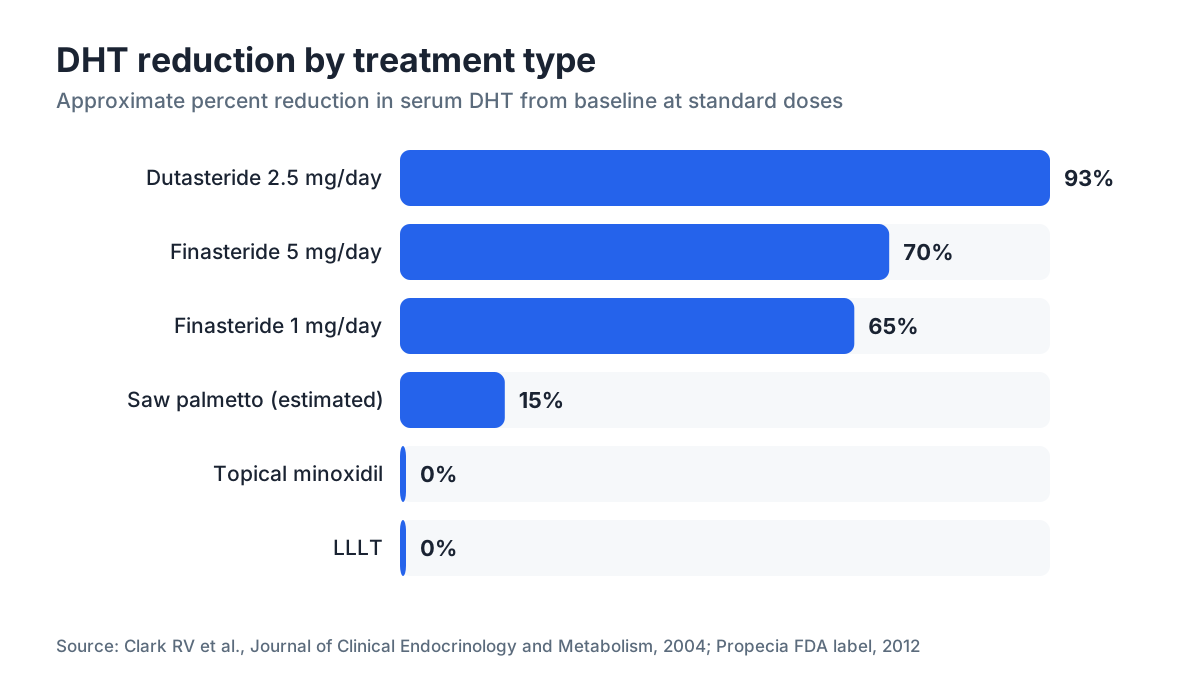
Saw palmetto is the one to think about first. It inhibits 5-alpha reductase, the same enzyme finasteride blocks [4]. Combining them is redundant at best and could push DHT suppression deeper than either alone. No strong clinical trial shows this combination is dangerous, and none says it's fine. The concern: if finasteride alone already cuts scalp DHT by roughly 70% [1], adding saw palmetto might push that further and raise the sexual side effect risk. Nobody has good data on this. The closest evidence comes from in-vitro studies of saw palmetto's mechanism, not a human trial on the combination.
Biotin at typical supplement doses (up to 10 mg daily) is unlikely to interact meaningfully with either finasteride or minoxidil. The FDA has warned that high-dose biotin can interfere with lab tests including thyroid function tests and troponin assays [5], which matters if you're being monitored for anything. Tell your doctor if you take biotin before bloodwork.
Vitamin D, zinc, and iron come up constantly in the hair loss space. None have documented pharmacokinetic interactions with finasteride or minoxidil at normal doses. The larger point about hair loss supplements is that most have weak evidence for efficacy, so stacking them on proven medications usually just adds cost without clear benefit.
Fennel, nettle root, and green tea extract all show mild 5-alpha reductase inhibition in lab studies. Whether that matters in humans, at supplement doses, alongside finasteride, is unknown. Treat them the way you'd treat saw palmetto: disclose them to your doctor.
How does PRP interact with minoxidil and finasteride?
Platelet-rich plasma (PRP) is injected into the scalp and works through growth factors, mainly platelet-derived growth factor (PDGF) and vascular endothelial growth factor (VEGF), that may stimulate follicle activity [6]. It sits outside the systemic and topical drug pathways entirely.
In the traditional pharmacological sense, PRP has no meaningful interaction with minoxidil or finasteride. They run through completely different mechanisms and routes, so combining them creates no known safety signal.
What the literature does show is combination studies asking whether adding PRP to standard medical therapy improves outcomes. A 2019 study in the Journal of Cutaneous and Aesthetic Surgery found that PRP plus minoxidil and finasteride produced greater hair density improvements than medical therapy alone in men with androgenetic alopecia [6]. But PRP protocols vary enormously (platelet concentration, session count, timing), and the evidence base is inconsistent. The American Academy of Dermatology calls PRP a promising but not yet definitive treatment [7].
One practical note. If you're on anticoagulants (warfarin, rivaroxaban, apixaban) or regular aspirin, tell your dermatologist before PRP. Those drugs affect platelet function and could change both bleeding risk at injection sites and how well PRP works. That's not a reason to skip PRP, but it needs disclosing.
Can you use hair growth treatments after a hair transplant?
Yes, and in most cases you should. A transplant moves follicles, but it doesn't change the biology driving loss in your existing native hair [8]. Without ongoing medical treatment, the hair you didn't transplant keeps miniaturizing. Most surgeons recommend continuing or starting finasteride and minoxidil after a transplant to protect the native hair that stayed put.
Timing matters. Right after surgery, the scalp is healing, so follow your surgeon's guidance on when to resume or start topical minoxidil. Applying anything to fresh surgical sites before they heal can cause irritation. Most protocols say wait at least 2 weeks on the recipient area. Finasteride can usually continue without interruption since it's systemic and doesn't touch the scalp surface.
The transplanted hairs are DHT-resistant when taken from the donor zone at the back of the scalp, so finasteride doesn't do much for them specifically. It protects the hair around them.
PRP is sometimes offered post-transplant to speed healing and graft survival. The evidence is mixed. A 2016 study in Plastic and Reconstructive Surgery found some improvement in early graft survival with PRP, but the effect size was modest [8]. It's not standard of care, and it's not contraindicated either.
For a full picture of what happens during and after a procedure, see our article on hair transplant.
Does low-level laser therapy (LLLT) interact with other treatments?
Low-level laser therapy devices (laser combs, caps, helmets) are FDA-cleared for hair loss based on trials showing modest gains in hair density [9]. The mechanism is photobiomodulation, thought to stimulate mitochondrial activity in follicle cells.
From an interaction standpoint, LLLT is one of the cleanest additions to a regimen. It's physical and non-systemic, with no known pharmacokinetic interactions with finasteride, minoxidil, or any supplement. You're shining light on your scalp. It doesn't get absorbed into your bloodstream.
The practical concern is photosensitizing medications. Some drugs make skin more sensitive to light, including certain antibiotics (doxycycline, tetracycline), some antifungals, and certain acne medications. If you're on a photosensitizer, ask your doctor whether LLLT at the scalp is a concern. For most hair loss patients it isn't relevant, but it's worth a check.
Efficacy is the bigger question with LLLT, not safety. The treatment effect versus sham devices in randomized trials is real but modest. A 2013 randomized controlled trial in the American Journal of Clinical Dermatology found a 39% increase in hair growth rate over 26 weeks with a laser device versus 9% with a sham device, in both men and women with pattern hair loss [9]. That's a real signal. Set expectations accordingly. Adding LLLT to a finasteride-minoxidil regimen may add marginal benefit at very low risk.
Are there medications that make hair loss worse or interact with treatments?
Several common drug classes can cause or worsen hair loss on their own, which muddies your picture when you're also using hair loss treatments. This isn't a drug-drug interaction in the pharmacokinetic sense, but it matters in practice.
Anticoagulants (heparin, warfarin), beta-blockers, lithium, valproate, retinoids (isotretinoin), and certain antidepressants (notably SSRIs in some patients) are all linked to drug-induced hair loss, usually diffuse shedding rather than pattern loss [10]. If you're on one of these and trying to regrow hair, the underlying drug may be partly undoing your treatment. That's a conversation with the prescribing physician, not a reason to quit a needed medication on your own.
Isotretinoin (Accutane) deserves a specific mention. It causes diffuse shedding in a meaningful share of users. It also has a documented interaction with vitamin A supplementation (additive toxicity), which matters if you're taking a general hair supplement with vitamin A or beta-carotene on top of it [10].
Finasteride interacts with strong CYP3A4 inhibitors, which affect its metabolism. Ketoconazole shampoo at the concentrations used topically for dandruff has negligible systemic absorption and isn't a meaningful concern. Oral ketoconazole is a strong CYP3A4 inhibitor and could theoretically raise finasteride exposure, but it's rarely prescribed for hair loss and carries significant liver toxicity concerns of its own.
If you take any regular prescriptions, run your full list past a pharmacist using an interaction checker. It takes ten minutes and catches things physicians sometimes miss.
What's the safest way to combine multiple hair loss treatments?
Add one treatment at a time, wait at least 6 to 8 weeks before adding the next, and write down what you're taking and when you started. This sounds tedious. It's the only reliable way to know what's helping and what caused a side effect if one shows up.
The combination with the most evidence and the most reasonable safety profile for most men with androgenetic alopecia is finasteride 1 mg orally plus 5% topical minoxidil twice daily. The 2021 trial mentioned earlier found meaningful improvement over 12 months with that stack [3]. Adding LLLT is a low-risk optional extra. PRP can be layered in with physician oversight.
| Combination | Evidence level | Main risk | Physician needed? |
|---|---|---|---|
| Finasteride + topical minoxidil | High (RCT) | Additive initial shed | Recommended |
| Finasteride + oral minoxidil | Moderate | Blood pressure monitoring | Yes |
| Finasteride + saw palmetto | Low | Unknown DHT suppression depth | Yes |
| Topical minoxidil + LLLT | Moderate | Minimal | Optional |
| Any treatment + antihypertensives | Variable | Hypotension | Yes |
| Post-transplant minoxidil + finasteride | Moderate | Scalp irritation if applied too early | Yes |
| PRP + minoxidil + finasteride | Moderate | Injection site (not drug) | Yes |
For women, the picture shifts. Finasteride and dutasteride aren't recommended in women who could become pregnant, because of teratogenicity risk [1]. The mainstay for women is topical minoxidil, with oral minoxidil at low doses increasingly used off-label. Spironolactone is commonly used in women as a DHT blocker, and pairing it with oral minoxidil carries a blood pressure interaction risk similar to the antihypertensive issue above.
If you want a baseline read on your own hair loss before deciding what to try, the free AI scan at MyHairline can help you understand your pattern and Norwood stage, which shapes which treatments actually matter for you.
The finasteride and minoxidil combination guide goes deeper on dosing protocols and what to expect month by month.
What should you tell your doctor before combining hair loss treatments?
Bring a complete medication list, including over-the-counter supplements. Many people skip the supplements because they feel like they're not 'real' medications, but saw palmetto, high-dose biotin, and vitamin A all have clinical relevance here.
Specifically mention: any blood pressure medication (prescribed or OTC), any anticoagulant, any antibiotic you're currently on, any acne treatment (especially isotretinoin), and any hormonal medication (birth control, testosterone, estrogen replacement). These all have either direct interactions or confounding effects on hair loss and its treatments.
For men starting finasteride, the FDA label recommends that women who are pregnant or may become pregnant avoid handling crushed or broken tablets, because absorption through skin can harm a fetus [1]. Worth knowing if you share a household with a pregnant partner.
Ask your doctor two questions directly: "Does anything on my current medication list interact with this hair loss treatment?" and "Should I monitor anything, like blood pressure or labs, while I'm on this?" Those two catch most of the meaningful interactions.
Knowing your hair loss type helps too, because some interactions matter more for androgenetic alopecia than for other forms. A receding hairline driven by DHT responds differently to the DHT-pathway drugs than loss from nutritional deficiency or an autoimmune process. What you're treating changes the calculus.
Are there interactions specific to DHT blockers beyond finasteride?
Dutasteride is a more potent 5-alpha reductase inhibitor than finasteride. It blocks both type 1 and type 2 isoforms of the enzyme, where finasteride mainly acts on type 2. The result is a deeper DHT cut, roughly 90 to 95% reduction in serum DHT versus finasteride's 65 to 70% [11].
Combining dutasteride with finasteride is not recommended. It adds nothing mechanistically, since dutasteride already covers both pathways finasteride covers, and there's no safety rationale for the pairing. It isn't dangerous in the drug-drug interaction sense. It's just pharmacologically pointless, and it adds cost and side effect exposure.
Dutasteride plus saw palmetto raises the same theoretical concern as finasteride plus saw palmetto, only amplified given dutasteride's deeper baseline DHT suppression.
Dutasteride with topical minoxidil follows the same logic as finasteride plus minoxidil: different mechanisms, generally safe to combine, with physician oversight. Dutasteride is not FDA-approved for hair loss (it's approved for benign prostatic hyperplasia) but dermatologists prescribe it off-label for androgenetic alopecia.
For a broader look at how DHT blockers work and their evidence base, see our DHT blocker article.
What about minoxidil side effects that could be confused with interaction effects?
One tricky part of combining treatments is telling a side effect of one drug apart from an effect of the combination. With minoxidil, a few side effects look like they might come from the combination but are really just minoxidil doing its thing.
Initial shedding in the first 4 to 8 weeks of starting minoxidil is a known effect of the drug, not a sign it's clashing with finasteride [2]. Minoxidil pushes resting follicles into the growth phase, and the old hairs shed first. If you've just added minoxidil to an existing finasteride regimen and you're shedding more, wait at least 12 weeks before deciding there's a problem.
Scalp contact dermatitis from topical minoxidil is common with the propylene glycol formulations. Switching to the propylene glycol-free foam often clears the irritation. That's not a drug interaction with finasteride. It's a reaction to the base the drug is dissolved in.
Fluid retention and facial puffiness are oral minoxidil side effects that get more pronounced alongside other drugs that affect fluid balance. That is a real interaction concern, not a standalone minoxidil effect in that setting.
For a complete picture of what minoxidil does on its own, see our minoxidil side effects article before blaming symptoms on a combination effect.
Sources
- FDA, Rogaine (minoxidil topical) label via DailyMed, NLM
- Suchonwanit P et al., Dermatology and Therapy, 2021, combination finasteride and minoxidil RCT
- National Center for Complementary and Integrative Health (NCCIH), Saw Palmetto
- Gupta AK et al., Journal of Cutaneous and Aesthetic Surgery, 2019, PRP combination study
- American Academy of Dermatology, Hair Loss Treatment
- Garg S, Plastic and Reconstructive Surgery, 2016, PRP and hair transplant graft survival
- Lanzafame RJ et al., American Journal of Clinical Dermatology, 2013, LLLT RCT
- Trüeb RM, Dermatology and Therapy, 2015, drug-induced alopecia review
- Clark RV et al., Journal of Clinical Endocrinology and Metabolism, 2004, dutasteride vs finasteride DHT reduction