

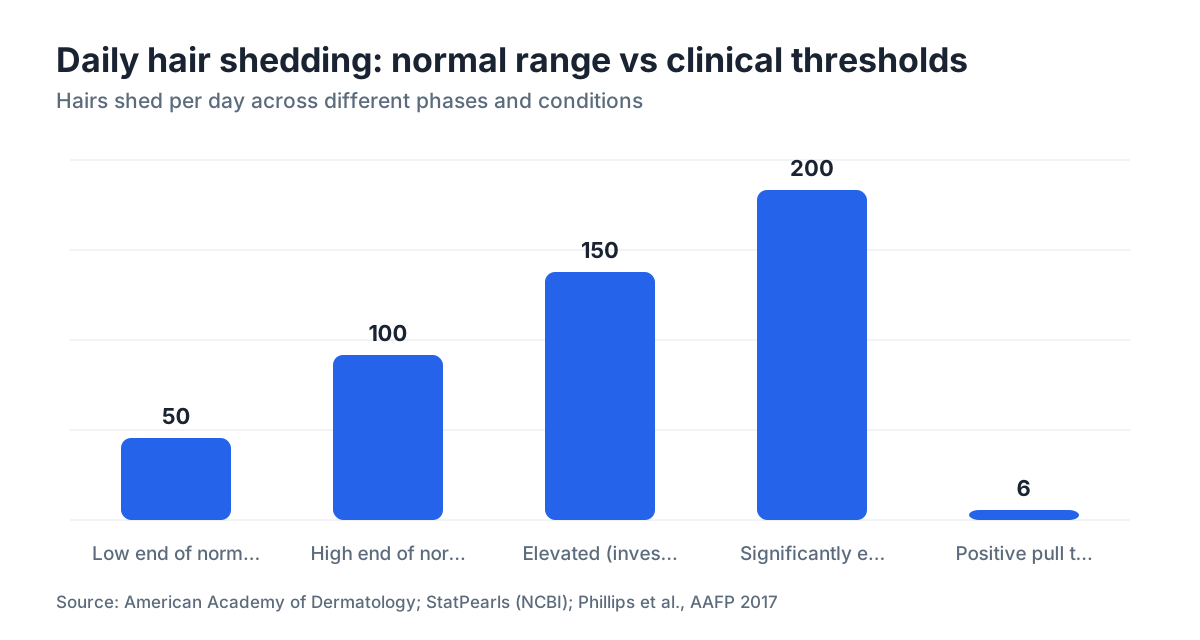
TL;DR: Losing 50 to 100 hairs a day is normal for most adults. Your scalp holds roughly 100,000 hairs, and each one cycles through growth, rest, and shedding on its own clock. Shedding more than 150 to 200 hairs a day for over three months, or seeing bald patches and scalp where there wasn't any, crosses from normal turnover into something worth checking.
What is the normal amount of hair loss per day?
Fifty to 100 hairs a day. That's the number you'll see everywhere, and the American Academy of Dermatology puts the normal ceiling at up to 100 hairs daily for adults [1]. The figure has held up in clinical guidance for decades. It's roughly right. The honest version is that the number moves around depending on the person, the hair texture, and where you are in your growth cycle.
Your scalp has around 80,000 to 120,000 follicles, and genetics plus natural hair color set your number. Blondes tend to have more follicles. Redheads fewer. At any moment, roughly 85 to 90 percent of those hairs are in the anagen (growth) phase, which runs two to seven years. About 10 to 15 percent sit in telogen (resting and shedding), and those are the ones you find on your pillow, in the drain, or wrapped around your brush [2].
So when 50 to 100 hairs come out each day, that's the telogen fraction doing its job. New hairs are already pushing up from the same follicles. The follicle isn't lost. The hair is.
One thing people miss: if you wash every other day instead of daily, wash days produce a bigger clump. That's not double the loss. It's the same hairs that would have shed yesterday, collecting in one event.
How do you actually count how many hairs you're losing?
Most people never count, and that's fine. But if you're genuinely worried and want a real number, dermatologists use a few simple methods you can copy at home.
The pull test is the standard clinical screen. Grab a small bunch, around 40 to 60 strands, between your thumb and forefinger and pull firmly from root to tip. Six or more hairs coming free counts as positive for active shedding, which points toward telogen effluvium or another live process [3]. It's an in-office test, but you can run a rough version at home on dry hair that hasn't been washed or combed in a day.
The 60-second hair count is what it sounds like. Comb your hair over a white towel for 60 seconds, then count what lands. Under 10 strands is typically normal. More than 10 may deserve attention, though it depends heavily on your starting length and density.
For a longer read, put a clean pillowcase down, skip combing during the day, then collect and count at bedtime. Do it three days running for a usable average. Anything holding steady over 150 to 200 hairs a day is above normal and worth raising with a doctor [1].
None of these is a diagnosis. They're signals.
What does the hair growth cycle have to do with daily shedding?
The growth cycle is the whole engine behind why shedding is normal. Each follicle runs through three stages on its own schedule, independent of its neighbors, which is why you don't go bald all at once.
Anagen is growth. Cells divide in the follicle and push the shaft out at roughly half an inch a month. This phase lasts two to seven years depending on your genes, which is why some people grow hair to the waist and others top out at the shoulders [2].
Catagen is a short two to three week transition where the follicle shrinks and pulls back from its blood supply. Only about 1 to 3 percent of your hairs sit here at any time.
Telogen is rest, lasting roughly three months. The old hair stays in the follicle, held loosely, while a new anagen hair forms underneath. When the new hair grows up far enough, it evicts the old one. That's the hair in the drain.
Timing explains sudden shedding. A fever, surgery, crash diet, or serious illness can shove a big cohort of follicles into telogen at the same time. Three months later they all shed together, and you get what dermatologists call telogen effluvium. It looks alarming and is usually temporary. This cycle also explains how treatments like minoxidil for men work, since minoxidil stretches the anagen phase.
When does daily hair shedding become a warning sign?
Volume isn't the only signal. Dermatologists read several factors together.
Shedding over 150 to 200 hairs a day, held for more than two to three months, is the threshold most clinicians use to flag a problem [1]. But quantity isn't everything. Where the hair leaves from matters as much as how much. Diffuse thinning all over the scalp often points to a body-wide cause: thyroid trouble, iron deficiency, telogen effluvium. Recession at the temples and crown with miniaturized hairs points at androgenetic alopecia (pattern baldness).
Signs that raise the concern level:
- Scalp becoming visible where it wasn't, especially the crown or part line
- Shed hairs with a small white bulb at the root (a normal telogen club hair) versus a dark, fleshy root (which can mean folliculitis or traction)
- Hairs breaking mid-shaft instead of shedding from the root, which suggests damage or a deficiency rather than the follicle cycle
- Patches of complete loss with a clean border, which can be alopecia areata, an autoimmune condition [4]
- Itch, burning, or tenderness alongside the shedding, which suggests inflammation
Shedding that starts three to four months after a clear trigger is almost always telogen effluvium, and the outlook is good. Shedding with no obvious trigger, or shedding plus visible scalp or a moving hairline, needs a real evaluation. A dermatologist can run a pull test, dermoscopy, and targeted blood work in one visit.
Does hair loss vary by season, age, or hair type?
Yes on all three, and the differences are bigger than most people expect.
Season: a study in the British Journal of Dermatology found that hair shedding in women peaked in summer and bottomed out in winter, with telogen rates highest in July [5]. The leading theory is a sun-driven shift in follicle cycling. So more hair in the shower drain in late summer and early fall is normal. It doesn't mean anything is wrong.
Age: shedding rates don't spike much with age, but the ratio of growing to resting hairs shifts. After 50, anagen tends to shorten and telogen lengthens a little, so even with the same follicle count, hairs come in finer and shorter and net density reads lower [2]. That's separate from androgenetic alopecia, which is hormone-driven.
Hair type: people with tightly coiled or curly hair may see fewer loose hairs per day, because shed strands tangle in the surrounding hair instead of falling free. The actual shedding rate is similar. The perceived count looks very different. People with long, straight hair may see more, because one long strand is obvious on a white sink. Length changes the appearance, not the count.
Follicle shape and density do differ by ancestry. African-descent follicles tend to curve more, and some research suggests average scalp density varies across groups. The normal range of 50 to 100 hairs a day still applies broadly across populations [2].
What causes a sudden increase in hair shedding?
A sudden jump in daily shedding almost always traces to something that happened two to four months earlier. That lag is the telogen cycle working exactly as built, and it trips people up constantly.
Common triggers:
- Fever over 39°C (102°F), including flu, COVID-19, or other illness
- Major surgery or heavy blood loss
- Rapid weight loss, crash dieting, or protein shortfall
- Thyroid disorders, both hypothyroidism and hyperthyroidism
- Iron deficiency anemia (ferritin below roughly 30 ng/mL gets cited as a threshold in dermatology literature, though optimal levels for hair may run higher) [6]
- Stopping estrogen-containing contraceptives, or postpartum hormone shifts
- Psychological stress heavy enough to affect physiology
- Certain drugs: beta-blockers, retinoids, anticoagulants, some antidepressants
Our article on what causes hair loss has a fuller breakdown.
For most of these, once the cause resolves, shedding drops back to baseline within three to six months and regrowth follows. The exception is androgenetic alopecia. It has no reversible trigger. It runs on its own hormonal schedule and responds to specific treatments like finasteride or minoxidil.
A note on DHT. In pattern hair loss, dihydrotestosterone slowly miniaturizes vulnerable follicles. The hairs don't dump out in big numbers. They shrink over years. If you see miniaturized hairs (thinner, shorter, lighter than the rest) rather than general volume loss, that's a sharper signal pointing at androgenetic alopecia. DHT blockers hit this mechanism head on.
Is shedding from minoxidil or finasteride normal?
Yes. Both treatments can cause a temporary jump in shedding at the start, and it's one of the top reasons people quit too early.
With minoxidil, the initial shed usually starts two to eight weeks in and lasts four to eight weeks [7]. The mechanism: minoxidil pushes follicles stuck in a long telogen phase back into anagen, and the old club hairs get ejected to make room. After four to six months of steady use the net result is denser hair, but the first two months can look worse before they look better. The FDA has approved topical minoxidil at 2% and 5%, with the 5% formulation specifically labeled for androgenetic alopecia in men [7]. Our piece on minoxidil side effects covers what to expect.
With finasteride, the evidence on an early shed is thinner. Some users report it, but clinical trials don't document a pronounced early shedding phase the way the minoxidil literature does. What does happen early on: hairs in miniaturized follicles can cycle out as those follicles start to recover. It can look like more shedding, but it's part of the recovery.
The dermatology guidance is consistent. Give either treatment at least four to six months before judging it. Quitting at week six over a temporary shed is the single most common treatment mistake here.
How is normal daily shedding different from pattern baldness?
This is the question that generates the most anxiety, and the line is actually clear once you know what to look for.
Normal daily shedding affects hairs evenly across the scalp. The follicles are healthy. The hairs that fall are full-diameter, full-length, in their natural telogen phase. Regrowth is immediate and matches what fell in texture and thickness. Net density holds steady over years.
Pattern baldness (androgenetic alopecia) works differently. DHT progressively miniaturizes the follicles themselves. Each new cycle produces a slightly thinner, shorter, less pigmented hair. Eventually the cycle shortens so much the follicle makes only a fine vellus hair, barely visible. The daily count may not be dramatically high, but density drops because hairs aren't getting replaced with equal hairs.
Signs pointing at pattern baldness rather than normal shedding:
- Hairs in the drain look visibly finer or shorter than they used to
- The temples have moved back, or the crown has a thin spot
- The same pattern runs in your father's or mother's family
- Onset is gradual over years, not sudden
The Norwood scale for men and the Ludwig scale for women are the standard tools for mapping how far pattern loss has gone. A receding hairline is often the first visible sign in men.
For a quick baseline without a clinic visit, the free AI scan at MyHairline maps where you sit on the Norwood scale from phone photos.
Early identification matters because finasteride and minoxidil both work best before serious miniaturization sets in. Running finasteride and minoxidil together is the combination most dermatologists reach for in early to moderate androgenetic alopecia.
What blood tests or exams actually diagnose the cause of hair loss?
A proper workup for shedding that's above normal or shows a new pattern usually runs a few targeted tests, not a scattershot panel.
Thyroid panel (TSH, free T4) goes first, because thyroid problems are common and very treatable. Both hypo and hyperthyroidism cause diffuse shedding. Ferritin, more than hemoglobin, is the key iron marker. Dermatologists often want ferritin above 40 to 70 ng/mL for hair health, even when your level sits inside the "normal" lab range, because the follicle is an early casualty of low iron stores [6].
Complete blood count catches anemia. Vitamin D, zinc, and B12 correlate less consistently with hair loss, but real deficiencies are worth fixing. If a hormonal cause is suspected, free and total testosterone, DHEA-S, and in women SHBG and prolactin may get checked.
Dermoscopy, done in-office with a handheld magnifier, is often more diagnostic than any blood test for pattern loss. It lets the dermatologist see follicle miniaturization, scalp inflammation, or the empty follicle openings of scarring alopecia before any of it shows to the naked eye.
A scalp biopsy is held back for unclear cases, especially suspected scarring alopecia, because scarring destroys follicles permanently and early treatment changes the outcome.
Blood work alone can miss the diagnosis and send you toward expensive, pointless hair loss supplements when you're deficient in nothing. Start with a board-certified dermatologist rather than a supplement label.
Can diet or lifestyle changes reduce hair shedding?
If the shedding has a nutritional cause, fixing that cause helps. If it doesn't, lifestyle tweaks won't move the needle much.
Protein is the structural material of hair. Keratin is a protein. Diets under roughly 50 grams of protein a day, or severe caloric restriction below 1,000 to 1,200 calories, are well-documented triggers of telogen effluvium [8]. Restore adequate protein and this type of shedding reverses within three to six months.
Iron deficiency is the most correctable nutritional cause of hair loss in women. Bringing ferritin up through diet or supplementation under medical guidance genuinely works when iron is the driver.
Things that matter less than the internet claims: biotin supplements in people who aren't actually biotin-deficient, scalp massage as a standalone fix (a few small studies show modest thickness effects, but nothing meaningful on shedding rates), and most proprietary hair blends. The evidence for those is weak. Our breakdown of hair loss supplements shows what the data actually says.
Things that genuinely worsen shedding and are avoidable: crash dieting, very tight hairstyles that pull on the follicle over years (traction alopecia is real and progressive), chemical processing plus heat that breaks the shaft, and chronic sleep deprivation, which has been linked to disrupted anagen/telogen ratios in animal models, though human data is limited.
If you're wondering about specific claims like whether creatine causes hair loss, that's a separate and genuinely interesting evidence question worth reading through.
At what point should you see a dermatologist about hair shedding?
Short answer: sooner than most people go.
Survey data on hair loss suggests many people wait years after first noticing thinning before seeking help. That delay costs you, because treatments work better on follicles that are still partly functional. A follicle miniaturized for a decade is much harder to rescue than one that started shrinking last year.
See a dermatologist if:
- Shedding is clearly above your baseline and has run more than two to three months
- You can see scalp through your hair where you couldn't before
- You're finding patchy thinning with a defined border
- Your part line has widened noticeably
- You have scalp symptoms (itch, pain, scaling) alongside the shedding
- You're postpartum and still shedding heavily past six months after delivery
- You have a family history of early pattern baldness and you're seeing early signs
A general practitioner can order blood work, but a board-certified dermatologist with a real interest in hair disorders, one who does dermoscopy, gives you the most useful read. The American Academy of Dermatology runs a dermatologist finder on their website [1].
For a fast, no-appointment first look, the free AI hair analysis at MyHairline (myhairline.ai/scan) gives you a baseline Norwood or Ludwig stage from your own photos, which is handy to bring to a dermatology appointment. It's not a diagnosis. It's a real starting point.
Sources
- American Academy of Dermatology, Hair Loss Overview
- StatPearls (NCBI Bookshelf), Hair Follicle Anatomy and Physiology
- American Academy of Dermatology, Hair Loss Diagnosis and Treatment
- National Institute of Arthritis and Musculoskeletal and Skin Diseases (NIAMS), Alopecia Areata
- Kunz M et al., British Journal of Dermatology, 2009 — Seasonal changes in hair shedding
- Trost LB et al., Journal of the American Academy of Dermatology, 2006 — The diagnosis and treatment of iron deficiency and its potential relationship to hair loss
- FDA, Drugs@FDA Database (topical minoxidil labeling)
- Guo EL and Katta R, Dermatology Practical and Conceptual, 2017 — Diet and hair loss
- National Library of Medicine MedlinePlus, Hair Loss
- Phillips TG et al., American Family Physician, 2017 — Hair Loss: Common Causes and Treatment