TL;DR: You can halt most androgenetic hair loss with FDA-approved treatments: finasteride (oral or topical) slows loss in roughly 83-87% of men, and minoxidil keeps follicles active in about 60% of users. Combining both works better than either alone. Catching it early matters more than anything else. No treatment cures hair loss permanently, but the right stack can hold the line for years.
What type of hair loss are you actually dealing with?
Before you spend a dollar on anything, figure out what's causing your shedding. The treatment for androgenetic alopecia (pattern hair loss) is completely different from what you'd use for telogen effluvium, alopecia areata, or scalp inflammation. Treating the wrong thing wastes months.
Androgenetic alopecia is the most common type, affecting roughly 50 million men and 30 million women in the United States [1]. It's driven by dihydrotestosterone (DHT) shrinking follicles over time, and it follows predictable patterns. Men typically recede at the temples and thin at the crown. Women usually keep their hairline but thin diffusely across the top.
Telogen effluvium is a stress shed: illness, surgery, crash dieting, childbirth, or major psychological stress can push large numbers of follicles into the resting phase simultaneously. You lose a lot of hair fast, but the follicles are alive. Most cases resolve on their own in 3-6 months once the trigger is gone, and no DHT-blocking drug will help.
Alopecia areata is autoimmune. Alopecia due to thyroid disease, iron deficiency, or certain medications has its own fix. If you're not sure what's going on, a dermatologist can diagnose the cause in one visit, usually with a scalp exam and basic blood work. Getting that right first saves you from chasing the wrong solution.
The rest of this guide focuses on androgenetic alopecia, because that's what the evidence-based treatments target. If your hair loss has a different cause, those same treatments mostly won't apply.
How do the proven treatments actually stop hair loss?
Two mechanisms drive the treatments that work. First, block DHT from reaching the follicle. Second, extend the hair follicle's active growth phase so it doesn't miniaturize. Every treatment with solid evidence hits one or both of those targets.
Finasteride inhibits the type II 5-alpha reductase enzyme, which converts testosterone to DHT. Less DHT means less follicle-shrinking signal. It doesn't block DHT entirely, but it reduces scalp DHT by roughly 60% and serum DHT by roughly 70% at the standard 1 mg oral dose [2]. That's enough to stop progression and, in many men, trigger partial regrowth.
Minoxidil's exact mechanism is still not fully understood, but it's believed to prolong the anagen (growth) phase of the hair cycle and widen blood vessels around the follicle, increasing nutrient delivery. The FDA approved topical minoxidil for hair loss in 1988, making it the first FDA-approved hair loss treatment available over the counter [3].
No other over-the-counter product has remotely comparable evidence. The supplement aisle is full of products that sound plausible (biotin, saw palmetto, pumpkin seed oil) but have very thin or no randomized trial data supporting them for androgenetic alopecia. Saw palmetto has some weak DHT-inhibiting data in vitro, but no head-to-head trial against finasteride. Biotin deficiency causes hair loss, but supplementing biotin when you're not deficient does essentially nothing for pattern baldness. More on supplements here.
What does the evidence say about finasteride for halting hair loss?
Finasteride 1 mg daily is the most effective single oral treatment for male androgenetic alopecia, and the clinical trial data is unusually strong for a hair loss drug.
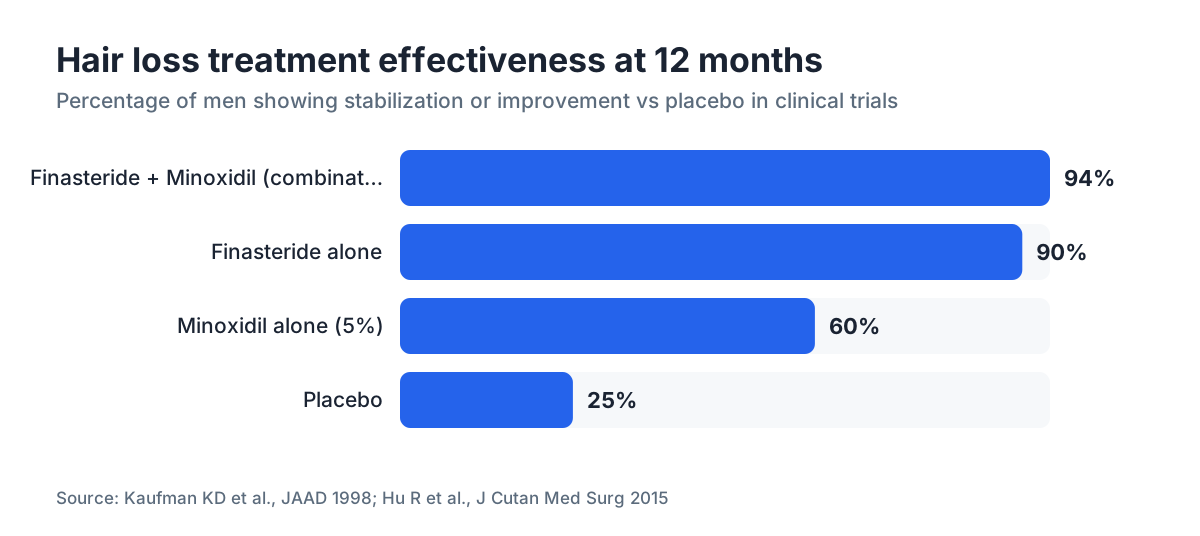
The main 5-year placebo-controlled trial, published in the Journal of the American Academy of Dermatology, found that 48% of men on finasteride showed increased hair count, 42% showed no further loss, and only 10% showed continued progression. In the placebo group, 75% showed continued loss by year five [4]. That's a dramatic gap. The study's own conclusion stated: "Finasteride 1 mg/day is effective and well tolerated for the treatment of male pattern hair loss."
For women, finasteride is a different story. It's not FDA-approved for women and is contraindicated in women who are or may become pregnant because of the risk of feminizing a male fetus. Some dermatologists prescribe it off-label to postmenopausal women. If you're a woman, minoxidil and spironolactone (another off-label option) are more commonly used.
The main side effect concern with finasteride is sexual dysfunction: decreased libido, erectile dysfunction, and ejaculatory disorders occur in roughly 2-4% of men in trial data [2]. A small subset of men report persistent symptoms after stopping the drug, which is called post-finasteride syndrome. The evidence on persistence is contested, but it's real enough to take seriously. Talk to a doctor before starting. Read more in our full finasteride guide.
Topical finasteride is a newer formulation that delivers the drug directly to the scalp with lower systemic absorption. Early data is promising. A 2020 study found topical finasteride 0.25% reduced scalp DHT comparably to oral 1 mg with roughly 50% less systemic DHT suppression [5], which may mean fewer systemic side effects. It's not FDA-approved as a branded topical product yet, but compounding pharmacies make it.
Does minoxidil actually halt hair loss or just slow it?
Minoxidil slows and sometimes reverses loss, but it doesn't block DHT. That distinction matters.
Because minoxidil doesn't address the root hormonal cause in androgenetic alopecia, you need to keep using it indefinitely. Stop it after a year and within 3-6 months you'll typically shed the hairs it was sustaining. Most people call this the minoxidil shed, and it's not actually extra loss, it's just the hair that minoxidil was keeping in anagen finally cycling out.
Topical minoxidil comes in 2% and 5% formulations. The 5% concentration works faster and produces modestly better results [3]. Men should use 5%. Women can use 2% or 5%; the 5% version is FDA-approved for women too, but some women find it causes facial hair growth as a side effect.
Oral minoxidil is different and worth knowing about. At low doses (0.625 to 2.5 mg daily for women, 2.5 to 5 mg for men), it has shown meaningful results in several observational studies and is increasingly prescribed off-label by dermatologists who find it easier to stick with than a twice-daily topical [6]. The side effects at these doses include fluid retention, initial shedding, and in rare cases a reflex tachycardia. Full breakdown is in our oral minoxidil article.
If you want the full picture on what topical minoxidil can and can't do, including the minoxidil side effects that most product pages downplay, read those before you start. And for men specifically, our minoxidil for men guide covers dosing and realistic expectations.
Does combining finasteride and minoxidil work better than either alone?
Yes, and the data is clear on this.
A 2015 randomized controlled trial compared finasteride alone, minoxidil alone, and the combination in men with androgenetic alopecia. Hair count increase was significantly greater in the combination group than in either monotherapy arm [7]. The logic makes biological sense: finasteride reduces the DHT signal that's shrinking follicles, while minoxidil extends the growth phase of whatever follicles remain active. They work on different pathways, so they add up.
In practice, most men who are serious about halting their hair loss end up on both. The combination does mean managing two treatments and two side effect profiles, which is why starting one at a time and giving each 6 months to evaluate makes sense. Our dedicated finasteride and minoxidil combination guide walks through exactly how to sequence them.
If you're a man dealing with a receding hairline specifically, the combination approach is what most hair loss dermatologists recommend in that scenario, because the temples are particularly DHT-sensitive and respond less to minoxidil alone.
What are the non-prescription options and do any of them work?
Low-level laser therapy (LLLT) has the most credible non-prescription evidence outside of minoxidil. The FDA cleared several laser cap and comb devices (note: cleared, not approved, meaning they showed safety and modest efficacy, not the same bar as drug approval). A 2013 randomized trial published in the American Journal of Clinical Dermatology found statistically significant increases in hair density with LLLT versus sham treatment [8]. The effect size is real but smaller than finasteride or minoxidil. These devices cost $200-$900 and require consistent use 3-4 times per week.
Ketoconazole shampoo is used adjunctively. A small older study found 1% ketoconazole shampoo improved hair density compared to a non-medicated shampoo, possibly by reducing scalp inflammation and having mild anti-androgenic effects locally. The evidence is thin, but ketoconazole shampoo costs almost nothing and has a reasonable safety profile, so it's the kind of low-risk add-on that makes sense.
DHT-blocking supplements like saw palmetto and pumpkin seed oil have small studies suggesting benefit, but the trials are short, underpowered, and industry-funded in most cases. Our DHT blocker article goes through the evidence honestly. Short answer: they probably do something, but the effect is modest enough that you can't count on them as a primary strategy.
Platelet-rich plasma (PRP) injections are in-office procedures where your own blood is drawn, the plasma is centrifuged out, and injected into the scalp. Evidence is promising but inconsistent, partly because there's no standardized protocol. A 2019 meta-analysis found statistically significant improvements in hair density, but the studies were heterogeneous enough that confident conclusions are hard to draw. Cost ranges from $1,000-$3,500 per session and is rarely covered by insurance. Typically 3 initial sessions are recommended.
How early do you need to start treatment to actually halt hair loss?
As early as possible. This is the single most consequential variable.
Finasteride and minoxidil can maintain existing hair and sometimes recover recently miniaturized follicles, but they can't resurrect follicles that have been completely dormant for years. Once a follicle is gone, medication won't bring it back, and a transplant becomes the only structural option.
The Norwood scale classifies male pattern baldness from Stage I (minimal recession) through Stage VII (horseshoe pattern). Starting finasteride at Norwood II or III is very different from starting at Norwood V or VI. At earlier stages, you have more follicles to protect, and the medications have more to work with. At later stages, you can still halt further loss, but the baseline you're holding is already significantly compromised.
If you're in your 20s and noticing recession or diffuse thinning, the time to act is now, not after you've watched it for two years. The "wait and see" approach has a real cost measured in follicles you won't get back.
Not sure where you are on the scale? A free AI scan at MyHairline can give you a Norwood stage assessment from photos in minutes, which at least tells you what you're working with before you talk to a doctor.
What does halting hair loss actually cost per year?
Costs vary significantly depending on whether you go generic, branded, or compounded. Here's a realistic breakdown based on 2025 US market prices.
Generic finasteride 1 mg daily costs roughly $10-$30 per month at most pharmacies with a GoodRx-type coupon, so $120-$360 per year [9]. Branded Propecia is dramatically more expensive (over $100/month) and offers no clinical advantage over generic.
Topical minoxidil 5% solution (Kirkland brand or equivalent) runs about $15-$25 for a 3-month supply, so roughly $60-$100 per year. Foam formulations and branded Rogaine cost more, around $30-$50 per month.
Compounded finasteride plus minoxidil topical solutions (which combine both in one product) run $50-$120 per month depending on the compounding pharmacy and telehealth service.
LLLT devices are a one-time cost of $200-$900. PRP injections are $1,000-$3,500 per session out of pocket.
Hair transplants, for those who've already lost significant ground, run $4,000-$15,000+ for a full procedure in the US depending on graft count. Our hair transplant guide covers the specifics on what to expect.
| Treatment | Monthly cost (approx.) | Evidence level |
|---|---|---|
| Generic finasteride 1 mg | $10-$30 | FDA-approved, strong RCT data |
| Topical minoxidil 5% | $5-$15 | FDA-approved, strong RCT data |
| Oral minoxidil (off-label) | $15-$40 | Off-label, growing evidence |
| LLLT device (amortized) | $10-$30 | FDA-cleared, modest RCT data |
| Ketoconazole shampoo | $5-$10 | Weak evidence, low risk |
| PRP injections | $250-$1,000+ | Promising, inconsistent evidence |
| Hair transplant (one-time) | N/A | Surgical, permanent but not progressive |
Are there lifestyle factors that speed up or slow down hair loss?
Lifestyle matters, but less than people want it to. No diet or supplement is going to overcome aggressive androgenetic alopecia on its own. That said, a few factors have real evidence behind them.
Chronic caloric restriction and crash dieting reliably trigger telogen effluvium, that stress-related mass shed mentioned earlier. Rapid weight loss, including bariatric surgery, is a known trigger. Adequate protein intake (roughly 0.8-1.2 grams per kg of body weight daily) is necessary for hair growth because hair shaft is almost entirely keratin, a protein [10].
Iron deficiency is a real and underdiagnosed cause of hair shedding, especially in premenopausal women with heavy periods. A ferritin level below 30 ng/mL is associated with hair shedding even in the absence of clinical anemia. A simple blood test checks this.
Chronic psychological stress elevates cortisol, and elevated cortisol can shift follicles toward the resting phase and worsen androgenetic loss. Whether reducing stress meaningfully slows pattern baldness in practice is hard to study. The effect is probably real but modest compared to the hormonal drivers.
Scalp massage has one small but interesting trial: a 2016 study of 9 Japanese men found that 4 minutes of standardized scalp massage daily for 24 weeks increased hair shaft thickness. Sample size is too small to make strong claims, but the mechanism (mechanical stretching of follicular cells) is biologically plausible and the practice has no downside.
One thing that doesn't cause hair loss despite persistent internet rumors: wearing hats, washing hair too frequently, and normal brushing. These are not drivers of androgenetic alopecia. For a specific claim you've probably heard, our article on does creatine cause hair loss runs through the actual evidence.
When should you see a dermatologist instead of handling this yourself?
A few situations call for a proper medical evaluation rather than a self-directed approach.
If your shedding is sudden and severe, losing several hundred hairs a day for weeks, that's more consistent with telogen effluvium or an underlying medical issue than with garden-variety pattern baldness. Thyroid disorders, autoimmune conditions, and nutritional deficiencies need a diagnosis and specific treatment, not finasteride.
If you're a woman. Women's hair loss is more diagnostically complex, more often has a treatable underlying cause, and the treatment options differ enough from men's that a dermatologist familiar with female hair loss is genuinely worth seeing. Female pattern hair loss can co-occur with PCOS, thyroid disease, and hyperandrogenism, each of which has its own treatment path.
If you have patchy loss rather than diffuse thinning or recession. Circular or irregular patches suggest alopecia areata, which is autoimmune and treated with steroids or, more recently, JAK inhibitors. The FDA approved baricitinib in 2022 and ritlecitinib in 2023 specifically for severe alopecia areata [11].
If you've been on finasteride and minoxidil for 12-18 months with no stabilization and continued decline, a dermatologist can do a trichoscopy (dermatoscope examination of the scalp) and consider other options: spironolactone, dutasteride, PRP, or referral to a hair transplant surgeon.
For most men with early to moderate androgenetic alopecia, starting with a telehealth consultation for finasteride and buying minoxidil over the counter is a reasonable and cost-effective first move. The bar for seeing a dermatologist in person is lower than people think, though. A single visit often clarifies the situation completely.
What's the honest step-by-step plan to halt hair loss?
Here's what I'd actually tell a friend who called asking about this.
Step 1: Figure out what you're dealing with. Is this pattern loss (gradual recession or thinning, family history), or is it sudden shedding? For pattern loss, keep reading. For sudden shedding, see a doctor first.
Step 2: Assess severity. Take photos in consistent lighting. Look at your hairline, your crown, your temples. If you have a partner or close friend, ask them to honestly tell you what they see from behind. Know your baseline so you can track change.
Step 3: Start finasteride if you're a man and don't have contraindications. Generic finasteride 1 mg daily. Get a prescription through a telehealth service or your primary care doctor. It's cheap. Give it 6 months before evaluating. Hair grows slowly, and DHT suppression needs time to show its effect.
Step 4: Add topical minoxidil 5%. Apply it twice daily to the scalp (not the hair shaft). Morning and night, roughly 1 mL each time. Set a reminder. Consistency matters more than anything here. Expect some initial shedding in the first 4-8 weeks. That's normal and temporary.
Step 5: Track progress honestly. Photograph your hairline and crown monthly in the same spot with the same light. Don't rely on feel alone. Hair loss is notoriously hard to perceive in real time. Compare photos at 3 months, 6 months, 12 months.
Step 6: If you've been on both treatments for 12-18 months and you're holding steady, that's a win. If you're still declining, see a dermatologist. Options like dutasteride, oral minoxidil, PRP, or eventually a transplant consultation may be appropriate.
The goal at every stage is to slow the loss enough that the remaining hair looks acceptable for as long as possible, and to make an informed decision about more aggressive intervention if the conservative approach isn't holding. There's no shame in any of the options. Thinking clearly about what you want and what the treatments can realistically deliver is half the battle.
If you want a quick read on where you currently stand before taking any of these steps, the free AI scan at MyHairline gives you a Norwood stage estimate and a sense of how urgently you need to act.
Sources
- American Academy of Dermatology, Hair loss: who gets and causes
- FDA, Minoxidil topical solution OTC monograph history
- Kaufman KD et al., Journal of the American Academy of Dermatology, 1998, finasteride 5-year trial
- Caserini M et al., Drug Delivery, 2020, topical finasteride 0.25% trial
- Randolph M, Tosti A, Journal of the American Academy of Dermatology, 2021, oral minoxidil review
- Hu R et al., Journal of Cutaneous Medicine and Surgery, 2015, combination finasteride and minoxidil RCT
- GoodRx, finasteride 1 mg price reference
- NIH Office of Dietary Supplements, Biotin fact sheet
- FDA, FDA approves first systemic treatment for alopecia areata, 2022