

TL;DR: Thyroid hair loss usually shows up as even thinning across the whole scalp, not a receding hairline or a bald patch. It travels with other clues: fatigue, weight change, feeling cold. A single TSH blood test confirms or rules out thyroid disease. Treat the gland, and hair typically regrows in 3 to 6 months, with full density back within a year.
What does thyroid hair loss actually look like?
The pattern gives it away first. Thyroid hair loss almost never starts at the temples or crown the way male-pattern or female-pattern baldness does. It thins evenly across the whole scalp. Doctors call this diffuse thinning, and it can move fast, sometimes obvious within a few months of a thyroid problem starting.
Look at your eyebrows too. Thinning of the outer third of the brow is one of the more specific signs of an underactive thyroid. Dermatologists call it "madarosis," and it points to hypothyroidism more reliably than almost any other hair-loss finding. If your brows are fading from the outer edges in, get a thyroid test no matter what your scalp is doing [1].
Texture shifts too. With hypothyroidism (underactive thyroid), strands turn dry, coarse, and brittle. With hyperthyroidism (overactive thyroid), hair goes fine and silky before it drops. Neither change proves anything by itself. Stack them with diffuse scalp thinning and a few systemic symptoms, though, and the picture sharpens fast.
Here's the part people miss. Thyroid hair loss is a form of telogen effluvium. The hormone swing shoves a big batch of follicles into the resting (telogen) phase all at once. Two to four months later, those resting hairs shed together. So today's shedding reflects what your thyroid was doing last season, which is why some people check their TSH now, find it normal, and never learn they were out of range earlier [9].
What are the other symptoms that come with thyroid hair loss?
Thyroid hair loss rarely travels alone. The body throws off other signals, and the more of them you can tick, the stronger the case for thyroid disease over stress or genetics.
For hypothyroidism (underactive), the usual companions are:
- Fatigue that sleep doesn't fix
- Unexplained weight gain
- Feeling cold when everyone else is fine
- Constipation
- Brain fog or slow thinking
- Dry skin and a puffy face
- Depression
- Heavy or irregular periods in women
For hyperthyroidism (overactive), the pattern flips:
- Weight loss despite eating normally
- Heart palpitations or a racing pulse
- Feeling hot and sweating more than usual
- Anxiety or irritability
- Diarrhea or more frequent bowel movements
- Trembling hands
- Trouble sleeping
Diffuse thinning plus two or more items from either list means a thyroid panel is the obvious next move. The American Thyroid Association reports that hypothyroidism affects about 4.6 percent of Americans aged 12 and older, and many cases go undiagnosed [11]. That's a lot of people blaming their hair loss on stress or heredity when a treatable gland is the real driver.
Which blood tests actually tell you if your thyroid is causing hair loss?
Start with TSH. Thyroid-stimulating hormone comes from the pituitary gland and tells your thyroid how hard to work. High TSH means the pituitary is shouting at an underperforming thyroid. Low TSH means it's easing off because the thyroid is already producing too much. Most U.S. labs use a reference range of roughly 0.4 to 4.0 mIU/L, though some clinicians push for tighter targets, especially in pregnancy [3].
If TSH comes back abnormal, your doctor usually adds Free T4 (the main hormone the thyroid makes) and sometimes Free T3 (the active form most cells use). Those numbers tell you how severe the problem is.
For hair loss, two more tests earn their spot:
Thyroid antibodies. Hashimoto's thyroiditis is the top cause of hypothyroidism in the U.S., an autoimmune attack on the gland. TPO antibodies (anti-thyroid peroxidase) run high in most Hashimoto's patients. You can have a normal TSH early on and still have Hashimoto's, with the antibody test catching it before TSH moves. Graves' disease drives hyperthyroidism and shows up on TSI (thyroid-stimulating immunoglobulin) testing.
Ferritin. Not a thyroid test, but dermatologists order it alongside because low iron stores cause the exact same diffuse shedding. A 2002 review in the Journal of the American Academy of Dermatology found serum ferritin below 30 ng/mL is tied to hair loss even when hemoglobin is still normal [4]. If both your ferritin and thyroid are off, both need fixing before hair recovers.
Ask for TSH, Free T4, TPO antibodies, and ferritin at minimum. That panel runs about $100 to $200 without insurance depending on the lab, and it catches most of the culprits behind diffuse thinning.
How is thyroid hair loss different from genetic hair loss or other causes?
Pattern is the main tell. Androgenetic alopecia, the genetic kind people call male-pattern or female-pattern baldness, follows set routes. In men it retreats along the receding hairline and thins the crown. In women it widens the center part while the front hairline usually holds. Thyroid hair loss ignores those routes. It comes out everywhere.
Timing splits them too. Genetic loss creeps along over years and decades. Thyroid shedding ramps up over weeks to months once the hormones go sideways. People describe a shower drain that's suddenly full or clumps on the pillow, not a slow recession they only spotted in old photos.
Alopecia areata is worth separating out. That's an autoimmune attack on specific follicles, leaving smooth, round bald patches. It runs with thyroid autoimmunity too (Hashimoto's patients carry higher risk), so the two can show up together, but the patchy look is nothing like diffuse thinning.
The table below lines up the differences across the causes doctors see most:
| Feature | Thyroid hair loss | Androgenetic alopecia | Telogen effluvium (other) | Alopecia areata |
|---|---|---|---|---|
| Pattern | Diffuse, all-over | Patterned (temples, crown, part line) | Diffuse, all-over | Round bald patches |
| Speed of onset | Weeks to months | Years to decades | Weeks to months | Rapid, days to weeks |
| Eyebrow thinning | Common (outer third) | Rare | Rare | Possible (patches) |
| Associated symptoms | Yes (fatigue, weight change, etc.) | No systemic symptoms | Yes (illness, stress, crash diet) | Sometimes (other autoimmune) |
| Reversible with treatment | Yes, usually | Partially (requires ongoing treatment) | Yes, usually | Variable |
| Diagnostic test | TSH, Free T4, antibodies | Clinical exam, family history | Identify trigger, ferritin | Clinical exam, scalp biopsy |
If your doctor can't tell, a scalp biopsy separates these diagnoses with high certainty. It sounds worse than it is. A small punch under local anesthetic, about a week to read.
For the full list of what drives diffuse thinning, the what causes hair loss overview covers it.
Can thyroid medication actually regrow hair?
Yes, for most people. The catch is patience.
Once hypothyroidism is treated with levothyroxine (synthetic T4) and TSH settles into the normal range, follicles come out of their forced rest and re-enter the growth cycle. Dermatology texts cite 3 to 6 months for the first visible regrowth and up to 12 months for full density [5]. Some people get everything back. Others find the hair returns thinner, especially when the thyroid problem ran for a long time.
Hyperthyroidism treated with antithyroid drugs (methimazole, propylthiouracil) or radioactive iodine follows the same arc, though the ride can be rougher because treatment sometimes overshoots into hypothyroidism.
Here's what few doctors warn you about. Hair loss can get worse for the first 1 to 2 months after starting thyroid treatment. Treatment wakes the follicles up and pushes the old telogen hairs out before new growth arrives. It feels like the medication is backfiring. It usually means the system is rebooting the way it should.
If hair hasn't clearly recovered after 6 months of stable, normal thyroid levels, thyroid isn't the whole story. Ask your doctor about co-existing androgenetic alopecia or iron deficiency. Those need their own treatment and won't clear up just because your TSH is fixed.
Want to work on other mechanisms while thyroid treatment catches up? Minoxidil for men and the topical minoxidil side effects page are worth a read. There's little trial data on minoxidil in thyroid hair loss specifically, but general telogen effluvium studies show some benefit and the risk is low.
Can you have normal thyroid levels and still have thyroid-related hair loss?
This is where most confusion lives, and the honest answer is: it depends on when you tested.
Hair loss from a thyroid event often lands 2 to 4 months after the actual hormone swing. Say someone had a big TSH spike in February from a dose change or pregnancy, started shedding hard in April, and drew blood in May once levels had normalized. The test looks clean. The hair loss is real and thyroid-driven. It was just late [9].
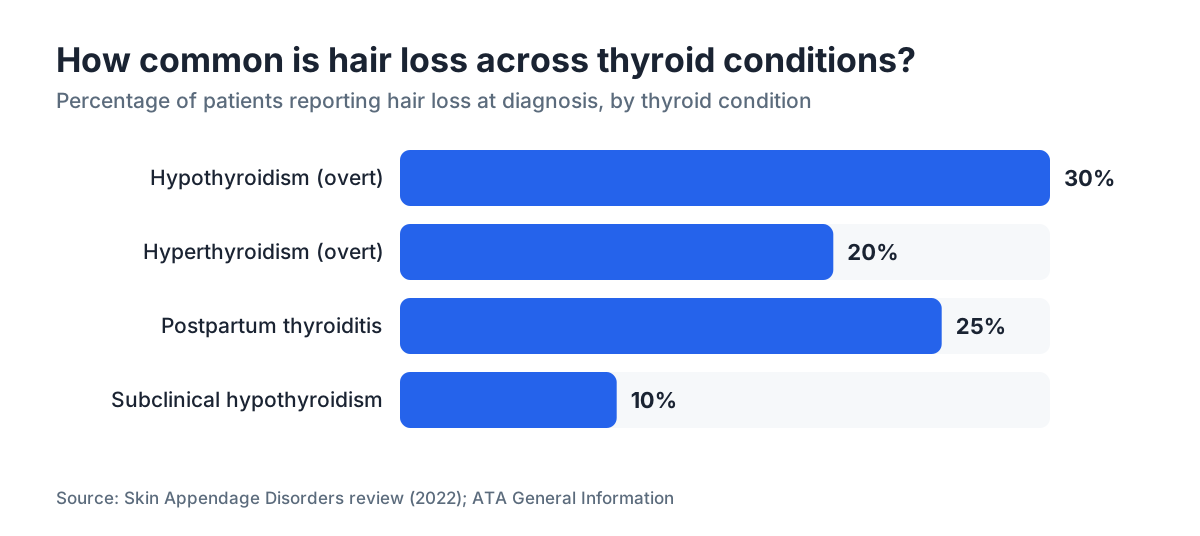
Then there's "subclinical hypothyroidism," where TSH is mildly high (usually 4 to 10 mIU/L) but Free T4 stays in range. Some patients report hair loss at these levels. The evidence for treating subclinical hypothyroidism just to save hair is mixed, and the American Thyroid Association is cautious about treating a TSH under 10 mIU/L without clear symptoms [6]. If you have several symptoms plus real hair loss, that finding earns a conversation with an endocrinologist instead of a shrug.
Hashimoto's antibodies are another angle. Antibody positivity with a currently normal TSH can lead overt disease by years, and some clinicians report patients noticing hair changes before TSH budges. The evidence here is mostly observational, not controlled trials. So the truthful answer is nobody has great data on it yet, but it's not a crazy concern.
One normal TSH doesn't close the book if your symptoms point hard at thyroid involvement. Repeat testing after a few months, or adding Free T4 and antibodies, is reasonable.
Does thyroid hair loss affect women and men differently?
Thyroid disease itself lands far more on women. Hashimoto's thyroiditis is 7 to 10 times more common in women than men, and hypothyroidism overall hits women at roughly 5 to 8 times the rate [10]. So most thyroid hair loss research and clinical experience comes from female patients.
In women, thyroid loss can stack on female-pattern androgenetic alopecia, postpartum shedding, or perimenopause hair changes, which muddies the picture. A new mother with postpartum hypothyroidism (which affects roughly 5 to 10 percent of new moms) and early genetic thinning is fighting three drivers at once. All three are real, and treating only the thyroid may not bring hair fully back.
In men, diffuse thinning shows up less often as the headline complaint, precisely because male-pattern baldness produces an obvious patterned loss. That can delay diagnosis. A man with hypothyroidism-driven diffuse thinning gets told it's just male-pattern baldness and never gets a TSH. If your thinning skips the temple-to-crown route and comes with fatigue, weight gain, and feeling cold, push for the blood test.
Women who are pregnant or planning to be should know thyroid hormone needs jump during pregnancy. The American Thyroid Association's 2017 guidelines advise women on levothyroxine to raise their dose by about 30 percent as soon as pregnancy is confirmed [6]. Undertreated hypothyroidism in pregnancy carries risks well past hair loss.
What else can cause the same diffuse hair thinning, and how do you rule it out?
Thyroid disease sits on the differential for diffuse thinning, but it's not the only name on the list. Rule out a few others before you land anywhere:
Iron deficiency. The most common nutritional cause of diffuse shedding. Ferritin below 30 ng/mL is the rough line where hair loss risk climbs, even with no anemia. Women in their reproductive years are at highest risk.
Chronic stress or illness. Major surgery, a severe infection, crash dieting, or long stretches of psychological stress can all trigger telogen effluvium. The thyroid panel reads normal, but the shedding is just as heavy. The telogen effluvium overview walks through the mechanism.
Nutritional deficiencies. Zinc, biotin, and vitamin D deficiencies show up in case reports and small studies, though the evidence is thinner than for iron. Biotin supplements get marketed hard for hair, but the FDA has warned they can skew thyroid lab results at high doses taken before bloodwork [7].
Polycystic ovary syndrome (PCOS). In women, androgen excess from PCOS drives diffuse-to-patterned thinning that overlaps with thyroid patterns. DHEA-S and free testosterone are the labs that sort it out.
Certain medications. Beta-blockers, retinoids, lithium, antiepileptics, and some chemo agents all cause diffuse shedding. A medication review belongs in the workup.
A good primary care doctor or dermatologist runs one panel: TSH, Free T4, CBC, ferritin, zinc, vitamin D, and in women, DHEA-S and free testosterone. One draw, most treatable causes covered. Some hair loss supplements fill nutritional gaps, but supplements shouldn't stand in for testing that confirms what's actually low.
When should you see a doctor, and which specialist do you need?
See a doctor if diffuse shedding has run more than 2 months, if you're losing more than about 150 hairs a day (a rough clinical marker, not a hard cutoff), or if the shedding comes with any of the systemic symptoms above.
Who you see first depends on access. A primary care physician can order TSH and the supporting labs, and that's the right start. If the labs show thyroid dysfunction, they'll manage it or refer you to an endocrinologist. If TSH is normal and the shedding keeps going, a dermatologist is your next stop. They examine the scalp under a dermatoscope, read the loss pattern more precisely than a GP usually can, and order a scalp biopsy when it's needed.
Want a preliminary read before your appointment? The free AI hair scan at MyHairline analyzes your scalp photos and flags diffuse thinning versus patterned loss, which is useful context to bring in. It doesn't replace a TSH test, but knowing your pattern helps you push for the right conversation.
Don't wait if you also have heart palpitations, unexplained weight change, or severe fatigue. Those plus hair loss call for prompt evaluation, not a months-long queue.
If thyroid levels are treated, do you need any other hair loss treatment?
For most people with pure thyroid hair loss, treating the thyroid is enough. A few situations call for more.
First, if genetic hair loss (androgenetic alopecia) sits under the thyroid issue, a normal TSH won't stop the genetic thinning. That needs its own plan: topical minoxidil, finasteride for men, or other options. The stack of thyroid treatment plus finasteride plus minoxidil, covered in the finasteride and minoxidil overview, is sometimes the right call when causes overlap.
Second, iron deficiency needs its own fix. Ferritin stores rebuild slowly on oral iron, usually over 3 to 6 months. Hair response tends to follow 1 to 3 months after ferritin clears the threshold.
Third, people who ran with untreated thyroid disease for years rather than months sometimes see incomplete recovery even after TSH normalizes. Follicles stuck in a long resting state can miniaturize for good. A hair restoration specialist's read is worth getting in those cases. A hair transplant consultation isn't out of line if real permanent thinning sticks around after a full year of stable thyroid treatment.
A word on DHT blockers: these target the androgen side of hair loss, not thyroid-driven telogen effluvium. No evidence says they speed thyroid hair recovery. Don't add them expecting thyroid benefits.
The MyHairline AI scan works as a follow-up tool too, tracking density change photographically over months of treatment so you can see whether regrowth is hitting pace.
What do the numbers actually show about thyroid disease and hair loss?
Prevalence data sets the scale. In a 2019 cross-sectional survey of 5,461 people with diagnosed hypothyroidism, about 32 percent reported hair loss as a symptom [8]. That puts it among the three most common presenting complaints, next to fatigue and weight gain.
A 2022 dermatology review in Skin Appendage Disorders reports hair loss in 20 to 30 percent of hypothyroid patients and roughly 20 percent of hyperthyroid patients at diagnosis [5]. Duration matters: the longer thyroid disease sits undiagnosed, the worse the hair loss tends to be.
Regrowth data is messier because most of it comes from case series and observational work, not randomized trials. The working consensus is that 3 to 6 months of normalized thyroid levels brings visible improvement for most patients, with maximum recovery by 12 months. Full return to pre-illness density happens for most, not all.
One number to sit with: the American Thyroid Association estimates about 20 million Americans have some form of thyroid disease, and up to 60 percent don't know it [2]. That gap between how common the disease is and how often it's caught is wide enough that thyroid testing belongs early on the list for anyone with unexplained diffuse thinning.
Sources
- American Academy of Dermatology, Hair Loss: Signs and Symptoms
- American Thyroid Association, General Information / Press Room
- National Institutes of Health, MedlinePlus: TSH test
- Journal of the American Academy of Dermatology, Rushton DH 2002: Nutritional factors and hair loss
- Skin Appendage Disorders (Karger), review on hair loss and thyroid disease
- American Thyroid Association, 2017 Guidelines for Thyroid Disease During Pregnancy (professional guidelines)
- U.S. Food and Drug Administration, Biotin and lab test interference safety communication
- Clinical Thyroidology for the Public (ATA), survey data on hypothyroidism symptom prevalence
- MedlinePlus, National Library of Medicine: Telogen effluvium overview
- National Institute of Diabetes and Digestive and Kidney Diseases, Hashimoto's Disease
- American Thyroid Association, Hypothyroidism