

TL;DR: Hair loss usually starts 6 to 12 months before a mirror shows it. The earliest signals are daily shedding that climbs past roughly 100 hairs, scalp itch or tenderness, a part line that keeps widening, finer hair at the root, and slower regrowth after a cut. Catch these early and treatment works far better.
Why does hair loss start so long before you can actually see it?
The mirror is a late detector. By the time you can see scalp through your hair or spot thinning in a photo, you have likely already lost somewhere between 25 and 50 percent of the hairs in that zone [1]. The damage was measurable at the follicle for months before it crossed any visible line.
Here is the mechanism. Every follicle runs on a cycle: growth (anagen), transition (catagen), and rest (telogen). When something disrupts that cycle, follicles miniaturize a little at a time. The shaft gets finer, the growth phase shortens, and the follicle spends more of its time resting. None of that shows up in a bathroom glance.
So the mirror test fails you exactly when you need it most. You need earlier signals, and they exist.
The shower drain and the scalp itself hand you clues well ahead of anything visible. Most people ignore them. Shedding feels routine, and a bit of scalp itch seems unrelated to hair. It is not unrelated.
How much hair shedding per day is actually normal?
Normal daily shedding runs 50 to 100 hairs, though published ranges stretch to 150 depending on hair length, how often you wash, and the season [2]. The absolute number is not the alarm. A change from your own baseline is.
If you used to pull three or four hairs off your pillow and now you count fifteen, that shift tells you more than any single-day total. Same with the drain. A clump that would have surprised you six months ago is the signal, not one heavy morning.
Try the hair pull test. Grasp about 40 to 60 hairs near the scalp between two fingers and pull slowly but firmly from root to tip. More than 6 hairs coming out counts as a positive result and is worth raising with a dermatologist [3]. It does not diagnose anything by itself, but you can repeat it at home and track the trend.
Seasonal shedding is real, not an excuse. Telogen effluvium tied to seasonal change tends to peak in late summer and autumn. If your shedding spikes every September and settles down in 2 to 3 months, that pattern differs from a steady, progressive climb that never recovers. Learn more about telogen effluvium if your shedding follows a big physical or emotional stressor.
What does a widening part line mean for hair loss?
A part that keeps widening is one of the most reliable early signs in women, and it matters for men too. The follicles along the midline thin first, producing hairs that are finer and shorter and no longer fill the space. Scalp shows where hair used to sit.
This is an early marker for androgenetic alopecia in women (female-pattern hair loss), which spreads as diffuse thinning across the top rather than a receding front. A part that has visibly widened over 12 to 18 months is a clinical sign worth an evaluation, even if it looks minor in casual photos [4].
Men usually see a shifting hairline first instead. Most men develop some mature hairline recession in their 20s, and that is not a disease. Rate is the question. A hairline that moves back more than 1.5 cm over 12 months, or temples that keep deepening, points to androgenetic alopecia rather than simple maturation. See receding hairline for how normal maturation compares to early Norwood progression.
Can scalp itch, dandruff, or sensitivity be early signs of hair loss?
Yes, and almost nobody connects the two. Seborrheic dermatitis, a common inflammatory scalp condition, goes hand in hand with more shedding. Chronic inflammation from the yeast Malassezia can shorten the growth phase. Research has found higher Malassezia colonization in people with androgenetic alopecia than in controls, alongside inflammation linked to shedding [5].
So a scalp that itches, flakes, or feels tight is more than a dandruff nuisance. If it lines up with heavier shedding, treat the inflammation and watch whether the shedding eases.
Tenderness without flaking can also trace back to DHT-driven inflammation at the follicle. Some people describe a tender or faintly burning feeling at the hairline or crown in the early stages of androgenetic alopecia. It is not universal, and no large controlled trial has pinned it down precisely, but it turns up again and again in patient histories. If your scalp is tender for no clear reason and you are shedding more, tell a dermatologist instead of blaming a new shampoo.
How can you tell if individual hairs are thinning before overall density drops?
Shaft diameter shrinks before hair count does. In androgenetic alopecia, follicle miniaturization steadily produces finer, shorter hairs. You can sometimes feel it before you see it. Hair that used to feel thick between your fingers starts to feel silkier, almost fragile.
Run a simple comparison. Pull one hair from the area you are worried about (usually the crown or temples) and one from the back of your head just above the nape. Hold them side by side against a light background. If the hair from the concern area is clearly thinner, that is miniaturization at work [6].
Dermatologists measure this with a trichoscope. The ratio of miniaturized hairs (under 0.03 mm in diameter) to full terminal hairs is a diagnostic tool. You cannot copy that at home, but the side-by-side diameter check gets you close.
Watch your length too. Hair that used to reach your collar in four months may now stop short. That happens because the growth phase is shortening. A maximum length your hair never seems to pass anymore is a real early sign.
Are there physical changes in how hair looks or behaves that signal early loss?
Several, and they are easy to miss.
Ponytail circumference. If you have long hair and the elastic suddenly needs an extra wrap, the circumference has dropped. Women often catch this before they see thinning directly.
Scalp showing through in photos. A photo under overhead or direct flash exposes scalp far more honestly than a mirror in soft bathroom light. Compare shots taken in the same lighting two years apart. The scalp-to-hair ratio is a real data point.
Broken hairs versus shed hairs. A shed hair has a tiny white bulb at the root. A broken hair tapers to a point with no bulb. If most of what you find is broken and bulbless, the problem may be structural damage from heat or chemical processing, not follicle-level loss. Both matter. They are different problems with different fixes.
Changes at the temples. In men headed toward androgenetic alopecia, the temples often show the first subtle shift before the front or crown does. Very fine, short hairs where thicker ones used to grow is a classic early Norwood sign.
What blood tests or lab results can show hair loss is coming?
No blood test predicts androgenetic alopecia. Genetics drives it, and while genetic tests exist, they tell you little at the individual level. What blood work can do is rule out systemic causes of shedding, some of them reversible.
The standard panel a dermatologist orders for new hair loss covers ferritin (iron stores), a complete blood count, thyroid-stimulating hormone (TSH), and sometimes total and free testosterone, sex hormone binding globulin (SHBG), and vitamin D [7]. Ferritin carries a lot of weight. Iron deficiency can drive significant telogen effluvium, and ferritin below 30 ng/mL is linked to shedding even when hemoglobin reads normal. Some clinicians push for ferritin above 70 ng/mL for good hair cycling, though that threshold is debated.
Thyroid disease cuts both ways. Hypothyroidism and hyperthyroidism both cause diffuse shedding. A TSH outside the reference range is a treatable cause, and if it is abnormal while your hair is shedding, thyroid treatment comes first, not a hair drug.
Understanding what causes hair loss makes it easier to read your own results and ask sharper questions at the appointment.
What is the difference between temporary shedding and permanent hair loss?
This is the question that keeps people up at night, and the honest answer is that you often cannot be sure in the first 3 to 4 months.
Telogen effluvium is the diffuse shedding set off by stress, illness, surgery, crash dieting, childbirth, or fast weight loss. It usually peaks 2 to 4 months after the trigger and clears within 6 to 12 months once the trigger is gone [8]. The follicles are not permanently damaged. The shed hairs come back.
Androgenetic alopecia does not play by that trigger-and-recover rule. It moves steadily, hairs getting finer year over year until the follicle stops making visible hair at all.
The practical read: if a major stressor (surgery, a COVID-19 infection, a loss, an extreme diet) hit roughly 2 to 4 months before the shedding started, acute telogen effluvium is the likely story. If shedding crept in with no clear trigger, or it is 9 months deep and still going, the hormonal cause looks more plausible and early treatment matters more.
A scalp biopsy can tell the two apart under a microscope, though straightforward cases rarely need one. A dermatologist can usually call it in the room by reading the telogen-to-anagen ratio in the pull test and the trichoscopic pattern.
How do family history and genetics factor into early detection?
Androgenetic alopecia is polygenic. Multiple genes feed it, not one. The old line that you inherit baldness strictly from your mother's father is a myth. Both sides of the family contribute, and the inheritance is messier than any single gene [9].
Still, family history is the best predictor you have without lab work. If your father, your maternal grandfather, or both lost significant hair before 40, your own risk is meaningfully higher. Not a certainty. Higher.
DHT sensitivity is the mechanism. Follicles in the front, temples, and crown are genetically wired to react to dihydrotestosterone in susceptible people, and DHT shrinks those follicles over time. Scalp DHT levels drive the process, not blood levels. Understanding DHT blockers matters here because both finasteride and topical treatments aim at one thing: cutting how much DHT reaches the follicle.
If you have a strong family history and you are a man in your early 20s, start photographing your hairline once a year and watch your part width. That beats waiting for the mirror moment. Women with a first-degree relative who thinned after menopause should do the same.
When should you actually see a doctor about hair loss signs?
Sooner than most people do. The average person waits 3 to 5 years after first noticing changes before seeking help [10]. That delay costs you, because the most effective treatments, minoxidil and finasteride, work best while follicles still make fine hair. Once a follicle goes truly dormant, regrowth gets much harder.
See a dermatologist if:
- You are shedding noticeably more than usual for longer than 8 weeks with no clear trigger
- Your part has visibly widened over 6 to 12 months
- The pull test yields more than 6 hairs consistently
- You can see scalp through your hair in direct overhead light and could not a year ago
- Your hairline has shifted back or the temples have receded
- You have patchy loss anywhere (more likely alopecia areata, which needs prompt evaluation)
A board-certified dermatologist can run a trichoscopy in the office in about 15 minutes. It shows the follicle openings and miniaturized hairs clearly enough to read the pattern and severity. That beats any app-based analysis for actual diagnosis.
Myhairline.ai's free AI hair scan can help you put numbers on what you are seeing at home and decide whether to book the appointment. It does not replace an in-person exam when you are genuinely concerned.
If androgenetic alopecia is confirmed, the two FDA-approved options are minoxidil (topical and oral) and finasteride [14]. Minoxidil for men and finasteride each cover the evidence, the timeline, and what side effects actually look like in practice. The best results usually come from running both. See finasteride and minoxidil together for the combination data.
What does early-stage hair loss look like on a Norwood or Ludwig scale?
The Norwood scale for men and the Ludwig scale for women are the classification systems dermatologists use to describe pattern and severity.
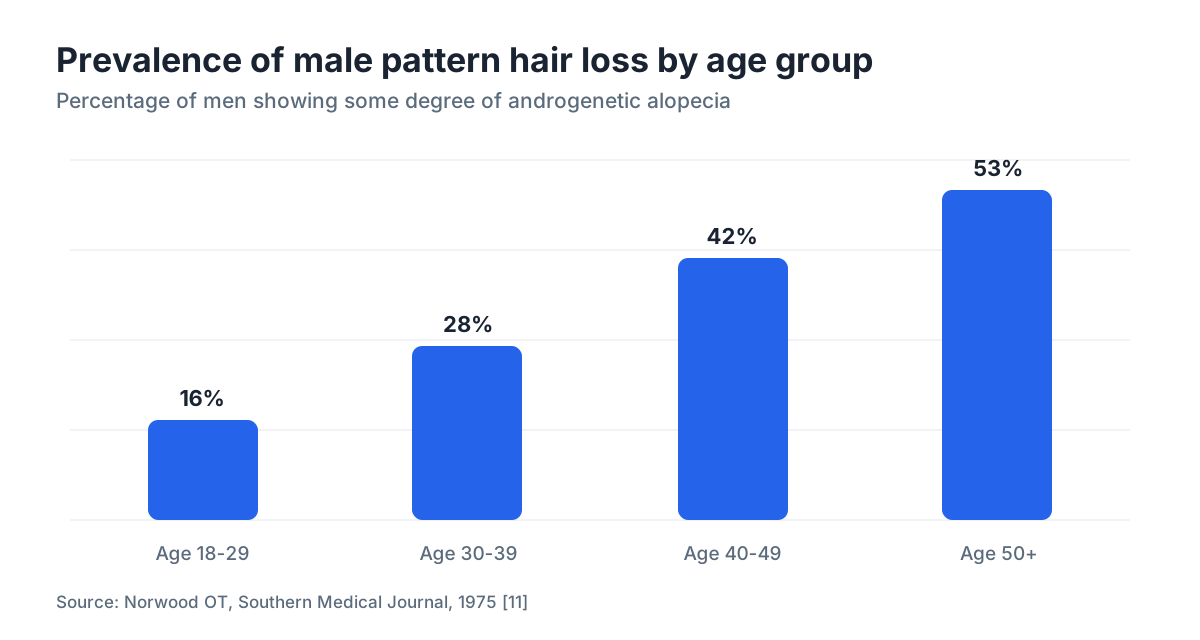
Norwood I and II often slip past the casual observer. Norwood I is basically a normal adult hairline. Norwood II shows slight temple recession while the front stays largely intact. This is where most men wave it off as aging. It is also where treatment works best. Norwood III brings more pronounced temple recession, and crown thinning shows up at Norwood IIIA and Norwood IV [11].
For women, Ludwig I is a widening center part with a normal frontal hairline. Ludwig II is heavier thinning across the top. The frontal hairline usually holds, which is a key clinical difference from male-pattern loss.
Want a rough self-assessment? Find a photo of yourself from 3 to 5 years ago under similar lighting and compare temple recession and part width point by point. Casual mirror glances are poor at tracking slow change.
| Scale | Stage | What it looks like | Typical age of first detection |
|---|---|---|---|
| Norwood (men) | I | Normal adult hairline, no real recession | 20s |
| Norwood (men) | II | Slight temple recession | 20s to 30s |
| Norwood (men) | III | Defined temple recession, visible in photos | 25 to 35 |
| Norwood (men) | IV | Crown thinning begins | 30 to 40 |
| Ludwig (women) | I | Widening center part | 30s to 40s |
| Ludwig (women) | II | Broader diffuse crown thinning | 40s to 50s |
Can lifestyle factors like stress, diet, or supplements cause or speed up early loss?
Yes on all three.
Chronically high cortisol disrupts the hair cycle directly. Animal studies and clinical observation both point to stress pushing more follicles into the resting phase early. A big acute stressor sets off the telogen effluvium wave described earlier. Chronic low-grade stress is harder to measure but likely keeps shedding elevated over months.
Diet gets underestimated. Cutting below about 1,000 calories a day is a well-established trigger for telogen effluvium. Protein deficiency starves the follicle of the amino acids it needs to build keratin. Iron, zinc, vitamin D, and biotin deficiencies all link to shedding, but supplementing only helps if you are actually deficient [12]. Throwing biotin at a hair problem when your levels are normal does essentially nothing. Hair loss supplements breaks down which ones have any real evidence.
Creatine has one study showing an association with higher DHT, which raised the question of whether it speeds androgenetic alopecia. The evidence is thin and far from settled. Does creatine cause hair loss? is the full breakdown if this worries you.
Smoking, alcohol, and poor sleep all track with faster hair aging in observational data, though proving cause is harder. Stack a genetic predisposition on top of bad habits across the board, and you are probably giving the process a push.
How do you track early hair loss at home so you have something useful to show a doctor?
A few methods that need nothing beyond a phone.
Photos every 3 months under the same lighting. Use the same spot, same time of day, overhead light directly above you. Part your hair the same way each time. Shoot from directly above (a selfie aimed up at a ceiling light works). Date every photo. That builds an actual time series you can compare against.
The 60-second comb count. Comb your hair forward over a white towel for 60 seconds after sleeping (dry, unwashed, no product). Count the hairs on the towel. Do it weekly and average the numbers. One small study using this method found counts above 10 hairs turned up far more often in people with androgenetic alopecia than in controls [13]. Crude, but repeatable.
The hair pull test, from the same zones each time: frontal, crown, occipital. More than 6 hairs from the frontal or crown zone is worth noting.
Ponytail circumference, if that applies to you, tracked with a soft measuring tape.
Bring the photo series and comb counts to the appointment. Dermatologists constantly see patients who just decided they are worried and have nothing objective in hand. A 12-month photographic record changes the conversation and speeds up the diagnosis. If you used the free AI scan at myhairline.ai for a baseline density read, export that report and bring it too.
Sources
- American Academy of Dermatology, Hair loss overview
- American Academy of Dermatology, Hair loss: who gets and causes
- Phillips TG et al. Alopecia: Evaluation and Treatment. American Family Physician, 2017
- National Institute of Arthritis and Musculoskeletal and Skin Diseases (NIAMS), hair loss information
- Pierard-Franchimont C et al. Ketoconazole shampoo and androgenetic alopecia. Skin Pharmacology and Applied Skin Physiology, 2002
- Rushton DH. Nutritional factors and hair loss. Clinical and Experimental Dermatology, 2002
- Almohanna HM et al. The Role of Vitamins and Minerals in Hair Loss: A Review. Dermatology and Therapy, 2019
- Phillips TG et al. Alopecia: Evaluation and Treatment. American Family Physician, 2017
- Redler S et al. Genetics of female pattern hair loss. Experimental Dermatology, 2017
- Hunt N, McHale S. The psychological impact of alopecia. BMJ, 2005
- Norwood OT. Male pattern baldness: classification and incidence. Southern Medical Journal, 1975
- Guo EL, Katta R. Diet and hair loss: effects of nutrient deficiency and supplement use. Dermatology Practical and Conceptual, 2017
- Wasko CA et al. Standardizing the 60-second hair count. Archives of Dermatology, 2008
- U.S. Food and Drug Administration, Drugs