
TL;DR: Chronic scalp inflammation narrows blood supply to follicles and speeds up miniaturization. The natural approaches with real evidence: tea tree oil, pyrithione zinc shampoos, omega-3 fatty acids, rosemary oil, and stress reduction. None of them cure androgenetic alopecia alone. Cutting inflammation is a legitimate supporting move alongside proven treatments like minoxidil or finasteride.
Does scalp inflammation actually damage hair follicles?
Yes, and the mechanism is more direct than most people think.
Hair follicles sit in a protected immunological niche. Under normal conditions the immune system mostly leaves them alone. When that protection breaks down, inflammatory cells, mainly CD4+ T lymphocytes and mast cells, cluster around the follicle's outer root sheath and the dermal papilla below it. That cluster restricts microcirculation and floods the local tissue with cytokines like IL-1β and TNF-α, which biopsy studies have linked to follicle miniaturization [1].
Research on perifollicular inflammation describes it as a factor that contributes to the progression of androgenetic alopecia rather than its root cause [1]. That distinction matters. It means treating inflammation alone won't stop genetic hair loss, but it may slow the pace.
Two distinct patterns show up on scalp biopsies. The first is low-grade chronic inflammation, the kind found in ordinary androgenetic alopecia. The second is the aggressive inflammation driving seborrheic dermatitis, scalp psoriasis, and frontal fibrosing alopecia, where follicle destruction can be permanent. Which one you have changes what you should do, which is why a dermatologist's biopsy stays the gold standard when you're losing hair and don't know why. You can start with a free AI hair analysis at MyHairline to get a read on your pattern before booking that appointment.
Inflammation is a real, measurable stressor on follicles. Reducing it matters. It's just not the whole answer.
What causes scalp inflammation in the first place?
Several things, usually layered on top of each other.
Seborrheic dermatitis is one of the most common. It's driven by an overgrowth of Malassezia yeast, which the scalp normally carries at low levels. When Malassezia multiplies, the immune system fires back with redness, flaking, and that oily scale. The American Academy of Dermatology reports seborrheic dermatitis affects 1 to 3 percent of the general population and up to 34 percent of people with HIV [2]. The irritation it causes around follicle openings is a documented stressor.
Contact dermatitis from hair products is underrated. Fragrance, preservatives like methylisothiazolinone, and some surfactants trigger delayed hypersensitivity reactions. You might never connect the redness to a conditioner you started three weeks ago.
High-DHT environments, central to androgenetic alopecia, also appear to ramp up local inflammatory signaling in scalp tissue. That's part of why some researchers argue a DHT blocker like finasteride does more than limit miniaturization directly.
Systemic inflammation feeds in too. Chronic stress raises cortisol, which disrupts the hair cycle and can trigger or worsen telogen effluvium. Poor diet, poor sleep, and metabolic problems all add to an inflammatory load the scalp feels downstream.
Then there's mechanical and thermal irritation: tight hairstyles, heat styling, and hard brushing physically break the scalp's stratum corneum and invite secondary inflammation. Simple, and often ignored.
Which natural ingredients actually have evidence behind them?
This is where most articles get lazy. Let's be specific.
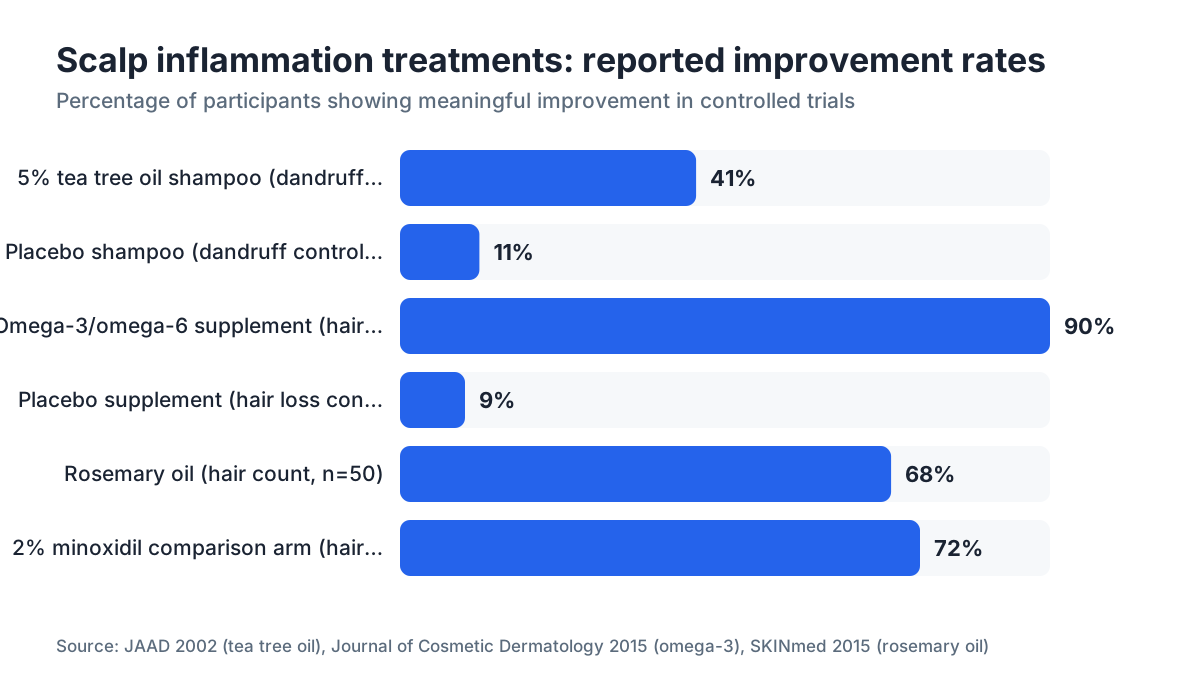
Tea tree oil (Melaleuca alternifolia) A double-blind, randomized controlled trial in the Journal of the American Academy of Dermatology tested a 5% tea tree oil shampoo against placebo in 126 patients with mild to moderate dandruff. The treatment group had a 41% improvement in total dandruff area versus 11% in placebo after four weeks [3]. The mechanism is antifungal action against Malassezia. Tea tree oil doesn't touch every cause of scalp inflammation, but for Malassezia-driven seborrheic dermatitis it's the most credible natural option out there.
Pyrithione zinc Technically a synthetic compound, but it shows up in over-the-counter "natural-adjacent" shampoos constantly. The FDA lists it as a Category I active ingredient for dandruff control at 0.3 to 2% concentration [4]. It reduces Malassezia load and measurably lowers scalp inflammation markers. Not exotic. It works.
Omega-3 fatty acids A six-month randomized controlled trial in the Journal of Cosmetic Dermatology followed 120 women taking an omega-3 and omega-6 supplement with antioxidants. At month six, 89.9% of the supplement group reported less hair loss versus 8.9% in placebo [5]. The proposed mechanism is dialing down inflammatory eicosanoids in scalp tissue. Real trial, not a petri dish. The catch: it was women only and funded by the supplement maker, so read the numbers as directional.
Rosemary oil A 2015 randomized comparative trial in SKINmed pitted rosemary oil against 2% minoxidil in 100 patients with androgenetic alopecia over six months. Hair count rose similarly in both groups, and the rosemary arm had less scalp itching [6]. Rosemary appears to mildly inhibit 5-alpha reductase and improve scalp blood flow. It's not a swap for minoxidil for men, but it's a fair complement.
Ketoconazole (1% OTC shampoo) Not botanical, but it's available OTC and worth knowing. A randomized study found 1% ketoconazole shampoo used every 2 to 4 days over 21 weeks produced hair density and size gains comparable to 2% minoxidil in men with androgenetic alopecia [7]. It cuts Malassezia and has weak anti-androgenic activity at the scalp. If your inflammation has a fungal component, this is a high-value, low-cost option.
What doesn't have real evidence Castor oil, onion juice, and most carrier oil blends have case reports and small uncontrolled studies at best. They might not hurt, but the evidence bar is low, and some people get contact sensitization from them.
How do diet and nutrition affect scalp inflammation?
Diet is the lever most people underrate, partly because the effects are slow and hard to pin down.
The Mediterranean dietary pattern has the most consistent anti-inflammatory evidence in the peer-reviewed literature. A cross-sectional study of 1,000 adults in Italy found that higher adherence to a Mediterranean diet was tied to lower odds of androgenetic alopecia, with men in the top adherence tertile showing an odds ratio of 0.6 compared to the lowest [8]. The researchers credited this partly to reduced systemic inflammation and partly to higher micronutrient intake.
Specific nutrients tied to follicle inflammation:
| Nutrient | Role in follicle health | Food sources |
|---|---|---|
| Omega-3 fatty acids (EPA/DHA) | Reduce pro-inflammatory prostaglandins in scalp | Fatty fish, walnuts, flaxseed |
| Vitamin D | Keratinocyte differentiation; deficiency linked to alopecia areata | Salmon, egg yolks, sunlight |
| Zinc | Sebum regulation; deficiency worsens seborrheic dermatitis | Oysters, beef, pumpkin seeds |
| Iron (ferritin) | Ferritin below 30 ng/mL associated with telogen effluvium in women | Red meat, lentils, spinach + vitamin C |
| Antioxidants (vitamins A, C, E) | Neutralize reactive oxygen species around follicles | Colorful vegetables, citrus, almonds |
Supplementation is not the same as dietary intake. Hair loss supplements vary wildly in quality, and megadosing some nutrients, particularly vitamin A and selenium, can paradoxically cause shedding. Get bloodwork before you supplement so you know what you're actually short on. Guessing is expensive and sometimes counterproductive.
Does stress really cause scalp inflammation, and what can you do about it?
Yes. This link is well-documented, and the pathway runs both directions.
Stress triggers the hypothalamic-pituitary-adrenal axis to release corticotropin-releasing hormone (CRH). Scalp skin cells, including mast cells next to follicles, carry CRH receptors. When those receptors fire, local mast cells degranulate and dump inflammatory mediators including histamine, IL-8, and substance P [9]. That's a measured response in human scalp tissue, not speculation.
The main output of chronic stress on hair is telogen effluvium, where follicles shift early from growth to resting phase and diffuse shedding follows 2 to 4 months later. Separate from that, the inflammation chronic stress produces is thought to worsen the perifollicular damage in androgenetic alopecia.
What actually lowers the stress response enough to matter for your scalp:
- Consistent aerobic exercise. The American Heart Association recommends 150 minutes per week of moderate activity for adults [11], and that level measurably reduces serum cortisol and inflammatory markers like C-reactive protein.
- Sleep. Chronic sleep restriction under 6 hours a night raises IL-6 and TNF-α in humans, both of which show up in follicle biopsy inflammation profiles. The CDC recommends 7 or more hours per night for adults [12].
- Mindfulness-based stress reduction (MBSR) has randomized trial evidence for lowering cortisol, though nobody has scalp-specific biopsy data connecting MBSR to less follicle inflammation. The systemic pathway is plausible.
None of this is glamorous. But stress management is probably more useful for scalp inflammation than any oil you'll ever apply.
How should you wash your scalp to reduce inflammation?
Most people's washing habits are either too harsh or too rare, and both cause problems.
Skipping washes lets sebum, Malassezia, and dead skin build up. That buildup drives the fungal load behind seborrheic dermatitis. Washing too hard strips the scalp's lipid barrier, triggers rebound sebum production, and causes contact irritation.
A reasonable protocol for an inflamed scalp:
Wash two to three times a week with a gentle, fragrance-free shampoo, or a medicated one with pyrithione zinc or 1% ketoconazole if you have visible flaking. Work the shampoo into the scalp (not the length of the hair) with fingertip pads, not nails. Leave a medicated shampoo on for two to five minutes before rinsing so the active ingredient has time to work.
Water temperature matters more than people think. Very hot water dilates scalp blood vessels, which feels good but can briefly worsen inflammatory skin conditions. Lukewarm water removes sebum fine and treats reactive scalps better.
Clarify monthly. Buildup from dry shampoo, styling products, and silicone conditioners can clog follicle openings and create a microenvironment that favors bacterial and fungal growth. A sulfate shampoo once a month clears that without daily harshness.
If you use minoxidil for men, apply it to a clean, dry scalp. Minoxidil over product residue or flaking skin absorbs less efficiently, which is one practical reason scalp health and treatment results are linked.
What scalp treatments can you do at home to calm inflammation?
A few home treatments have real physiological rationale. A few are mostly ritual.
Diluted apple cider vinegar rinse ACV has a pH around 2 to 3 and may briefly help restore scalp pH (normal scalp sits near 5.5) after alkaline shampoos disrupt it. There's no controlled trial I can point to for scalp inflammation specifically. The risk is low if diluted (1 part ACV to 4 parts water), but on an already irritated or broken scalp it stings and may worsen the barrier.
Cold water final rinse Cold water causes vasoconstriction, tightens the cuticle, and reduces transient inflammatory flushing. No clinical trial here either, but the mechanism is coherent and the cost is zero.
Scalp massage A 2016 standardized scalp massage study in Eplasty found that daily 4-minute massages over 24 weeks increased hair thickness in 9 Japanese men [10]. The proposed mechanism is mechanical stretching of dermal papilla cells and better microcirculation, not an anti-inflammatory effect specifically. Still, more blood flow to inflamed tissue is not a bad thing.
Aloe vera gel Aloe vera contains acemannan and polyphenols with documented anti-inflammatory activity in skin studies. A small randomized trial found aloe vera effective for seborrheic dermatitis compared to placebo, though the sample was small. It's one of the more credible botanicals for calming redness and itch.
What to skip Pure essential oils applied undiluted to the scalp. Essential oils are potent sensitizers. Tea tree oil, even at 5%, belongs in a carrier. Applying it neat is how people develop contact allergies that make everything worse.
Can minoxidil or finasteride help with scalp inflammation?
Both are worth understanding here, even though neither is primarily an anti-inflammatory.
Minoxidil is a vasodilator. It started as an oral blood pressure drug. Applied topically to the scalp, it widens the vessels supplying follicles and increases nutrient and oxygen delivery. Some researchers think that better microcirculation incidentally eases the hypoxic stress in chronically inflamed follicular tissue, but minoxidil has no direct immunosuppressant mechanism. The minoxidil side effects profile for topical use is mild for most people, though scalp irritation is a listed side effect in the FDA prescribing information. For some users, minoxidil adds inflammation rather than reducing it.
Finasteride lowers DHT systemically. Since DHT appears to upregulate inflammatory signaling in follicle tissue, cutting DHT has an indirect anti-inflammatory effect downstream. But that's not how finasteride is described in its prescribing literature, and it's not a reason to take it. Finasteride is a prescription drug with real side effect considerations, and the decision to use it should happen with a clinician. See the full breakdown in our finasteride guide.
Here's the practical read: if you have both genetic hair loss and scalp inflammation, running an evidence-based treatment like finasteride and minoxidil alongside anti-inflammatory scalp hygiene beats doing either alone. The inflammation is a separate problem worth treating directly.
Not sure which category your hair loss falls into? MyHairline's free AI scan can map your pattern against Norwood and Ludwig classifications before you pick a treatment path.
When does scalp inflammation require a doctor, not a home remedy?
This matters a lot, and it's where people lose months or years they can't get back.
Some scarring alopecias, conditions where the follicle is permanently destroyed by inflammation, look like seborrheic dermatitis in early stages. Frontal fibrosing alopecia (FFA), lichen planopilaris (LPP), and discoid lupus erythematosus all cause scalp redness, scale, and follicle loss. The difference: in these conditions the follicle is replaced by fibrous scar tissue. Once that happens, no treatment, natural or pharmaceutical, brings that hair back.
Signs your scalp inflammation is not a shampoo problem:
- Spreading redness or scale that doesn't respond to two weeks of OTC treatment
- Hair loss at the margins in a linear band (classic for FFA)
- Pustules or significant pain on the scalp
- Permanent bald patches with no visible follicle openings when you look closely (or pull the scalp tight under bright light)
- A family history of autoimmune disease
A dermatologist can do a punch biopsy in under ten minutes and have a pathology report in a week. For anything where scarring is possible, that week of waiting beats six months of home remedies on a condition that actually needs systemic immunosuppressants.
For standard androgenetic alopecia with mild seborrheic dermatitis on top, which is probably the most common combination, home management is fine. But know which situation you're in before you assume.
What's the most realistic timeline for seeing results?
Hair biology is slow, and scalp inflammation responds on two different clocks.
Symptom improvement (less itch, less flaking, less redness) can come in two to four weeks with consistent use of an antifungal shampoo or pyrithione zinc if Malassezia is the driver. That's fast, encouraging feedback.
Follicle protection is a much longer game. Scalp hair runs 2 to 6 years in anagen (growth), then a few weeks in catagen (transition), then 2 to 4 months in telogen (resting and shedding). Interventions that reduce perifollicular inflammation won't regrow miniaturized hairs in weeks. Realistically, you're looking at 6 to 12 months before you can judge whether a regimen is moving density or shedding rate.
Photos matter here. Take a standardized shot in the same lighting from the same angle every four weeks. Human perception of gradual change is terrible. Your memory will lie to you about whether things got better or worse. The photos won't.
A realistic combination protocol for someone with mild androgenetic alopecia and an inflammatory scalp:
- Week 1 to 4: Start pyrithione zinc or ketoconazole shampoo, begin fish oil, audit and simplify your product routine
- Month 2 to 3: Add rosemary oil in a carrier 3x per week if tolerated; get bloodwork for ferritin, vitamin D, and zinc if you haven't
- Month 4 to 6: Reassess shedding rate and scalp comfort; if shedding continues or worsens, see a dermatologist
- Month 6 to 12: Full assessment of density change with photos
Sources
- Journal of Investigative Dermatology (flagship dermatology research journal)
- American Academy of Dermatology, Seborrheic Dermatitis overview
- Journal of the American Academy of Dermatology, Satchell et al. 2002, tea tree oil for dandruff RCT
- U.S. FDA, OTC dandruff drug products (Code of Federal Regulations, Title 21)
- Journal of Cosmetic Dermatology, Le Floc'h et al. 2015, omega-3/omega-6 supplement RCT in women
- SKINmed, Panahi et al. 2015, rosemary oil versus minoxidil comparative trial
- Dermatology (Karger), Pierard-Franchimont et al. 1998, ketoconazole vs minoxidil in AGA
- Archives of Dermatological Research, Fortes et al. 2018, Mediterranean diet and androgenetic alopecia
- Journal of Investigative Dermatology, research on CRH and mast cell activation in human scalp skin
- Eplasty, Koyama et al. 2016, standardized scalp massage study
- American Heart Association, Physical Activity Recommendations
- CDC, About Sleep