

TL;DR: The Norwood scale sorts male pattern baldness into 7 stages, from a full hairline (Type I) to near-total crown and frontal loss (Type VII). Most men who go on to lose hair show measurable recession by their late 20s. Catching it at Stage II or III gives you the most treatment options and the best odds of keeping what you have.
What is the Norwood scale and why do doctors still use it?
The Norwood scale, formally the Hamilton-Norwood scale, is the standard classification system for male pattern baldness. James Hamilton built the original scale in the 1950s. O'Tar Norwood revised and expanded it in 1975 into the seven-stage system most dermatologists and hair transplant surgeons still reach for [1].
It works because it maps the two most predictable patterns of androgenetic alopecia: recession at the temples and thinning at the crown. Most men get some combination of both, and the scale captures that with a main numbered sequence (I through VII) plus a separate "A variant" for men whose hairline recedes straight back rather than in the classic horseshoe.
The scale isn't perfect. It doesn't tell you how fast you're losing hair, and it handles diffuse thinning poorly, which is why it's a weak tool for women. But for the question men in a dermatologist's office are actually asking, "how far along am I and what's still treatable?" it gives everyone a shared vocabulary that makes treatment planning much easier.
One practical warning: staging yourself from photos is harder than it looks. The light, the camera angle, and how wet or dry your hair is can shift an honest Stage III into looking like Stage II or IV. A trained eye, whether a dermatologist or a calibrated tool, beats a bathroom mirror every time.
What does each Norwood stage actually look like?
Here is what each stage describes in plain terms.
Stage I: No meaningful recession. The hairline sits roughly where it did in your late teens. This is a baseline, not a stage of loss.
Stage II: Slight, symmetric recession at the temples, forming a modest "M" shape. The corners are pulling back maybe a centimeter. Plenty of men at this stage tell themselves it's just a "mature hairline," and sometimes they're right. A mature hairline (the normal shift from an adolescent hairline that happens in most men between 17 and 29) sits a little higher and more angular without continuing to move [2]. Stable after 12 months? Probably maturation. Still creeping back? That's Stage II androgenetic alopecia.
Stage III: The temples have receded far enough that the gaps show at conversational distance. The sparse zones are mostly skin or thin vellus hair. This is the earliest stage most guidelines count as clinically significant hair loss [1]. There's also a Stage III Vertex subtype, where the temples stay mild but a bald spot opens up at the crown.
Stage IV: Recession has pushed further front-and-center, and the crown thinning is now its own separate bald patch. A band of hair still divides the frontal zone from the crown spot. That band is going to thin.
Stage V: The bridge of hair between front and crown is narrow and thinning fast. The two zones are starting to merge. This is the tipping point, and treatment results get noticeably less predictable from here.
Stage VI: The frontal and crown zones have merged into one large bald area. Only the sides and back remain, forming the classic horseshoe.
Stage VII: The most advanced stage. Loss covers the whole top of the scalp. What's left is a thin band along the sides and very low back. In some men, even that fringe has thinned.
The A variant runs through the same stages, but the hairline recedes uniformly across the front rather than from the corners inward. Crown involvement tends to be lighter in A-variant men, though the frontal loss can be just as heavy.
| Norwood Stage | Key visible change | Crown involvement | Treatment urgency |
|---|---|---|---|
| I | No recession | None | None needed |
| II | Slight temple recession | None | Monitor; consider preventive treatment |
| III | Deep temple gaps, visible at distance | Possible (III Vertex) | Good time to start medication |
| IV | Clear frontal loss + crown spot | Moderate | Medication still effective; consult surgeon |
| V | Front and crown merging | Significant | Medication less reliable; transplant planning |
| VI | Zones merged, horseshoe pattern | Extensive | Transplant limited by donor supply |
| VII | Near-total loss, thin fringe | Entire crown | Donor hair is the main constraint |
How common is each stage, and what is your likely endpoint?
About 50 percent of men show some degree of androgenetic alopecia by age 50, and that climbs to roughly 80 percent by age 70 [3]. But "some degree" covers an enormous range. Most men who lose hair plateau well before Stage VII.
A large study in the Journal of Investigative Dermatology found that Stage II and Stage III together account for most affected men under 40, with the more severe stages getting proportionally more common as age climbs [3]. Stage VII hits somewhere between 5 and 15 percent of men who ever experience hair loss, not 80 percent of all men.
Your likely endpoint is mostly genetic. If the men on your mother's side (your maternal grandfather in particular) reached Stage VI or VII, your risk runs well above average. That said, the genetics here are polygenic, so it's not a clean prediction. You can have a bald father and keep most of your hair, and the reverse.
Speed of loss varies just as wildly. Some men move through two stages in two years in their mid-20s, then stall. Others give ground slowly for decades. No one can reliably predict rate of loss from a single snapshot, which is why dermatologists ask you to come back in six months to a year for a comparison.
What are the earliest signs of hair loss before the Norwood stages become obvious?
The Norwood scale describes visible patterns, but hair loss starts long before the mirror shows it. Roughly 50 percent of the hairs in a given area are gone before the thinning becomes obvious to the naked eye [4]. That lag is exactly why catching it early matters.
The signs that show up before obvious recession:
More hair in the drain or on your pillow. Losing 50 to 100 hairs a day is normal. Consistently seeing a lot more over several weeks is worth watching. Keep in mind that telogen effluvium (shedding triggered by stress, illness, or diet changes) can mimic this and usually reverses on its own.
Your part looks wider. One of the first visible signs of diffuse crown thinning. Hair that used to cover the part now leaves gaps.
Your scalp shows more under certain lighting. Harsh overhead light or a camera flash reveals thinning that soft light hides. That's not the camera lying. That's the camera showing you what's actually there.
Your hairline feels further back. Find a photo from five years ago taken in similar conditions and compare. Your memory of your own hairline is surprisingly bad.
Temple hair feels finer and shorter. Miniaturization, the process where DHT shrinks susceptible follicles over successive cycles, produces thinner, lighter vellus hairs before the follicle quits entirely. If your temple hair looks pale and wispy next to a few years ago, miniaturization is probably underway [5].
That miniaturization point deserves a second look. The core mechanism of male pattern baldness is that dihydrotestosterone (DHT) binds to receptors in genetically susceptible follicles and shortens the anagen (growth) phase cycle after cycle. Each round, the hair comes back thinner and shorter, until the follicle produces nothing visible. This is exactly the process that DHT blockers like finasteride are built to interrupt.
When should you start treatment, and does the stage matter?
Stage matters a lot. The earlier you start, the more you have to work with.
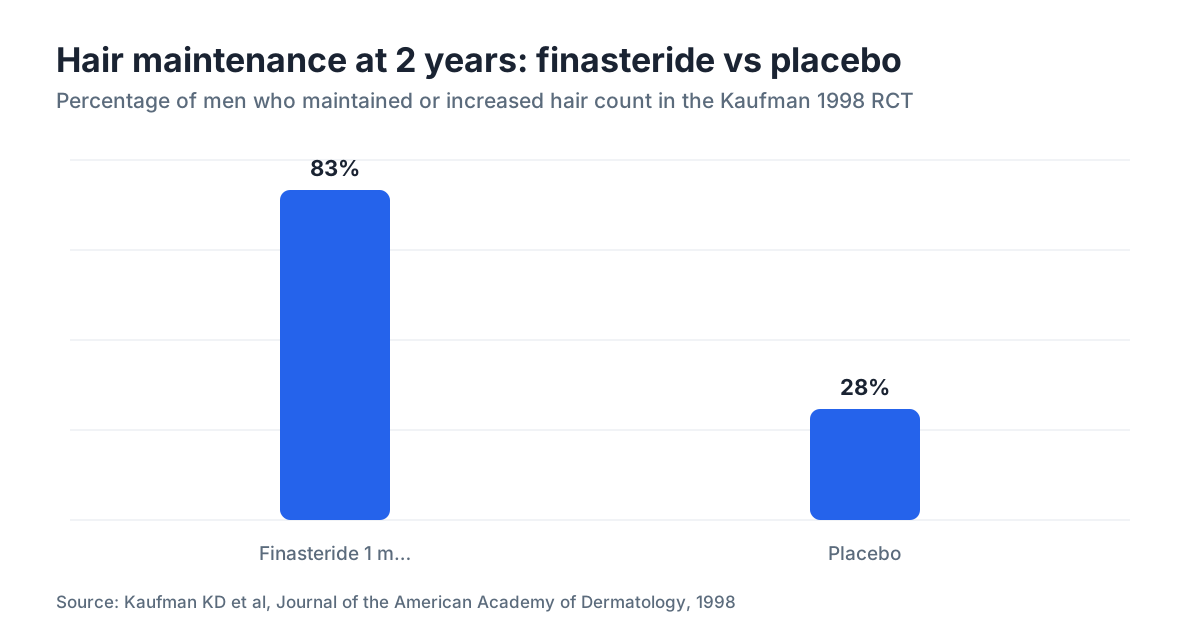
Finasteride (1 mg/day oral) is the most studied medication for male pattern baldness. A two-year randomized controlled trial published in the Journal of the American Academy of Dermatology found that 83 percent of men on finasteride maintained or increased hair count versus 28 percent on placebo, and the effect was strongest in men with mild to moderate loss rather than advanced stages [6]. The FDA approved finasteride 1 mg for male pattern hair loss in 1997 [7].
Minoxidil, applied topically twice daily, is the other FDA-approved option. It works differently, mostly by extending the anagen phase and enlarging follicles, and it helps at both the frontal scalp and the crown. The FDA label for topical minoxidil 5% states it is "for use by men only" at that concentration, with 2% approved for both sexes [7]. Our guide to minoxidil for men covers how it works.
For most men at Stage II or early Stage III, starting one or both medications gives a real shot at halting progression and clawing back some density. At Stage IV or V, you can still slow or stop further loss, but getting significant density back without a transplant becomes unlikely. At Stage VI or VII, medication alone rarely does enough for meaningful cosmetic change.
Hair transplants are a separate conversation. A surgeon needs enough donor hair from the stable sides and back, and the gap between available donor supply and the area to cover is the central limit. Men at Stage VII often don't have the donor hair for a satisfying result. The American Academy of Dermatology's guidance on transplant candidacy generally favors men who've stabilized their loss, ideally with medication, before surgery [8].
Want an objective read before booking a dermatologist? MyHairline's free AI scan (/scan) grades your hairline from photos against the Norwood stages. It isn't a medical diagnosis, but it gives you a concrete starting point for the conversation.
A few things that don't work, to save you money: biotin supplements help only if you're actually deficient, and deficiency-driven loss doesn't follow the Norwood pattern anyway. Caffeine shampoos, scalp massages, and essential oils have essentially no rigorous evidence behind them for androgenetic alopecia. Our hair loss supplements guide sorts the real from the fake.
Is the Norwood scale different for women?
Yes, and by a lot. Women with androgenetic alopecia usually lose hair in a diffuse pattern across the crown and top of the scalp rather than receding at the temples. The Ludwig scale (three stages) and the Sinclair scale are the standard tools for women [9].
Researchers occasionally apply the Norwood scale to women, but it's a poor fit for most female patients because the female pattern rarely produces the deep temporal recession that defines early Norwood stages. Women who notice a widening part, general thinning on top, or scalp showing through the crown should ask their doctor about the Ludwig or Sinclair framework and get hormone panels and ferritin levels checked, since female hair loss has more reversible causes than male pattern baldness.
There is a subtype, sometimes called female pattern hair loss with frontal accentuation, where the hairline does recede. In those cases Norwood staging sometimes gets used. But it's the exception, not the rule.
Can you slow down or reverse progression through the Norwood stages?
Slow it down, often yes. Reverse it, partly, in early stages. Stop it cold, not reliably.
Finasteride and minoxidil together beat either one alone. A 2021 randomized trial in the Journal of the American Academy of Dermatology found that oral minoxidil 5 mg combined with finasteride 1 mg outperformed either drug alone for total hair count at 24 weeks, though the combination also brought higher rates of side effects [10]. If you're weighing the oral route, our oral minoxidil guide covers dosing and the risk tradeoffs.
The honest picture: most men on finasteride stop progressing, and some see real regrowth, mostly at the crown. The drug works less well at the hairline. Minoxidil tends to help more at the crown and vertex than at the temples. For the hairline itself, surgery is the most reliable option.
Here's what genuinely doesn't matter: no medication changes your underlying genetics or permanently alters DHT sensitivity in scalp follicles. Stop finasteride and the effect unwinds over roughly 12 months. This is maintenance, not a cure, and any source telling you otherwise is selling you something.
For men at Stage III or IV who've already lost real temporal ground, pairing medication to hold the crown with a transplant to rebuild the hairline is a common, reasonable plan. Our hair transplant guide walks through what the procedure actually involves and what a realistic result looks like.
The what causes hair loss article goes deeper on the DHT mechanism and the other factors in play.
How is Norwood staging done in a clinical setting?
In a dermatology office, Norwood staging is usually a visual assessment, but good clinics push further. Dermoscopy (a handheld lighted magnifier on the scalp) lets a dermatologist see individual follicles and measure the ratio of miniaturized to terminal hairs. More than 20 percent miniaturized hair in frontal or temporal areas is a reliable sign of androgenetic alopecia in progress [5].
Trichoscopy (scalp dermoscopy with standardized photography) is more rigorous and lets you compare the same scalp zone over time with documented images. Some practices run a trichogram, pulling a small sample of hairs and reading them under a microscope to measure the anagen-to-telogen ratio.
Blood panels aren't standard for diagnosing androgenetic alopecia in men, but a responsible doctor checks them when the history doesn't fit. Thyroid dysfunction, low ferritin, and hormonal imbalances can all cause or worsen hair loss, and they're eminently treatable. If you're losing hair in your early 20s or the pattern doesn't match classic male loss, pushing for labs is reasonable.
One thing worth knowing: a single office snapshot tells you less than a baseline plus a follow-up six to twelve months later. Rate of change is at least as informative as your current stage.
Does creatine or any supplement actually speed up Norwood progression?
The creatine question comes up constantly. A single 2009 study on college rugby players found creatine supplementation raised DHT levels by about 56 percent over three weeks against a placebo group [11]. That finding got huge popular attention, but the limits are real: a small sample (20 participants), no actual hair loss measured, and no replication since.
The short answer is that no study has directly shown creatine speeding up Norwood progression. But if you're already genetically susceptible and taking high-dose creatine, the DHT bump is worth knowing about. Our full breakdown lives in does creatine cause hair loss.
Other supplements people ask about: saw palmetto (weak evidence as a mild 5-alpha reductase inhibitor, far weaker than finasteride), biotin (no evidence for androgenetic alopecia), and the various "thickening" hair vitamins. The honest position is that no supplement has shown anything close to the evidence finasteride has in randomized trials. They're not all useless, but none of them replaces a proven treatment.
What questions should you ask a dermatologist about your Norwood stage?
Walking in prepared makes the appointment far more useful. Here are the questions worth asking.
"What stage am I at, and do you see signs of miniaturization at the temples or crown?" A good dermatologist should name a stage and explain the dermoscopy findings, more than say "you're thinning a bit."
"How fast does this appear to be progressing?" On a first visit they may not be able to answer, but baseline photography is the right next step.
"Am I a candidate for finasteride?" This means a quick look at your overall health, any family history of prostate issues, and whether you're planning to father children soon (finasteride is teratogenic to male fetuses, and women who are or may become pregnant should not handle crushed tablets [7]).
"What's a realistic goal for treatment at my stage?" A dermatologist who promises full regrowth to a Stage V patient isn't being straight with you.
"Should I be on topical or oral minoxidil, and are there any contraindications given my health history?"
If you want to review your hairline objectively before booking, the free AI hair analysis at MyHairline (/scan) gives you a Norwood stage estimate and a summary to bring to your doctor.
What's the connection between the Norwood scale and receding hairline treatment options?
The Norwood stage you're at directly decides which treatments are on the table. This is probably the most practical piece of information in the whole article.
At Stage II: medication (finasteride, minoxidil, or both) is the standard start. The hairline hasn't receded far enough for surgery, and frankly a transplant at Stage II would be premature. The goal is to stop progression.
At Stage III: medication is still first-line. If the temporal recession bothers you cosmetically and it's clearly stable (meaning you've been on finasteride for at least a year and the hairline hasn't budged), some surgeons will discuss a very conservative hairline procedure. Our receding hairline article covers surgical versus non-surgical options in detail.
At Stage IV to V: most men on medication can stabilize reasonably well, but density recovery is limited. A transplant is often the right complement to medication, using FUE (follicular unit extraction) or FUT (follicular unit transplantation) to move donor hair from the back and sides to the frontal and crown zones.
At Stage VI to VII: donor supply becomes the limiting factor. A skilled surgeon can still make a real difference, especially rebuilding a frontal hairline to frame the face, but full coverage usually isn't achievable with a transplant alone. Scalp micropigmentation (tattooing the scalp to mimic a shaved look) is a non-surgical option some men at advanced stages prefer.
Running finasteride and minoxidil before and after a transplant is standard care for most transplant surgeons, because without medication the non-transplanted hair keeps miniaturizing.
Sources
- Norwood OT. Male pattern baldness: classification and incidence. Southern Medical Journal, 1975
- American Academy of Dermatology, Hair Loss overview
- Norwood OT prevalence data; referenced in Blume-Peytavi U et al, Journal of Investigative Dermatology, 2011
- Messenger AG, Sinclair R. Follicular miniaturization in female pattern hair loss. British Journal of Dermatology, 2006
- Rudnicka L et al. Trichoscopy update 2011. Journal of Dermatology Case Reports
- Kaufman KD et al. Finasteride in the treatment of men with androgenetic alopecia. Journal of the American Academy of Dermatology, 1998
- U.S. Food and Drug Administration, drug information
- American Academy of Dermatology, Hair Loss treatment section
- Sinclair R et al. A new scale for the assessment of female pattern hair loss: the Sinclair scale. Journal of Investigative Dermatology, 2004
- Hu R et al. Combined treatment with oral finasteride and topical minoxidil in male androgenetic alopecia. Journal of the American Academy of Dermatology, 2021
- van der Merwe J et al. Three weeks of creatine monohydrate supplementation affects dihydrotestosterone to testosterone ratio in college-aged rugby players. Clinical Journal of Sport Medicine, 2009
- Rossi A et al. Comparative effectiveness of finasteride vs. saw palmetto for androgenetic alopecia. International Journal of Immunopathology and Pharmacology, 2012