TL;DR: Male pattern hair loss (androgenetic alopecia) comes from a genetic sensitivity to DHT that shrinks hair follicles over years. It affects about 50% of men by age 50. Two FDA-approved treatments exist: minoxidil (topical or off-label oral) and finasteride. Combined, they beat either one alone. Transplants are permanent but pricey. Nothing fully regrows a bald scalp, and starting early gets the best results.
What is male pattern hair loss and how common is it?
Male pattern hair loss, called androgenetic alopecia in the clinic, is the most common reason men lose hair. It follows a predictable route. The hairline retreats at the temples, the crown thins, and over years those two zones can merge into broad baldness. The follicles don't die. They shrink, pushing out finer and shorter hairs until they stop producing anything you can see.
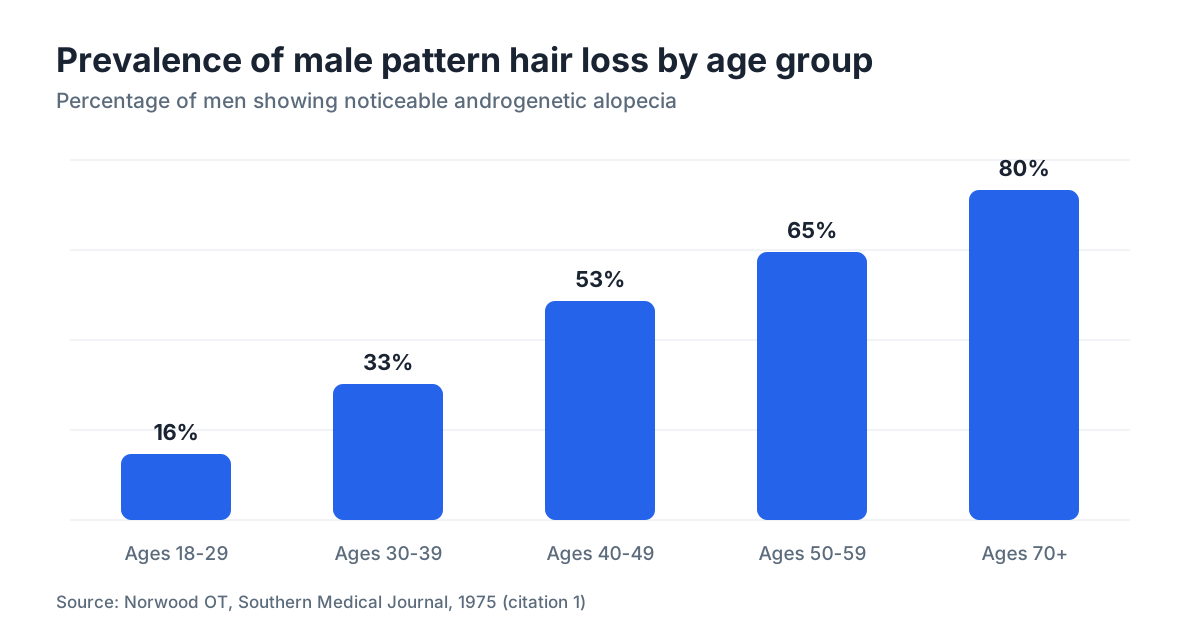
The numbers are blunt. Roughly 16% of men aged 18 to 29 show noticeable hair loss, climbing to about 53% by ages 40 to 49, and reaching close to 80% by their 70s [1]. That makes it one of the most statistically normal things the male body does. It doesn't feel normal when it's happening to you.
The condition isn't dangerous. The psychological toll is real and well-documented, though. Studies link hair loss to lower self-esteem, social anxiety, and in some men depression. That matters before any talk of treatment, because deciding whether and how hard to treat is partly a quality-of-life call, more than a medical one.
One thing surprises people. Pattern hair loss hits women too. The mechanism overlaps a lot, but the look is different. More on that below.
What causes male pattern hair loss?
Two things drive it: your genes and a hormone called dihydrotestosterone (DHT). An enzyme called 5-alpha reductase converts testosterone into DHT. In genetically susceptible men, DHT binds to receptors in scalp follicles, shortens the hair's growth phase (anagen), stretches the resting phase (telogen), and slowly shrinks the follicle itself. That is the miniaturization pattern you see in the mirror [2].
The genetics are polygenic. Dozens of genes contribute. The old line about inheriting baldness from your mother's father is a simplification. The androgen receptor gene sits on the X chromosome, which you do get from your mother, but a 2017 genome-wide study identified more than 200 genetic loci tied to androgenetic alopecia spread across many chromosomes [3]. Baldness on either side of your family raises your odds.
Here is the part people miss. Blood DHT is often normal in men with pattern loss. The problem is follicle sensitivity to DHT, not how much DHT you make. That's why the whole treatment strategy targets DHT production or its action at the follicle.
Stress, poor nutrition, and thyroid trouble can speed up or mimic shedding, but they cause a different, largely reversible loss called telogen effluvium. If you're shedding diffusely all over, especially after an illness or a hard stretch, sort that out before you start treatment. What causes hair loss has the broader breakdown.
What are the Norwood stages of male pattern hair loss?
The Norwood-Hamilton scale is the standard way to classify male pattern hair loss. It runs from Type I (no visible loss) to Type VII (only a horseshoe rim around the sides and back). Clinicians use it to describe severity, plan treatment, and set honest expectations for transplant candidates.
| Norwood Stage | What it looks like | Typical treatment options |
|---|---|---|
| I | No significant loss, juvenile hairline intact | Monitoring; preventive treatment optional |
| II | Slight recession at temples | Minoxidil, finasteride |
| III | Deeper temple recession; III Vertex = crown thinning begins | Minoxidil, finasteride |
| IV | More temple loss; crown bald patch, bridge of hair still present | Minoxidil + finasteride; transplant possible |
| V | Temple and crown areas beginning to merge | Finasteride + minoxidil; transplant with realistic expectations |
| VI | Temple and crown areas merged; band of hair reduced | Transplant limited by donor supply |
| VII | Only rim of hair remaining on sides and back | Limited transplant options; scalp micropigmentation |
Stages I through III respond best to medication. Start early, keep more hair. By Stage VI or VII, you're mostly working with what you have left.
The scale has one real weakness: it doesn't capture density. Two men at Stage III can look completely different if one has coarse, dense hair and the other has fine hair. Some dermatologists add trichoscopy (dermoscopy of the scalp) to grade follicle miniaturization directly [4].
Want to see what early loss looks like and tell it apart from normal variation? The receding hairline article covers that ground.
What are the FDA-approved treatments for male pattern hair loss?
Two drugs carry FDA approval specifically for androgenetic alopecia in men: minoxidil and finasteride. Everything else is off-label, adjunctive, or unproven.
Minoxidil started as an oral blood pressure drug in the 1970s. Researchers noticed patients growing hair as a side effect. Topical 2% minoxidil got FDA approval for men in 1988, and 5% followed in 1991 [5]. It extends the anagen (growth) phase and increases blood flow to follicles. It does not touch DHT. So it treats the symptom (underperforming follicles) rather than the hormonal cause.
Finasteride (brand name Propecia, now mostly generic) won FDA approval for male pattern hair loss in 1997 at 1 mg daily [6]. It blocks Type II 5-alpha reductase and cuts scalp DHT by roughly 60%. A five-year clinical trial found 48% of men on finasteride had increased hair count versus baseline, against 6% on placebo, and 83% maintained or improved their count versus 28% on placebo [6]. Those numbers are worth the attention. More on finasteride and its side effects at finasteride.
Low-dose oral minoxidil (0.625 mg to 2.5 mg/day for men) has picked up real clinical use off-label. A 2021 review in the Journal of the American Academy of Dermatology found it effective with a manageable side-effect profile at low doses [7]. It isn't FDA-approved for hair loss specifically, but plenty of dermatologists prescribe it now. See oral minoxidil for the full comparison with topical.
Running finasteride and minoxidil together is additive. The mechanisms don't overlap, so you hit both the hormonal driver and follicle performance at once. A randomized trial found the combination beat either drug alone [8]. Details at finasteride and minoxidil.
How well do these treatments actually work?
Honest answer: they slow or stop loss in most men and give modest regrowth in some. They don't restore a full head in advanced loss, and they only work while you keep taking them.
Minoxidil 5% foam or solution, applied twice daily, produces statistically significant hair count gains over placebo after 16 to 48 weeks in trials [5]. The American Academy of Dermatology recommends it first-line, notes results usually take three to six months to show, and warns that shedding often spikes in the first few weeks as follicles shift phase. That early shed is normal, not a failure signal [9].
Finasteride 1 mg daily has the five-year data above as its strongest long-term evidence. About 14% to 17% of men don't respond meaningfully. Nobody fully knows why. Variation in the androgen receptor probably explains part of it.
Platelet-rich plasma (PRP) has a growing evidence base and shows up in many dermatology offices, but it has no FDA approval for hair loss. A 2018 systematic review found it statistically significant for hair density, though study quality varied and no standard protocol exists [12]. It doesn't replace first-line medication.
Low-level laser therapy (LLLT) devices (combs, helmets, caps) have FDA clearance as a device, not drug approval. The evidence points to a modest density benefit, especially in early loss, but the effect sizes trail minoxidil and finasteride. Added on top of proven treatments, it's unlikely to hurt. On its own, it probably won't impress you.
Can supplements fill the gap? No. Some (biotin in deficient people, saw palmetto at high doses) carry weak supportive evidence, but none replace medication. The hair loss supplements article grades the evidence one ingredient at a time.
What are the side effects of hair loss treatments?
This question stops a lot of men from starting, sometimes for good reason and sometimes not.
Topical minoxidil's usual side effects are scalp irritation, dryness, and flaking. The propylene glycol in the liquid irritates more people than the foam does. Systemic absorption from the scalp is low, but contact dermatitis happens. Rarely, users grow facial hair from transfer. Full breakdown at minoxidil side effects.
Finasteride's sexual side effects are real and documented since the pre-approval trials. The original data showed erectile dysfunction in about 1.3% of men, decreased libido in about 1.8%, and ejaculation disorders in about 1.2%, versus 0.7%, 1.3%, and 0.7% on placebo [6]. Statistically real differences, low absolute rates. Less settled is whether some effects persist after stopping, sometimes called post-finasteride syndrome. The FDA added a warning about that in 2012 [6]. The evidence on persistence is contested, but the label acknowledges it. Men with a history of depression or sexual dysfunction should talk this through with a physician first.
Low-dose oral minoxidil has a real but manageable side-effect profile. Unwanted facial or body hair (hypertrichosis) is the top complaint. Fluid retention and heart palpitations are documented, which is why cardiac patients need oversight. The oral minoxidil article covers dosing and risk.
Here's the practical read. Topical minoxidil side effects are usually cosmetic and reversible. Finasteride side effects are real but uncommon in young healthy men. The cost of not treating, for someone who cares about their hair, is guaranteed continued loss.
When is a hair transplant the right option?
A transplant makes sense once you've lost hair you want back and medication alone can't recover it. It's a surgical redistribution of your own hair, not new hair. Follicles from the back and sides (the donor zone) move to thinning areas. Those donor follicles are DHT-resistant by nature, which is why transplanted hair tends to stay.
Two main techniques exist. FUT (follicular unit transplantation) is the strip method. FUE (follicular unit extraction) removes follicles one by one. FUE leaves no linear scar, which is why it dominates now, but FUT can yield more grafts per session and may suit extensive loss when the surgeon is good at both.
Cost is the barrier. In the US, FUE runs $4,000 to $15,000 or more depending on graft count and clinic, and insurance won't cover it. Clinics in Turkey and Eastern Europe charge $1,500 to $4,000 for similar graft counts, which drives a lot of medical tourism. Quality control varies widely, and revision surgery gets expensive when things go wrong.
The most important fact for candidates: you keep losing native hair after a transplant if you're not on medication. A man who gets 2,000 grafts at 30 and skips finasteride can end up with transplanted hair marooned in growing baldness a decade later. The AAD recommends continuing medical therapy after transplant for exactly this reason [9].
Full procedure and cost data at hair transplant.
Does male pattern hair loss also affect women?
Yes, and it's underappreciated. The same genetic and hormonal mechanism drives female androgenetic alopecia (FPHL), though it looks different on women. Instead of a receding hairline and bald patches, women usually get diffuse thinning across the top of the scalp with the frontal hairline often preserved. The Ludwig scale (I to III) classifies severity in women, where men get the Norwood scale.
FPHL is common. Around 40% of women show some degree of androgenetic alopecia by age 50, and prevalence rises further after menopause, when estrogen (which partly counters androgens) drops [1].
Treatment options for women are narrower. Minoxidil 2% is FDA-approved for women; 5% is used off-label and looks more effective [5]. Finasteride is not FDA-approved for women and is teratogenic, meaning it causes birth defects in male fetuses, so it's considered only in postmenopausal women with close monitoring. Spironolactone, an androgen blocker used off-label, is a common prescription for premenopausal women with FPHL. Low-dose oral minoxidil is increasingly used off-label in women too.
Searches for a "female pattern hair loss cure" run high, and the honest answer is there isn't one. FPHL, like the male version, is chronic and managed, not cured. Consistent treatment slows progression and can improve density. Stop, and the loss resumes.
How can you reduce hair loss as a male in practical terms?
Here's the hierarchy of what actually matters.
Get on medication early. The sooner you start finasteride and/or minoxidil, the more hair you keep. Both drugs hold onto existing hair better than they regrow lost hair. If you're in your 20s watching your temples recede, starting now beats waiting until you're 30 with a Stage IV pattern.
Be consistent. Both treatments need daily or twice-daily use, indefinitely. A missed dose won't ruin results, but stopping entirely reverses the benefits, usually within 6 to 12 months. No point starting if you won't commit.
Rule out reversible contributors. A blood panel checking ferritin, thyroid-stimulating hormone, and full blood count can flag nutritional deficiencies or thyroid trouble that speeds up loss. These aren't the cause of androgenetic alopecia, but they can make it worse.
Stay skeptical of the supplement and topical market. Most DHT-blocking shampoos have no clinical evidence for meaningful follicle-level DHT reduction. A few ingredients like ketoconazole (an antifungal) have weak supportive evidence for cutting scalp DHT as an add-on, not a replacement. The dht blocker article walks through what the evidence shows.
Want a quick read on where your loss stands before booking a dermatologist? The free AI scan at MyHairline can estimate your Norwood stage from photos.
Manage expectations. No protocol available today fully reverses advanced male pattern hair loss without surgery. Medical treatment stops the clock. It doesn't turn it back.
What role does DHT play and can you block it effectively?
DHT is the hormone doing the damage at the follicle. Finasteride blocks the enzyme that turns testosterone into DHT, cutting scalp DHT by roughly 60% [6]. Dutasteride, a related drug not FDA-approved for hair loss in the US (approved elsewhere and used off-label by some US dermatologists), blocks both Type I and Type II 5-alpha reductase and cuts scalp DHT closer to 90%.
Dutasteride looks better than finasteride in head-to-head trials, but it carries a heavier side-effect burden and a much longer half-life (about 5 weeks versus 6 to 8 hours for finasteride). If effects show up, they linger longer after you stop.
Natural DHT inhibitors like saw palmetto (Serenoa repens) have been studied. A small 2002 randomized trial in the Journal of Alternative and Complementary Medicine found 60% of men on saw palmetto rated as improved versus 11% on placebo, but the study ran only 26 men and the effect was modest [10]. Don't expect saw palmetto to match finasteride. It might be reasonable for men who won't take finasteride, but it's no substitute.
Topical finasteride is an emerging option that aims to cut systemic absorption while still delivering drug to the scalp. Early evidence looks promising on effectiveness and possibly a lighter systemic side-effect profile, though the data are less mature than for oral finasteride. Several compounding pharmacies make it, and some dermatologists prescribe it.
For a detailed review of what actually blocks DHT, see dht blocker.
Does creatine cause male pattern hair loss?
Gym-going men ask this constantly, so here's a straight answer. One small 2009 study (21 rugby players in South Africa) found creatine supplementation raised DHT by 56% and the DHT-to-testosterone ratio by 36% over three weeks [11]. That single study is the entire foundation of the creatine-causes-baldness claim.
The problems stack up. It measured blood DHT, not scalp DHT or follicle exposure. It had 21 men. No follow-up has replicated the DHT finding. No study has linked creatine to measurable hair loss in humans.
The honest version: if you're genetically prone to male pattern hair loss, creatine might in theory nudge DHT-related miniaturization along, but there's no direct evidence it causes or speeds up hair loss in practice. The does creatine cause hair loss article goes deeper, including the full study data.
And if you're worried about creatine while already on finasteride, the drug is likely canceling out any marginal DHT bump anyway.
How do you know if you're losing hair from pattern baldness or something else?
Diagnosis matters because the treatment changes completely depending on the cause.
Androgenetic alopecia shows up in a predictable pattern that tracks the Norwood stages. It's gradual, measured in years, and doesn't cause scalp pain, scaling, or bald patches in irregular spots.
Telogen effluvium is diffuse shedding, often three to four months after a stressor (illness, surgery, rapid weight loss, childbirth, extreme psychological stress). It sheds from all over rather than in a pattern. It usually reverses once the trigger clears, though normalizing can take 6 to 12 months. Full explanation at telogen effluvium.
Alopecia areata is autoimmune. It produces round, sharply defined bald patches that can appear fast. Doctors treat it with corticosteroids or newer JAK inhibitors, not minoxidil or finasteride.
Traction alopecia comes from chronic tension on follicles (tight ponytails, braids, extensions). It's most common in women but hits men too. Caught early, it reverses once the tension stops.
A dermatologist can usually tell these apart by eye, and trichoscopy (a non-invasive dermoscopy tool) can confirm the miniaturization pattern of androgenetic alopecia. Blood work rules out thyroid disorders, iron deficiency, and autoimmune markers. If you're under 25 and shedding hard, get a diagnostic workup before assuming it's straightforward pattern loss.
Sources
- Norwood OT. Male pattern baldness: classification and incidence. Southern Medical Journal. 1975.
- Ho CH, Sood T, Zito PM. Androgenetic Alopecia. StatPearls, National Library of Medicine.
- Hagenaars SP et al. Genetic prediction of male pattern baldness. PLOS Genetics. 2017.
- Rudnicka L et al. Trichoscopy update 2011. Journal of Dermatological Case Reports. 2011.
- FDA, Drug Approvals and Databases: Minoxidil (Rogaine) label history
- FDA Propecia (finasteride 1 mg) prescribing information and label history
- Randolph M, Tosti A. Oral minoxidil treatment for hair loss. Journal of the American Academy of Dermatology. 2021.
- Khandpur S et al. Comparative efficacy of finasteride vs minoxidil vs combination in male androgenetic alopecia. Indian Journal of Dermatology, Venereology and Leprology. 2002.
- American Academy of Dermatology Association, Hair Loss: Diagnosis and Treatment
- Prager N et al. A randomized, double-blind, placebo-controlled trial to determine the effectiveness of botanically derived inhibitors of 5-alpha-reductase in the treatment of androgenetic alopecia. Journal of Alternative and Complementary Medicine. 2002.
- van der Merwe J et al. Three weeks of creatine monohydrate supplementation affects dihydrotestosterone to testosterone ratio in college-aged rugby players. Clinical Journal of Sport Medicine. 2009.
- Gupta AK, Carviel JL. A mechanistic model of platelet-rich plasma treatment for androgenetic alopecia. Journal of Dermatological Treatment. 2018.