TL;DR: Minoxidil is the only FDA-approved topical treatment for androgenic alopecia in both men and women. Clinical trials show it stabilizes loss and produces visible regrowth in roughly 40-60% of users. It must be used continuously; stopping reverses any gains within months. It works better the earlier you start and pairs well with finasteride for men.
What is minoxidil and why is it used for hair loss?
Minoxidil started life as an oral blood pressure drug in the 1970s. Researchers noticed that patients taking it grew unexpected body hair, which led to the obvious question: could you put it on a scalp and keep hair that was falling out? The answer, after clinical testing, was yes, often enough that the FDA approved a 2% topical solution for men in 1988 and for women in 1991. A 5% formula for men followed in 1997. [1]
The drug has nothing to do with hormones. It does not block dihydrotestosterone (DHT), the androgen that drives androgenic alopecia, and it does not interfere with the androgen receptor. What it does is work directly on the hair follicle through a different mechanism. That makes it useful regardless of sex and, to a meaningful extent, regardless of how advanced the loss is, though earlier use consistently outperforms later use in trials.
Today it comes in three main forms: topical solution, topical foam, and low-dose oral tablets. The topical versions are available over the counter. Oral minoxidil requires a prescription and is used off-label for hair loss. Learn more about oral minoxidil here.
How does minoxidil actually work on the follicle?
The short answer is that minoxidil is a potassium channel opener. It widens blood vessels, which in the scalp means more blood, oxygen, and nutrients reach the follicle. But the fuller picture is more interesting.
Hair follicles cycle through three phases: anagen (active growth, lasting two to six years), catagen (a brief transition), and telogen (resting, lasting roughly three months). Androgenic alopecia progressively shrinks follicles and shortens the anagen phase until hairs become so thin and short they are invisible. Minoxidil appears to do two things to counter this. First, it prolongs the anagen phase directly. Second, its active metabolite minoxidil sulfate opens ATP-sensitive potassium channels in the dermal papilla cells at the follicle base, which hyperpolarizes the cell membrane and triggers downstream effects that promote cell survival and growth. [2]
One important implication: the drug works best on follicles that are miniaturized but still alive. Follicles that have been gone long enough to scar over cannot respond. This is why a bald spot you have had for fifteen years is unlikely to fill in while a thinning area you noticed last year has a real chance.
There is also a genetic variable most people do not know about. The enzyme sulfotransferase converts minoxidil into its active sulfate form inside the follicle. People with low sulfotransferase activity in their scalp respond poorly regardless of how faithfully they apply the product. Estimates suggest this affects somewhere around 30-40% of people, though the exact figure is uncertain and no commercial test is widely used yet. [2]
What do clinical trials actually show for androgenic alopecia?
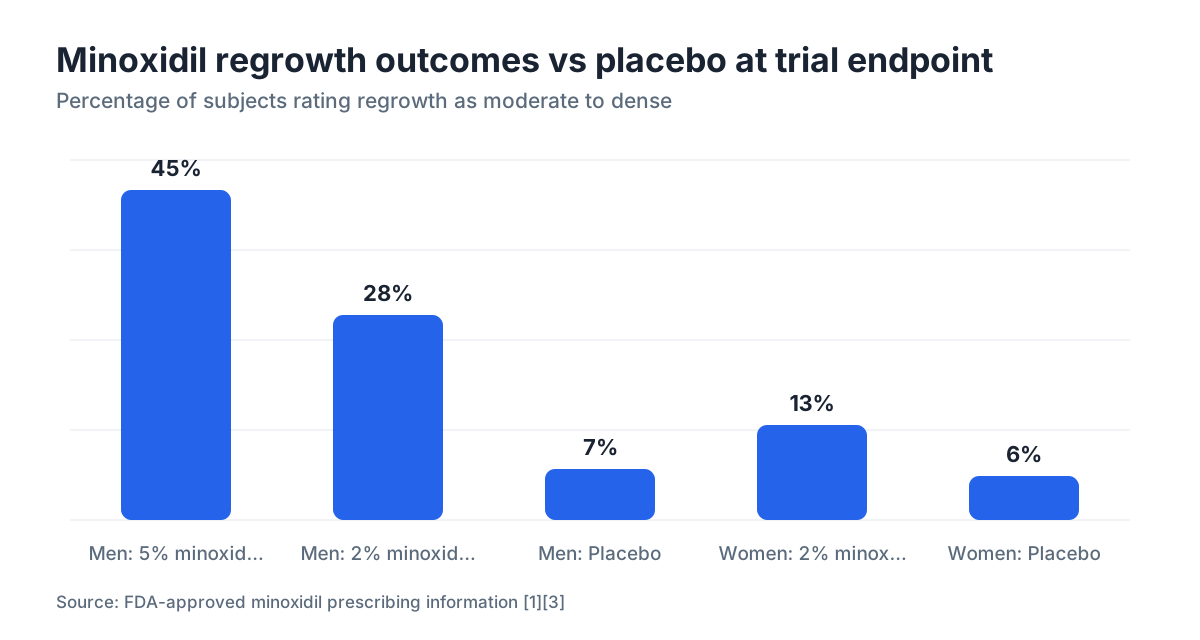
The FDA registration trials used hair count and investigator assessment as their main endpoints. In the primary study supporting the 5% solution label for men, 45% of users rated their hair regrowth as moderate to dense after 48 weeks, compared with 7% on placebo. Hair counts in a defined scalp area increased by a mean of about 20 hairs per cm² with 5% minoxidil versus roughly 11 hairs per cm² with 2% minoxidil and about 4 hairs per cm² with placebo. [1]
For women, the 2% solution trials showed that 60% of subjects reported at least minimal regrowth and about 13% reported moderate regrowth after 32 weeks. The FDA-approved label for women uses the 2% concentration, though dermatologists frequently use 5% foam off-label in women because the foam formulation avoids the propylene glycol that causes scalp irritation and the solution vehicle that can cause facial hair growth if it drips. [3]
These numbers sound modest. They are. Minoxidil is not a cure. The more accurate framing is that it reliably slows progression and produces meaningful visible improvement in roughly half of people who use it correctly for at least a year. The other half may see stabilization with little cosmetic gain. A small minority see no response at all, often because of the sulfotransferase issue above.
| Outcome | 5% Topical (Men) | 2% Topical (Women) | Placebo |
|---|---|---|---|
| Moderate-to-dense regrowth (self-rated) | ~45% at 48 wks | ~13% at 32 wks | ~7% |
| Hair count change (hairs/cm²) | +~20 | not directly comparable | ~+4 |
| Stabilization of loss | ~80% | ~60-70% | lower |
| Response sustained if continued | yes | yes | n/a |
Source: FDA-approved prescribing information, Rogaine/minoxidil labeling [1][3]
Does minoxidil work for both men and women with androgenic alopecia?
Yes, but the approved concentrations differ. Men use 5% (solution or foam, twice daily, or 5% foam once daily per the label). Women use 2% solution twice daily or 5% foam once daily. The 5% foam once-daily approval for women came in 2014 and has become the most common recommendation because it is easier to apply without the drip issue. [3]
The pattern of loss also differs. Men typically follow the Norwood scale, losing hair at the temples and crown. Women more often show diffuse thinning across the top of the scalp (Ludwig pattern) with the frontal hairline largely preserved. Minoxidil works in both patterns, but because women's loss is more diffuse, the results can look less dramatic even when follicle counts are actually improving.
One thing that matters for women: if your hair loss has a hormonal driver beyond DHT, such as thyroid disease, iron deficiency, or polycystic ovary syndrome, minoxidil will not fix that. It can support the follicle while you address the underlying issue, but it is not a substitute for the underlying investigation. The American Academy of Dermatology recommends a workup for women with hair loss that includes thyroid function, ferritin, and hormonal panels before assuming androgenic alopecia is the sole cause. [4]
How long does minoxidil take to show results?
This is where most people quit too early. And that is unfortunate because the timeline is genuinely counterintuitive.
Weeks 1-8: many people notice increased shedding. This is called a minoxidil shed and it is a real phenomenon. The drug forces resting telogen hairs out to make room for new anagen hairs. It looks alarming. It is not a sign the drug is harming you. Shedding typically peaks around weeks four to eight and then reverses. If you stop the drug here you simply lose both the new growth potential and the hairs that shed. Learn more about this process at our article on telogen effluvium.
Months 2-4: shedding slows. You may start to see fine, light regrowth hairs (often called vellus hairs) in areas that were thinning.
Months 4-6: vellus hairs begin to thicken and pigment. Visible improvement typically begins here for responders.
Months 6-12: peak visible improvement. Clinical trials use 48-52 weeks as the assessment point for a reason. Meaningful results before six months are possible but not guaranteed.
After 12 months: maintenance. Gains plateau or very slowly continue. Some studies show continued modest improvement through 24 months. [2]
The honest summary: give it a full year before deciding it is not working. Anything less than six months is too short to draw conclusions.
What happens if you stop using minoxidil?
The gains reverse. This is the single most important thing to understand about minoxidil before you start.
Minoxidil does not alter the underlying genetic program causing your androgenic alopecia. The DHT pathway keeps working. What minoxidil does is support follicle health and prolong anagen artificially. When you stop, the follicles return to their genetically determined trajectory. Most people are back to where they would have been without treatment within three to six months of stopping. [1]
That is not a reason not to start. But it is a reason to think of it as a long-term commitment from day one, not a short course. People who do best are those who build the application into a daily habit, like brushing teeth, and who do not treat it as optional.
Combining minoxidil with a DHT-blocking medication like finasteride changes this equation somewhat. Finasteride attacks the root cause (DHT-mediated follicle miniaturization) while minoxidil supports growth. Together they address different parts of the problem. Detailed data on the combination is at our finasteride and minoxidil article.
How do you use minoxidil correctly for the best results?
Application technique matters more than most people think. Here is what actually makes a difference.
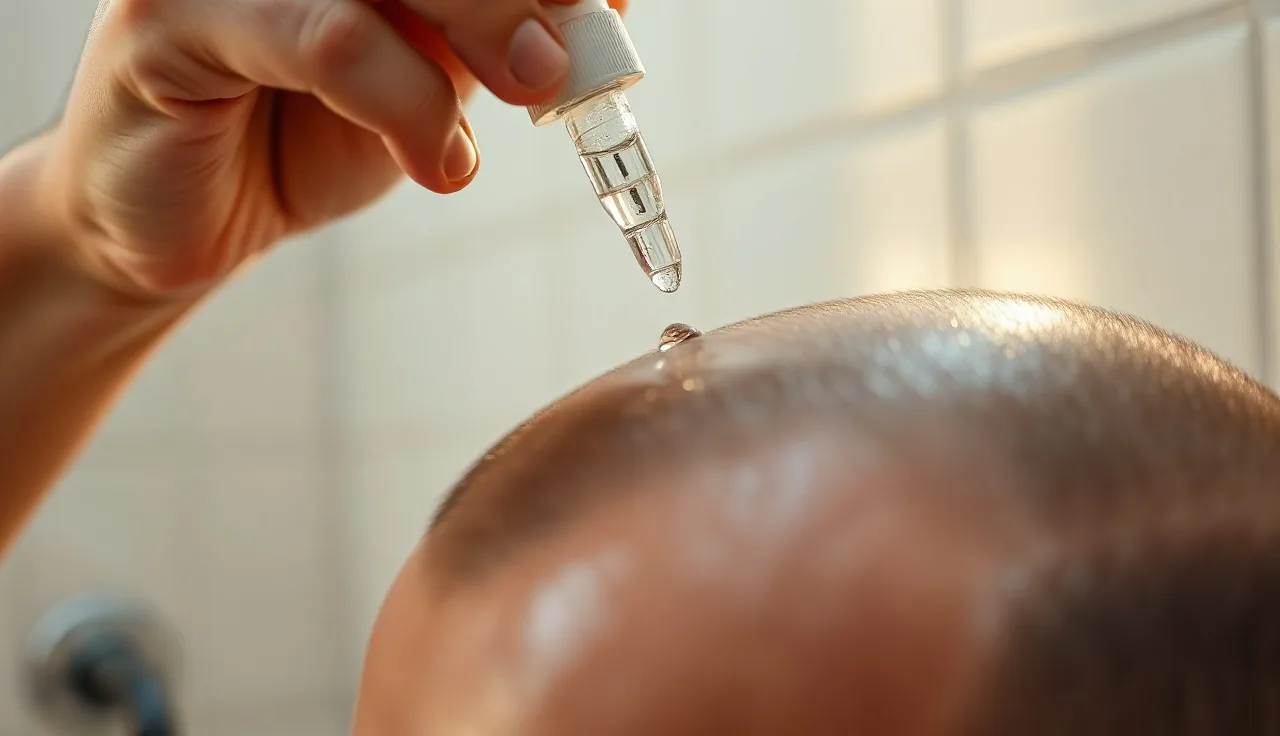
For topical solution: apply 1 mL twice daily to a dry scalp. Use the dropper to distribute it directly on the area of concern, not over a large area of already-healthy hair. Massage it in gently with fingertips. Wait at least four hours before washing hair, though overnight application is fine. The propylene glycol base in the solution can cause scalp irritation in sensitive users.
For topical foam: apply half a capful (2.5 mL total across two applications for the 2x daily schedule, or one full capful for the once-daily 5% schedule). Foam melts on contact with warm skin, so dispense it onto fingertips first. It absorbs more quickly than the solution and is less likely to cause facial hair growth from dripping in women.
For oral minoxidil: dosing for hair loss is typically 0.625 mg to 2.5 mg daily for women and 2.5 mg to 5 mg daily for men, far below the antihypertensive doses. This requires a prescription. A 2021 review in JAMA Dermatology found low-dose oral minoxidil effective and generally well tolerated for hair loss, with hypertrichosis (body hair growth) the most common side effect. [5]
Three practical points. Wash your hands after applying. Do not use more than the labeled dose thinking more is better; you will increase side effect risk without better outcomes. If you use it at night and it drips onto your pillow, protecting your face is worth thinking about.
If you want to understand how your specific hair loss pattern compares to typical androgenic alopecia progression before starting treatment, the free AI hair analysis at MyHairline can give you a starting point.
What are the side effects of minoxidil?
Most people tolerate topical minoxidil well. The side effect profile for the topical form is considerably milder than for oral use.
Common with topical use: scalp dryness, flaking, or irritation, especially with the solution formulation due to propylene glycol. Switching to the foam often resolves this. Initial increased shedding (discussed above) is common and temporary.
Less common but real with topical use: unwanted facial hair growth in women, usually from solution dripping onto the forehead or temples. Using foam and applying at night can minimize this.
Systemic side effects are rare with topical application because absorption is low: typically 1-2% of the applied dose reaches systemic circulation. However, people with cardiovascular disease or low blood pressure should talk to a doctor before starting, because the drug's vasodilatory mechanism can have effects even at those low systemic levels.
With oral minoxidil, fluid retention, hypertrichosis, headache, and (rarely) pericardial effusion are concerns that warrant medical supervision. [5]
For a detailed breakdown of risk factors, interaction considerations, and what symptoms warrant stopping the drug, see our minoxidil side effects article.
Is minoxidil better combined with other treatments?
For men with androgenic alopecia, the combination of minoxidil and finasteride is the most studied and most recommended approach in dermatology guidelines. They work by different mechanisms and the combination outperforms either alone.
A randomized controlled trial published in Dermatology and Therapy in 2021 compared finasteride alone, minoxidil alone, and the combination over 12 months. The combination produced significantly greater hair density increases than either monotherapy. [6] The AAD's clinical guidelines for androgenic alopecia in men recommend both as first-line options, noting they can be used together. [4]
For women, finasteride is not FDA-approved for female pattern hair loss and is contraindicated in women who may become pregnant due to teratogenicity risk. Spironolactone (an antiandrogen) is sometimes combined with minoxidil in women with hormonally-driven loss, under physician supervision.
DHT blockers as a category are worth understanding if you are trying to decide what to add to minoxidil. Topical finasteride sprays are an emerging option for men who want to avoid the systemic exposure of oral finasteride, though the data set is smaller.
For men with significant loss beyond what medication can restore, hair transplant surgery combined with ongoing minoxidil and finasteride is the current standard of care. Transplanted hairs are DHT-resistant, but the native hair around them is not, so stopping medication post-transplant accelerates loss of the surrounding hair.
Minoxidil for men specifically is covered in more depth in our dedicated guide.
How does minoxidil compare to other hair loss treatments?
Here is an honest comparison across the main options:
| Treatment | FDA-approved for AGA | Mechanism | Efficacy (general) | Cost/month (approx.) | Requires Rx |
|---|---|---|---|---|---|
| Topical minoxidil 5% | Yes (men), Yes (women 2%) | Vasodilation, K-channel opening | Moderate | $20-40 OTC | No |
| Oral minoxidil | No (off-label) | Systemic vasodilation | Moderate-high | $15-30 | Yes |
| Finasteride 1mg oral | Yes (men only) | 5-alpha reductase inhibitor, blocks DHT | Moderate-high | $30-80 | Yes |
| Dutasteride oral | No (off-label in US) | Dual 5-alpha reductase inhibitor | High | $50-100 | Yes |
| PRP injections | No | Growth factor delivery | Variable, limited evidence | $500-1500/session | Yes |
| Hair transplant | N/A (surgical) | Redistribution of DHT-resistant follicles | Permanent (for moved hair) | $4,000-15,000 total | Yes |
Source: FDA drug labels [1][3], AAD clinical guidelines [4], cost ranges from GoodRx 2024 data [7]
Minoxidil's main advantage is that it is cheap, available without a prescription, works in both sexes, and has decades of real-world safety data. Its main disadvantage is that it does not stop the underlying cause of androgenic alopecia, so its effect on the natural trajectory of the disease is always partial.
For context on whether supplements could substitute for minoxidil: the honest answer is no. Biotin, saw palmetto, and similar products have limited evidence at best and none carry FDA approval for androgenic alopecia.
Who is a good candidate for minoxidil, and who is not?
Good candidates: anyone with confirmed androgenic alopecia (male or female pattern loss) who has hair loss that is active and ongoing but still has living follicles in the affected area. The earlier you start relative to the onset of loss, the better the expected outcome.
Less ideal candidates: people with completely bald areas that have been bare for many years (scarred follicles cannot respond), people with scalp psoriasis or contact dermatitis on the scalp that would be aggravated by the topical vehicle, and people with cardiovascular conditions who have not been cleared by a physician.
Not appropriate without medical supervision: pregnant women (oral minoxidil is category C and should be avoided; topical minoxidil is generally avoided as well due to unknown absorption levels), people on antihypertensive medications where an additive blood pressure-lowering effect could be dangerous, and children.
If you are unsure whether your hair loss is androgenic alopecia versus something else, such as alopecia areata, telogen effluvium, or traction alopecia, getting the right diagnosis first matters. Minoxidil can help in some of those conditions too, but the treatment approach differs. A dermatologist or trichologist is the right person to make that call, ideally with a scalp biopsy if the pattern is unclear.
For people wondering about specific contributing factors like supplements: the relationship between creatine and hair loss is a separate and frequently searched question, but the short version is that the DHT-raising mechanism of creatine, if real, would be one more reason to use a DHT blocker alongside minoxidil rather than minoxidil alone.
What does the research say about long-term use of minoxidil?
Most trials run 12-48 weeks. Longer-term data exists but is thinner. A five-year open-label extension study of topical minoxidil in men found that the majority of users maintained their gains or saw continued modest improvement through year two, with gradual but slow progression of underlying androgenic alopecia from year three onward despite continued use. [8] This is consistent with the drug's mechanism: it supports follicles but cannot fully override a strong genetic drive toward miniaturization.
The practical implication is that minoxidil is most effective in its first two to three years, after which some ongoing progression should be expected. This is another reason combination with a DHT blocker tends to produce better long-term outcomes than minoxidil alone.
Safety over many years of topical use appears good. No long-term carcinogenic signal has emerged in the decades since approval. Cardiovascular monitoring is not required for topical use in otherwise healthy adults, though it makes sense for anyone with preexisting cardiac conditions.
One thing the field is still working out: the optimal dose and formulation of oral minoxidil for hair loss. The studies published between 2019 and 2024 suggest efficacy at low doses (0.25 mg to 5 mg daily), and a 2022 systematic review in the Journal of the American Academy of Dermatology analyzed 17 studies covering over 600 patients and concluded that "low-dose oral minoxidil was effective for the treatment of various forms of alopecia with a favorable safety profile at doses used for hair loss." [9] But the optimal dose, the best candidates, and the long-term cardiovascular implications of even low-dose oral use are still being studied.
Sources
- FDA, Minoxidil 5% Topical Solution Prescribing Information (Rogaine/generic label)
- Messenger AG, Rundegren J. Minoxidil: mechanisms of action on hair growth. Br J Dermatol. 2004;150(2):186-194.
- FDA, Minoxidil 2% Topical Solution and 5% Foam labeling for women
- American Academy of Dermatology, Clinical Guidelines: Androgenetic Alopecia
- Randolph M, Tosti A. Oral minoxidil treatment for hair loss: A review of efficacy and safety. J Am Acad Dermatol. 2021;84(3):737-746.
- Hu R et al. Combined treatment with oral finasteride and topical minoxidil in male androgenetic alopecia: a randomized and comparative study. Dermatol Ther. 2021;10(1):221-231.
- GoodRx, Minoxidil price data 2024
- Olsen EA et al. Five-year follow-up of men with androgenetic alopecia treated with topical minoxidil. J Am Acad Dermatol. 1990;22(4):643-646.
- Vañó-Galván S et al. Low-dose oral minoxidil as treatment for non-scarring alopecia: a systematic review. J Am Acad Dermatol. 2022;86(2):482-485.
- MedlinePlus (U.S. National Library of Medicine), Minoxidil Topical
- Gupta AK, Charrette A. Topical minoxidil: systematic review and meta-analysis of its efficacy in androgenetic alopecia. Skinmed. 2015;13(3):185-189.