

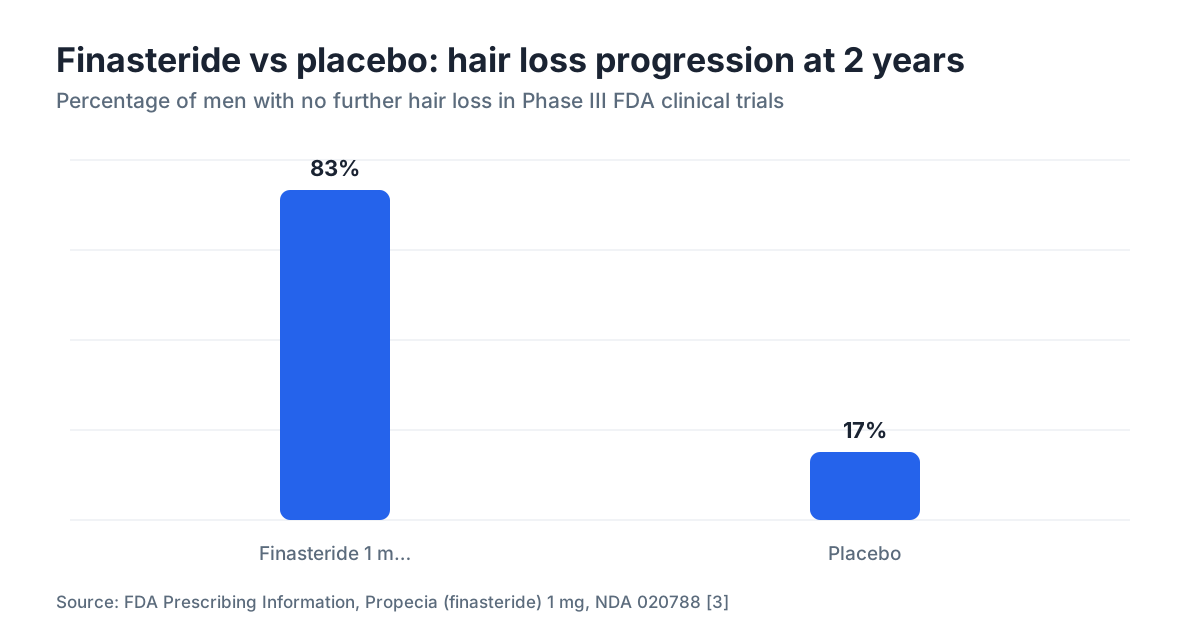
TL;DR: Norwood 2 is mild recession at the temples with no crown involvement. The evidence strongly favors starting treatment early: finasteride stopped further loss in 83% of men over two years, and hair you still have is far easier to keep than hair you've lost. Waiting is a real gamble because androgenetic alopecia is relentless and unpredictable.
What does Norwood 2 actually look like?
Norwood 2 is the first step above a juvenile hairline on the Hamilton-Norwood scale, the classification system most dermatologists and hair surgeons use worldwide [1]. You'll see slight recession at the temples forming shallow triangles, but the hairline across the front is mostly intact and the crown is completely untouched. A lot of men at this stage aren't even sure they're losing hair or just have a "mature" hairline.
That distinction matters. A mature hairline, which affects around 96% of adult men according to one study in the Journal of Investigative Dermatology Supplements, moves back slightly from the adolescent position and then stops [2]. Androgenetic alopecia (male pattern baldness) doesn't stop. The miniaturization of hair follicles driven by dihydrotestosterone (DHT) continues over years and decades, and without intervention the great majority of men with early pattern loss progress to more advanced stages.
If you're uncertain whether your recession is mature or progressing, two things help: old photos showing the hairline six to twelve months ago, and a dermatologist check for miniaturized hairs using a dermatoscope. Miniaturization is the signature of androgenetic alopecia and it shows up before hairs visibly disappear. You can also learn more about what causes hair loss and the DHT mechanism before your appointment.
Is Norwood 2 early enough to actually benefit from treatment?
Yes, and honestly this is the best possible time to start. Every FDA-approved treatment for male androgenetic alopecia works by slowing or stopping further loss, not by regrowing what's already gone in any dramatic way. At Norwood 2, you still have the hair you want to keep. The follicles are alive, many just partially miniaturized.
Finasteride's five-year trial (the Phase III data submitted to the FDA) showed that 99% of men on 1 mg/day had no further vertex loss compared with 17% in the placebo group at two years [3]. That trial was weighted toward vertex (crown) outcomes, but the mechanism is identical for temporal recession. A systematic review published in the Journal of the American Academy of Dermatology found that finasteride increased hair count and improved scalp coverage across frontal and vertex regions [4].
Minoxidil, applied topically, also works best on existing follicles that are still functional. The FDA approved 5% topical minoxidil for men specifically for androgenetic alopecia; the label states the drug is "not intended to treat frontal baldness or a receding hairline" but that language refers to completely bald frontal zones, not to early temple recession where follicles are still present [5]. Men at Norwood 2 are exactly the population most likely to see benefit.
The honest framing: if you are genetically programmed to reach Norwood 5 or 6, starting at Norwood 2 doesn't guarantee you'll stay at Norwood 2 forever. But it makes holding there for the next decade far more plausible than doing nothing.
What happens if you wait?
Hair follicles that are miniaturizing don't wait for you to make up your mind. DHT binds to androgen receptors in genetically susceptible follicles and progressively shrinks them over time. Once a follicle has been dormant long enough, the dermal papilla cells that govern growth can lose their regenerative capacity and the follicle becomes fibrotic. At that point, no topical or oral treatment brings it back.
How fast does this happen? It varies enormously, which is part of why the decision feels murky. Some men stay at Norwood 2 for ten years. Others move through three stages in eighteen months. There's no blood test or genetic panel currently available that reliably predicts your personal trajectory, though what causes hair loss gives context on the genetic and hormonal factors involved.
The practical cost of waiting is asymmetric. If you start treatment now and later decide to stop, you've spent some money and possibly navigated side effects, but your hair position roughly returns to where it would have been without treatment. If you wait until Norwood 4 or 5 and then start, you can stabilize at that stage, but the Norwood 2 hairline is gone. You'd be looking at a hair transplant to recover it, which costs $4,000 to $15,000+ depending on graft count and clinic [6].
What are the treatment options at Norwood 2?
| Treatment | FDA status | Typical effect | Time to see result | Rough monthly cost |
|---|---|---|---|---|
| Finasteride 1 mg/day (oral) | FDA-approved (1997) | Stops progression in ~83% of men at 2 yrs [3] | 6-12 months | $15-$50 generic |
| Minoxidil 5% topical | FDA-approved (1991) | Slows loss, modest regrowth | 4-6 months | $10-$30 |
| Oral minoxidil (low dose) | Off-label | Similar to topical, better adherence | 4-6 months | $20-$60 |
| Finasteride + Minoxidil combined | Both FDA-approved separately | Additive benefit shown in trials [7] | 6-12 months | $25-$80 |
| Hair transplant | Surgical | Restores density; doesn't stop future loss | Permanent (1-2 yr visual) | $4,000-$15,000+ one-time |
| Hair loss supplements | Not FDA-approved for AGA | Limited evidence | Variable | $20-$60 |
For most men at Norwood 2, the first-line conversation is finasteride, minoxidil, or both. A 2021 randomized controlled trial in JAMA Dermatology found that the combination of 0.25 mg oral minoxidil plus 0.1 mg oral dutasteride (a stronger DHT blocker) outperformed either drug alone, and a separate trial showed oral minoxidil 5 mg improved hair density significantly versus placebo [7][8]. Oral minoxidil is worth reading about if topical application is a friction point for you.
Finasteride is the drug with the deepest evidence base for pattern hair loss. It blocks the 5-alpha-reductase enzyme that converts testosterone to DHT, reducing scalp DHT by roughly 60-70% [3]. DHT blockers broadly, including dutasteride and some supplement ingredients like saw palmetto, all work on this axis but with varying strength and evidence.
A transplant at Norwood 2 is almost never the right first move. You don't yet know how your pattern will progress, so a surgeon doesn't know how to design a hairline that will still look natural at Norwood 5. Most reputable surgeons will tell you to exhaust medical options first.
What are the real risks of finasteride at this stage?
This is the question that makes most men hesitate, and it deserves a straight answer rather than a dismissive one.
The FDA label for finasteride 1 mg lists sexual side effects including decreased libido, erectile dysfunction, and decreased ejaculate volume in a small percentage of users [3]. The original Phase III trials reported these in about 3.8% of finasteride users versus 2.1% of placebo users. In most men who experience them, side effects resolve after stopping the drug.
There is ongoing discussion in the literature about post-finasteride syndrome, a cluster of persistent sexual and cognitive symptoms reported by a subset of men after stopping the drug. The FDA added labeling updates about this in 2012 [3]. The prevalence is genuinely disputed and hard to quantify because it relies on self-report. The Post-Finasteride Syndrome Foundation has documented cases, and some peer-reviewed case series have been published, but large prospective data is limited. If you have a personal or family history of depression or sexual dysfunction, that's worth discussing explicitly with a prescribing physician before starting.
The American Academy of Dermatology guidelines call finasteride "safe and effective" for androgenetic alopecia [4]. Most men tolerate it without incident. But you're making a long-term commitment: stopping finasteride typically means whatever hair was preserved starts to shed within six to twelve months, so you're more than starting a drug, you're starting a relationship with it.
Should you treat a Norwood 2 receding hairline differently than a thinning crown?
Mechanically the same DHT-driven miniaturization process causes both, but temples and crown respond somewhat differently to treatment. The FDA clinical trials that established finasteride's approval were primarily powered on vertex (crown) outcomes, and finasteride clearly works there [3]. Frontal hairline response is real but typically more modest than vertex response in clinical measurements.
Minoxidil was originally shown to work well at the vertex, which is why the FDA label's "not for frontal baldness" language exists. That said, real-world clinical practice and more recent trials show minoxidil absolutely helps slow temporal recession when follicles are still present. A receding hairline at Norwood 2 is not the same as a completely bald front, and the distinction in the label is meaningful.
Practically: if your primary concern is your temples at Norwood 2, a combination approach (finasteride plus minoxidil applied to the temple region) is what most dermatologists who specialize in hair loss would recommend, and the evidence for combination therapy is better than for either drug alone [7].
Can lifestyle changes slow progression without medication?
Somewhat, but not in a way that replaces medication if you're genetically prone to significant loss.
Nutrition matters at the margins. Iron deficiency and zinc deficiency can accelerate shedding, and correcting them helps. Vitamin D deficiency is associated with alopecia areata specifically, though the link to androgenetic alopecia is less direct [4]. A complete blood count and ferritin level are cheap tests worth running before assuming everything is purely genetic.
Stress-related shedding (telogen effluvium) can look like pattern loss or layer on top of it. If you've had a major stressor in the past three to six months, some of what you're seeing may be temporary. Telogen effluvium typically reverses within six months of the stressor resolving.
Scalp hygiene, avoiding tight hairstyles, and not overstyling with heat are sensible habits but they don't change DHT sensitivity. Hair loss supplements like biotin are popular but evidence for them in androgenetic alopecia is thin unless you have a documented deficiency. If you're eating a reasonably balanced diet, biotin supplements are almost certainly not doing much.
One legitimate lifestyle angle: chronic sleep deprivation and high cortisol may accelerate miniaturization by indirect hormonal pathways, though the clinical evidence for this specifically in AGA is not strong enough to cite a hard number.
How do you know if your Norwood 2 is actively progressing?
The most reliable method is photographic comparison over time. Take a standardized photo today with consistent lighting, the same distance, and the same camera angle. Check it again in three and six months. If the temples have moved, you have your answer.
A dermatologist with a dermatoscope can assess hair shaft diameter distribution right now. A high proportion of miniaturized hairs (less than 0.03 mm diameter) compared to terminal hairs suggests active androgenetic alopecia even before you can see significant loss in the mirror [4].
You can also use a free AI hairline analysis tool like the one at MyHairline to get a baseline assessment of your hairline position and shape, which gives you something concrete to compare against in the future. It won't replace a dermatologist's trichoscopy, but it's a useful first step if you're not sure whether what you're seeing is real change.
Genetic testing services that claim to predict baldness risk (like HairDX) have limited predictive validity in clinical use. The genes involved in androgenetic alopecia are numerous and their interactions are complex. A family history of significant male pattern baldness on either side of the family remains a more honest predictor.
What do dermatologists actually recommend at Norwood 2?
The American Academy of Dermatology clinical guidelines for androgenetic alopecia recommend finasteride 1 mg/day as a first-line treatment for men, and topical minoxidil 2% or 5% as a first-line or adjunct [4]. These recommendations apply regardless of Norwood stage; there is no guideline that says "wait until Norwood 3 or 4 to start."
In practice, dermatologists who specialize in hair loss will often say the following to a Norwood 2 patient: if you're bothered by the recession and you want to keep what you have, start now. The risk-benefit calculation at Norwood 2 is favorable for treatment because you have the most to protect and the longest runway ahead of you.
Some clinicians take a "watchful waiting" approach for patients who are over 50 and progressing slowly, reasoning that the window of significant loss may be narrower. For a 25-year-old at Norwood 2, most hair loss specialists would be much more aggressive about recommending early intervention.
The one situation where a dermatologist might genuinely say "let's wait" is if they're not certain the diagnosis is androgenetic alopecia. Other causes (thyroid disorder, iron deficiency, alopecia areata, certain medications) need to be ruled out first, and treating them may resolve the shedding without DHT-blocking drugs.
Does starting treatment at Norwood 2 give you better long-term results than starting later?
The clinical evidence points to yes, though head-to-head trials comparing early versus late starters are not numerous because they require long follow-up.
The biological logic is solid. Finasteride reduces scalp DHT by 60-70% and in doing so slows the miniaturization process. Hair follicles that are mildly miniaturized at Norwood 2 have much better recovery potential than follicles that have been shrinking for five or ten more years. A 2019 review in Skin Appendage Disorders noted that "the best candidates for medical therapy are those with early-stage hair loss with a significant proportion of miniaturized but still viable follicles" [9].
There's also the hair transplant angle. Men who start medical therapy early and maintain their Norwood 2 or progress only slightly may need far fewer grafts if they ever choose a surgical option, or may not need surgery at all. Men who wait until Norwood 5 and then pursue a transplant face both a larger area to cover and a more limited donor supply. Using medication to hold at an early stage preserves both options.
For context: a Norwood 2 hairline might require 800 to 1,500 grafts to restore if lost, while a Norwood 5 restoration can require 4,000 to 6,000+ grafts [6]. Starting treatment early is, in purely economic terms, also the cheaper long-term path.
If you want to understand the combination approach better before talking to a doctor, the article on finasteride and minoxidil together covers the evidence in detail.
What's the honest answer: treat now or wait?
Treat now. That's the opinion backed by the mechanism of the disease, the evidence for the available drugs, and the logic of preserving what you have while you still have it.
Waiting makes sense in one specific scenario: you aren't sure whether you actually have androgenetic alopecia versus a mature hairline or temporary shedding. In that case, wait six months, take photos monthly, see a dermatologist, run basic blood work. Confirm the diagnosis. Then decide.
But "wait and see if it gets worse" as a long-term strategy for someone already confirmed to have pattern hair loss is essentially deciding to lose more ground before acting. DHT doesn't take a break. The follicles you lose over the next two years of waiting aren't recoverable with medication.
If side effects are your concern, which is completely reasonable, discuss them with a prescribing doctor and consider starting with topical minoxidil alone as a lower-stakes first step while you gather more information about finasteride. Some men also find that minoxidil side effects are minimal enough that the drug alone gives them useful coverage at an early stage.
You can get a clearer picture of your current hairline position with the MyHairline AI scan, which gives you a baseline to track against over time. That's useful whether or not you decide to start treatment today.
Sources
- Hamilton JB. Patterned loss of hair in man; types and incidence. Annals of the New York Academy of Sciences, 1951. Norwood KA modification 1975.
- Sehgal VN et al., Journal of Investigative Dermatology Supplements, mature versus pathological hairline recession.
- American Academy of Dermatology, Guidelines of Care for Androgenetic Alopecia, Journal of the American Academy of Dermatology 2017.
- FDA OTC monograph and labeling, Minoxidil 5% Topical Solution for men, 21 CFR 358.
- International Society of Hair Restoration Surgery (ISHRS), Practice Census 2022.
- Sinclair RD et al., JAMA Dermatology 2021, oral minoxidil and dutasteride combination RCT.
- Panchaprateep R, Lueangarun S. Dermatologic Surgery 2020, oral minoxidil 5 mg RCT.
- Blumeyer A et al., Skin Appendage Disorders 2019, evidence-based guidelines for treatment of androgenetic alopecia.
- van der Donk J et al., Journal of the American Academy of Dermatology 1994, minoxidil frontal hairline use.
- Rogaine (minoxidil) FDA label and product labeling via DailyMed, NIH National Library of Medicine.
- van Neste D, Kaufman KD. European Journal of Dermatology 2006, long-term finasteride follow-up.