

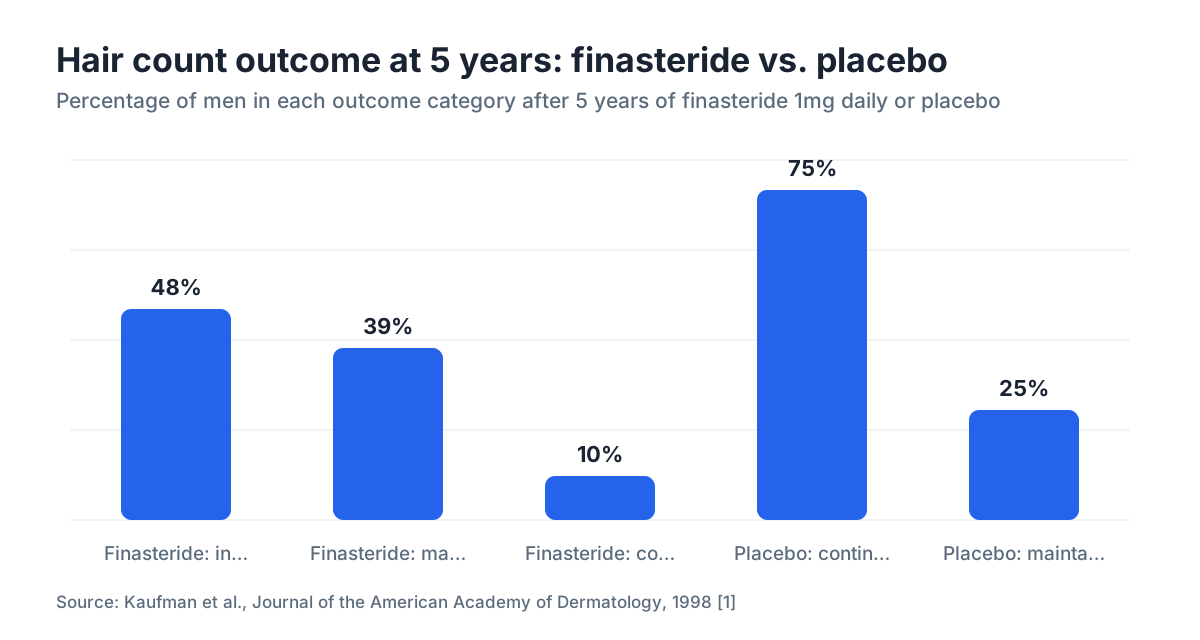
TL;DR: Start hair loss treatment the moment you notice thinning, usually the late teens to mid-20s for men with a strong family history. In a 5-year trial, 87% of men on finasteride 1mg maintained or increased their hair count. Every year you wait pushes more follicles into miniaturization, and shrunken follicles are far harder to revive than active ones.
Why does timing matter so much for hair loss treatment?
Hair follicles don't just fall out. They shrink. Dihydrotestosterone (DHT) attaches to receptors in genetically sensitive follicles and, over years, shortens each growth cycle until the follicle produces a fine, colorless vellus hair instead of a terminal one. Once that miniaturization is complete, the follicle is essentially scar tissue. No medication can reliably restart it.
This is why a 23-year-old with a Norwood 2 hairline who starts finasteride has a fundamentally different prognosis than a 35-year-old with a Norwood 5. The 23-year-old still has the follicle. The medication can keep DHT away from it. The 35-year-old may have already lost those follicles entirely, and treatment at that point is mostly about protecting whatever is left, not recovering what's gone.
The clinical literature is blunt on this. A 5-year placebo-controlled trial published in the Journal of the American Academy of Dermatology found that men who took finasteride 1mg daily maintained or increased hair count over the study period, while placebo patients lost an average of 100 hairs per square centimeter in the same timeframe [1]. That gap only widens over a decade.
So the core idea is simple: treat active follicles, not dead ones.
What age do most men start losing hair?
Male pattern hair loss (androgenetic alopecia) starts earlier than most people expect. By age 20, roughly 20% of men show some degree of recession. By 30, it's about 30%. By 50, approximately half of men have significant hair loss [2]. These figures come from the American Academy of Dermatology and are consistent across multiple epidemiological studies.
The "50% of men by 50" figure is widely cited, but it understates early onset. The Hamilton-Norwood scale was built on a large cross-sectional sample, and researchers consistently find that the first signs, meaning a slight temple recession or diffuse thinning at the crown, often appear between 18 and 25 in men who will eventually develop significant hair loss.
For women, androgenetic alopecia tends to present later, most commonly after 40, though it can begin in the 20s, especially after hormonal events like stopping birth control or postpartum shedding [2]. Women's pattern loss looks different (diffuse thinning rather than recession) but the same principle applies: the earlier you intervene, the more follicles you protect.
Knowing your family history helps you estimate your personal timeline. If your maternal grandfather and father both had significant hair loss, the probability you'll follow the same pattern is high. Genetics on both sides of the family matter, and what causes hair loss covers the inheritance patterns in detail.
Can teenagers or people in their early 20s start treatment?
Finasteride is FDA-approved for adult men only, not for use in women or children, and the label specifically notes it is not indicated for pediatric patients [3]. Prescribing it to a 15- or 16-year-old is off-label and most dermatologists won't do it, for good reason: the hormonal environment during puberty is still stabilizing, and long-term data on finasteride's effect on adolescent hormonal development is thin.
Once a male is in his late teens, typically 17 or 18, the picture changes. Some clinicians will consider prescribing finasteride off-label if hair loss is aggressive and documented. The 2023 guidelines from the American Academy of Dermatology do not set a strict minimum age but emphasize that the benefit-risk conversation should be individualized [4]. A 19-year-old with rapidly progressing Norwood 3 loss is a different case than a 19-year-old with normal hairline variation.
Minoxidil is a different story. The 2% topical formulation is FDA-approved for women's hair loss (over-the-counter), and the 5% formulation is FDA-approved for men [3]. Neither approval specifies a minimum age, but the labeling says consult a physician before use in patients under 18. Many dermatologists are comfortable with minoxidil for older teenagers if hair loss is confirmed.
Practically speaking: if you're under 18 and worried about your hair, see a board-certified dermatologist first. Get a diagnosis. Many teenagers experience normal hairline maturation (the so-called "mature hairline") that isn't pathological hair loss. Starting medication unnecessarily is not a good outcome either.
What is the ideal age window to start finasteride or minoxidil?
If there's a window where treatment does the most good with the fewest trade-offs, it's roughly 18 to 35. Here's why.
In your early 20s, you almost certainly still have the follicles that are at risk. Finasteride works by blocking 5-alpha-reductase type II, the enzyme that converts testosterone to DHT [3]. Reduce DHT, and those follicles stop getting the signal to miniaturize. The 5-year finasteride trial showed 48% of men had increased hair growth, 42% had no further loss, and only 10% had continued progression, compared to 75% progression in the placebo group [1]. Those numbers come from a study population with mild to moderate loss, which is exactly who benefits most.
In your late 20s to mid-30s, you're still in a good position if you haven't crossed into advanced Norwood stages. Treatment at Norwood 3 or 4 can stabilize things very effectively. Many men in this window do well with the combination of finasteride and topical minoxidil. The two work by different mechanisms, and several head-to-head trials show the combination outperforms either drug alone [5].
After 40, treatment still makes sense but expectations shift. You're no longer trying to preserve a full head of hair. You're slowing the rate of loss on what remains and possibly buying years before a hair transplant becomes the right conversation. That's a legitimate goal. Finasteride and minoxidil for men both have evidence for benefit at any age where living follicles remain.
The honest answer: the ideal age is "when you first notice something happening." That is almost always earlier than when most men actually seek help.
How much hair can you actually preserve by starting early?
The data here is real but imprecise, because studies vary in endpoints, populations, and follow-up periods. Here's what the evidence actually shows.
The 5-year finasteride trial in the JAAD tracked vertex (crown) hair count and found men on finasteride had a net increase of about 277 hairs per square inch from baseline versus a decrease of about 100 hairs per square inch in the placebo group [1]. That's a net swing of roughly 377 hairs per square inch over 5 years. In subjective terms, most men notice visible, meaningful retention.
Minoxidil's evidence base is somewhat different. Topical 5% minoxidil was shown to increase hair count by roughly 15-18% in a 48-week trial [6]. It prolongs the anagen (growth) phase and may have some direct effect on follicle size. It does not block DHT, so if you stop using it, the hair it supported will shed within a few months.
The brutal math of waiting: every 12 to 24 months of untreated DHT exposure means more follicles in miniaturization. Some estimates suggest that by the time a man with Norwood 4 loss seeks treatment, he has already lost 50% or more of the hair density in affected areas. You can't undo that with medication.
For women, topical minoxidil (2% or 5%) is the primary FDA-approved medical option. Finasteride and spironolactone are used off-label in premenopausal women, with meaningful evidence but also important contraindications, especially in women who may become pregnant.
| Treatment | Mechanism | Best evidence timing | 5-year outcome (vs. placebo) |
|---|---|---|---|
| Finasteride 1mg oral | DHT blocker | Norwood 1-3, before significant miniaturization | 87% maintained or increased hair count [1] |
| Topical minoxidil 5% | Prolongs anagen, improves follicle blood flow | Any stage with living follicles | ~15-18% increase in hair count at 48 weeks [6] |
| Combo (finasteride + minoxidil) | Dual mechanism | Norwood 2-4 | Greater benefit than monotherapy in multiple trials [5] |
| Hair transplant | Surgical redistribution | After stabilization (usually 25-30+) | Permanent results but doesn't stop ongoing loss |
Does it make sense to start treatment before you see visible hair loss?
This is one of the more contested questions in dermatology, and the honest answer is: probably not for most people, but there's a genuine argument for high-risk individuals.
If your father went fully bald by 30, your maternal grandfather was a Norwood 7, and you're 22 with a hairline that looks fine right now, should you start finasteride prophylactically? Some dermatologists say yes. The medication is safe in healthy adult men (the main documented side effects are sexual in nature, affecting roughly 2-3% of users in randomized controlled trials [3]), and starting before any loss means you're preserving the maximum amount of hair.
The counter-argument is that not every man with a family history will develop significant loss, and starting a lifelong medication unnecessarily has real costs, both financial and in terms of potential side effects. Nobody has great data on prophylactic use because trials enroll people who already show signs of loss.
A practical middle ground: if you have a strong family history, start monitoring carefully at 18-20. Photographs every 3-6 months, ideally with consistent lighting. If you detect any thinning or recession, that's your signal to see a dermatologist and have the treatment conversation early. The receding hairline guide explains how to tell normal hairline maturation from true pathological recession.
What happens if you wait until your 30s or 40s to seek treatment?
Treatment in your 30s and 40s still works. Let's be clear about that. The goal just changes.
If you're 38 and at Norwood 4, finasteride can very likely slow or stop the loss in areas that still have miniaturizing follicles. What it almost certainly won't do is restore the areas that are already smooth and bare. That requires either a hair transplant or accepting the loss. DHT blockers can still provide real value at this stage by protecting donor areas and any remaining native hair.
The conversation about hair transplants also becomes more relevant after your late 20s. Most experienced hair restoration surgeons prefer to wait until loss has stabilized before doing a transplant, which usually means late 20s at the earliest and often 30s. Doing a transplant at 21 on an aggressive pattern can result in an island of transplanted hair surrounded by continued recession. This is a poor cosmetic outcome and often requires further surgery [7].
Oral minoxidil is gaining traction as an option for people who find topical application inconvenient. Low doses (0.625mg to 2.5mg daily for men) appear effective with a manageable side effect profile in recent studies. The oral minoxidil breakdown covers the dosing evidence in detail.
The main risk of waiting until your 40s is that you've permanently lost the optionality. You can't un-miniaturize a follicle. You can only protect what's left.
Is the treatment timeline different for women?
Yes, meaningfully so.
Female pattern hair loss (FPHL) typically progresses more slowly than male pattern loss and presents differently, usually as diffuse thinning at the crown and part-line rather than a receding hairline. The Ludwig scale describes three stages of FPHL severity [2].
For women, the treatment conversation often starts later, frequently in the 30s to 50s. But early intervention is just as logical. Minoxidil 2% is FDA-approved for women's use, and 5% minoxidil is used off-label with good evidence [6]. Spironolactone, an androgen-blocking medication, is widely prescribed off-label and has solid clinical evidence in women with androgenetic alopecia, though there's no specific FDA approval for this use.
One complication for younger women: shedding episodes that mimic pattern loss but aren't. Postpartum shedding, crash diets, thyroid issues, and high stress all cause telogen effluvium, a temporary shed that recovers on its own within 3-6 months. Treating temporary shedding with long-term DHT blockers is unnecessary and potentially harmful. This is why diagnosis matters before treatment, especially in women under 35.
If you're a woman noticing thinning, the sequence is: get bloodwork (ferritin, thyroid, DHEAS, hormone panel), see a dermatologist, get a diagnosis, and then discuss treatment. Don't self-diagnose and self-medicate.
How do you know if your hair loss is the right type to treat with medication?
Medication works for androgenetic alopecia (pattern hair loss driven by DHT sensitivity). It does not work for alopecia areata (autoimmune), traction alopecia (mechanical damage from tight hairstyles), scarring alopecias, or nutritional deficiencies.
The way to tell the difference starts with the pattern. Male pattern loss follows predictable Norwood stages, starting at the temples and crown. Diffuse loss all over the scalp is more likely a systemic issue. Patchy circular loss is more consistent with alopecia areata. A dermatologist can confirm with a scalp examination, and sometimes a scalp biopsy or trichoscopy.
If your loss is definitely androgenetic, the earlier you start treating it, the more you preserve. If it's something else, treating it with finasteride or minoxidil is at best useless and at worst a distraction from the real cause.
Myhairline's free AI scan (/scan) can help you map your current hair situation before a dermatology appointment, giving you a starting point for the conversation about what pattern you have and how far along it is.
For anything other than straightforward pattern loss, see a physician. Hair loss supplements and over-the-counter options are generally unproven for most non-androgenetic causes.
What are the risks of starting treatment too early?
Starting medication before you've confirmed a diagnosis is the main risk. You might be treating something that would resolve on its own, or treating the wrong thing entirely.
For finasteride specifically, the documented risks in randomized trials include sexual side effects (decreased libido, erectile dysfunction, ejaculatory disorders) in approximately 2-3% of users [3]. Post-finasteride syndrome, a condition where sexual and cognitive symptoms persist after stopping the drug, is reported by some patients but its prevalence and mechanism remain debated in the literature. The FDA updated finasteride's label in 2012 to include mention of persistent sexual side effects, and again in 2022 to add a warning about potential mental health effects including depression [3]. These are real label warnings, not rumors.
For a 19-year-old worried about hair loss but still in normal hairline maturation territory, starting finasteride carries a real side effect risk for zero benefit. This is why the diagnosis step matters.
Minoxidil's main risks are contact dermatitis from the vehicle (propylene glycol in topical formulas), initial shedding in the first 2-4 weeks as resting hairs are pushed out to make way for new growth, and, for oral minoxidil, fluid retention and in rare cases heart rate changes [6]. The minoxidil side effects article goes through these in granular detail.
The bottom line: starting early is smart, starting before you have a confirmed diagnosis and a real conversation with a clinician is not.
What's the single most effective thing you can do right now regardless of your age?
Get a baseline. Seriously, that's the answer.
Most men spend 3-5 years noticing their hair changing before doing anything about it. That delay is where follicles are lost. If you can establish a photographic baseline at the first sign of concern, you can track progression objectively rather than trying to remember if your hairline looked different two years ago.
From there, the path is: get a diagnosis (dermatologist, or a good AI-assisted starting point like the free scan at myhairline.ai/scan), understand your Norwood stage, and have a real conversation about whether the benefit-risk calculation of finasteride, minoxidil, or both makes sense for you specifically.
If you're under 25 and your loss is clearly progressing: act faster than your instinct tells you. This is one area where the cost of hesitation is real and permanent.
If you're over 40: treatment is still worth it for slowing further loss, even if restoration is more limited. The finasteride and minoxidil combination has evidence at any age where follicles remain.
And if you're considering a transplant someday: protect your native hair with medication first. A transplant without medical therapy is like building on sand. The surrounding hair will keep receding after surgery, leaving you with an increasingly unnatural result.
Sources
- Journal of the American Academy of Dermatology, Kaufman et al. 5-year finasteride trial, 1998
- American Academy of Dermatology, Hair Loss resource
- FDA, Propecia (finasteride) prescribing information
- American Academy of Dermatology, Clinical Practice Guidelines on Androgenetic Alopecia
- Journal of the American Academy of Dermatology, Combination finasteride and minoxidil study
- FDA, Rogaine (minoxidil 5%) prescribing information and clinical trial data
- International Society of Hair Restoration Surgery, Patient Guidance
- van der Merwe J et al., International Journal of Sport Nutrition and Exercise Metabolism, 2009 (creatine DHT study)
- National Institutes of Health, MedlinePlus, Androgenetic Alopecia
- Olsen EA et al., Journal of the American Academy of Dermatology, 2002 (minoxidil in women)