
TL;DR: Pura d'or Hair Loss Prevention shampoo combines biotin, niacin, argan oil, and a blend of botanicals. None of these ingredients regrow hair on their own in controlled studies, though some may modestly cut shedding tied to nutrient gaps or scalp inflammation. It is not FDA-approved to treat hair loss. Losing real density? Minoxidil or finasteride have far stronger evidence.
What exactly is Pura d'or hair loss prevention shampoo?
Pura d'or is a California personal care brand. Its flagship product, the Hair Loss Prevention Therapy shampoo (gold label), sits in the $25 to $30 range on Amazon and in some Target and Costco locations. The brand markets it as a clinically tested formula that reduces hair thinning, and it has piled up tens of thousands of Amazon reviews. That review count is how most people find it.
The product is not a drug. It is classified and sold as a cosmetic shampoo under U.S. law, which means the FDA does not evaluate or approve it before it reaches shelves [1]. The words "hair loss prevention" on the label are a cosmetic claim, not a medical one. That distinction matters a lot when you're deciding whether to trust the marketing.
The shampoo line also includes conditioners, a gold-and-silver "advanced" version, and DHT-blocking styling products, all using similar ingredient sets. This article covers the core Pura d'or hair loss prevention therapy shampoo because that's the one people search for and spend money on.
What are the active ingredients and what does the evidence say about each?
The label lists a long roster of botanicals. Here are the ones that get the most attention, and what the research actually shows.
Biotin (Vitamin B7) Biotin deficiency can cause hair loss and brittle nails. Correcting a real deficiency does restore hair. The catch: true biotin deficiency is rare in adults eating a normal diet [2]. If you're not deficient, adding more biotin through a shampoo almost certainly does nothing, because biotin works through metabolic pathways inside the cell, not by sitting on the hair shaft. The FDA has also warned that high biotin supplementation can interfere with lab test results, though topical amounts in shampoo are far lower than oral supplement doses [3].
Niacin (Niacinamide) Niacinamide improves scalp circulation and has anti-inflammatory properties. A small study found that a topical niacinamide formulation increased hair fullness compared to placebo [4]. The evidence is thin, the study was funded by Procter & Gamble, and the effect size was modest. Still, it's one of the better-supported ingredients in this category.
DHT-blocking botanicals (saw palmetto, pumpkin seed oil, nettle extract) Androgenetic alopecia, the most common hair loss pattern in men and women, is driven largely by dihydrotestosterone (DHT) shrinking hair follicles over time. Finasteride works by blocking the enzyme 5-alpha reductase, which converts testosterone to DHT, and it reduces scalp DHT by about 60% in clinical trials [5]. Saw palmetto has a similar but much weaker mechanism. A 2020 review in the Journal of Dermatological Treatment found that saw palmetto improved hair count in some small studies, but the evidence is rated low-quality and the optimal dose is unclear [6].
How much topical saw palmetto extract actually penetrates the scalp after a two-minute shampoo rinse? Nobody has good data on this. The closest relevant comparison is that even leave-on topical DHT blockers have thin evidence. A rinse-off product almost certainly delivers less active ingredient than a leave-on serum.
Argan oil and other oils Argan oil moisturizes and reduces breakage, which can make hair look fuller and shed less from mechanical damage. It does not grow new hair. It's a solid conditioning ingredient and probably earns its place in a shampoo for that reason alone.
Keratin amino acids and proteins Proteins coat the hair shaft temporarily and can reduce visible damage. They don't change follicle biology.
| Ingredient | Mechanism | Evidence level | Affects regrowth? |
|---|---|---|---|
| Biotin | Corrects deficiency | Strong (for deficiency only) | Only if deficient |
| Niacinamide | Scalp circulation, anti-inflammatory | Limited, 1 small RCT | Possibly modest |
| Saw palmetto | Weak DHT-blocker | Low-quality, small studies | Unclear |
| Argan oil | Moisturizer, reduces breakage | Cosmetic effect only | No |
| Pumpkin seed oil | Possible 5-AR inhibition | 1 small 2014 RCT | Unclear |
| Nettle extract | Anti-inflammatory, possible DHT effect | Very limited | No clear evidence |
The honest summary: nothing in this shampoo has the kind of large-scale, placebo-controlled trial evidence that minoxidil and finasteride have. That doesn't make it useless, especially for someone whose thinning traces back to scalp inflammation, poor diet, or breakage. But calling it "hair loss prevention" overstates what the science supports.
Is Pura d'or clinically tested, and what does that actually mean?
The brand's website references a clinical study showing reduced hair thinning. Cosmetic companies routinely commission their own studies, and these almost never appear in peer-reviewed journals, which means nobody outside the company's lab has scrutinized the methods or replicated the findings.
That doesn't make the studies fraudulent. It does mean you can't judge them the way you'd judge a published clinical trial. The FDA does not require cosmetic companies to prove efficacy before making cosmetic claims, only to ensure the product is safe [1]. So when Pura d'or says "clinically tested," it means they ran a test. It does not mean independent scientists confirmed the result, or that it would hold up in a controlled setting with a different population.
This is standard in the hair-care industry. Almost every premium shampoo brand makes similar claims. Pura d'or is neither uniquely honest nor uniquely deceptive here. It's playing by the same rules everyone else is.
How does Pura d'or compare to minoxidil, finasteride, and other proven treatments?
Here's the straight answer: Pura d'or is not in the same category as minoxidil or finasteride.
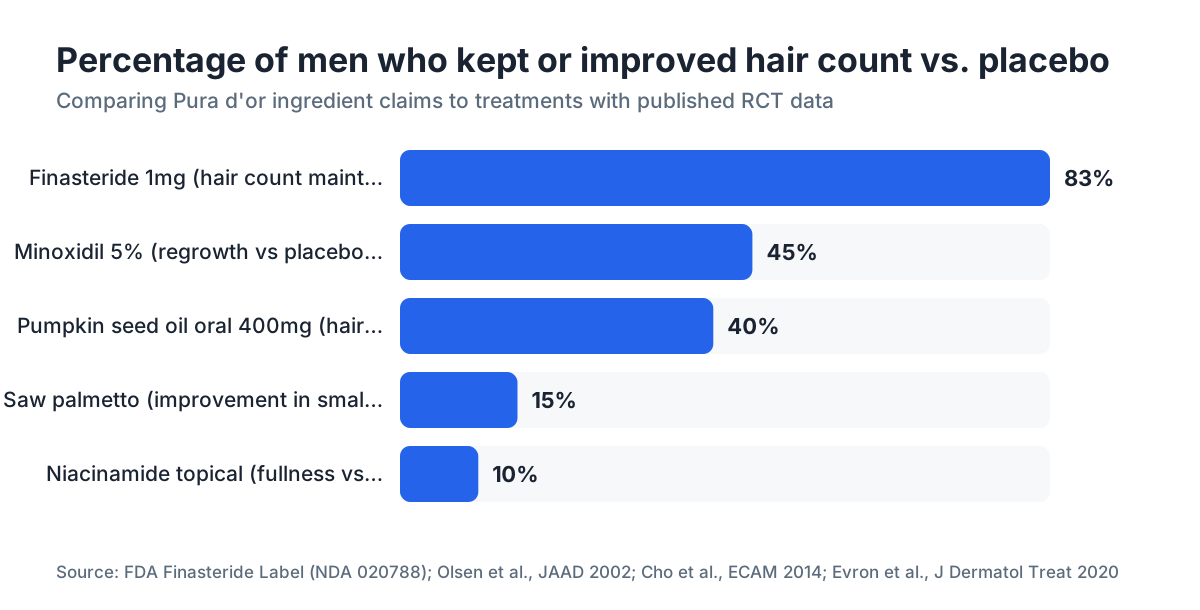
Minoxidil (2% and 5% topical) is FDA-approved for androgenetic alopecia. In published trials, 5% minoxidil produced 45% more hair regrowth than placebo at 48 weeks in men [7]. Finasteride (1 mg oral) is FDA-approved for male pattern baldness and reduced hair loss in 83% of men compared to 28% in the placebo group in its registration trials [5]. These are big, replicated, independently funded numbers. No shampoo comes close.
Learn more about minoxidil for men here.
Where does that leave a shampoo like Pura d'or? Probably in one of two roles. As a daily wash for someone whose thinning is mild and possibly tied to scalp health or minor nutrient gaps, it may slow visible shedding a little. As an add-on to a real treatment protocol, it's an inoffensive base shampoo that won't strip out topical minoxidil the way harsh sulfate shampoos might.
If you're already losing noticeable density and have a receding hairline, a shampoo alone is unlikely to stop it. What causes hair loss at the follicle level is a hormonal and genetic process that rinse-off botanicals don't meaningfully interrupt.
For context on the full treatment landscape:
- Finasteride and minoxidil combined is the most effective non-surgical approach most dermatologists recommend.
- Hair transplant is the only option that permanently restores lost hair.
- Hair loss supplements covers the oral supplement side of this debate.
| Treatment | FDA approval for hair loss | Typical cost/month | Evidence quality |
|---|---|---|---|
| Pura d'or shampoo | No | ~$8-10 | Low (industry-funded, cosmetic) |
| Minoxidil 5% topical | Yes | ~$10-25 | High (multiple RCTs) |
| Finasteride 1 mg oral | Yes (men) | ~$10-30 | High (multiple RCTs) |
| Saw palmetto supplement | No | ~$10-20 | Low |
| Hair transplant | N/A (surgical) | $4,000-$15,000 total | High for eligible candidates |
Can Pura d'or block DHT effectively?
The brand's DHT-blocking claim rests on saw palmetto and other botanicals. Saw palmetto's active components (fatty acids and phytosterols) do inhibit 5-alpha reductase in lab assays. The jump from a lab assay to meaningful follicle-level DHT reduction in a human scalp, through a rinse-off shampoo, is a long one with no compelling evidence bridging it.
The best study on a botanical 5-AR inhibitor was a 2014 randomized controlled trial of pumpkin seed oil supplements (400 mg/day oral) in men with androgenetic alopecia. After 24 weeks, the pumpkin seed oil group saw 40% more hair count than placebo [8]. That was oral pumpkin seed oil, taken in a concentrated dose every day, not a trace amount in a shampoo rinsed away after two minutes.
If DHT-driven hair loss worries you, this comparison of finasteride and minoxidil is a more productive read than botanical shampoo comparisons. Finasteride cuts scalp DHT by roughly 60% because it blocks the enzyme systemically. A botanical shampoo, at best, delivers a weak local inhibition for the few minutes it's on your scalp.
That said, if you're set on avoiding finasteride because of concerns about finasteride's side effects, higher-dose oral saw palmetto supplements (studied at 320 mg/day in some trials) make more sense than relying on a shampoo.
Who is most likely to see results from Pura d'or?
Honest answer: people with specific circumstances will get the most out of this product.
If your shedding traces back to poor scalp health, buildup, or inflammation, the anti-inflammatory botanicals and gentle sulfate-free formula may cut reactive shedding. If you're deficient in biotin or other B vitamins (more common with restrictive diets, Crohn's disease, or certain medications), the biotin content might help, though you'd get more from an oral supplement.
If your thinning follows a pattern (temples, crown, hairline), that's almost certainly androgenetic alopecia. No shampoo has good evidence for stopping that process. Check your Norwood stage and consult a dermatologist before spending years on shampoos alone.
A sudden increase in shedding usually means telogen effluvium, triggered by stress, illness, crash dieting, or hormonal shifts. Hair loss telogen effluvium usually resolves on its own in 3 to 6 months regardless of what shampoo you use. A gentle, nourishing shampoo like Pura d'or won't hurt during that window, but don't credit it for the recovery.
People most likely to notice something from Pura d'or:
- Mild diffuse thinning with no clear pattern
- Scalp irritation or seborrheic dermatitis feeding shedding
- Those who switched from a harsh, stripping shampoo and attribute improvement to the new product
- People with diet-related nutrient gaps
Are there any side effects or risks?
Pura d'or is generally well tolerated. The formula is sulfate-free, paraben-free, and uses a relatively gentle surfactant blend. Most negative reviews cite scalp irritation, dryness, or allergic reactions to specific botanical extracts, which can happen with any heavily formulated shampoo.
If you have a known sensitivity to tree nuts (argan comes from the argan tree), nut-derived oils could trigger a reaction, though topical exposure differs from ingestion. Saw palmetto is generally safe topically but has some documented side effects as an oral supplement (nausea, headache) that are not a meaningful concern in a shampoo [6].
One practical note: Pura d'or's website and label state it is color-safe. Independent reviews suggest some users with color-treated hair find it slightly drying over time. If you're using topical minoxidil on the scalp, a gentle shampoo like this is fine in combination. There's no known interaction between the botanical ingredients here and minoxidil.
The bigger risk isn't physical. It's the opportunity cost of leaning on a weak-evidence product while a progressing hair loss condition goes untreated for months or years.
How long does Pura d'or take to work, and what should you track?
The brand suggests using it for at least 2 to 3 months before evaluating results, which is reasonable advice for any hair product, because the normal hair growth cycle runs roughly 90 days [9].
What to track: count hairs on your pillow or in the shower drain before starting, then again at 8 to 12 weeks. Take a consistent photo (same lighting, same spot, same hair position) weekly. Less visible shedding is a more realistic goal than new hair density.
What not to do: don't confuse better hair appearance (less breakage, more shine from argan oil, reduced frizz) with actual hair loss prevention. Cosmetic improvements are real but distinct from follicle-level changes.
No change in shedding after three months, or continued thinning, is a clear signal to consult a dermatologist and consider treatments with real clinical backing. Does minoxidil work covers what realistic expectations look like for the most widely used topical treatment.
Is Pura d'or worth the money compared to alternatives?
At $25 to $30 for a 16 oz bottle, Pura d'or is mid-range for a specialty hair loss shampoo. It costs more than a basic drugstore shampoo but less than some salon brands.
For comparison, Nizoral (ketoconazole 1%) shampoo costs about $15 and has more direct clinical evidence for hair loss than most botanical shampoos. A 2019 review noted that ketoconazole shampoo improved hair density in some studies, likely through anti-fungal and anti-inflammatory mechanisms on the scalp [10]. If you're going to pay extra for a medicated hair loss shampoo, ketoconazole has the stronger scientific case.
If your goal is scalp health and a gentle daily wash, Pura d'or is a reasonable product. If your goal is to stop or reverse hair loss, that $25 a month is better spent on a generic minoxidil or a telehealth consult for finasteride.
Myhairline.ai's free AI hair analysis (/scan) can help you understand whether your pattern points to androgenetic alopecia, telogen effluvium, or something else before you commit to any product category.
For people already spending on hair loss: if you're on a proven treatment and want a complementary shampoo that won't interfere with it, Pura d'or is an inoffensive choice. As your primary defense against real pattern hair loss, it probably isn't enough.
What do real users report, and how reliable are those reports?
Pura d'or has over 30,000 reviews on Amazon with an average around 3.8 to 4.0 stars (as of mid-2025). Positive reviews often mention less hair in the drain, softer hair, and a better scalp feel. Negative reviews cite no change in shedding, scalp dryness, or dissatisfaction after months of use.
User reviews for hair loss products are notoriously unreliable, for a few reasons. Telogen effluvium (the temporary shedding spike from stress or illness) often resolves on its own around the same time someone starts a new product. Confirmation bias runs strong when someone spends money on a product they want to work. And the people who see zero effect usually don't bother reviewing.
The most honest framing: some users see less shedding, and some of that reduction is probably real (gentle cleansing, better scalp environment, less breakage). Some of it is coincidental resolution of temporary shedding. Almost none of it is follicle-level DHT blocking at a meaningful scale.
For hair loss supplements in general, the same review skepticism applies across the board.
What should you do if Pura d'or isn't enough?
If you've used Pura d'or for three or more months with no meaningful drop in shedding, or if you can see your scalp more clearly than a year ago, it's time to escalate.
Step one is a clear diagnosis. A dermatologist or trichologist can examine your scalp, ask about family history and medications, and run bloodwork to rule out thyroid issues, iron deficiency, or other systemic causes. If creatine or other supplements you take might be contributing, that's worth knowing too.
Step two is treatments with real clinical evidence. The American Academy of Dermatology recommends minoxidil as a first-line treatment for androgenetic alopecia in both men and women [11]. Finasteride is recommended for men. Combining the two is the approach most dermatologists use for moderate to advanced cases. Oral minoxidil is an option for people who struggle with topical application.
Step three, if hair loss is already significant, is understanding your surgical options. Hair transplant expenses explains what FUE and FUT procedures actually cost, which helps you plan realistically.
A shampoo can be part of your routine. It just can't be all of it when pattern hair loss is involved. The follicle won't respond to a two-minute botanical rinse the way it responds to a drug that works inside the body every day.
Sources
- FDA, How Cosmetics Are Regulated
- NIH Office of Dietary Supplements, Biotin Fact Sheet for Health Professionals
- FDA, Biotin Interference with Laboratory Tests Safety Communication
- Draelos ZD et al., Journal of Cosmetic Dermatology, 2005, Niacinamide and Hair Fullness
- FDA, Propecia (finasteride 1 mg) Prescribing Information, NDA 020788
- Evron E et al., Journal of Dermatological Treatment, 2020, Saw Palmetto Review
- Olsen EA et al., Journal of the American Academy of Dermatology, 2002, 5% Minoxidil vs 2% Minoxidil
- Cho YH et al., Evidence-Based Complementary and Alternative Medicine, 2014, Pumpkin Seed Oil RCT
- American Academy of Dermatology, Hair Loss Resource Center
- Piérard-Franchimont C et al., Dermatology, 2019, Ketoconazole and Hair Density Review
- American Academy of Dermatology, Hair Loss Diagnosis and Treatment