
TL;DR: Two medications have real clinical evidence for a receding hairline: finasteride (oral, FDA-approved for male pattern hair loss) and minoxidil (topical or oral, FDA-approved for androgenetic alopecia). Finasteride stops DHT-driven shedding; minoxidil extends the growth cycle. Used together, they beat either one alone. Everything else is either adjunctive or unproven.
What medications are proven to treat a receding hairline?
Two drugs have genuine FDA approval and a large body of peer-reviewed evidence behind them: finasteride 1 mg daily (brand name Propecia, now widely generic) and minoxidil, available as a 2% or 5% topical solution or foam, and more recently as a low-dose oral pill [1][2]. Everything else sits somewhere on a spectrum from "promising but early data" to "marketing copy with a citation that doesn't hold up."
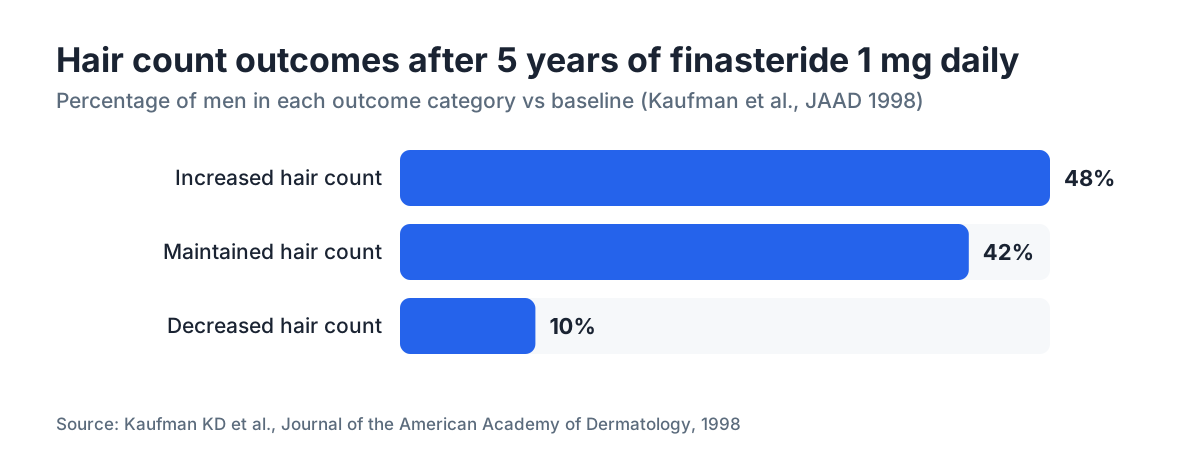
Finasteride works by blocking the enzyme 5-alpha reductase, which converts testosterone to dihydrotestosterone (DHT). DHT is the main hormonal driver of androgenetic alopecia, the pattern that causes a receding hairline in most men. Lower DHT means the follicles under attack get a break. In the main 5-year clinical trial published in the Journal of the American Academy of Dermatology, 48% of men taking finasteride 1 mg daily showed increased hair count versus baseline, and 42% maintained their count, meaning 90% of men stopped getting worse or improved [3].
Minoxidil's mechanism is different and honestly less well understood. It's a potassium channel opener that likely dilates blood vessels around follicles and prolongs the anagen (active growth) phase. It doesn't touch DHT at all. Because the two drugs work through completely different pathways, combining them is rational, not redundant. A 2021 randomized controlled trial in the Journal of the American Academy of Dermatology found that the combination of oral minoxidil 0.25 mg plus oral finasteride beat either drug alone on hair count at 24 weeks [4].
For a deeper look at how DHT fits into the bigger picture, see our overview of what causes hair loss.
How does finasteride work for a receding hairline?
Finasteride is a 5-alpha reductase type II inhibitor. The FDA approved it at 1 mg daily specifically for androgenetic alopecia in men in 1997 [1]. It is not approved for women of childbearing age because of serious teratogenic risk, specifically the risk of ambiguous genitalia in a male fetus.
For men, the evidence is as good as you'll find in this field. Scalp DHT drops roughly 60-70% within two weeks of starting, and serum DHT drops about 65% [3]. That reduction isn't enough to cause the muscle or libido changes you'd see from testosterone suppression, but it is enough to take meaningful pressure off the hair follicles. Most men notice less shedding before they notice regrowth, often around months three to four. Visible regrowth at the temples and hairline, the areas most people care about, tends to be more modest than regrowth at the crown, but it does happen in a meaningful proportion of users.
The drug requires continuous use. Stop it and DHT levels rebound to baseline within two to four weeks, and any hair retained by the drug typically sheds over the following six to twelve months. That's not a scam, it's just the pharmacology. You're suppressing a hormonal process, not curing it.
Side effects get a lot of attention online. The FDA label lists sexual side effects (reduced libido, erectile dysfunction, reduced ejaculate volume) in about 1.4-3.8% of men in clinical trials, compared to 0.9-2.1% on placebo [1]. Post-marketing reports of persistent sexual side effects after stopping the drug (sometimes called post-finasteride syndrome) are real, but the frequency and mechanism are genuinely contested in the literature. If you want the full picture on risks and the post-finasteride syndrome data, read our detailed article on finasteride.
Generic finasteride 1 mg costs roughly $15-30 per month at most U.S. pharmacies as of 2025, depending on source and coupon use. Brand-name Propecia runs $80-100 per month. Same molecule.
How does minoxidil work for a receding hairline?
Minoxidil is FDA-approved for androgenetic alopecia. The 2% solution was approved for women in 1992, and the 5% solution for men in 1997 [2]. Low-dose oral minoxidil (typically 0.25-2.5 mg daily for hair) is not formally FDA-approved for hair loss specifically, but it's prescribed off-label by dermatologists with increasing frequency and has several published RCTs supporting it.
Topical minoxidil works best when it reaches the scalp, which means it needs to get through the hair to the skin. If your hairline is actively receding, that's actually easier than treating a dense mid-scalp. The 5% formulation is more effective than 2% for men, per a controlled trial showing greater hair count increases at 48 weeks [5]. Foam tends to cause less scalp irritation than liquid (the liquid uses propylene glycol, which some people react to) and dries faster.
Oral minoxidil at 0.25-2.5 mg/day sidesteps the application hassle entirely and delivers consistent systemic levels. The trade-off is systemic side effects, including fluid retention, increased heart rate, and hypertrichosis (unwanted body hair growth). At low doses these are usually mild, but people with cardiovascular conditions should be cautious and should talk to a doctor first.
Cost for topical minoxidil is low: generic 5% solution runs about $10-20 per month. Oral generic minoxidil tablets (often cut from higher-dose blood pressure pills) can be similarly cheap, though you should only use compounded or pharmacy-dispensed pills with a prescription.
For more on what to expect and what to watch for, see our full guide to minoxidil for men and the separate article covering minoxidil side effects.
Which medication works better: finasteride or minoxidil?
Head-to-head, finasteride generally shows better results for male androgenetic alopecia in direct comparisons. A randomized trial published in the Journal of Dermatology comparing finasteride 1 mg to topical minoxidil 2% found significantly greater hair count increases with finasteride at 12 months [6]. The difference matters most at the hairline and temples, where DHT-mediated miniaturization is the primary driver. Minoxidil without DHT blockade is fighting a battle on only one front.
That said, minoxidil wins in specific situations. If you can't take finasteride because of side effect concerns, health history, or because you're female, topical minoxidil is your main evidence-based option. Women with a receding hairline (female pattern hair loss, which often shows as widening part and hairline changes) use the 2% solution, though some dermatologists use 5% off-label. Finasteride is generally not recommended for premenopausal women with childbearing potential due to teratogenicity.
The honest answer is: use both if you can tolerate them. The combination data is the strongest we have. A 2022 systematic review in Dermatology and Therapy found combination therapy consistently beat monotherapy across multiple outcome measures in men with androgenetic alopecia [7]. Think of it as a two-pronged approach: finasteride removes the hormonal stimulus that's killing the follicle, and minoxidil keeps the follicle active while you do it.
For a side-by-side breakdown of the combined protocol, see our article on finasteride and minoxidil together.
Are there other medications used for receding hairlines?
A few other options come up in clinic and online.
Dutasteride is a 5-alpha reductase inhibitor that blocks both type I and type II of the enzyme, making it more potent than finasteride at DHT suppression (roughly 90% reduction in serum DHT vs. 65% for finasteride) [8]. It's FDA-approved for benign prostatic hyperplasia (BPH) at 0.5 mg daily, and it's widely prescribed off-label for hair loss at the same dose. Several RCTs show it outperforms finasteride for hair count. It also carries a higher theoretical risk of the same sexual side effects and has a much longer half-life (five weeks vs. six hours for finasteride), so side effects, if they occur, persist longer after stopping. The FDA has not approved it for androgenetic alopecia as of 2025.
Spironolactone is used in women with androgenetic alopecia or hyperandrogenism-driven hair loss. It's an anti-androgen that blocks androgen receptors and reduces adrenal androgen production. Off-label doses for hair loss are typically 50-200 mg daily. It can't be used in men in meaningful doses because it causes gynecomastia and feminizing effects. The American Academy of Dermatology guidelines list spironolactone as a treatment option for women with female pattern hair loss [9].
Ketoconazole 2% shampoo is sometimes added to a regimen. There is some evidence it has mild anti-androgenic effects at the scalp. The data is thin for hair loss specifically, but it's low-risk as an adjunct.
Platelet-rich plasma (PRP) is not a medication per se, but it gets lumped into treatment discussions. It involves injecting concentrated growth factors from your own blood into the scalp. Results are variable, costs are high ($500-1,500 per session, multiple sessions required), and the evidence is less consistent than for finasteride or minoxidil. It's worth knowing about but it's not where I'd start.
For a full review of supplements marketed for hair, see our breakdown of hair loss supplements and why most don't move the needle.
How long does it take for receding hairline medication to work?
Slower than almost everyone expects.
Finasteride: Most men notice stabilization (less shedding) by month three or four. Visible regrowth, especially at the hairline, takes six to twelve months. The full benefit isn't really assessable until eighteen months to two years. The 5-year trial data shows continued slow improvement over time in men who stay on it [3]. If you quit at three months because "it's not working," you've essentially not run the experiment.
Minoxidil: You may see a paradoxical increase in shedding in the first four to eight weeks as the drug pushes resting follicles into the growth phase all at once. This is normal and not a sign the drug is damaging your hair. The pattern is documented in the dermatology literature and reflects follicle cycling, not damage [12]. Meaningful regrowth usually shows up by four to six months of consistent use.
A practical way to track progress: take standardized photos every three months under the same light, same angle. Phone cameras are fine. Your memory is not a reliable baseline.
If you want a faster read on where your hairline actually stands before committing to a medication protocol, the free AI analysis at MyHairline can map your Norwood stage from a photo and give you a personalized starting point.
The most common reason medication fails is inconsistent use. Finasteride is once daily. Topical minoxidil is twice daily (once daily is sometimes used for oral). Skipping doses doesn't just slow progress, it lets DHT or the growth cycle disruption partially recover each time.
What are the real side effects of receding hairline medications?
Let's go medication by medication with honest numbers, not fear or dismissal.
Finasteride 1 mg: The FDA-approved label reports sexual side effects (decreased libido, erectile dysfunction, ejaculation disorder) in 1.4-3.8% of men in clinical trials, with resolution on discontinuation in most trial participants [1]. Real-world post-marketing data suggests a small subset of men report symptoms persisting after stopping (post-finasteride syndrome). The European Medicines Agency added a strengthened warning about this in 2018 [10]. The current scientific consensus is that persistent effects occur but their frequency is unclear; estimates range from very rare to a few percent depending on study methodology. Mood changes, including depression and anxiety, appear in post-marketing reports; the FDA label was updated to include a warning about suicidal ideation in 2022. That's serious and worth knowing.
Minoxidil topical: The main issues are scalp irritation (more common with liquid due to propylene glycol), increased facial hair, and occasional initial shedding. Systemic effects are uncommon at topical doses but can occur.
Minoxidil oral: At low doses used for hair (0.25-2.5 mg/day), side effects include fluid retention (ankle swelling in some users), dizziness, headache, and unwanted body or facial hair (hypertrichosis). The body hair effect bothers some people enough to stop. Cardiovascular effects are rare at these doses but the drug should be avoided without medical oversight in people with heart disease or kidney impairment [2].
Dutasteride: Similar profile to finasteride but more pronounced DHT suppression means potentially more impact on sexual function. The very long half-life means any side effects take weeks to clear after stopping.
Spironolactone (women): Can cause menstrual irregularities, breast tenderness, and in rare cases hyperkalemia (elevated potassium). Lab monitoring is standard.
How do I know if my receding hairline is the type that responds to medication?
Medication works best for androgenetic alopecia (pattern hair loss), which is by far the most common cause of a receding hairline in both men and women. But not all hairline recession is androgenetic.
Traction alopecia (from tight hairstyles) won't respond to finasteride because DHT isn't the cause. Frontal fibrosing alopecia (FFA) is an inflammatory scarring condition that looks like a very clean, band-like recession at the hairline, often with loss of eyebrow hairs. FFA does not respond to minoxidil or finasteride and needs immunomodulatory treatment. Alopecia areata can cause patchy loss including at the hairline and responds to completely different medications (JAK inhibitors, corticosteroids). Telogen effluvium causes diffuse shedding that can affect the hairline temporarily but resolves when the underlying trigger is addressed; throwing DHT blockers at it won't help.
If you have a family history of male or female pattern baldness, and your hairline recession follows a predictable pattern (temples first, then mid-frontal, consistent with Norwood classification), androgenetic alopecia is the likely culprit. A dermatologist can confirm with a scalp exam, and often with dermoscopy, which shows the follicular miniaturization pattern that is the fingerprint of androgenetic alopecia.
For context on Norwood stages and what your hairline pattern means, see our guide to a receding hairline.
If you're not sure what's driving your shedding, our article on telogen effluvium explains the most common non-androgenetic cause.
Can women use medication for a receding hairline?
Yes, but the options are different from men's.
Minoxidil 2% topical is FDA-approved for women with androgenetic alopecia (female pattern hair loss). The 5% formulation is used off-label by many dermatologists with reasonable evidence, though facial hair growth is a more common complaint at higher concentrations. Oral minoxidil at very low doses (0.25-1 mg/day) is used off-label in women and appears effective in several small RCTs.
Finasteride is not recommended for women who are pregnant or could become pregnant because of the teratogenic risk. In postmenopausal women, some dermatologists do prescribe it off-label at 1-2.5 mg daily with evidence of benefit, though it's not FDA-approved for this use in women.
Spironolactone 50-200 mg daily is a meaningful option for premenopausal women with female pattern hair loss, particularly those with signs of elevated androgens. The AAD guidelines include it as a treatment option for women [9].
For women with a receding hairline that looks like a very clean, high frontal band rather than diffuse thinning, the possibility of frontal fibrosing alopecia should be ruled out before starting androgenetic alopecia treatments, since they won't help and delay proper treatment.
Female hair loss is genuinely underfunded in the research literature. The data quality for women is weaker across the board compared to men. That's not an excuse to avoid treatment; it's context for why the conversations are often more nuanced.
Is medication enough, or do I also need a hair transplant?
For most people in the earlier stages of a receding hairline, medication alone can stabilize the hairline and in many cases produce meaningful regrowth. That's where I'd start every time. Hair transplants are not a substitute for medication; they're a complement for cases where significant follicle loss has already occurred.
Here's the practical logic. A hair transplant moves donor follicles from the back and sides of the scalp (which are DHT-resistant) to the thinning areas. But if you're not on medication, DHT continues to miniaturize the native follicles around the transplanted ones. The result can look moth-eaten within a few years. Most reputable hair transplant surgeons require or strongly recommend that patients be on finasteride or an equivalent before and after transplant surgery.
If you're a Norwood stage 5-7 with extensive loss, medication at that point has less to offer for regrowth (though it can still slow further loss), and a transplant may be the primary path to restoring a hairline. But the transplant still works best in a low-DHT environment.
For anyone weighing this decision, our article on hair transplants covers costs, techniques, and who is actually a good candidate.
The takeaway: start medication early. The hairline you save with finasteride and minoxidil at Norwood 2 is hair you'll never need to transplant.
What does receding hairline medication cost per month?
This is a question that determines whether people actually stay on treatment, so let's be specific.
| Medication | Form | Approx. monthly cost (US, 2025) | Notes |
|---|---|---|---|
| Finasteride 1 mg | Oral generic | $15-30 | Widely available, GoodRx coupons help |
| Finasteride 1 mg | Brand (Propecia) | $80-100 | No clinical benefit over generic |
| Minoxidil 5% | Topical solution, generic | $10-20 | Kirkland at Costco is the cheapest reliable option |
| Minoxidil 5% | Topical foam, generic | $20-35 | Easier to apply, no propylene glycol |
| Oral minoxidil 2.5-5 mg tablets (cut) | Oral | $5-20 | Requires prescription; often cut from higher-dose pills |
| Dutasteride 0.5 mg | Oral generic | $25-60 | Off-label for hair; FDA-approved for BPH |
| Spironolactone 100 mg | Oral generic | $15-30 | Women primarily; requires prescription |
| Ketoconazole 2% shampoo | Topical | $10-25 | Adjunct only; Rx needed for 2% in US |
Combining finasteride and topical minoxidil, the most evidence-backed protocol for men, costs roughly $25-50 per month if you use generics. That's less than one session of PRP or one bad supplement purchase.
Telehealth platforms (Hims, Keeps, others) often bundle these medications with a prescription at comparable or slightly higher prices. Convenience is real but so is the markup.
If cost is genuinely a barrier, GoodRx consistently gets finasteride under $20 at major chains. No need to use a brand.
Do DHT blockers sold as supplements actually work for a receding hairline?
Short answer: not reliably, and not comparably to finasteride or dutasteride.
Saw palmetto is the most studied supplement with DHT-blocking claims. It inhibits 5-alpha reductase, the same enzyme finasteride blocks, but weakly and inconsistently. A 2020 systematic review found some evidence of benefit compared to placebo in androgenetic alopecia, but the effect size was much smaller than prescription 5-ARIs and the study quality was low [11]. If someone can't tolerate finasteride and wants something, saw palmetto is not unreasonable as an adjunct. As a replacement for finasteride, the evidence just isn't there.
Biotin gets marketed aggressively for hair loss. Unless you have a diagnosed biotin deficiency (which is rare outside of specific medical conditions or extreme dietary restriction), biotin supplements do not cause hair regrowth. The AAD has directly stated there is no evidence supporting biotin supplementation for hair loss in people without deficiency [9].
Nutritional deficiencies in iron, zinc, vitamin D, and B12 can contribute to hair shedding, and correcting a true deficiency can help. But correcting a normal level doesn't add extra benefit. Get a blood panel before throwing money at supplements.
For a full assessment of what supplements are worth the money and which aren't, see our guide to hair loss supplements.
For a broader look at the DHT blocker category, including both prescription and OTC options, our article on DHT blockers lays out the evidence hierarchy clearly.
When should I see a doctor about medication for my receding hairline?
Finasteride and dutasteride require a prescription in the United States. Spironolactone requires a prescription. Oral minoxidil requires a prescription. You can get topical minoxidil over the counter, but that's not always the right starting point depending on your situation.
See a dermatologist (ideally one who specializes in hair) if: your hairline is receding rapidly over months, not years; you have patchy loss rather than diffuse thinning; the scalp looks inflamed, scarred, or has an unusual texture; you're losing eyebrows or other body hair alongside scalp hair; or you're female and the pattern doesn't fit classic female pattern hair loss. Any of these could signal a condition that needs a different treatment entirely.
If you're a man with a classic Norwood pattern, no scalp symptoms, and a clear family history of androgenetic alopecia, a primary care physician can prescribe finasteride. Telehealth platforms have made this even more accessible, often without an in-person visit, though you won't get the dermoscopy evaluation a specialist offers.
At MyHairline, the free AI scan can give you a Norwood stage estimate and flag patterns worth discussing with a doctor, which can help you walk into that appointment with useful information already in hand.
Don't wait too long. The follicles that miniaturize completely and stop producing terminal hair are very difficult to rescue with medication. Medication is far better at slowing and stabilizing than it is at reversing years of loss.
Sources
- FDA, Propecia (finasteride) prescribing information
- FDA, Minoxidil drug label and OTC approval history
- Kaufman KD et al., Journal of the American Academy of Dermatology, 1998 (5-year finasteride trial)
- Vano-Galvan S et al., Journal of the American Academy of Dermatology, 2021 (combination oral minoxidil + oral finasteride RCT)
- Olsen EA et al., Journal of the American Academy of Dermatology, 2002 (5% vs 2% minoxidil controlled trial)
- Arca E et al., Journal of Dermatology, 2004 (finasteride vs minoxidil head-to-head trial)
- Hu R et al., Dermatology and Therapy, 2022 (systematic review, combination therapy for androgenetic alopecia)
- Clark RV et al., Journal of Clinical Endocrinology and Metabolism, 2004 (dutasteride DHT suppression)
- American Academy of Dermatology, Hair loss diagnosis and treatment guidelines
- European Medicines Agency, Finasteride 1 mg safety review and label update, 2018
- Evron E et al., Dermatologic Therapy, 2020 (systematic review, saw palmetto for androgenetic alopecia)
- National Library of Medicine, MedlinePlus: Minoxidil topical