

TL;DR: Both drugs cause similar sexual side effects, but dutasteride does it more often and the effects last longer because it stays in your body for months after you stop. In head-to-head trials, dutasteride causes sexual adverse events in roughly 5-9% of men vs 3-7% for finasteride. Dutasteride also works better for hair. The tradeoff is real and worth thinking through carefully.
How do dutasteride and finasteride actually work?
Both drugs belong to a class called 5-alpha reductase inhibitors. They block the enzyme that converts testosterone into dihydrotestosterone (DHT), which is the hormone that shrinks genetically susceptible hair follicles and eventually kills them. Stopping DHT slows that process and, for many men, partially reverses it.
The difference is which version of the enzyme each drug targets. There are two isoforms: type 1 and type 2. Finasteride blocks only type 2 [1]. Dutasteride blocks both type 1 and type 2 [2]. That dual blockade is why dutasteride reduces serum DHT by about 90-95% compared to roughly 70% for finasteride [2]. More DHT suppression means better hair regrowth on average, and it also means a bigger shift in your hormone environment, which is the root of the side-effect conversation.
Both drugs are taken orally. The standard dose for hair loss is 1 mg finasteride daily or 0.5 mg dutasteride daily. Finasteride at 1 mg is FDA-approved for male pattern hair loss under the brand name Propecia [1]. Dutasteride is FDA-approved only for benign prostatic hyperplasia in the US (at 0.5 mg under the brand name Avodart), but it is approved for androgenetic alopecia in South Korea and Japan, and is widely prescribed off-label for hair loss by dermatologists in the US and Europe [3].
How these drugs work drives almost everything about their side effects, so hold that in mind as you read the numbers below. The bigger the DHT suppression, the bigger the potential shift in everything DHT touches. For a broader look at how DHT blockers work and the full category of options, that article covers the landscape well.
What are the side effects of finasteride?
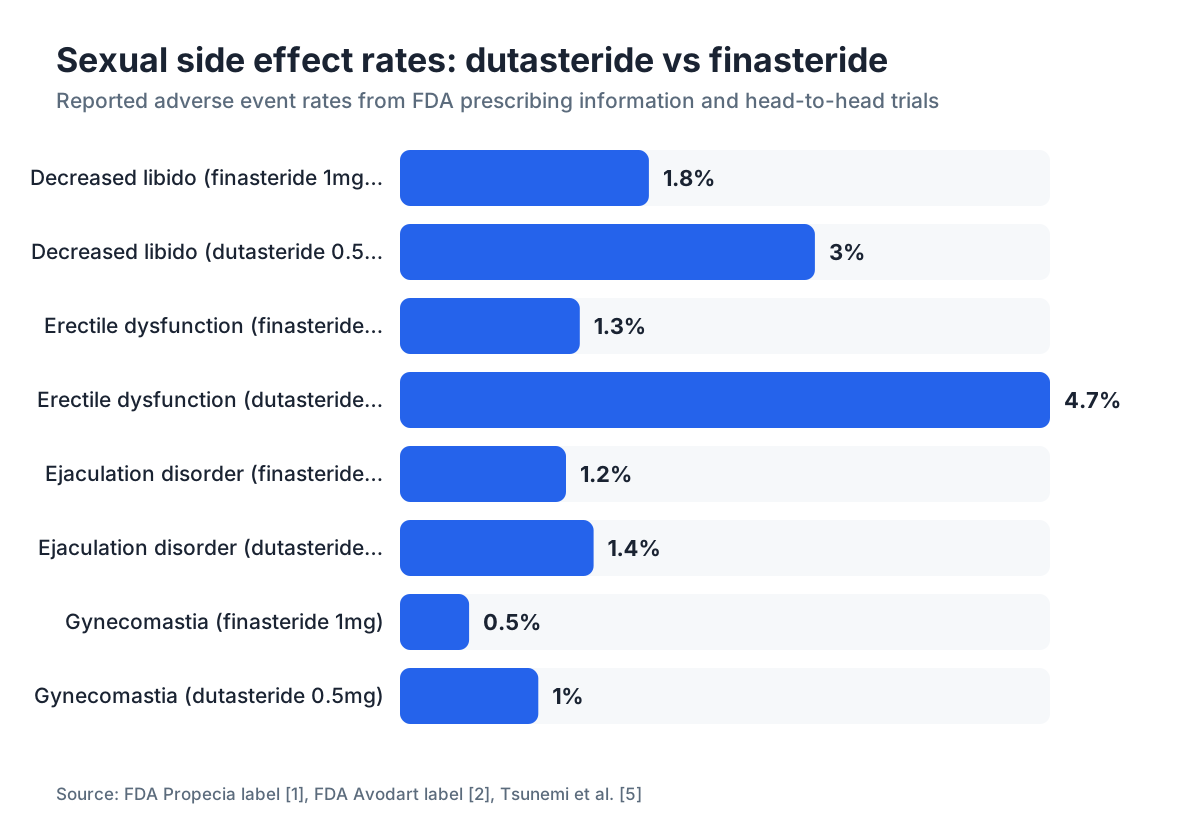
The FDA label for Propecia (finasteride 1 mg) lists the most common adverse effects as sexual in nature: decreased libido, erectile dysfunction, and reduced ejaculate volume [1]. In the original clinical trials submitted for FDA approval, the rates were low. Decreased libido appeared in 1.8% of men on finasteride vs 1.3% on placebo; erectile dysfunction in 1.3% vs 0.7%; ejaculation disorder in 1.2% vs 0.7% [1].
Those trial numbers are the ones the FDA reviewed, but real-world surveys and longer observational studies often report higher rates. A 2017 survey-based study published in the Journal of Sexual Medicine found sexual dysfunction rates of around 3.4-7.5% depending on the specific symptom and how it was measured. The discrepancy comes partly from how adverse events are collected: formal clinical trials tend to undercount because men self-report symptoms only when directly asked in a structured way.
Finasteride also carries a post-marketing warning about persistent sexual side effects that can continue after stopping the drug, a syndrome sometimes called post-finasteride syndrome [1]. The FDA added a label update in 2012 to reflect reports of libido disorders, ejaculation disorders, and orgasm disorders persisting after discontinuation [8]. The mechanism is not fully understood, and the FDA has not formally accepted post-finasteride syndrome as a defined clinical entity, but the label acknowledgment is real.
Other reported side effects include breast tenderness or enlargement (gynecomastia), depression, and cognitive symptoms sometimes called "brain fog". These are rarer and the evidence is less consistent. A large Danish register-based study published in JAMA Internal Medicine in 2017 found a modestly elevated risk of depression among men on finasteride, though the absolute risk increase was small and the study design had limitations [4].
Finasteride is also a known teratogen. It must never be handled by pregnant women in crushed or broken form because absorption through the skin can cause genital birth defects in a male fetus [1].
Read more about finasteride including dosing, how long it takes to work, and what to expect.
What are the side effects of dutasteride?
Dutasteride's FDA label (approved for BPH) lists the same core categories of sexual side effects: decreased libido, erectile dysfunction, and ejaculation disorder [2]. The rates in clinical trials for BPH (where the population is older men) were somewhat higher than finasteride's hair-loss trials: impotence appeared in about 4.7% of dutasteride users, decreased libido in 3.0%, ejaculation disorder in 1.4%, and gynecomastia in 1.0% [2].
Comparing those numbers directly to finasteride's 1 mg hair-loss data is a bit unfair because the patient populations differ. When the two drugs are compared in the same trial using the same population, the picture is clearer.
A 2016 randomized controlled trial by Tsunemi et al. put dutasteride and finasteride head-to-head in men with androgenetic alopecia. Dutasteride 0.5 mg produced significantly greater hair regrowth than finasteride 1 mg, and sexual adverse events showed up in roughly 5-9% of dutasteride users versus 3-7% of finasteride users, though the differences were not always statistically significant between the two groups in every measure [5].
The more important practical difference is duration. Finasteride has a half-life of roughly 5-6 hours, which means it clears your system within a day or two of stopping [9]. Dutasteride has an extremely long half-life: around 5 weeks [2]. So if you develop a side effect on dutasteride and stop the drug, the compound is still circulating and active in your body for months. The FDA label notes that dutasteride is detectable in serum up to 4-6 months after the last dose [2]. For men who experience persistent side effects, that timeline is not a small thing.
Head-to-head: which drug causes more side effects?
The honest answer: dutasteride causes sexual side effects at modestly higher rates and those effects persist longer if they occur, but the absolute difference in rate between the two drugs is not dramatic.
| Side effect | Finasteride 1 mg (hair loss trials) | Dutasteride 0.5 mg (BPH label) | Head-to-head trials (approx.) |
|---|---|---|---|
| Decreased libido | 1.8% | 3.0% | Slightly higher with dutasteride |
| Erectile dysfunction | 1.3% | 4.7% | Slightly higher with dutasteride |
| Ejaculation disorder | 1.2% | 1.4% | Similar |
| Gynecomastia | <1% | 1.0% | Similar |
| Drug half-life | ~5-6 hours | ~5 weeks | Dutasteride far longer |
Sources: FDA labels for Propecia [1] and Avodart [2]; Tsunemi et al. 2016 [5].
A systematic review and meta-analysis published in JAMA Dermatology in 2019 looked at multiple 5-alpha reductase inhibitors for hair loss and confirmed that dutasteride 0.5 mg was superior to finasteride 1 mg for hair count and global photographic assessment, with a similar but slightly elevated adverse event profile [6].
Here's the real risk calculus. Dutasteride works better. But if you're one of the men who develops a persistent side effect, you're committed to a much longer recovery window. That asymmetry is what matters. Most dermatologists use finasteride first and reserve dutasteride for men who have had a fair trial of finasteride without enough results.
If you want to compare how these drugs stack up against topical options like minoxidil, the finasteride and minoxidil article covers combination therapy and the tradeoffs.
Does dutasteride cause post-finasteride syndrome too?
Post-finasteride syndrome (PFS) describes a cluster of symptoms including sexual dysfunction, depression, and cognitive complaints that persist after stopping finasteride. The Post-Finasteride Syndrome Foundation and patient communities have documented many cases, and the FDA's label acknowledges the reports [8].
Dutasteride is in the same drug class and works via the same mechanism but with broader inhibition. There are case reports of similar persistent symptoms after dutasteride. The Post-Finasteride Syndrome Foundation's registry includes men who took dutasteride, more than finasteride. But the dedicated research base on persistent post-dutasteride symptoms is smaller because dutasteride has been prescribed for hair loss less widely.
What we can say with confidence: dutasteride suppresses DHT more completely, and given the 5-week half-life, any neurosteroid changes that contribute to PFS-type symptoms would theoretically take longer to reverse. Nobody has good population-level data on the incidence of persistent symptoms after dutasteride specifically. The closest thing is case series and the overlapping pharmacology.
If persistent side effects worry you, raise it with a prescribing physician before you start, not after you notice something.
Are there side effects unique to dutasteride?
Not strictly unique, but a few matter more with dutasteride than with finasteride in practice.
PSA suppression is one. Both drugs lower prostate-specific antigen (PSA) levels, which is used as a prostate cancer screening marker. Finasteride suppresses PSA by about 50% and dutasteride suppresses it by a similar or slightly greater amount [2]. The practical problem: if your urologist orders a PSA test and doesn't know you're on dutasteride, they may read a falsely low result and miss a rising PSA that would otherwise trigger further investigation. Tell every provider you're on this drug.
Dutasteride also delivers longer and more complete Type 1 inhibition, which means it suppresses DHT in skin and sebaceous glands more thoroughly than finasteride. For most men that's irrelevant. In theory, Type 1 inhibition could affect sebum production, but clinical trials haven't shown meaningful skin changes as an adverse event.
Drug interactions deserve mention. Dutasteride is metabolized by CYP3A4, and drugs that inhibit this enzyme (like some antifungals and HIV protease inhibitors) can raise dutasteride levels [2]. Finasteride is also metabolized by CYP3A4 but has less clinical significance given its short half-life.
The teratogen warning applies to both drugs. Neither should be handled by pregnant women in any form, and both persist in semen. Men on dutasteride should use condoms if their partner is pregnant, and the FDA label advises caution for at least 6 months after stopping, given the long half-life [2].
What does the research say about mental health side effects?
The mental health signal is real enough to take seriously, but the absolute risk is modest and the causality debate continues.
For finasteride, the 2017 Danish cohort study published in JAMA Internal Medicine followed over 4,000 men prescribed finasteride for hair loss and found a statistically elevated rate of depression and self-harm diagnoses, most pronounced in the first year of use [4]. The hazard ratio was approximately 1.44 for depression diagnoses (meaning about 44% relatively higher risk than matched controls), though the baseline rate of depression is low enough that the absolute increase was still small.
For dutasteride, there is much less epidemiological data. The drug's shorter prescribing history for hair loss means the large population-based studies simply haven't been done yet. Mechanistically, both drugs affect neurosteroid synthesis. DHT and its metabolites (including allopregnanolone) have modulatory effects on GABA-A receptors in the brain. Reducing DHT affects that system. Whether the broader suppression from dutasteride produces stronger mood effects is biologically plausible but unproven in population data.
Got a personal or family history of depression or anxiety? Raise it explicitly with the physician prescribing the drug. It doesn't mean you shouldn't take it. It's a real variable in the decision.
MyHairline's free AI hair analysis (/scan) can help you understand your current hair loss stage and whether medical treatment is likely to help, which matters before you decide which drug's risk profile is worth taking on.
What are the side effects that are the same for both drugs?
A lot of the risk is shared. Both drugs:
Cause sexual side effects in a minority of users (decreased libido, erectile dysfunction, ejaculation disorder) by the same mechanism: lowering DHT, which has physiological roles in sexual function beyond the prostate and hair follicle.
Can cause gynecomastia. The mechanism is the shift in testosterone-to-estrogen ratio that comes with DHT suppression. Uncommon but real.
Are absolute contraindications in pregnancy and for women of childbearing potential who could become pregnant. The FDA labels for both drugs carry this warning and document the risk of hypospadias and other genital abnormalities in male fetuses [1][2].
Reduce PSA levels by approximately 50%, which the American Urological Association notes must be accounted for when interpreting PSA-based prostate cancer screening [3].
Cause an initial period of increased shedding in some users as the hair cycle resets. This isn't the drug causing more loss. It's the telogen effluvium that can occur as follicles shift from a dying to an active cycle. If that's happening to you, the telogen effluvium article explains what it is and when to worry.
Both drugs also run through the same metabolic pathway and can build up when co-administered with CYP3A4 inhibitors, though this matters more for dutasteride given its long half-life.
Who should probably avoid both drugs?
Men with a history of significant depression or sexual dysfunction should approach either drug with caution and a frank conversation with their doctor. That doesn't mean they can't use them, but the informed consent conversation needs to happen first.
Anyone planning to donate blood should know that both finasteride and dutasteride require a deferral period before donation because of the teratogen risk (the blood could be transfused to a pregnant woman). The FDA requires a 1-month deferral for finasteride and a 6-month deferral for dutasteride [3].
Men with prostate cancer or suspected prostate cancer are generally not given these drugs because 5-alpha reductase inhibitors can mask PSA changes that would signal disease progression or recurrence.
Younger men with fertility concerns should ask about a semen analysis before starting. Both drugs reduce semen volume and can reduce sperm count. These effects appear reversible for finasteride within months of stopping. For dutasteride, the long half-life means the effect on sperm persists longer and return to baseline takes more time. A 2007 study in Fertility and Sterility found that dutasteride significantly reduced sperm concentration and total motile sperm count, with recovery observed but taking longer than with finasteride [7].
Women are a separate category entirely. Finasteride's evidence for hair loss in women is mixed and the drug is not FDA-approved for women. Dutasteride has even less data. Both carry clear embryo risk. Some physicians prescribe finasteride off-label to postmenopausal women, but premenopausal women on the drug need reliable contraception.
How do doctors decide which drug to prescribe?
Most dermatologists in the US start men on finasteride 1 mg because it's FDA-approved for hair loss, has decades of safety data, and clears the system fast enough that stopping it quickly resolves the exposure if problems arise. It's the more conservative choice.
Dutasteride tends to get used in a few situations: when a man has tried finasteride for at least 12 months and seen inadequate response, when a dermatologist's clinical judgment is that the man's hair loss is aggressive and maximal DHT suppression is needed sooner, or in markets like South Korea and Japan where dutasteride is the first-line approved option.
A 2021 systematic review in the Journal of the American Academy of Dermatology confirmed that dutasteride 0.5 mg produces statistically greater hair density improvement than finasteride 1 mg, but noted that the adverse event profiles were broadly similar and that the choice between them often comes down to patient preference and physician comfort with off-label prescribing [6].
Some physicians also consider starting at lower doses of either drug to cut side effects, though the evidence base for reduced dosing (like finasteride 0.25 mg or dutasteride 0.1 mg) is thinner. A few small trials suggest partial DHT suppression at lower doses still produces meaningful hair benefit with potentially fewer side effects, but this hasn't made its way into mainstream guidelines yet.
If your first job is figuring out how bad your hair loss actually is before committing to any drug, MyHairline's free AI scan (/scan) can assess your hairline and give you a stage reading in a few minutes.
For context on how these drugs compare to non-pharmaceutical options, the hair loss supplements article is worth a read, as is the overview of what causes hair loss if you're still in diagnostic mode.
Can you reduce side effects while taking either drug?
There's no proven protocol that eliminates side effects, but a few strategies come up in clinical practice and in the literature.
Alternate-day dosing is sometimes tried with finasteride. Because finasteride's mechanism involves enzyme inhibition that lasts beyond its serum half-life, twice-weekly dosing still produces meaningful DHT suppression (around 50-65% in small pharmacodynamic studies). Some men report fewer sexual side effects on this schedule. The data isn't from large randomized trials, so treat it as hypothesis-generating rather than established guidance.
Starting and monitoring carefully means many physicians recommend a check-in at 3 months and 6 months after starting, asking specifically about sexual function changes and mood. Catching symptoms early lets you stop before they potentially become entrenched. This is practical, not optional.
For dutasteride specifically, given the long half-life, some prescribers consider alternate-week dosing or even monthly dosing schedules, especially for men who want hair benefit with minimal systemic exposure. Again, this rests on pharmacodynamic modeling more than large clinical trials.
The biggest risk-reduction move is simply knowing what to watch for before you start, not after something changes and you're left guessing whether the drug is to blame.
If you've decided medication isn't for you, hair transplant surgery is the most definitive option for restored density, though it comes with its own cost and recovery considerations.
What should you actually do with this information?
If you're deciding between these two drugs, the evidence points one way: dutasteride works better and carries a modestly higher risk of sexual side effects, at rates that hit harder if something goes wrong. The much longer half-life is the most practically important difference, not the slightly elevated percentage rates.
For most men starting treatment, finasteride is the reasonable first choice. It's FDA-approved for hair loss, has more than 25 years of post-market data, and gives you the option to stop quickly if something doesn't feel right.
For men who've tried finasteride and found it inadequate, or who have aggressive early-stage loss and want maximal DHT suppression, dutasteride is a legitimate clinical option. The off-label status in the US doesn't make it fringe medicine. It's widely used by mainstream dermatologists and approved for hair loss in multiple countries.
Either way, this decision should involve a physician who knows your full medication list, your mental health history, your fertility plans, and your actual hair loss stage. The receding hairline article can help you find where you are on the Norwood scale, which affects whether you need aggressive treatment or have time to be methodical. And if you're also weighing whether minoxidil for men fits into your plan alongside either of these drugs, it often does.
Sources
- American Urological Association, Guideline on Management of Benign Prostatic Hyperplasia
- Melcangi RC et al., JAMA Internal Medicine, 2017, finasteride and depression risk in Danish cohort
- Tsunemi Y et al., Journal of Dermatology, 2016, randomized controlled trial of dutasteride vs finasteride for androgenetic alopecia
- Adil A, Godwin M, Journal of the American Academy of Dermatology systematic review on 5-ARIs for androgenetic alopecia
- Amory JK et al., Fertility and Sterility, 2007, dutasteride effects on spermatogenesis
- FDA MedWatch, Post-market safety information on finasteride label update 2012
- NIH National Library of Medicine, MedlinePlus, Finasteride
- American Academy of Dermatology Association, Hair Loss Guidelines