
TL;DR: Finasteride is an FDA-approved oral medication used for two things: male pattern baldness (at 1 mg daily, brand name Propecia) and benign prostatic hyperplasia, or BPH (at 5 mg daily, brand name Proscar). It works by blocking DHT, the hormone that shrinks hair follicles and inflames prostate tissue. Clinical trials show it slows hair loss in roughly 83-86% of men and regrows visible hair in about 66%.
What exactly is finasteride and what does it do in the body?
Finasteride is a synthetic 4-azasteroid compound that inhibits type II 5-alpha-reductase, the enzyme that converts testosterone into dihydrotestosterone (DHT) [1]. DHT is a stronger androgen than testosterone, and it drives two problems that matter clinically: it shrinks genetically susceptible hair follicles, and it stimulates overgrowth of prostate tissue.
At the 1 mg dose used for hair loss, finasteride reduces serum DHT by roughly 60-70% [1]. At the 5 mg dose used for BPH, that suppression reaches about 70-75%. Either way, the drug barely touches testosterone at these doses, which is why it doesn't cause the whole-body androgen collapse you'd expect from a testosterone blocker.
The drug is absorbed orally, reaches peak plasma concentration in about one to two hours, and has a half-life of five to six hours in young men and eight hours in men over 70 [1]. The liver metabolizes it, and it leaves the body in both urine and feces. None of this is exotic pharmacology. It's a well-understood mechanism that's been studied since the late 1980s.
One thing to know from the start: finasteride is a prescription medication in the United States and most countries. You need a doctor to prescribe it. That's not a bureaucratic formality. DHT suppression has real systemic effects, and the prescribing conversation matters.
What is finasteride used for in hair loss specifically?
The FDA approved finasteride 1 mg (Propecia) for male androgenetic alopecia, commonly called male pattern baldness, in December 1997 [2]. It's the only oral medication FDA-approved for this indication.
Androgenetic alopecia is the most common form of hair loss in men, affecting roughly 50% of men by age 50. The mechanism is straightforward: hair follicles in the scalp's frontal and vertex regions carry androgen receptors. In genetically predisposed men, DHT binds to those receptors and triggers miniaturization, a process where follicles produce progressively thinner, shorter hairs until they stop producing terminal hairs at all. Blocking DHT interrupts that process.
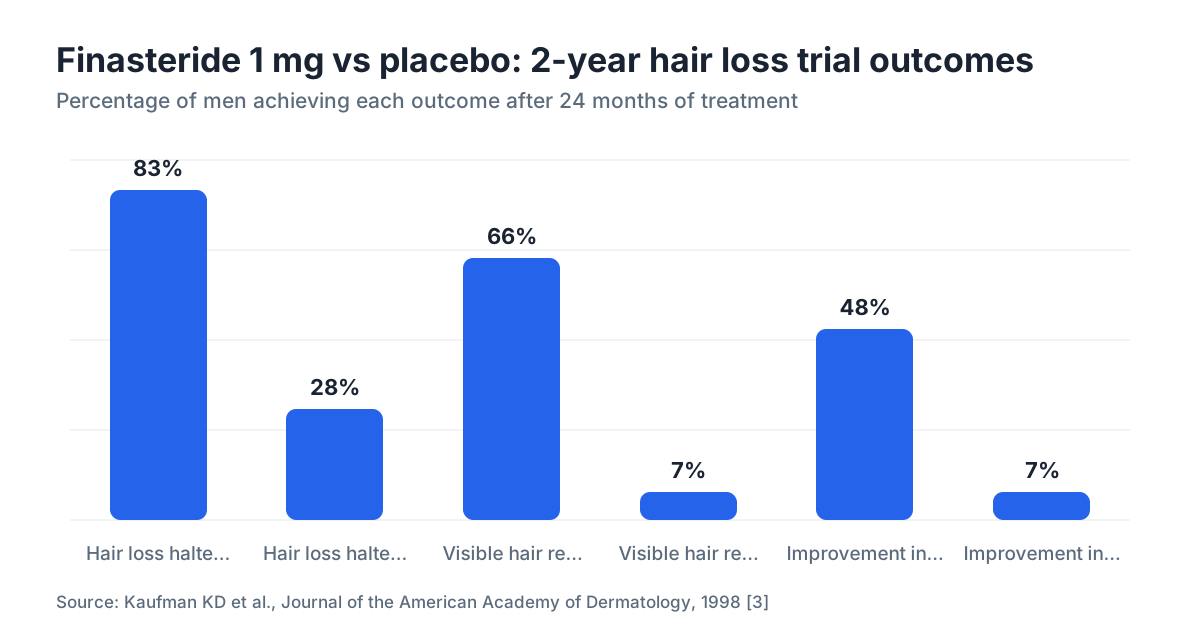
The two-year clinical trial that led to FDA approval enrolled 1,553 men aged 18-41 with mild to moderate vertex hair loss [3]. The results:
| Outcome | Finasteride 1 mg | Placebo |
|---|---|---|
| Hair loss halted or reversed | 83% | 28% |
| Visible hair regrowth | 66% | 7% |
| Hair count increase (vertex) | +107 hairs/cm² | -50 hairs/cm² |
| Improvement in hair growth rating | 48% | 7% |
Those are real numbers from the FDA-reviewed trial data, not marketing copy [3]. The honest caveat is that most of the regrowth happened at the vertex (crown), with more modest results at the hairline. If you have a receding hairline, finasteride tends to slow the recession more than it reverses it.
Finasteride works best when started early. Men with extensive loss (Norwood scale 5 and above, where large areas of follicles are completely dead) will see less benefit because there are fewer viable follicles left to rescue. Think of it as a preservation drug first, a regrowth drug second.
Many dermatologists combine finasteride with minoxidil for men because they work through different mechanisms. The combination tends to outperform either alone. That evidence base is solid enough that the American Academy of Dermatology (AAD) recommends both as first-line options [4].
How does finasteride compare to other hair loss treatments?
The honest comparison matters here, because men spend a lot of money on things with weaker evidence than finasteride.
| Treatment | Evidence level | Typical effect | FDA-approved for hair loss? |
|---|---|---|---|
| Finasteride 1 mg (oral) | RCT, Level I | Halts loss in ~83%, regrows in ~66% | Yes (men only) |
| Minoxidil (topical) | RCT, Level I | Slows loss, modest regrowth | Yes (men and women) |
| Minoxidil (oral) | Multiple trials | Similar or better than topical | No (off-label) |
| Hair transplant surgery | Observational, Level III | Permanent redistribution of existing follicles | N/A |
| DHT-blocking shampoos/supplements | Weak or none | Unproven for most | No |
| Low-level laser therapy | Small RCTs | Modest, inconsistent | Yes (device clearance) |
The oral minoxidil comparison deserves a paragraph. Off-label oral minoxidil at 0.25-2.5 mg/day has drawn real interest in dermatology over the past five years. It's not FDA-approved for hair loss, but trial data suggests it can work as well as topical minoxidil with better adherence. Some dermatologists use it alongside finasteride. If you want to understand the finasteride and minoxidil combination specifically, that's covered in more detail elsewhere.
Hair transplants are a different category. Finasteride doesn't compete with a hair transplant. Doctors often use it before and after transplant surgery to preserve native hair, since transplanted follicles (taken from the DHT-resistant donor zone) keep growing, while untreated native follicles around them continue to fall out.
DHT blockers in supplement form, things like saw palmetto, get asked about constantly. The evidence is thin. A 2020 systematic review in the Journal of Dermatological Treatment found weak evidence that saw palmetto reduces hair loss, and no study has compared it head-to-head with finasteride under rigorous conditions [5]. If you're weighing supplements against finasteride, know that you're comparing an FDA-approved drug with decades of trial data against something with maybe two small studies behind it.
What is finasteride used for in BPH (enlarged prostate)?
The 5 mg version of finasteride (Proscar) received FDA approval for benign prostatic hyperplasia in 1992, five years before the hair loss approval [2]. BPH is non-cancerous enlargement of the prostate that causes urinary symptoms: weak stream, frequent nighttime urination, difficulty starting urination, and incomplete bladder emptying.
The Proscar Long-Term Efficacy and Safety Study (PLESS), a four-year randomized trial of over 3,000 men, found that finasteride reduced prostate volume by about 18% and cut the risk of acute urinary retention by 57% compared to placebo [6]. It also reduced the need for surgery by about half over those four years.
For BPH, finasteride is often prescribed alongside alpha-blockers like tamsulosin (Flomax), which relax smooth muscle in the prostate and bladder neck. The combination beats either drug alone for men with significantly enlarged prostates.
One clinical note carries real weight: finasteride suppresses PSA (prostate-specific antigen) levels by about 50% in men taking it long-term [1]. PSA is a marker used to screen for prostate cancer. Physicians need to know a patient is on finasteride when they read PSA tests, because the drug's PSA-lowering effect can mask an elevation that would otherwise trigger further investigation. This isn't a reason to avoid the drug, but it is a reason the prescribing conversation matters.
Is finasteride used for anything else?
Transgender healthcare is one area where finasteride comes up often. In feminizing hormone therapy, finasteride is sometimes used as an anti-androgen to reduce DHT activity, though spironolactone and newer agents like bicalutamide are more common in that context. Finasteride's role here is off-label, and the evidence base is thinner than for its approved indications.
Polycystic ovary syndrome (PCOS) in women sometimes involves androgen-driven hair loss, and finasteride has been studied off-label for women with PCOS-related androgenetic alopecia. Results from small trials are mixed. The FDA label states plainly that finasteride is not indicated for use in women or children [1]. The main concern is teratogenicity: finasteride can cause abnormal genital development in a male fetus, so it's absolutely contraindicated in women who are pregnant or may become pregnant. Women who handle crushed or broken finasteride tablets should be warned.
For women with pattern hair loss that isn't PCOS-related, the evidence for finasteride is weaker than for men. A 2012 Cochrane review found insufficient evidence to recommend finasteride for postmenopausal women with androgenetic alopecia [7]. Some dermatologists prescribe it off-label in postmenopausal women at higher doses (2.5-5 mg), but this sits outside the FDA label and the data isn't close to as strong as the male hair loss trials.
High-dose finasteride (above 5 mg) has no established medical use, and no credible prescriber would suggest it.
What are the real side effects of finasteride?
This is where most men get stuck, and the anxiety around side effects is partly warranted and partly out of proportion to the actual risk profile at the 1 mg dose.
The FDA label lists sexual side effects including decreased libido, erectile dysfunction, and decreased ejaculate volume [1]. In the registration trials for the 1 mg dose, these occurred in roughly 3.8% of finasteride users versus 2.1% of placebo users. The difference is real but modest. In the main trial, 58 of 945 finasteride-treated men (about 6%) reported sexual adverse events, compared to 49 of 934 placebo-treated men (about 5.1%), and most resolved when the drug was stopped [3].
Post-finasteride syndrome (PFS) is a contested but real concern. Some men report persistent sexual, neurological, and psychological symptoms after stopping finasteride. The FDA added a warning about this in 2012 [2]. Here's the honest position: nobody has good large-scale epidemiological data on how common PFS actually is. The closest rigorous data comes from a 2021 study in JAMA Dermatology that found low rates of persistent sexual dysfunction, but the topic stays actively studied, and the FDA label acknowledges the persistent symptoms.
Mental health effects, specifically depression and suicidal ideation, sit on the FDA label as well [1]. These are reported at low rates but are serious. Men with existing depression or psychiatric history should discuss this with their physician before starting.
Breast tenderness or enlargement (gynecomastia) is rare but documented, occurring in under 1% of users in clinical trials.
The 5 mg BPH dose carries a somewhat higher side effect burden than the 1 mg hair loss dose, which makes sense given the greater DHT suppression.
Most side effects from the 1 mg dose appear to reverse after you stop, and the majority of men tolerate it without significant problems. That's not a promise. If you start finasteride and notice changes in mood, libido, or sexual function, talk to the prescribing physician rather than quietly continuing.
How long does finasteride take to work for hair loss?
Slow. That's the honest answer, and men who expect fast results often quit before they see real benefit.
You won't see meaningful change for the first three to six months. That stretch is mostly about halting existing loss rather than producing visible new growth. The hair cycle has its own rhythm: follicles in the telogen (shedding) phase have to cycle back into anagen (growth) before new terminal hairs emerge. DHT suppression changes the environment, but the follicles respond on their own clock.
In the registration trials, measurable increases in hair count showed up at 12 months, with continued improvement through 24 months [3]. Year two consistently beat year one in the trial data. Some men keep improving through year five.
One thing catches men off guard: a small percentage see a temporary increase in shedding in the first few weeks or months. This is sometimes called the "finasteride shed," and it may reflect follicles moving out of a stunted phase into a proper growth cycle. It looks a lot like what happens with minoxidil. If it happens, it generally settles by month three to four.
Stop taking finasteride and DHT returns to baseline within about two weeks, and the hair loss process resumes. Most men who stop lose the gains they made within 9-12 months. This is a long-term commitment, not a course of treatment.
If you're tracking changes early, photograph the vertex and hairline under consistent lighting every four weeks. Visual judgment without comparison photos is notoriously unreliable.
Who should not take finasteride?
Women who are pregnant or may become pregnant. Full stop. The risk of harm to a male fetus is serious enough that the FDA required a specific warning label, and that Proscar and Propecia tablets be film-coated to prevent absorption through skin contact [1].
Men with liver disease should use caution, since the liver metabolizes finasteride. Men taking certain medications that interact with CYP3A4 may need dose adjustments, though clinically significant drug interactions with finasteride are fairly uncommon.
Men with a history of prostate cancer should discuss finasteride carefully with a urologist. The Prostate Cancer Prevention Trial, a large randomized trial, found that finasteride reduced the overall incidence of prostate cancer by 24.8%, but there was a higher rate of high-grade prostate cancers in the finasteride group [6]. The FDA reviewed this data and concluded the overall benefit profile supported continued use, but the higher-grade cancer finding is real, and the conversation with a physician is warranted.
Men who donate blood should know that finasteride-tainted blood could harm a pregnant recipient. The American Red Cross asks that men wait one month after their last finasteride dose before donating [4].
Age matters too. The registration trials enrolled men aged 18-41. Evidence in older men exists (mostly from BPH studies), but the hair loss benefit data for men over 60 is thinner. That's not a reason to avoid it in older men, just a transparency note about where the trial data is strongest.
Generic finasteride vs. brand name: does it matter?
Propecia (brand name 1 mg) and Proscar (brand name 5 mg) are both made by Organon (previously Merck). Generic finasteride at 1 mg and 5 mg is widely available and much cheaper.
Generic drugs approved by the FDA have to demonstrate bioequivalence to the brand-name product, meaning the same active ingredient, same dose, same route of administration, and comparable absorption [2]. There's no reliable clinical evidence that brand-name finasteride outperforms generic for hair loss or BPH.
The cost gap is big. Brand-name Propecia typically runs $60-90/month without insurance in the United States. Generic finasteride 1 mg runs $15-30/month at most pharmacies, and sometimes less with discount programs like GoodRx. Some men buy 5 mg generic tablets and cut them into quarters, which gets the cost under $10/month. This is common practice, and the FDA doesn't prohibit it for personal use, but it gives you uneven doses per piece. A pill cutter helps.
Compounding pharmacies also produce finasteride in topical form (usually 0.1-0.25% solutions) as an off-label alternative. The theory is that topical application reduces systemic DHT suppression and therefore reduces systemic side effects. A few small studies suggest topical finasteride does reduce scalp DHT while having less impact on serum DHT than oral doses. But this isn't FDA-approved, the bioavailability is variable, and the long-term evidence doesn't match the oral formulation. It's a legitimate research area, not a proven alternative.
How do I know if finasteride is actually working for me?
The first real sign is that your shedding slows. Most men who respond to finasteride notice fewer hairs on the pillow, in the shower drain, and on the brush within three to six months. That's the drug doing its primary job: preservation.
At the 12-month mark, a dermatologist can do a trichoscopy or standardized global photography assessment to compare baseline against current hair density. If you didn't take baseline photos, that comparison gets harder. Take photos now if you're starting or considering it.
If you've been on finasteride for 12 months with no change in shedding rate and no visible maintenance, that's a real signal the drug may not be working for you. About 14-17% of men in clinical trials were classified as non-responders [3]. Non-response shows up more in men with more advanced loss, older follicle miniaturization, or possibly genetic variation in androgen receptor sensitivity.
For men who aren't sure where they are in their hair loss progression, an AI hair scan gives you a useful baseline before or after starting treatment. If you want an objective starting point, MyHairline's free AI scan can map your density and Norwood stage so you have something concrete to track against.
If finasteride isn't working alone, the most evidence-backed next step is adding minoxidil. If loss is advanced enough that no medical treatment will restore cosmetically meaningful density, then a hair transplant consultation makes more sense. These aren't mutually exclusive paths.
What do dermatologists actually recommend finasteride for?
The American Academy of Dermatology's guidelines for androgenetic alopecia recommend finasteride as a first-line oral treatment for men with pattern hair loss across all Norwood stages where active follicles remain [4]. The AAD also notes that finasteride works best when started early, that it requires long-term use, and that combination with minoxidil is supported by evidence.
For BPH, the American Urological Association's guidelines recommend finasteride (or dutasteride, a related 5-alpha-reductase inhibitor) for men with an enlarged prostate volume above roughly 30-40 mL who have bothersome urinary symptoms [6]. It's not recommended for men with small prostates, because those men don't show meaningful symptom benefit.
Dutasteride is finasteride's close relative. It inhibits both type I and type II 5-alpha-reductase (finasteride only inhibits type II), which gives it more complete DHT suppression. Dutasteride 0.5 mg is FDA-approved for BPH but not for hair loss in the US, though it's approved for hair loss in Japan and South Korea. Some dermatologists prescribe it off-label for hair loss in men who don't respond to finasteride. The side effect profile is similar, but the sexual side effects may be slightly more common given the greater DHT suppression.
Here's the honest take from dermatology practice: finasteride works, most men tolerate it, and the combination of an early start plus minoxidil gives the best odds of meaningful preservation and some regrowth. If you're in the early stages of pattern loss, there's a strong clinical argument for starting sooner rather than waiting. If you're uncertain what's causing your hair loss, read what causes hair loss more broadly, because finasteride specifically addresses androgenetic alopecia and won't help with telogen effluvium or other non-androgenic causes.
For men tracking their hair and thinking about next steps, MyHairline's AI scan at myhairline.ai/scan can help you identify where you are on the Norwood scale, which matters for deciding whether finasteride alone is likely enough or whether you need to be talking to a dermatologist about more aggressive options.
Sources
- FDA, Propecia (finasteride) prescribing information
- FDA, Drug approvals and databases
- Kaufman KD et al., Finasteride in the treatment of men with androgenetic alopecia, Journal of the American Academy of Dermatology, 1998
- Evron E et al., Natural hair supplement: Friend or foe? Saw palmetto, a systematic review, Journal of Dermatological Treatment, 2020
- American Urological Association, Benign prostatic hyperplasia guideline
- Cochrane Database of Systematic Reviews, Finasteride for female androgenetic alopecia, 2012
- Mella JM et al., Efficacy and safety of finasteride therapy for androgenetic alopecia, Archives of Dermatology, 2010
- FDA, Generic drug facts
- van Zuuren EJ et al., Interventions for female pattern hair loss, Cochrane Database of Systematic Reviews, 2016
- Rondanelli M et al., A combination of minoxidil and finasteride in male alopecia, Dermatologic Therapy, 2016