

TL;DR: Finasteride 5mg is FDA-approved for benign prostatic hyperplasia, not hair loss (that's the 1mg dose), but some men and doctors use it off-label. Sexual side effects, including reduced libido, erectile dysfunction, and ejaculation problems, occur in roughly 3-8% of users in clinical trials and usually resolve after stopping. A small subset reports persistent symptoms beyond discontinuation, a pattern known as post-finasteride syndrome, though the epidemiological data on it remain thin.
What is finasteride 5mg and how is it different from the 1mg hair loss dose?
Finasteride comes in two FDA-approved doses. The 1mg tablet (brand name Propecia) is approved specifically for male pattern baldness. The 5mg tablet (brand name Proscar) is approved for benign prostatic hyperplasia, or BPH, a condition where the prostate enlarges and makes urination difficult. [1]
The mechanism is identical at both doses: finasteride inhibits type II 5-alpha reductase, the enzyme that converts testosterone into dihydrotestosterone (DHT). DHT drives both prostate growth and the miniaturization of hair follicles in androgenetic alopecia. Cutting DHT at the prostate shrinks it. Cutting DHT at the scalp slows follicle miniaturization. [2]
The 5mg dose suppresses serum DHT by roughly 70-75%, while 1mg suppresses it by about 60-70%. [3] That gap sounds modest, and for hair loss the benefit difference is small, which is why some doctors split 5mg tablets as a cost-cutting move. The side effect profile does not scale cleanly with dose. The 5mg trials involved older men (median age mid-60s) being treated for prostate symptoms, so direct comparisons to the younger, hair-loss population require caution.
If you are reading this because a dermatologist prescribed finasteride for hair loss, they almost certainly wrote for 1mg. The 5mg dose comes up in hair loss contexts mainly when people buy the cheaper Proscar and cut it, or when someone is being treated for both BPH and hair loss at once. For a full overview of how finasteride works for hair, see our guide to finasteride.
What side effects did the clinical trials actually find for finasteride 5mg?
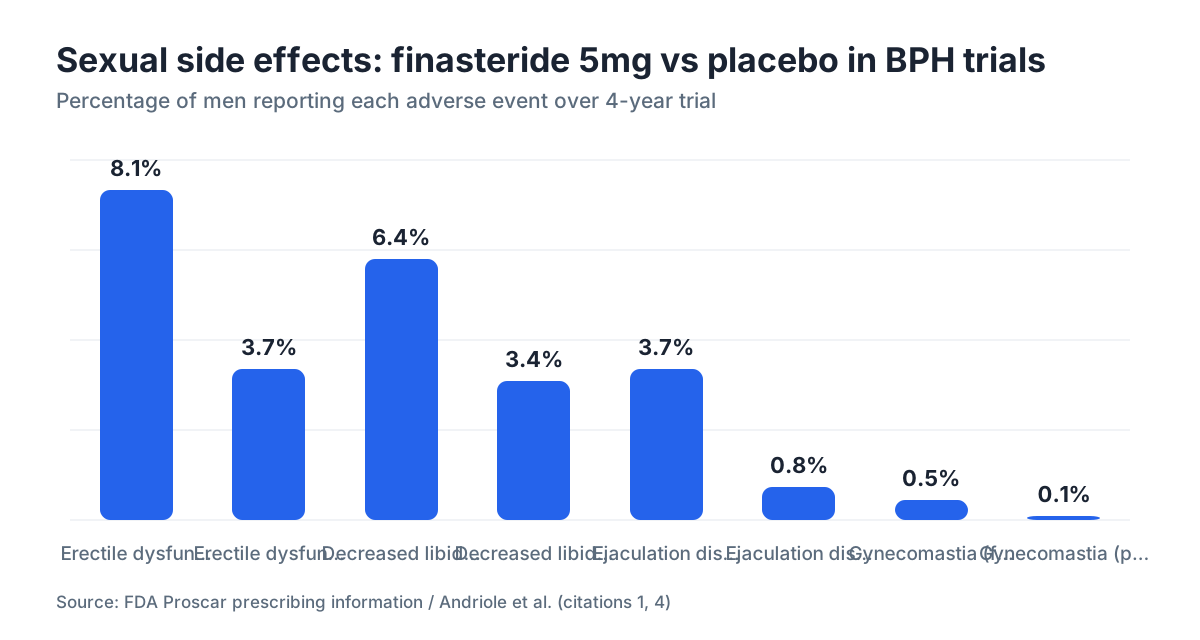
The main Proscar (finasteride 5mg) trials enrolled thousands of men and ran for one to four years. The Finasteride Study Group's four-year data reported these sexual adverse effects against placebo:
| Side effect | Finasteride 5mg | Placebo |
|---|---|---|
| Decreased libido | 6.4% | 3.4% |
| Erectile dysfunction | 8.1% | 3.7% |
| Ejaculation disorder | 3.7% | 0.8% |
| Gynecomastia (breast enlargement) | 0.5% | 0.1% |
Source: Andriole et al., Urology; FDA prescribing information for Proscar [1][4]
Those absolute numbers look alarming at first glance. But the placebo rates matter a lot. The men in these trials were often over 50, and erectile dysfunction in that age group is common with or without a drug. Subtract the placebo rate and the drug-attributable rate of erectile dysfunction lands closer to 4-5 percentage points, not 8%.
Gynecomastia is real but rare. About 1 in 200 men developed noticeable breast tissue changes. Most cases are mild and resolve after stopping, though tissue that persists beyond six months sometimes needs evaluation.
Non-sexual side effects get less airtime. Finasteride 5mg lowers PSA (prostate-specific antigen) by roughly 50% within six months, which matters because PSA is used to screen for prostate cancer. [1] Doctors following men on finasteride 5mg double the PSA result when reading it. Miss that step in a new patient who doesn't mention his finasteride, and you can mask a prostate cancer signal.
Depression and mood changes show up in post-marketing reports but were not a pre-specified endpoint in the original BPH trials, so any frequency estimate from trial data is unreliable. Here the package insert is honest about what nobody knows.
Are finasteride 5mg side effects permanent?
For most men, no. The trials and most post-marketing follow-up show sexual side effects resolve within weeks to a few months of stopping. The FDA prescribing information states that in men who discontinued therapy due to these adverse reactions, the reactions resolved. [1]
That sentence from the label reassures, but it applies to the trial populations and to discontinuations captured inside the study follow-up window. It does not mean every person on earth who stops finasteride recovers fully.
A subset of men report sexual dysfunction, cognitive fog, and mood symptoms that persist long after stopping. This cluster is labeled post-finasteride syndrome (PFS). A 2018 paper in Pharmacotherapy described 79 men with persistent symptoms, though the study design (a case series with no control group) can't establish causation or true incidence. [5]
The scientific fight is real. Some researchers argue the persistent symptoms reflect nocebo effects or pre-existing conditions. Others point to changes in neuroactive steroid levels and epigenetic modifications in animal models as plausible mechanisms. The honest answer is that nobody has clean epidemiological data on the true rate of permanent side effects. The largest prospective cohorts suggest the rate is low, but "low" across a drug taken by millions of men still means a meaningful number of individuals.
If you're weighing this risk, the question that matters is the reversibility window. Most practitioners and pharmacologists think stopping within the first several months of onset gives the best odds of resolution. Continuing after early symptoms appear, hoping they clear on their own, is a bet the data don't back.
For context on the side effect profiles of alternative treatments, see our comparison of minoxidil side effects.
What is post-finasteride syndrome and how common is it?
Post-finasteride syndrome describes a set of symptoms that persist after finasteride is stopped. The most reported are:
- Persistent sexual dysfunction (low libido, erectile dysfunction, reduced penile sensation)
- Cognitive symptoms sometimes called "brain fog"
- Depression and emotional blunting
- Reduced ejaculate volume
The Post-Finasteride Syndrome Foundation, a patient advocacy group, petitioned the FDA and contributed to label updates that now list persistent sexual dysfunction and depression as adverse events. [6]
How common is it? Here honest uncertainty has to win. A 2020 review in Urology by Traish et al. went through the available evidence and found no prospective incidence data good enough to pin a reliable percentage on. [7] The rate is clearly not zero. Whether it's 1 in 1,000 or 1 in 100 is genuinely unknown.
The proposed mechanisms include finasteride's effect on allopregnanolone and other neuroactive steroids that modulate GABA receptors in the brain, epigenetic changes in androgen receptor expression, and serotonergic pathway disruption. None of these is proven in humans to a degree that ends the debate.
This is not a fringe idea invented by the internet. The FDA added a depression warning to the finasteride label in 2012, and the European Medicines Agency updated its assessment in 2017 to include persistent sexual dysfunction. [6] Those are real regulatory responses to signal building up in pharmacovigilance systems.
How does finasteride 5mg affect PSA and prostate cancer risk?
Finasteride 5mg was studied in the Prostate Cancer Prevention Trial (PCPT), a randomized controlled trial of 18,882 men that ran seven years. The results were mixed in a way worth understanding.
Finasteride cut the overall prevalence of prostate cancer by about 24.8% versus placebo. [8] That reads like a clear win. The catch: men in the finasteride arm who did develop prostate cancer had a higher rate of high-grade tumors (Gleason score 7 or above) than the placebo group. That finding drove years of debate over whether finasteride caused more aggressive cancers or whether it was a detection artifact. Finasteride shrinks the prostate, so a biopsy samples a higher proportion of it, making high-grade tumors easier to find.
The FDA's current position, shared by most urologists, is that the high-grade finding is largely a detection artifact rather than a true rise in biologically aggressive cancer. A 2018 long-term follow-up of PCPT participants in NEJM found no difference in prostate cancer mortality between the groups. [8]
Practical point: any man on finasteride 5mg for BPH needs a urologist who knows about the PSA halving effect. A PSA of 2.0 ng/mL on finasteride is clinically equivalent to roughly 4.0 ng/mL off it. Get this wrong and you delay cancer detection.
Can women take finasteride 5mg and what are the risks?
Finasteride is absolutely contraindicated in pregnancy. This is not a precaution. It's a hard prohibition. The FDA gives finasteride a Pregnancy Category X rating, meaning animal studies showed fetal abnormalities and the risk clearly outweighs any benefit. [1] Finasteride causes abnormal development of external genitalia in male fetuses. Women who are pregnant or may become pregnant should not even handle crushed or broken tablets, because the drug can absorb through the skin.
For postmenopausal women with hair loss, finasteride is sometimes prescribed off-label at 1mg and at 2.5-5mg doses. The evidence base is small next to the male data. A few randomized trials and several case series show modest benefit in postmenopausal women with androgenetic alopecia, but the effect size runs smaller than in men. [9]
Side effect data in postmenopausal women are limited, and the sexual dysfunction risks (which matter in premenopausal women) are barely studied. No long-term safety data comparable to the BPH trials exist for women.
Premenopausal women who want finasteride for hair loss need reliable contraception. Full stop. Most dermatologists either decline to prescribe it to women of childbearing potential or require documented contraception and informed consent.
What are the side effects of long-term finasteride 5mg use?
Most of the sexual side effect data comes from trials of one to four years. Longer data out to seven years (from the PCPT follow-up) and several real-world cohorts show that side effects in most men stabilize or improve over time rather than worsen. [8]
A few long-term concerns are worth knowing.
Depression. The FDA added a depression warning in 2012 after pharmacovigilance data piled up. A 2017 population-based cohort study using Danish health registry data found men on finasteride had a modestly higher rate of depression diagnoses and antidepressant prescriptions than unexposed men, with the highest risk in the first year of use. [10] The absolute increase was small, but the signal was real enough for the label to mention it.
Libido trajectory. Some men on finasteride for years report gradual adaptation, where an initial libido dip improves. Others report the opposite. There's no reliable trial data here, because most trials don't track libido continuously across many years in any granular way.
Breast cancer. Finasteride's label mentions breast cancer in post-marketing experience. The numbers are very small and no causal link is established, but the signal exists in pharmacovigilance databases. Any man who notices a breast lump or nipple discharge on finasteride should get it checked.
Muscle mass and recovery. DHT has some role in muscle function. Some men on finasteride report weaker gym performance or slower recovery. This isn't well-studied in controlled trials, but the mechanism is biologically plausible given DHT's androgenic activity in muscle tissue.
How do finasteride 5mg side effects compare to finasteride 1mg?
The 1mg hair loss trials used a younger group (mostly men in their 20s to 40s with androgenetic alopecia) than the 5mg BPH trials (mostly men over 50). That age gap complicates any direct comparison, because baseline erectile dysfunction rates differ enormously by age.
In the 1mg Propecia trials, sexual adverse effects came in at these rates:
| Side effect | Finasteride 1mg | Placebo |
|---|---|---|
| Decreased libido | 1.8% | 1.3% |
| Erectile dysfunction | 1.3% | 0.7% |
| Ejaculation disorder | 1.2% | 0.7% |
Source: FDA prescribing information for Propecia [2]
Those rates sit well below the 5mg BPH data. Part of that is dose. Part is the age of the study population. A 30-year-old man's baseline erectile dysfunction rate is close to zero. A 65-year-old's is much higher, inflating both the drug and placebo columns in the BPH trials.
The bottom line: the 5mg dose probably does carry somewhat higher absolute side effect frequency, but the comparison isn't clean because of who was studied. If you're a younger man using finasteride for hair loss and splitting 5mg tablets, your true risk profile is probably closer to the 1mg data than the 5mg BPH data.
For a broader look at DHT blockers and how they compare as a class, that resource covers the landscape beyond finasteride alone.
What should you do if you experience side effects on finasteride 5mg?
Tell your prescribing doctor first. Don't stop suddenly without telling them, though sudden discontinuation of finasteride is not dangerous the way stopping some other drugs abruptly can be. The concern is tracking what happens after you stop, which is clinically useful.
For sexual side effects that show up in the first few months, there's a reasonable clinical argument for stopping promptly and watching whether they resolve. Waiting six to twelve months while hoping things improve has weaker support in the literature.
For mood and depression symptoms, take them seriously. Some men wave off low mood as unrelated to the drug. If symptoms started after you began finasteride, that timing is worth noting and worth raising with a doctor who understands the mechanism.
For PSA-related concerns (men on 5mg for BPH), remind every new provider about your finasteride use before PSA testing. A surprising number of lab misreadings happen because the treating urologist knew, but an emergency room physician or new internist did not.
Tracking your progress before committing to any treatment helps. Tools like the free AI hair analysis at MyHairline can document baseline hair density and recession patterns before you start, giving you something concrete to compare over time instead of relying on memory.
If you're considering stopping finasteride and looking at other options, the comparison between finasteride and minoxidil is a practical next read.
Are there alternatives to finasteride 5mg with fewer side effects?
For BPH, the main finasteride alternatives are alpha-blockers (tamsulosin, alfuzosin), which work differently and don't carry the same sexual dysfunction profile, and dutasteride, which inhibits both type I and type II 5-alpha reductase and has a similar or slightly wider side effect profile than finasteride. Combination therapy (finasteride plus an alpha-blocker) is common for moderate-to-severe BPH.
For hair loss specifically, minoxidil for men is the other major FDA-approved option. It works by a completely different mechanism (vasodilation and ion channel effects at the follicle) and carries none of finasteride's hormonal side effects. It also works less well for most men at the hairline, and some people see initial shedding that looks alarming but usually reflects telogen effluvium, a temporary shift in the hair cycle. Minoxidil's downsides are mostly topical (scalp irritation, unwanted facial hair if it runs) or cardiovascular if taken orally at higher doses.
Hair transplant surgery is a permanent structural fix that doesn't depend on continued DHT suppression, but it treats existing loss, not ongoing loss, so most surgeons require some form of medical therapy alongside the procedure.
Hair loss supplements like saw palmetto get marketed as mild natural DHT blockers. The evidence is weak. One small randomized trial showed some benefit, but no supplement carries the volume of safety and efficacy data that finasteride or minoxidil does. See the hair loss supplements overview for what the trial evidence actually says.
For men asking whether creatine contributes to hair loss (and therefore whether stopping it might reduce the need for finasteride), the evidence is thin but the mechanism has biological plausibility via DHT. See the full breakdown at does creatine cause hair loss.
What does the FDA label say about finasteride 5mg side effects?
The current FDA prescribing information for Proscar (finasteride 5mg) lists the following under warnings and adverse reactions. Quoting directly: "In clinical studies, 3.7% of men taking Proscar had ejaculation disorders compared with 0.8% of men on placebo." [1]
The label also carries a specific warning: "Before initiating therapy with PROSCAR for BPH, rule out other urological conditions, including prostate cancer, that might mimic BPH." This matters because finasteride can mask a rising PSA, a prostate cancer marker.
As of the most recent label updates, these are explicitly listed as post-marketing adverse reactions reported with finasteride 1mg and inferred to apply to 5mg as well: depression, decreased libido that continued after discontinuation, erectile dysfunction that continued after discontinuation, and male infertility and/or poor semen quality. [1][6]
Male infertility is an underreported concern. Finasteride at both doses can reduce semen volume and sperm motility in some men. A 2013 analysis in Fertility and Sterility found semen parameters improved after stopping finasteride, but recovery took several months and was not complete in all participants within the follow-up window. [11] Men planning to father children are generally advised to stop finasteride at least three months before attempting conception, and some fertility specialists recommend longer.
If you're working through what level of hair loss you're dealing with and whether treatment is indicated, understanding your receding hairline stage is a useful first step before committing to any long-term medication.
Sources
- Gormley GJ et al., New England Journal of Medicine, 1992
- Andriole GL et al., Finasteride Study Group, Urology, 1995
- Irwig MS, Pharmacotherapy, 2018
- FDA Drug Safety and Availability: finasteride label changes for persistent sexual dysfunction and depression
- Traish AM et al., Urology, 2020
- Thompson IM et al. / Unger JM et al., New England Journal of Medicine, 2018 (PCPT long-term follow-up)
- Price VH et al., Journal of the American Academy of Dermatology, 2000
- Danish population-based cohort study, JAMA Internal Medicine, 2017
- Samplaski MK et al., Fertility and Sterility, 2013
- American Academy of Dermatology, hair loss treatment guidelines