
TL;DR: The main drug treatments for alopecia are minoxidil (topical or oral), finasteride, dutasteride, and for alopecia areata specifically, JAK inhibitors like baricitinib and ritlecitinib. Minoxidil and finasteride work well for androgenetic alopecia. JAK inhibitors are the first FDA-approved systemic drugs for severe alopecia areata. No drug regrows hair in 100% of users or works permanently after stopping.
What types of alopecia can actually be treated with drugs?
Alopecia is not one disease. It's a category. The drug that helps you depends almost entirely on which type you have, so getting this right before spending money on anything matters more than people realize.
Androgenetic alopecia (AGA), also called male-pattern or female-pattern hair loss, is the most common kind. It's driven by dihydrotestosterone (DHT) shrinking hair follicles over time. This is what minoxidil and finasteride treat. [1]
Alopecia areata (AA) is an autoimmune condition. The immune system attacks hair follicles. Mild cases sometimes recover on their own. Severe cases, including alopecia totalis (full scalp loss) and alopecia universalis (full body loss), rarely do without medical treatment. [2]
Telogen effluvium is a temporary shed triggered by stress, illness, surgery, or nutritional deficiency. Drugs rarely help here. Removing the trigger does. You can read more about telogen effluvium if you suspect that's your situation.
Scarring alopecias like lichen planopilaris and frontal fibrosing alopecia destroy follicles permanently. The goal there is stopping progression, not regrowth. Treatment is usually anti-inflammatory drugs prescribed by a dermatologist.
This article covers the four main treatment categories where good evidence exists: minoxidil, 5-alpha reductase inhibitors (finasteride and dutasteride), JAK inhibitors, and corticosteroids. Everything else marketed for hair loss has far weaker data behind it.
How does minoxidil work, and who should use it?
Minoxidil is the most widely used hair loss drug on the planet. It was originally a blood pressure pill. Hair growth was a side effect. Topical versions became FDA-approved for androgenetic alopecia in men in 1988 and women in 1991. [3]
The honest mechanism is still not fully understood. Minoxidil is a potassium channel opener. It likely works by widening blood vessels around follicles and extending the anagen (growth) phase. It may also have a direct effect on follicle cells independent of circulation.
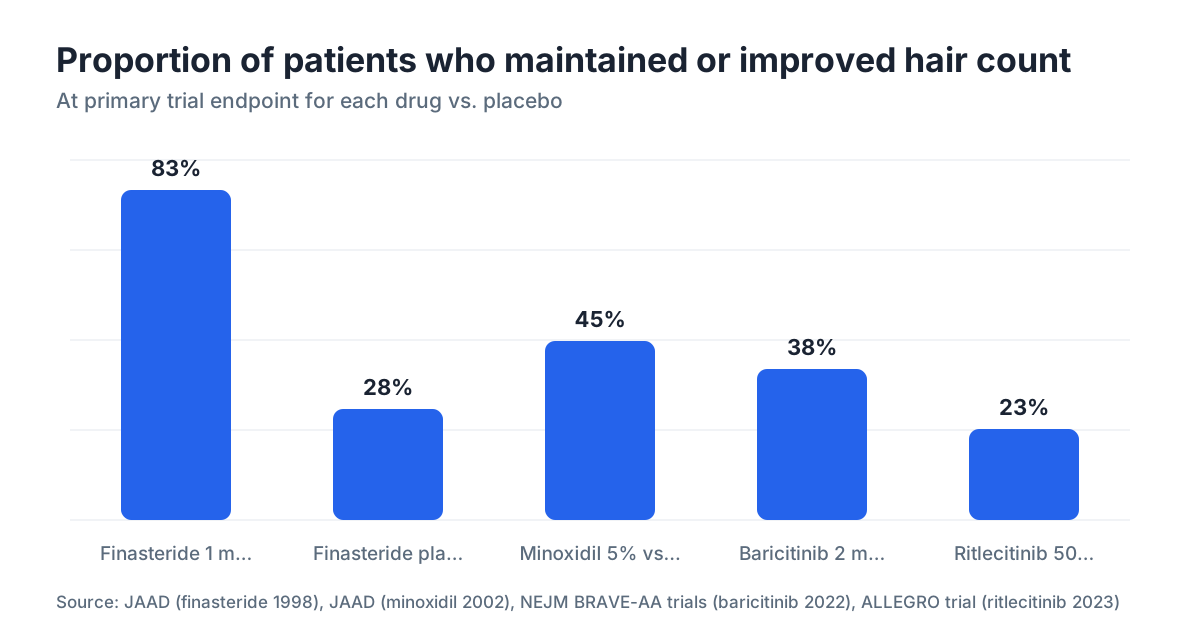
Topical 2% minoxidil is FDA-approved for women. Topical 5% is approved for men, though many dermatologists prescribe 5% off-label to women too. A 12-month randomized trial published in the Journal of the American Academy of Dermatology found 5% topical minoxidil produced 45% more hair regrowth than 2% in men with AGA. [4]
Oral minoxidil is a different beast. It's not FDA-approved for hair loss (it's approved as an antihypertensive at higher doses), but dermatologists increasingly prescribe it off-label at low doses, typically 0.625 mg to 2.5 mg daily for women and 1.25 mg to 5 mg for men. A 2020 retrospective study in the Journal of the American Academy of Dermatology found that 80 of 100 patients on low-dose oral minoxidil reported improvement, with a favorable side effect profile at those doses. [5] You can read a full breakdown on oral minoxidil and minoxidil for men.
Who should consider it: anyone with androgenetic alopecia who wants a well-studied, relatively affordable first option. It also gets used off-label in alopecia areata, though evidence there is weaker than for AGA.
The catch: you stop, you shed. Hair gained from minoxidil is lost within about 3 to 6 months of stopping. It's a maintenance drug, not a cure.
Does finasteride actually stop hair loss, or just slow it down?
Finasteride does both, but the split depends on how early you start and your individual DHT sensitivity.
It works by blocking type II 5-alpha reductase, the enzyme that converts testosterone into DHT. Less DHT means less follicle miniaturization. In a two-year study of 1,553 men published in the Journal of the American Academy of Dermatology, 83% of men on 1 mg finasteride maintained or increased their hair count, compared with 28% on placebo. [6]
The FDA approved finasteride 1 mg (Propecia) for male androgenetic alopecia in 1997. It is not FDA-approved for women, and it's contraindicated in pregnancy because of risk to a male fetus. [7]
For men who are losing ground quickly, finasteride plus minoxidil outperforms either alone. A 2021 randomized controlled trial in Dermatology and Therapy found the combination produced significantly greater improvement in hair count and thickness than finasteride or minoxidil used alone. You can read more about the finasteride and minoxidil combination.
The sexual side effect conversation is real and worth having honestly. The FDA label lists decreased libido, erectile dysfunction, and decreased ejaculate volume in roughly 1.8% to 3.8% of users in clinical trials. [7] Post-finasteride syndrome, where some men report persistent side effects after stopping, is a documented complaint, though its prevalence is debated in the literature. If you want a full picture on how finasteride works and what it blocks, the DHT blocker article covers that.
Dutasteride blocks both type I and type II 5-alpha reductase, suppressing DHT more aggressively than finasteride. It's FDA-approved for benign prostatic hyperplasia and prescribed off-label for AGA. A meta-analysis in the Journal of the American Academy of Dermatology found dutasteride 0.5 mg outperformed finasteride 1 mg on hair count metrics, though with a broader side effect profile. Nobody should pick between them without talking to a dermatologist about their specific situation.
Read the detailed guide on finasteride for dosing, cost, and what to expect in the first year.
What are JAK inhibitors and why are they a big deal for alopecia areata?
JAK inhibitors are the first class of drugs FDA-approved specifically for alopecia areata. That matters because before 2022, there were no approved systemic options. Dermatologists were managing severe cases with off-label corticosteroids, methotrexate, and other immunosuppressants that had real toxicity issues at the doses required.
JAK inhibitors block Janus kinase enzymes involved in the inflammatory signaling that drives the autoimmune attack on hair follicles in alopecia areata.
Baricitinib (Olumiant) was FDA-approved for severe alopecia areata in adults in June 2022, at a dose of 2 mg daily. [8] In the BRAVE-AA1 and BRAVE-AA2 phase 3 trials, roughly 35% to 40% of patients who had lost at least 50% of their scalp hair achieved at least 80% scalp coverage after 36 weeks. That's a real response in a population that previously had almost no approved options. The trial results were published in the New England Journal of Medicine in 2022, and the primary finding stated: "Baricitinib was significantly more effective than placebo for the treatment of severe alopecia areata." [9]
Ritlecitinib (Litfulo) received FDA approval in June 2023 for severe alopecia areata in adults and adolescents 12 and older. It's the first approval to include patients under 18. In the ALLEGRO phase 2b/3 trial, about 23% of patients on 50 mg ritlecitinib achieved the primary endpoint (80% scalp coverage) at week 24. [10]
Here's what matters most. Both drugs carry FDA black box warnings about serious infections, malignancy, and thrombosis. They are not the right first move for mild to moderate alopecia areata. These are for severe, treatment-resistant cases under specialist supervision.
Cost is a major barrier. Baricitinib and ritlecitinib each run over $20,000 per year at list price before insurance. Insurance coverage is improving but not universal. Patient assistance programs exist through the manufacturers.
Do corticosteroids work for alopecia areata?
Corticosteroids are still the first-line treatment for most cases of alopecia areata, especially patchy disease. They suppress the immune response attacking the follicle.
Intralesional corticosteroid injections, usually triamcinolone acetonide at 5 to 10 mg/mL, are the standard first-line approach for patchy alopecia areata. A dermatologist injects directly into the affected area every 4 to 6 weeks. Response rates in small-to-moderate patches run around 60% to 70% in published series, though randomized data is thin and most studies are observational. [2]
Topical corticosteroids are an alternative when injections aren't tolerable, particularly for children. They're less effective than injections but far less invasive. High-potency options like clobetasol propionate are used on the scalp.
Systemic corticosteroids (oral or IV pulse) can induce regrowth in extensive disease, but hair tends to fall out again when the steroids stop, and long-term systemic steroid use carries serious metabolic consequences. Most dermatologists avoid long-term oral steroids for alopecia areata for this reason.
Bottom line for steroids: good for limited patchy disease, poor for extensive or chronic disease, and not a solution you want to stay on indefinitely.
What other prescription drugs get used off-label for hair loss?
Spironolactone is an antiandrogen commonly prescribed to women with androgenetic alopecia or female-pattern hair loss. It's FDA-approved as a diuretic and antihypertensive, not for hair loss, but it's probably the most commonly prescribed off-label hair drug for women in the US. [2] Doses for hair loss typically run 100 to 200 mg daily. It takes 6 to 12 months to see meaningful results.
Methotrexate is used for extensive alopecia areata when corticosteroids fail. It suppresses the immune system broadly. Evidence is based on small studies and case series. It requires regular bloodwork to monitor liver function.
Cyclosporine, another immunosuppressant, can produce faster regrowth in alopecia areata than methotrexate, but relapse after stopping is common and the side effects at therapeutic doses are significant enough that it's a short-term bridge drug at best.
Topical calcineurin inhibitors (tacrolimus, pimecrolimus) have been tried for alopecia areata with mixed results. They're not generally recommended as primary therapy.
Anthralin (dithranol) is a topical agent that irritates the scalp in a way thought to distract the immune attack. It's an older approach largely replaced by JAK inhibitors in severe cases.
If you're looking into why hair falls out in the first place before deciding on treatment, the what causes hair loss guide is worth reading.
How do the main alopecia drugs compare on efficacy and cost?
Here's an honest side-by-side for the drugs most people actually end up choosing between. Prices are US retail estimates as of 2025; generics vary widely by pharmacy.
| Drug | Approved for | Typical cost/month | Efficacy (best RCT result) | Requires Rx? |
|---|---|---|---|---|
| Topical minoxidil 5% | AGA (men), 2% for women | $10-$25 (generic) | ~45% more growth vs. 2% at 12 months [4] | No (OTC) |
| Oral minoxidil 2.5 mg | Off-label (AGA) | $15-$40 (generic) | ~80% improvement rate in observational data [5] | Yes |
| Finasteride 1 mg | AGA (men only, FDA) | $15-$40 (generic) | 83% maintained/increased count at 2 years [6] | Yes |
| Dutasteride 0.5 mg | Off-label (AGA) | $30-$60 (generic) | Outperforms finasteride on count in meta-analysis | Yes |
| Spironolactone 100-200 mg | Off-label (women, AGA) | $10-$30 (generic) | Moderate; mostly observational data | Yes |
| Baricitinib 2 mg | Severe AA (adults) | ~$1,700+/month list | 35-40% achieved 80% coverage at 36 weeks [9] | Yes (specialist) |
| Ritlecitinib 50 mg | Severe AA (12+) | ~$1,700+/month list | ~23% achieved 80% coverage at 24 weeks [10] | Yes (specialist) |
| Intralesional steroids | Patchy AA | $50-$200/session (office visit) | ~60-70% response in patchy disease [2] | Yes |
The drugs with the best cost-to-evidence ratio for androgenetic alopecia are generic topical minoxidil and generic finasteride. If you can tolerate finasteride's risk profile, the combination is probably the highest-value regimen available short of a hair transplant. You can look into receding hairline treatment options for more on how those stack.
For alopecia areata, the calculus is different. Mild, patchy disease: try corticosteroid injections first. Severe, extensive disease: JAK inhibitors are now the best evidence-based option, cost and access permitting.
How long does it take for hair loss drugs to actually show results?
Patience is the drug no one wants to take, and every one of these treatments demands it.
Minoxidil typically causes an initial shed in weeks 2 to 8. That's telogen hairs being pushed out to make room for new anagen hairs. It frightens people into stopping. Don't stop during the shed. Real growth takes 4 to 6 months to appear, and full results take 12 months. [3]
Finasteride slows and stops loss faster than it regrows, so the first sign it's working is often that you stop losing ground. Regrowth, if it happens, usually appears at 3 to 6 months and peaks around 12 to 24 months. [6]
Baricitinib shows meaningful response at 36 weeks in trials. Some patients see early response at 12 to 16 weeks, others take longer.
Intralesional steroids for alopecia areata can produce visible regrowth in the treated patch within 4 to 8 weeks, which is faster than systemic options.
The short version: budget at least a year before judging any hair loss drug. Photos at the start and at 6-month intervals are far more reliable than mirror checks.
Are there serious side effects you need to know about before starting?
Every drug in this category has a real side effect profile. Here's what matters most.
Minoxidil topical: scalp irritation, contact dermatitis (sometimes from propylene glycol in the vehicle, not minoxidil itself), and unwanted facial hair in women who apply near the hairline. Cardiovascular effects are rare at topical doses but fluid retention is possible. Check the full minoxidil side effects breakdown before starting.
Oral minoxidil: fluid retention, weight gain, pericardial effusion at high doses, and hypertrichosis (unwanted body hair). At the low doses used for hair loss (under 5 mg), serious cardiovascular events are rare but not impossible. Anyone with cardiac history should discuss with a cardiologist first.
Finasteride: sexual side effects in 1.8% to 3.8% of users per the FDA label, including decreased libido, erectile dysfunction, and reduced ejaculate volume. [7] Post-finasteride syndrome is controversial in the literature but documented in patient reports. Finasteride also lowers PSA, which can mask prostate cancer screening results. Physicians should be aware.
JAK inhibitors (baricitinib, ritlecitinib): black box warnings for serious infections including reactivation of tuberculosis and herpes zoster, risk of malignancy, major cardiovascular events, and thrombosis. [8] These are not casual drugs. Baseline screening for TB, hepatitis, and blood counts is standard before starting.
Corticosteroids: skin atrophy and local depigmentation with intralesional injections. Systemic effects with long-term oral use.
Spironolactone: menstrual irregularities, breast tenderness, hyperkalemia (elevated potassium), and it's teratogenic so reliable contraception is required for women of childbearing age.
What does drug treatment look like for women specifically?
Women's hair loss gets less research attention than men's, which means more of the treatment is off-label and more of the dosing evidence is weak. That doesn't mean nothing works. It means you need a dermatologist who actually specializes in this.
Topical minoxidil 2% is the only FDA-approved drug specifically for female-pattern hair loss. Dermatologists commonly use 5% off-label, and the evidence suggests it works better. Women who are pregnant or planning pregnancy should avoid minoxidil.
Spironolactone at 100 to 200 mg daily is the most prescribed second-line agent for women with androgenetic alopecia in the US. It's antiandrogen by mechanism and makes sense physiologically for women with elevated androgens, but it works in many women even without documented androgen excess. Response takes 6 to 12 months.
Finasteride and dutasteride are not FDA-approved for women and are contraindicated in pregnancy. They are sometimes used off-label in postmenopausal women or women using reliable contraception, under specialist guidance.
Oral minoxidil at low doses (0.625 mg to 2.5 mg) is increasingly popular for women because it avoids the scalp application hassle and may be better tolerated than higher topical doses. Hypertrichosis on the face is the main complaint.
If the hair loss has a known trigger like a crash diet, illness, or thyroid issue, addressing that first matters more than any drug. The telogen effluvium article explains how that type of shed works and when it resolves on its own.
If you want to get a clearer read on your own hair loss pattern before booking a dermatology appointment, the free AI hair scan at MyHairline can help you figure out what you're actually dealing with and give you a more informed starting point for that conversation.
When does drug treatment stop being enough?
Drugs slow and sometimes reverse hair loss. They don't stop the underlying genetics forever, and in aggressive cases of androgenetic alopecia, they can't outpace what DHT is doing even when they're working.
If you're at Norwood stage 5 or higher with extensive miniaturization, drug treatment alone is unlikely to restore a full head of hair. It can stabilize what's left and may thicken existing miniaturized hairs, but the follicles that are gone are gone. A hair transplant becomes the conversation at that point, and drugs typically continue alongside transplant surgery to preserve non-transplanted hair.
For alopecia areata, drugs don't change the underlying autoimmune predisposition. JAK inhibitors hold the disease at bay while you're on them. Discontinuation often leads to relapse. Nobody has good long-term data on what continuous JAK inhibitor use looks like at 10 to 20 years.
The honest answer to "when should I stop relying on drugs alone" is when a board-certified dermatologist looks at your scalp, your history, and your goals and says so. Online tools can orient you. A dermatologist makes the call.
For men specifically, MyHairline's free AI hair scan (/scan) can help you assess your current Norwood stage and pattern before that dermatology visit, so you go in with a clearer picture of where you actually stand.
What supplements or OTC options have real evidence behind them?
Almost none of them have evidence comparable to the drugs above. That's the honest answer.
Saw palmetto is a weak 5-alpha reductase inhibitor sold in supplements. A 2012 study in the Journal of Alternative and Complementary Medicine found it produced mild improvement in hair counts in men with mild to moderate AGA, but the effect size was much smaller than finasteride and the study was small. Nobody has good head-to-head trial data.
Biotin is widely marketed for hair loss. The evidence for biotin supplementation helping hair loss in people who are not biotin-deficient is essentially nonexistent. Biotin deficiency causes hair loss, but it's rare outside of certain genetic conditions or prolonged raw egg consumption. The hair loss supplements article covers the evidence for the full category.
Ketoconazole shampoo (2%) has some evidence as an adjunct for androgenetic alopecia, possibly through anti-inflammatory and mild antiandrogen effects on the scalp. It's not a replacement for minoxidil or finasteride.
Nutritional deficiencies in iron, zinc, vitamin D, and protein can contribute to hair shedding. Correcting a real deficiency can reduce shedding, but these are not treatments for AGA or alopecia areata. And questions like does creatine cause hair loss come up a lot. The short answer: one small study raised the question via DHT, but no trial has shown creatine causes clinically significant hair loss in humans.
If you're stacking supplements alongside drugs hoping to speed up results, the main risk is wasting money. The main drug interactions to check are with anything affecting blood pressure (minoxidil) or hormones (finasteride, spironolactone).
Sources
- American Academy of Dermatology, Hair Loss: Who Gets It and Causes
- American Academy of Dermatology, Alopecia Areata: Diagnosis and Treatment
- FDA, Minoxidil Drug Label (Rogaine)
- Olsen EA et al., Journal of the American Academy of Dermatology, 2002. Minoxidil 5% vs 2% in men with AGA.
- Randolph M, Tosti A, Journal of the American Academy of Dermatology, 2021. Oral minoxidil retrospective study.
- Kaufman KD et al., Journal of the American Academy of Dermatology, 1998. Finasteride 2-year RCT in 1,553 men.
- FDA, Propecia (finasteride 1 mg) prescribing information
- King B et al., New England Journal of Medicine, 2022. BRAVE-AA1 and BRAVE-AA2 trials of baricitinib for alopecia areata.
- FDA, Litfulo (ritlecitinib) approval press release, June 2023