
TL;DR: Alopecia areata can attack beard, mustache, and eyebrow hair just as hard as scalp hair. Intralesional corticosteroid injections stay the first-line treatment for patchy facial alopecia. For widespread or resistant cases, JAK inhibitors like baricitinib (FDA-approved 2022) have the strongest evidence. Topical minoxidil and immunotherapy also get used. No treatment is a cure, and regrowth can take months.
What is alopecia of the beard, mustache, and eyebrows?
Alopecia areata is an autoimmune condition in which the immune system attacks hair follicles. Most people link it to scalp loss, but the same process can strip the beard, mustache, eyebrows, eyelashes, and the thin hair along the jawline. When it targets only the beard area it's sometimes called alopecia areata barbae. When it wipes out all facial hair it overlaps with alopecia totalis or universalis presentations.
The patches usually show up as smooth, skin-colored ovals with no scarring and no obvious redness. That absence of scarring matters a lot: it means the follicle is still alive, just suppressed. Regrowth is biologically possible, which is why treatment is worth pursuing.
Facial hair follicles behave slightly differently from scalp follicles because they're androgen-driven. That difference changes how some treatments work, and it's why a treatment plan for beard alopecia isn't always a straight copy of a scalp protocol. The National Alopecia Areata Foundation estimates roughly 6.8 million Americans have some form of the condition at any point in time, and facial involvement is common, though hard to study in isolation because most trials lump it in with scalp alopecia [1].
To understand what causes hair loss more broadly, including the difference between immune-mediated alopecia areata and androgenetic causes, it helps to read up on the mechanisms separately before picking a treatment path.
How is facial alopecia areata diagnosed?
A board-certified dermatologist can usually diagnose alopecia areata of the face by clinical exam alone. The classic finding is a well-defined, smooth, non-scarring patch with 'exclamation point' hairs at the margin, short hairs that taper toward the scalp end.
A dermoscopy exam (a handheld magnifying tool with cross-polarized light) gives the dermatologist more detail without a biopsy. When the picture is unclear, a punch biopsy can confirm the characteristic lymphocytic infiltrate around the hair bulb. Thyroid function, a complete blood count, and antinuclear antibody tests are often ordered because alopecia areata has elevated rates of co-occurring autoimmune thyroid disease and other autoimmune conditions [2].
Self-diagnosis is risky here. Tinea barbae (a fungal infection), folliculitis, traction from shaving habits, and early scarring alopecias like lichen planopilaris can all produce beard patches. A fungal infection needs an antifungal, not an immunosuppressant. Getting the right diagnosis first saves months of wasted treatment.
What are the first-line treatments for facial alopecia areata?
Intralesional corticosteroid injections are still the standard starting point for patchy, limited facial alopecia. A dermatologist injects a dilute solution of triamcinolone acetonide directly into the patch, typically every 4 to 8 weeks. The steroid locally suppresses the immune attack on the follicle without the systemic side effects of oral steroids.
For the beard specifically, the skin over the chin and jaw is thicker than the scalp, and dermatologists often use slightly higher concentrations than they'd use on the scalp, though the dosing is individualized. Patients typically see early vellus regrowth within 6 to 8 weeks of the first injection. Pigmented terminal hair usually follows over the next few months. The American Academy of Dermatology clinical practice guidelines list intralesional steroids as the recommended first-line therapy for adults with limited alopecia areata affecting less than 50% of the scalp or face [2].
Topical corticosteroids (high-potency creams and foams) are a less-effective alternative for patients who can't tolerate injections. They're more practical for daily home use but the evidence is weaker, especially for thick facial skin where penetration is lower.
Oral prednisone can trigger rapid regrowth but relapse is common once it's stopped, and the side-effect profile from repeated courses is real: bone density loss, blood sugar changes, adrenal suppression. Most guidelines recommend against long-term oral steroids specifically for alopecia areata [2].
Do JAK inhibitors work for beard and facial hair alopecia?
JAK inhibitors are the biggest shift in alopecia areata treatment in decades, and the evidence for facial regrowth specifically is strong. These drugs block Janus kinase enzymes that drive the inflammatory signals attacking the hair follicle.
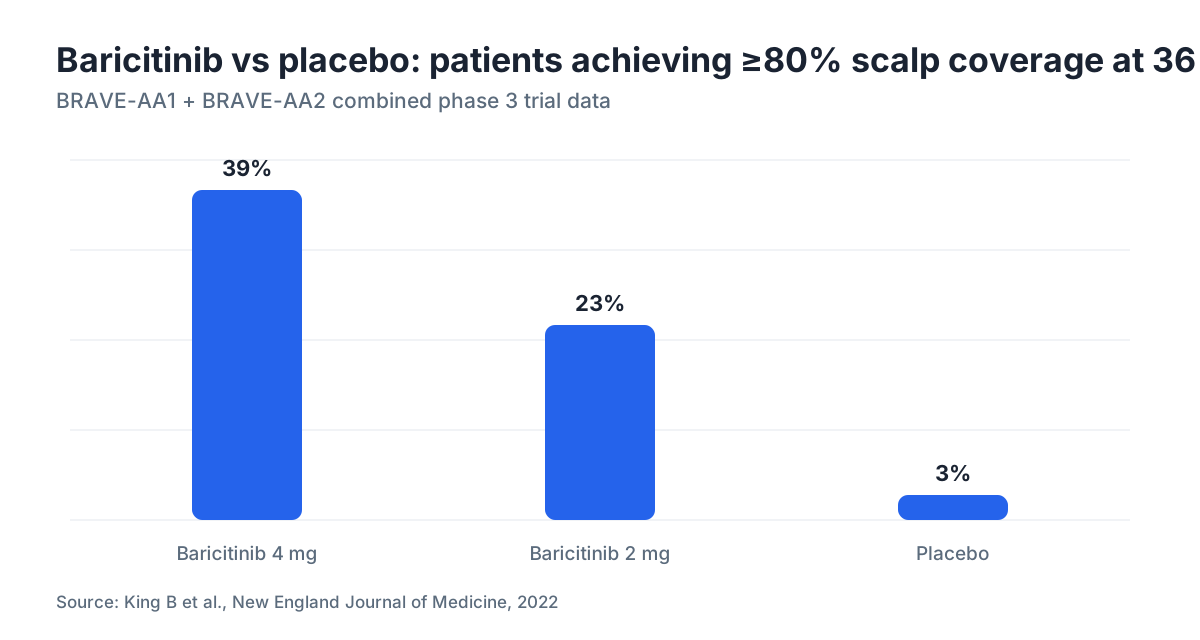
Baricitinib (brand: Olumiant) received FDA approval in June 2022 specifically for severe alopecia areata, becoming the first systemic treatment ever approved for the condition [3]. The BRAVE-AA1 and BRAVE-AA2 phase 3 trials, published in the New England Journal of Medicine, found that 38.8% of patients on 4 mg baricitinib achieved a SALT score of 20 or lower (meaning at least 80% scalp coverage) at week 36, compared with 3% in the placebo group. Those trials included patients with facial hair loss, and photos in supplementary data show clear beard regrowth in responders [4].
Ritlecitinib (brand: Litfulo), a JAK3/TEC inhibitor approved by the FDA in June 2023, is approved for patients aged 12 and older [5]. Deuruxolitinib is under review. These drugs come as daily oral pills.
The catch is safety. JAK inhibitors carry an FDA Boxed Warning for serious infections, major adverse cardiovascular events, thrombosis, and malignancy, derived largely from rheumatoid arthritis data at higher doses [3]. The alopecia doses are lower, but the warning applies. This isn't a casual over-the-counter choice; it's a drug-drug interaction check and ongoing monitoring conversation with a dermatologist who knows your full medical picture.
JAK inhibitors don't work for androgenetic alopecia or scarring alopecias. They target the autoimmune mechanism specifically. If your beard loss has a different cause, they won't help.
Can topical minoxidil help with facial alopecia?
Topical minoxidil for men is often added as an adjunct for facial alopecia areata, and it makes biological sense. Minoxidil prolongs the anagen (growth) phase of the hair cycle and increases follicle diameter. For follicles suppressed by immune attack, an extra growth signal can speed regrowth once the immune attack has been tamped down by the primary treatment.
The evidence here is thinner than for scalp androgenetic alopecia. A handful of small studies and case series show benefit when minoxidil is layered onto steroid injections, but there's no large randomized trial on facial alopecia areata alone. The standard is to apply a 5% solution or foam once or twice daily to the affected patches, which is the same strength used on the scalp.
One practical note: minoxidil applied to the face can cause local irritation in some men, and the propylene glycol in liquid formulations is a more common culprit than the foam vehicle. If skin irritation is a problem, the foam version is worth trying instead. Minoxidil side effects on the face are generally mild and local, but any minoxidil absorbed systemically can cause the same cardiovascular effects as the scalp version, so men with cardiovascular disease should talk to a doctor first.
For an expanded look at oral options, oral minoxidil at low doses (0.625 to 2.5 mg daily) is increasingly being studied for alopecia areata, with some dermatologists using it off-label.
What is contact immunotherapy and does it work for facial hair?
Contact immunotherapy, also called topical immunotherapy or DPCP/SADBE therapy, involves applying a chemical allergen (usually diphenylcyclopropenone, or DPCP) to the skin to deliberately trigger a controlled allergic reaction. The theory is that the locally induced inflammation shifts the immune response away from attacking hair follicles.
For scalp alopecia areata with extensive loss, contact immunotherapy has reasonable evidence, with response rates of roughly 40 to 60% in experienced centers [7]. For facial alopecia, it's used less often partly because applying it around the eyes and delicate facial skin requires careful technique, and accidental eye exposure can cause severe eye inflammation.
When it is used for beard alopecia, the treatment is usually applied at a dermatologist's office, not at home. It requires sensitization over several weeks, then maintenance applications. Response takes months to assess. It's typically reserved for cases that haven't responded to intralesional steroids or when systemic treatment isn't an option.
Are there treatments specifically for alopecia of the eyebrows and eyelashes?
Eyebrow and eyelash alopecia areata follow the same immune mechanism but have different treatment nuances because the skin is thinner and the proximity to the eye creates safety constraints.
Intralesional triamcinolone injections are used for eyebrows, but at lower concentrations than the scalp or beard to reduce the risk of skin atrophy and subcutaneous fat loss. The AAD guidelines note that injections near the eye require care to avoid intraocular pressure effects and fat atrophy [2].
For eyelashes, ophthalmologist-supervised bimatoprost (the prostaglandin analog in Latisse) is sometimes used off-label. Bimatoprost was originally developed as a glaucoma drug and its eyelash-growing side effect became a treatment. Evidence in alopecia areata eyelash loss is limited to small case series.
Systemic JAK inhibitors, when used for severe total or universal alopecia, often regrow eyebrows and eyelashes as part of the overall response. The BRAVE-AA trials reported eyebrow and eyelash regrowth as secondary endpoints, with meaningful improvement in responders [4].
Cosmetic options like microblading and eyebrow tattooing are not treatments in the medical sense, but they're legitimate quality-of-life tools for people waiting on regrowth or who haven't responded to treatment. Wigs and beard pieces are similarly valid options, not consolation prizes.
How does facial alopecia treatment differ from scalp alopecia treatment?
The treatments overlap a lot because the root cause (autoimmune attack on follicles) is the same. But a few differences matter in practice.
First, facial hair follicles are androgen-dependent, so the hair growth cycle and follicle biology differ from scalp follicles. This may affect how strongly minoxidil works and how regrowth progresses. Second, facial skin thickness varies, which affects how well topical agents penetrate and how intralesional injections are dosed. Third, there's no licensed systemic treatment specifically studied and approved for beard or facial alopecia in isolation; approval for baricitinib and ritlecitinib covers 'severe alopecia areata' broadly, and trials enrolled patients based on scalp severity scores (SALT). Facial improvement is a secondary or exploratory endpoint.
If scalp alopecia and facial alopecia coexist, the treatment decision is usually made based on the total burden of disease and the safety profile appropriate for that patient, not by treating each site separately with a different drug.
For context on how androgenetic hair loss differs from what's happening in alopecia areata, the piece on what causes hair loss covers the mechanistic distinction clearly. And if you're thinking about hair replacement as a backup, hair transplant options for alopecia areata patients have specific contraindications worth knowing.
What's the realistic timeline for facial hair regrowth?
This is the question patients actually want answered, and the honest answer is: it depends on the treatment and the severity, and nobody should promise a specific timeline.
For intralesional steroids treating a localized beard patch, some patients see vellus fuzz within 4 to 8 weeks. Terminal pigmented hair typically takes 3 to 6 months. Patches that have been hairless for several years respond more slowly and less predictably than recent-onset patches.
For baricitinib in the BRAVE-AA trials, the primary endpoint was measured at 36 weeks (about 9 months). Some patients showed meaningful improvement earlier, around 12 weeks, but full response took longer [4]. Responders who then stop the drug often relapse, sometimes within months. This means JAK inhibitor treatment may need to continue long-term, which has both cost and safety implications.
Minoxidil adjuncts typically show effects within 3 to 6 months of consistent use, assuming the primary immune attack is also being addressed.
About 50% of people with alopecia areata affecting less than 50% of the body experience spontaneous regrowth within a year without any treatment, according to AAD guidance [2]. That makes controlled trials hard to interpret and also means some 'treatment successes' would have resolved anyway. The more extensive the disease, the lower the chance of spontaneous remission.
If you're tracking changes over time and want an objective way to assess density, a free AI scan at MyHairline can document baseline and progression so you're not relying on memory alone.
What treatments do NOT work for facial alopecia areata?
This is worth stating plainly because the internet is full of noise on hair loss.
Finasteride and DHT blockers do not treat alopecia areata. They target androgen-driven follicle miniaturization (androgenetic alopecia) by blocking DHT. Alopecia areata is an autoimmune attack, not a DHT problem. Taking finasteride for autoimmune beard loss won't work and wastes time and money. (If you have both androgenetic hair loss and alopecia areata, finasteride is relevant only for the androgenetic component.)
Biotin supplements, collagen powders, onion juice, castor oil, and rosemary oil have no credible evidence for alopecia areata in particular. Some of these, especially rosemary oil, have preliminary data for androgenetic alopecia, not autoimmune alopecia. The hair loss supplements article covers what has evidence and what doesn't.
Platelet-rich plasma (PRP) has some small, low-quality studies for alopecia areata but is not recommended in any major guideline as a primary treatment. It's expensive, evidence is weak, and it's not FDA-approved for this indication.
Hair transplants are generally contraindicated for active alopecia areata. Because the underlying immune problem is not fixed, transplanted follicles can also be attacked. Surgery for alopecia areata is only considered in very specific cases of long-term stable remission, and even then most surgeons are cautious.
How much do facial alopecia treatments cost?
Cost is a real part of the decision, and the range is large.
Intralesional steroid injections at a dermatology office typically run $50 to $200 per session depending on the number of sites and your location, though the office visit fee can push that higher. With health insurance, these are often covered if properly coded.
Topical minoxidil is cheap. Generic 5% minoxidil solution runs about $10 to $20 per month. Foam is slightly more.
Baricitinib's list price is approximately $18,000 to $20,000 per year in the United States without insurance as of 2024. With commercial insurance and manufacturer assistance programs, out-of-pocket costs vary widely. Medicaid and Medicare coverage is inconsistent and state-dependent. This is a drug that requires prior authorization in almost every insurance plan.
Ritlecitinib has a similar list price tier. Neither is a realistic self-pay option for most people without insurance coverage.
Contact immunotherapy, when performed in a dermatologist's office, costs vary but are often not covered by insurance since it's used off-label for alopecia areata.
The table below summarizes the main options.
| Treatment | Evidence Level | Typical Cost (US) | Best For |
|---|---|---|---|
| Intralesional steroids | Moderate/High | $50-$200/session | Limited, patchy disease |
| Topical minoxidil (adjunct) | Low-moderate | $10-$20/month | Add-on to primary Rx |
| Topical corticosteroids | Moderate | $20-$80/month | Mild or maintenance |
| Baricitinib (oral JAK inhibitor) | High (FDA-approved) | ~$18,000-$20,000/yr list | Severe/refractory |
| Ritlecitinib (oral JAK inhibitor) | High (FDA-approved) | ~$18,000+/yr list | Age 12+, severe |
| Contact immunotherapy (DPCP) | Moderate | Variable, often uninsured | Extensive, scalp-primary |
| Hair transplant | Contraindicated in active AA | $3,000-$15,000+ | Not recommended |
Sources: FDA prescribing information [3][5], AAD clinical guidelines [2], published cost analyses.
When should you see a dermatologist for facial hair alopecia?
A single small patch that appeared recently and is smaller than a quarter is worth monitoring for a few weeks, since spontaneous remission is possible. Beyond that, see a dermatologist.
Go sooner rather than later if: the patch is growing or new patches are appearing; eyebrows or eyelashes are affected; you also notice nail pitting, ridging, or splitting (nail changes accompany alopecia areata in up to 38% of patients and signal a more systemic immune process [2]); or if you've already tried over-the-counter minoxidil for 3 to 4 months with no result.
Alopecia areata runs a highly unpredictable course. Some people have one episode and never relapse. Others have progressive, treatment-resistant disease. There's no reliable way to predict which pattern you'll have early on. The earlier treatment starts, especially with intralesional steroids for fresh patches, the better the response rate tends to be.
Also, if you're not sure whether your hair loss is alopecia areata, androgenetic alopecia, or something else entirely, the section on telogen effluvium may help you rule out diffuse shedding as a factor. Tracking the pattern and documenting changes over time helps any dermatologist you see make a faster, clearer diagnosis. The MyHairline free AI scan is one way to do that documentation before and between appointments.
Sources
- National Alopecia Areata Foundation, About Alopecia Areata
- American Academy of Dermatology, Clinical Guidelines for Alopecia Areata
- FDA Drug Approval: Baricitinib (Olumiant) for Severe Alopecia Areata, June 2022
- King B et al., BRAVE-AA1 and BRAVE-AA2, New England Journal of Medicine, 2022
- FDA Drug Approval: Ritlecitinib (Litfulo) for Alopecia Areata, June 2023
- FDA Drug Approval: Ruxolitinib cream (Opzelura) for Alopecia Areata, 2022
- Guo H et al., Alopecia Areata: Epidemiology, Pathogenesis, Diagnosis, and Treatment, Journal of Investigative Dermatology Symposium Proceedings
- National Institute of Arthritis and Musculoskeletal and Skin Diseases (NIAMS), Alopecia Areata
- MedlinePlus (NIH), Alopecia Areata
- Strazzulla LC et al., Alopecia areata: Disease characteristics, clinical evaluation, and new perspectives on pathogenesis, Journal of the American Academy of Dermatology, 2018