
TL;DR: Alopecia covers a dozen distinct conditions, each with different treatments. Androgenetic alopecia responds best to minoxidil and finasteride. Alopecia areata now has FDA-approved JAK inhibitors (baricitinib, ritlecitinib). Scarring alopecias need early dermatologist intervention. No single treatment works for every type, and none are cures, but several produce meaningful, sustained regrowth.
What is alopecia, and why does the type you have determine the treatment?
Alopecia just means hair loss. The word itself tells you nothing about cause, prognosis, or what to put on your scalp. Doctors use it as a prefix, so you end up with androgenetic alopecia (the common pattern baldness most people picture), alopecia areata (an autoimmune attack on follicles), scarring alopecias like lichen planopilaris, and a handful of others. Each one has a different underlying mechanism, which means a treatment that works brilliantly for one type can be completely useless or even harmful for another.
This matters because a lot of people buy minoxidil after googling "alopecia hair treatment" without knowing which type they have. If you have androgenetic alopecia, that is a reasonable starting point. If you have alopecia areata, minoxidil is not the primary treatment and won't address the autoimmune cause at all. If you have a scarring alopecia, delaying a proper diagnosis while trying over-the-counter products can cost you follicles you cannot get back.
So before anything else: know your type. A dermatologist can usually diagnose the common ones on visual exam alone. For anything ambiguous, a scalp biopsy is the definitive test. The rest of this article breaks down treatments by condition, so you can match your situation to the actual evidence rather than buying whatever appeared first in your search results.
See also: what causes hair loss for a full breakdown of every major trigger.
What are the most common types of alopecia?
Knowing the landscape helps. Here are the types you will actually encounter:
Androgenetic alopecia (AGA) is by far the most common. It affects roughly 50% of men by age 50 and around 25% of women by age 50 [1]. In men it follows the Norwood scale (receding temples, thinning crown). In women it tends to be diffuse thinning at the part line. The cause is a genetic sensitivity to dihydrotestosterone (DHT), a hormone that shrinks follicles over time. See receding hairline for how this typically progresses.
Alopecia areata (AA) is autoimmune. The immune system mistakenly attacks hair follicles, causing round, patchy bald spots. It affects roughly 2% of the global population at some point in their life [2]. It can stay as a few small patches (alopecia areata), progress to total scalp hair loss (alopecia totalis), or extend to all body hair (alopecia universalis).
Telogen effluvium is diffuse shedding triggered by a physical or emotional stressor: illness, surgery, major weight loss, childbirth, or severe psychological stress. It is almost always temporary if the trigger is removed. Telogen effluvium explains the mechanism and timeline in detail.
Scarring alopecias (lichen planopilaris, frontal fibrosing alopecia, central centrifugal cicatricial alopecia) destroy follicles and replace them with scar tissue. They are irreversible once established, which makes early treatment non-negotiable.
Traction alopecia comes from chronic mechanical tension on hair from tight styles. It can be reversed early but becomes permanent if the traction continues long enough to cause scarring.
Which alopecia hair treatments are FDA-approved?
The FDA has approved a short list, and each approval is tied to a specific condition, not alopecia in general. Read the table as a map of what actually has a green light behind it.
| Treatment | Approved for | Approval year | Notes |
|---|---|---|---|
| Minoxidil 2% topical | AGA in women | 1991 | OTC |
| Minoxidil 5% topical | AGA in men | 1997 | OTC |
| Finasteride 1 mg oral | AGA in men | 1997 | Rx, not approved for women |
| Baricitinib (Olumiant) | Severe alopecia areata | 2022 | Rx, JAK inhibitor |
| Ritlecitinib (Litfulo) | Alopecia areata (12+) | 2023 | Rx, JAK inhibitor |
| Low-level laser therapy devices | AGA | 2007+ (510k clearances) | Not approval, clearance only |
Minoxidil is a vasodilator that was originally a blood pressure drug. Researchers noticed patients grew hair as a side effect, and topical formulations were eventually approved for AGA [3]. It does not block DHT; it extends the hair growth cycle and may improve follicle blood flow. It works for AGA and has some off-label use in alopecia areata, but it is not a standalone treatment for autoimmune hair loss.
Finasteride blocks the enzyme (5-alpha reductase type II) that converts testosterone to DHT, which directly targets the mechanism behind AGA in men. A 2-year randomized controlled trial published in the Journal of the American Academy of Dermatology found finasteride 1 mg daily produced a 48% increase in hair count in men vs. placebo [4]. See finasteride for a full evidence review, and finasteride and minoxidil if you are considering both together.
Baricitinib and ritlecitinib are the genuine news in alopecia treatment. Both are JAK inhibitors, drugs that block the JAK-STAT signaling pathway the immune system uses to attack follicles in alopecia areata. The FDA approved baricitinib in June 2022 for adults with severe alopecia areata (defined as 50% or more scalp hair loss). Ritlecitinib followed in June 2023 and is approved for patients 12 and older, making it the first treatment approved for adolescents with AA [5].
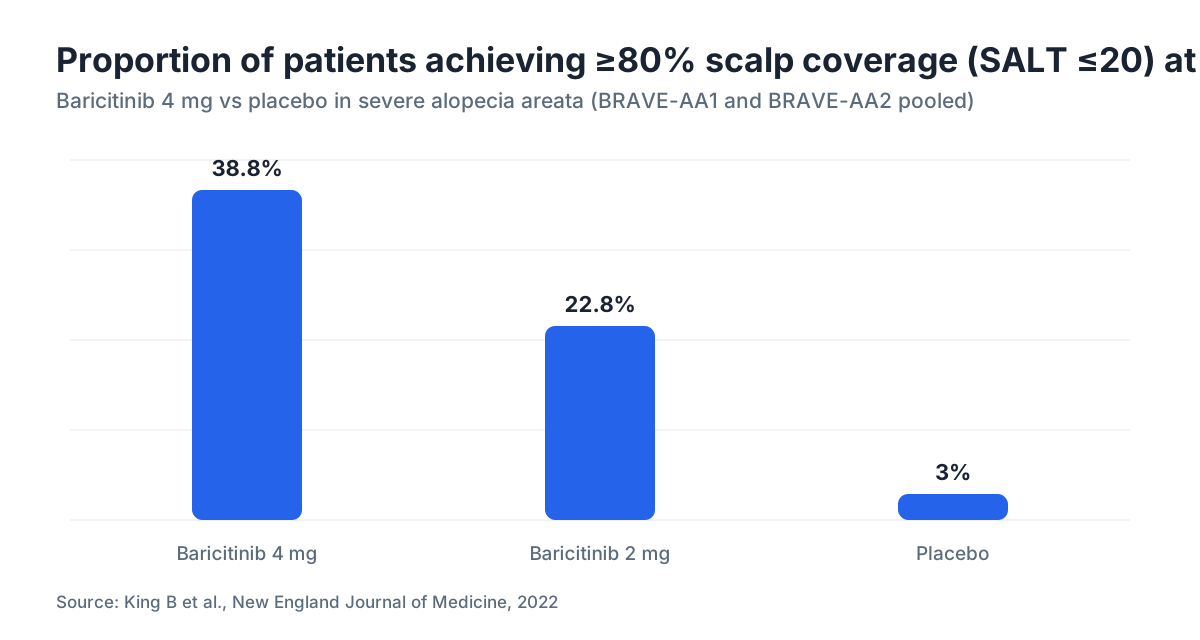
The main baricitinib trials (BRAVE-AA1 and BRAVE-AA2) found that 38.8% of patients taking 4 mg daily reached at least 80% scalp coverage (SALT score ≤20) at 36 weeks, compared to 3% on placebo [6]. Those are not small numbers for a condition that has resisted treatment for decades.
How does minoxidil work for alopecia, and who should use it?
Minoxidil is the first thing most people try, and for androgenetic alopecia it is a reasonable start. You can buy it without a prescription in 2% and 5% concentrations (liquid or foam), and generic versions cost as little as $10 to $20 per month. The 5% formulation produces faster and more substantial results in men with AGA [3].
Who benefits most? People with early-to-moderate AGA who still have miniaturized follicles. Once a follicle is gone, minoxidil cannot bring it back. If you have had a completely bald patch for years, you are not going to regrow hair there with a topical. The drug works by extending the anagen (growth) phase of the hair cycle and possibly by increasing blood flow to follicles.
It requires consistent, indefinite use. Stop using it and the hair you gained sheds within three to six months because you have not fixed the underlying hormonal cause, you have just been propping follicles up. This is probably the most important thing to understand about minoxidil before you buy it.
Oral minoxidil is gaining traction as an off-label alternative to topical. At low doses (0.625 mg to 2.5 mg daily in women, 2.5 mg to 5 mg in men), it avoids the scalp irritation and greasy residue some people can't tolerate with topical, and compliance tends to be better because you're taking a pill rather than applying a liquid twice a day. See oral minoxidil for the evidence and risk profile. And check minoxidil side effects before starting, especially if you have any cardiovascular history, as oral minoxidil carries blood pressure considerations topical does not.
For women with AGA, minoxidil for men covers how dosing and evidence differs by sex.
What are JAK inhibitors and are they right for alopecia areata?
JAK inhibitors are the biggest development in alopecia areata treatment in at least a generation. Before 2022, people with severe AA had no FDA-approved options. Corticosteroid injections, topical immunotherapy with DPCP or squaric acid, and oral steroids were all used off-label with modest and inconsistent results.
Baricitinib and ritlecitinib change that calculus. They work by blocking JAK1 and JAK2 (baricitinib) or JAK3 and TEC kinases (ritlecitinib), which interrupts the immune signaling cascade that drives follicle inflammation in AA. In the BRAVE-AA trials, baricitinib 4 mg produced clinically meaningful scalp regrowth in roughly a third of patients who had been bald for years [6]. Ritlecitinib showed similar results in its ALLEGRO trial.
These are not cure drugs. When patients stop taking them, AA typically returns. They also carry real risks: increased susceptibility to infections, potential for elevated cholesterol, rare but serious cardiovascular events, and possible increased cancer risk with long-term use. The FDA label for baricitinib carries a boxed warning for serious infections, malignancy, and thrombosis [12]. Anyone considering these medications needs a real conversation with a dermatologist, more than a quick telehealth consult.
Cost is the other wall. Branded JAK inhibitors run thousands of dollars per month without insurance. Coverage varies a lot, and prior authorization is common. Patients who qualify on disease severity (a SALT score showing 50% or more hair loss) have the strongest case for coverage.
For patients who do not meet the threshold for JAK inhibitors or prefer to avoid systemic medication, intralesional corticosteroid injections (triamcinolone acetonide into the bald patches) remain a widely used first-line treatment for limited alopecia areata. They work by locally suppressing the immune attack. Regrowth often appears within four to eight weeks of injection, though repeat treatments every four to six weeks are usually needed.
What works for scarring alopecia (lichen planopilaris, frontal fibrosing alopecia)?
Scarring alopecias sit in a different category from everything else. The goal is not regrowth. It is stopping active disease before more follicles die. Once follicles are replaced with scar tissue, they cannot be revived.
Lichen planopilaris (LPP) and its variant frontal fibrosing alopecia (FFA) are the most common scarring alopecias seen in dermatology clinics. FFA specifically causes progressive recession of the frontal hairline, often accompanied by eyebrow loss, and disproportionately affects postmenopausal women, though it is increasingly diagnosed in younger women and some men.
The treatment evidence here is weaker than for AGA or AA, partly because these are rarer conditions that are harder to run large trials on. The American Academy of Dermatology and the British Association of Dermatologists have published guidelines summarizing the available evidence [7]. First-line treatments typically include topical or intralesional corticosteroids to reduce inflammation, along with hydroxychloroquine or doxycycline as anti-inflammatory agents. Some dermatologists use 5-alpha reductase inhibitors (finasteride or dutasteride) for FFA, based on case series showing stabilization, though the mechanism is not fully understood.
If you suspect you have a scarring alopecia, get to a dermatologist quickly. A burning or itching sensation at the hairline, follicular erythema (redness around hair shafts), and absence of visible follicle openings in bald areas are all warning signs. The American Academy of Dermatology has a find-a-dermatologist tool on their website if you need help locating a specialist [7].
Does diet, stress, or lifestyle affect alopecia hair treatment outcomes?
For telogen effluvium specifically, addressing the root cause is the treatment. That might mean correcting a nutritional deficiency (low ferritin is a well-documented trigger for diffuse shedding), managing thyroid disease, or simply allowing recovery time after a significant stressor. Shedding in telogen effluvium typically peaks two to three months after the trigger and resolves within six to nine months once the trigger is removed [8].
For androgenetic alopecia, lifestyle changes do not reverse genetically determined follicle sensitivity to DHT. They can, however, affect the rate of progression. Chronic caloric restriction, very low protein intake, and deficiencies in iron, zinc, biotin, or vitamin D have all been associated with worsening hair loss, though the causality is not always clear [9]. Fixing a genuine deficiency helps. Megadosing supplements beyond normal levels does not produce extra growth and occasionally causes problems (very high selenium intake, for example, can cause hair loss rather than prevent it).
Stress is real but often overstated as a standalone cause of permanent hair loss. Severe acute stress can trigger telogen effluvium. Chronic psychological stress may worsen alopecia areata through neuroendocrine and immune pathways. But stress alone does not cause androgenetic alopecia. It can unmask a genetic predisposition, not create one.
See hair loss supplements for an honest look at what the evidence actually shows for biotin, saw palmetto, and other popular supplements before you spend money on them. And does creatine cause hair loss addresses a specific question that comes up often for active people.
How do hair transplants fit into alopecia treatment?
Hair transplants redistribute your existing hair. They do not create new hair. A surgeon removes follicles from a donor area (typically the back and sides of the scalp, which are DHT-resistant) and implants them into thinning areas. The transplanted follicles keep the genetic programming of the donor site, so they keep growing after the move.
The two main techniques are follicular unit transplantation (FUT, which removes a strip of scalp) and follicular unit extraction (FUE, which removes individual follicle groups). FUE leaves no linear scar and has largely replaced FUT in most practices, though FUT can deliver more grafts per session.
Transplants are appropriate for stable androgenetic alopecia in patients who have enough donor hair and realistic expectations. They are generally not appropriate for active alopecia areata because the autoimmune attack can destroy transplanted follicles the same as native ones. Scarring alopecias also require disease stability (usually confirmed by biopsy) before transplant is considered, and results are less predictable.
Costs in the United States typically run from $4,000 to $15,000 or more per session depending on graft count, technique, and clinic location [10]. Results take six to twelve months to fully appear. See hair transplant for a complete guide to the process, candidacy, and what to realistically expect from outcomes.
One honest opinion: a lot of people get transplants without continuing medical therapy afterward. The underlying AGA is still active, which means surrounding non-transplanted hairs continue to thin. The best long-term outcomes come from transplant plus ongoing finasteride and/or minoxidil.
What treatments are being studied for alopecia that aren't available yet?
The pipeline is more active now than it has been in decades, mostly driven by the success of JAK inhibitors in AA.
Dupilumab, an IL-4/IL-13 blocker already approved for eczema and other inflammatory conditions, is in trials for alopecia areata. Early data are mixed. It does not appear to work as well as JAK inhibitors for AA, though it may have a role in patients who cannot tolerate them.
Topical JAK inhibitors (ruxolitinib cream is already approved for eczema) are being investigated for alopecia areata, with the appeal of avoiding systemic exposure. Early trials show promise for limited patch-type AA where covering the bald areas with a topical is practical.
For androgenetic alopecia, clascoterone (Winlevi), a topical androgen receptor inhibitor approved for acne in 2020, is being studied as an alternative to finasteride that works locally rather than systemically. It could be useful for women or for men who want to avoid finasteride's systemic DHT reduction. Phase 2 data have shown some efficacy; Phase 3 trials are ongoing.
Stem cell-based follicle regeneration and Wnt pathway activators are further back in development and should be treated with appropriate skepticism until large human trial data exist. The history of hair loss treatment is littered with exciting early-stage results that never turned into real-world products.
If you want help sorting out where you actually stand before committing to a treatment plan, MyHairline's free AI hair analysis at myhairline.ai/scan can identify your pattern type and loss stage from photos, which at minimum gives you a clearer starting point for a dermatology conversation.
How do you know which alopecia treatment is right for you?
The honest answer is: you probably need a dermatologist, at least for a single consultation, before committing to anything long-term. That is not a deflection. Misidentifying your type is the most common and expensive mistake people make.
For straightforward androgenetic alopecia in men, the evidence strongly supports starting with minoxidil (5% topical), finasteride (1 mg/day), or both. Combining them produces better results than either alone. A 2022 analysis in the Journal of the American Academy of Dermatology found combination therapy consistently outperformed monotherapy in head-to-head comparisons [11]. See DHT blocker for a broader look at how anti-androgen options stack up.
For women with AGA, minoxidil 2% or 5% is first-line. Finasteride is not FDA-approved for women and carries teratogenic risk in women of childbearing age. Spironolactone is commonly prescribed off-label for women with hormonal hair loss and has a reasonable evidence base.
For alopecia areata, the treatment decision depends heavily on extent of disease. Patchy AA affecting less than 50% of the scalp is typically managed with intralesional corticosteroids and watchful waiting (since many cases remit spontaneously within a year). Severe or refractory AA now has FDA-approved JAK inhibitor options.
For scarring alopecia, see a dermatologist urgently. For telogen effluvium, identify and address the cause and give it time.
If you want a starting point before your appointment, MyHairline's free AI scan at myhairline.ai/scan can help you understand your pattern and severity, which makes the conversation with a specialist more productive.
One last thing worth saying plainly: no treatment currently available cures any form of alopecia. The goal is control, stabilization, and where possible, regrowth. Anyone marketing a cure is not being honest with you.
Sources
- American Academy of Dermatology, Hair Loss: Who Gets and Causes
- National Institute of Arthritis and Musculoskeletal and Skin Diseases (NIAMS), Alopecia Areata
- FDA, Minoxidil OTC Label and Approval History
- Kaufman KD et al., Finasteride in the treatment of men with androgenetic alopecia, Journal of the American Academy of Dermatology, 1998
- FDA Drug Approval, Ritlecitinib (Litfulo) for alopecia areata, 2023
- King B et al., Two Phase 3 Trials of Baricitinib for Alopecia Areata (BRAVE-AA1, BRAVE-AA2), New England Journal of Medicine, 2022
- American Academy of Dermatology, Clinical Guidelines: Hair Loss
- Malkud S, Telogen Effluvium: A Review, Journal of Clinical and Diagnostic Research, 2015
- Guo EL, Katta R, Diet and hair loss: effects of nutrient deficiency and supplement use, Dermatology Practical and Conceptual, 2017
- International Society of Hair Restoration Surgery, Practice Census 2022
- Dhurat R et al., Combination therapy in androgenetic alopecia, Journal of the American Academy of Dermatology, 2022
- FDA Drug Approval, Baricitinib (Olumiant) for alopecia areata, 2022