
TL;DR: Alopecia treatment centers are clinics staffed by dermatologists or trichologists who diagnose and treat hair loss with FDA-approved options like minoxidil, finasteride, corticosteroids, PRP, and hair transplants. The right center depends on your alopecia type, budget, and whether you want medical or surgical care. Most people benefit from a board-certified dermatologist first.
What is an alopecia treatment center?
An alopecia treatment center is a clinic, medical practice, or specialty department focused on diagnosing and managing hair loss. That sounds simple, but the term covers a wide spectrum. At one end you have academic medical centers with full dermatology departments running clinical trials. At the other end are hair restoration studios run by cosmetologists who can sell you a shampoo but cannot prescribe a drug.
The distinction matters enormously. Alopecia has more than 30 recognized subtypes [1], and the right treatment for androgenetic alopecia (pattern hair loss) is almost the opposite of the right treatment for scarring alopecias like lichen planopilaris. A clinic that only does hair transplants cannot help you if your hair follicles are being permanently destroyed by inflammation. A clinic that only sells topical serums cannot prescribe finasteride.
Most reputable centers fall into three categories: a dermatology practice with a hair loss subspecialty, a dedicated hair restoration clinic (usually offering surgical and some medical options), or a university-based program that also conducts research. Each has trade-offs, covered in the section on how to choose one.
What types of alopecia do these centers treat?
The American Academy of Dermatology recognizes several major categories of alopecia, and a good center should be equipped to differentiate between them before recommending anything [1].
Androgenetic alopecia is the most common type, affecting roughly 50 million men and 30 million women in the United States [2]. It follows predictable patterns (Norwood scale for men, Ludwig scale for women) and responds to FDA-approved treatments like minoxidil and finasteride. You can learn more about how that process works in our overview of what causes hair loss.
Alopecia areata is an autoimmune condition where the immune system attacks hair follicles. It ranges from small round patches to total scalp or body hair loss. The FDA approved baricitinib (Olumiant) for severe alopecia areata in 2022 and ritlecitinib (Litfulo) in 2023, both JAK inhibitors [3]. These drugs are only available by prescription and require monitoring.
Scarring (cicatricial) alopecias like frontal fibrosing alopecia and lichen planopilaris permanently destroy follicles through inflammation. Treatment focuses on stopping progression, not regrowing hair. Hair transplants are generally contraindicated while active inflammation is present.
Telogen effluvium is diffuse shedding triggered by stress, illness, surgery, or nutritional deficiency. It usually resolves on its own once the trigger is removed. If you've been shedding heavily after a health event, read our guide on telogen effluvium before spending money at a specialty clinic.
Traction alopecia and trichotillomania are mechanical or behavioral causes that require different management entirely.
Knowing your type is step zero. Any center worth your time will diagnose you before selling you anything.
What treatments do alopecia centers actually offer?
Here is an honest rundown of what you'll encounter, from the most evidence-based to the more speculative.
Minoxidil (topical and oral): The only FDA-approved topical hair growth treatment for both men and women [4]. Topical minoxidil has decades of controlled trial data. Oral minoxidil (used off-label at low doses, typically 0.625 mg to 2.5 mg in women and 2.5 mg to 5 mg in men) is gaining traction in the literature and at specialist clinics. See our article on oral minoxidil for the pharmacology and dosing evidence. Common side effects are worth understanding before you start; the minoxidil side effects guide covers the full picture.
Finasteride and dutasteride: Finasteride 1 mg daily is FDA-approved for male androgenetic alopecia and works by blocking the conversion of testosterone to DHT [5]. It's the most studied oral hair loss drug for men. Dutasteride blocks more DHT but is only FDA-approved for benign prostatic hyperplasia; its use for hair loss is off-label. Neither is FDA-approved for women of childbearing age. If you want to understand the mechanism, read our deep look at finasteride and DHT blockers.
Corticosteroids: Injected triamcinolone acetonide is first-line for mild-to-moderate alopecia areata and some scarring alopecias. Topical and oral steroids are also used. These are not long-term solutions but can quiet inflammation quickly.
JAK inhibitors: Baricitinib and ritlecitinib are the first FDA-approved systemic treatments specifically for severe alopecia areata [3]. They're expensive (baricitinib listed around $2,000 to $3,000 per month before insurance as of 2024) and require labs to monitor for immune suppression. A good center will help you navigate insurance prior authorization.
Platelet-rich plasma (PRP): A provider draws your blood, spins it to concentrate growth factors, and injects it into the scalp. The evidence is genuinely mixed. A 2019 systematic review in the Journal of the American Academy of Dermatology found most PRP studies were small and poorly controlled, but some showed statistically significant improvements in hair density [6]. It is not FDA-approved as a hair loss treatment; it's a procedure using your own blood, which puts it in a regulatory gray zone. Typical cost: $1,500 to $3,500 per course of three sessions.
Low-level laser therapy (LLLT): Several devices (HairMax, Theradome, others) have FDA clearance as medical devices, which is different from FDA drug approval [4]. The data shows modest benefit for androgenetic alopecia. Clinics often offer in-office LLLT as an add-on.
Hair transplants: Follicular unit excision (FUE) and follicular unit transplantation (FUT/strip) are the main surgical options. These are permanent but only work if you have sufficient donor hair and stable, non-scarring alopecia. A dedicated surgical center staffed by a board-certified plastic surgeon or dermatologist is essential. More on that in our hair transplant overview.
Combination therapy: Using finasteride and minoxidil together is common because they work by different mechanisms. A 2021 randomized trial in JAMA Dermatology found that the combination outperformed either drug alone for androgenetic alopecia [7].
How much does treatment at an alopecia center cost?
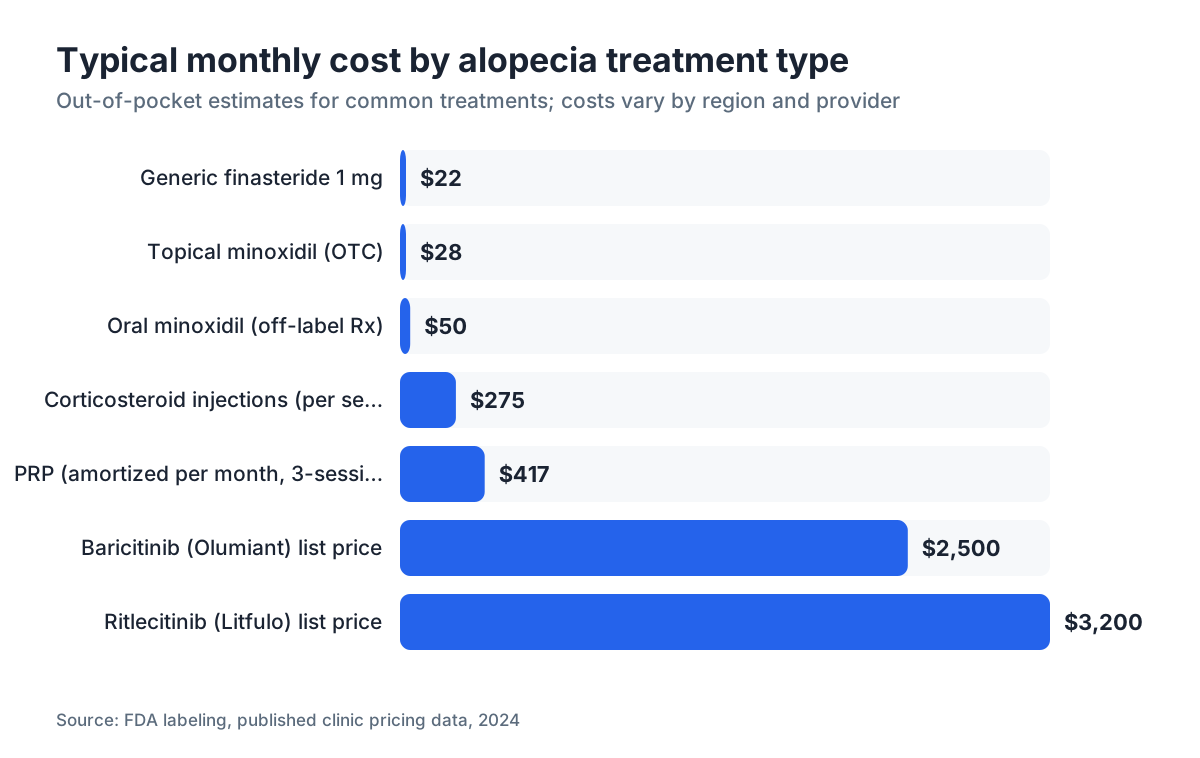
Costs vary enormously based on what you need, where you are, and whether insurance helps. Below is a realistic range based on publicly available pricing data and published literature.
| Treatment | Typical cost range | Insurance coverage? |
|---|---|---|
| Dermatology consultation | $150 to $400 out-of-pocket | Often covered with referral |
| Scalp biopsy (diagnosis) | $200 to $600 | Usually covered if medically indicated |
| Topical minoxidil (OTC) | $15 to $40/month | No |
| Oral minoxidil (Rx, off-label) | $20 to $80/month | Rarely |
| Finasteride 1 mg generic | $15 to $30/month | Rarely |
| Baricitinib (Olumiant) | $2,000 to $3,000+/month list price | Prior auth required; copay cards available |
| Ritlecitinib (Litfulo) | ~$3,200/month list price | Prior auth required |
| Corticosteroid injections | $150 to $400 per session | Sometimes covered |
| PRP (per course of 3) | $1,500 to $3,500 | Almost never covered |
| LLLT (in-office course) | $1,000 to $3,000 | Almost never covered |
| FUE hair transplant | $4,000 to $15,000 | Almost never covered |
| FUT/strip transplant | $4,000 to $10,000 | Almost never covered |
For alopecia areata specifically, both baricitinib and ritlecitinib manufacturers offer patient assistance programs. The NeedyMeds database (needymeds.org) and RxAssist (rxassist.org) track these programs. If a clinic doesn't mention these options, that's a red flag.
Many patients benefit from understanding hair loss supplements as low-cost adjuncts, though the evidence for most supplements is thinner than clinics often imply.
What credentials should an alopecia treatment center have?
This is where most people make expensive mistakes. The term "hair loss clinic" or "alopecia center" is not regulated. Anyone can put that on a sign.
Here's what to look for:
Board-certified dermatologist on staff. The American Board of Dermatology (ABD) certifies physicians who complete residency and pass rigorous exams. You can verify certification at the ABMS (American Board of Medical Specialties) website [8]. Dermatologists are the only physicians who complete formal training specifically in hair and scalp disorders as part of their residency.
Fellowship training in hair disorders. Some dermatologists pursue additional fellowship training in hair loss (sometimes called trichology fellowship, though this term is used loosely in the US). Ask directly: "Did you complete fellowship training in hair disorders, and where?"
Trichologists. In the UK, the Institute of Trichologists grants certifications after formal training and exams. In the US, there is no equivalent regulated credential. The American Board of Hair Restoration Surgery (ABHRS) certifies surgeons specifically in hair transplantation. Verify ABHRS certification at abhrs.org [9].
Pathology access. A center that can perform and interpret scalp biopsies in-house or through a certified dermatopathologist is better equipped to diagnose scarring alopecias and autoimmune hair loss than one that cannot.
No pressure selling. Legitimate clinics diagnose before they prescribe. If a first appointment ends with a high-pressure pitch for an expensive package before a single test has been run, walk away.
How is alopecia diagnosed at a specialty center?
A proper diagnostic workup at a good center typically includes several steps.
First, a detailed history: onset, pattern of loss, associated symptoms like itching or pain, medications, diet, recent illnesses, family history. This alone can narrow the differential dramatically.
Second, a physical exam. An experienced dermatologist can often distinguish androgenetic alopecia from alopecia areata by pattern and pull test results alone. The pull test involves gently tugging on 40 to 60 hairs; more than 10% coming out suggests active shedding.
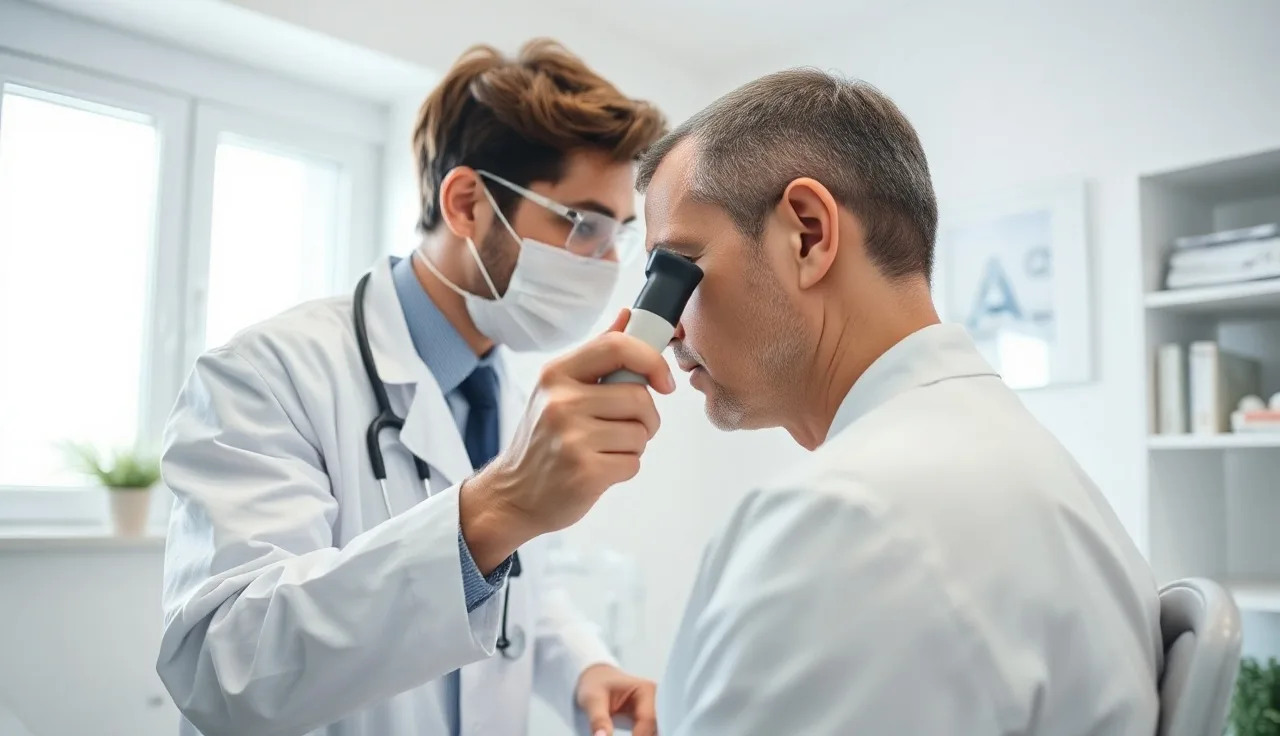
Third, dermoscopy. A handheld or digital dermoscope lets the provider examine follicle openings, hair shaft diameter, and scalp skin at 20x to 70x magnification without cutting. Different alopecias have distinct dermoscopic signatures. This is a big step up from visual inspection alone.
Fourth, bloodwork. A standard panel for hair loss often includes complete blood count, ferritin (iron stores), thyroid function (TSH, free T4), vitamin D, B12, zinc, and in some cases hormone levels (DHT, DHEA-S, total and free testosterone) [1]. Ferritin below 40 ng/mL is often flagged in women with diffuse shedding, though the exact threshold for treatment remains debated in the literature.
Fifth, scalp biopsy. For any suspected scarring alopecia or diagnostically ambiguous case, a 4 mm punch biopsy sent to a dermatopathologist is the gold standard. A center that skips this step for a patient with a pattern suggesting lichen planopilaris or frontal fibrosing alopecia is cutting corners.
If you want a preliminary sense of your hair loss pattern before your appointment, the free AI hair analysis at MyHairline can give you a baseline reference point based on your photos, though it's not a substitute for a clinical exam.
How do you choose the right alopecia treatment center for your situation?
The right center depends almost entirely on what type of alopecia you have and how far along it is.
If you have early androgenetic alopecia (pattern baldness) and want medical management, a dermatologist who prescribes finasteride and minoxidil is the most efficient starting point. You don't necessarily need a specialty hair clinic for that. Telehealth platforms have made access to these prescriptions easier, but they cannot do a scalp biopsy or dermoscopy if your diagnosis turns out to be more complicated.
If you have alopecia areata, especially moderate to severe, you want a dermatologist with specific experience in autoimmune hair loss. Ask whether they have prescribed JAK inhibitors and how many patients with alopecia areata they currently manage. Centers affiliated with academic medical institutions are more likely to have this experience and may have access to clinical trials.
If you have a scarring alopecia, find a dermatologist who subspecializes in hair and has dermoscopy and biopsy capability in-office. The North American Hair Research Society (NAHRS) maintains a provider directory at nahrs.org that can help you find specialists [10].
If you're considering a hair transplant for stable androgenetic alopecia, look for an ABHRS-certified surgeon with published or verifiable before-and-after outcomes for your hair type and Norwood stage. Read our guide on hair transplants before any consultations.
If you have a receding hairline and aren't sure whether it's early androgenetic alopecia, traction, or something else, start with a dermatologist, not a transplant clinic. Transplant clinics have a financial incentive to recommend transplants. A medical dermatologist doesn't.
One honest truth: geography limits most people. If you're in a rural area, a telehealth dermatology service for initial prescription management, combined with in-person labs at your local provider, is a reasonable compromise for androgenetic alopecia. It is not a reasonable compromise for suspected scarring alopecia, which requires physical examination and biopsy.
What does treatment at an alopecia center actually look like, visit by visit?
People often don't know what to expect from the process. Here's a realistic walk-through.
Visit 1 (consultation and diagnosis): Expect 30 to 60 minutes. History, exam, dermoscopy, discussion of likely diagnosis and diagnostic uncertainty. You may leave with lab orders and no treatment prescription yet, which is appropriate. A clinician who prescribes on visit one without labs or dermoscopy for a diagnostically ambiguous case is moving too fast.
Visit 2 (follow-up with results): Lab results and possibly biopsy results reviewed. Treatment plan discussed, including mechanism, expected timeline, and monitoring. For androgenetic alopecia on finasteride, realistic expectations are stabilization within three months and some regrowth visible at 6 to 12 months [5]. For alopecia areata on JAK inhibitors, trial data for ritlecitinib showed meaningful regrowth at 24 weeks in roughly 23% of patients and continued improvement through 48 weeks [3].
Follow-up visits: Usually every 3 to 6 months during active treatment. Standardized photographs in consistent lighting are the only objective way to track progress. A good center takes them. If a clinic doesn't do this, you have no way to know whether treatment is working.
When to expect results: The biggest source of frustration is timeline. Hair grows roughly 0.5 to 1.0 inch per month. Treatments that work at the follicle level take months to show visible results on the shaft. Anyone promising visible results in weeks for a medical (non-surgical) treatment is overstating the evidence.
Are there red flags that a hair loss clinic is not reputable?
Yes, and they're common enough that you should have a mental checklist before your first visit.
They push expensive packages at the first appointment before completing a diagnosis. Legitimate medicine diagnoses before it treats.
No physician on staff. Some centers operate with aestheticians, cosmetologists, or "certified trichologists" who have no prescribing authority and whose training varies wildly. This is fine for scalp health and styling, not for treating medical alopecia.
Guarantees of regrowth. No ethical clinician guarantees hair regrowth. The FDA has not approved any treatment as a cure for any alopecia type [4].
Selling unproven proprietary serums or supplements as their main protocol. Some compounds (like saw palmetto or biotin) have weak supporting evidence. If a clinic leads with these products rather than FDA-approved treatments, they are prioritizing margin over medicine.
No before-and-after photography protocol. You cannot track your own progress without it.
Discouraging outside opinions or second consultations. Good clinicians welcome it.
If a clinic offers mostly PRP and laser packages without a physician-led diagnostic workup, that's not an alopecia treatment center. It's an aesthetics studio using medical language.
For context on what legitimate supplements do and don't do, see our analysis of hair loss supplements.
Does insurance cover alopecia treatment center visits?
This depends on your diagnosis and your plan. Here's the honest picture.
Dermatology consultations and medical management of alopecia areata are generally covered by health insurance when there is a documented diagnosis, because alopecia areata is classified as a medical condition [1]. Scalp biopsies, bloodwork, and medically necessary follow-ups are usually reimbursable.
Androgenetic alopecia (pattern baldness) is classified as cosmetic by most insurance plans. Visits explicitly for this condition are often not covered, and minoxidil and finasteride for hair loss are almost never covered by insurance, even though finasteride is on many generic formularies at low cost.
JAK inhibitors for severe alopecia areata are covered by most major insurers after prior authorization, because they are FDA-approved for this specific indication and cost far more than a typical Rx. Eli Lilly and Pfizer (manufacturers of baricitinib and ritlecitinib respectively) offer patient support programs. Ask your clinic's prior auth coordinator to initiate this.
PRP, LLLT, and hair transplants are almost universally considered elective by insurers and are not covered.
The IRS allows unreimbursed medical expenses that exceed 7.5% of adjusted gross income to be deducted if you itemize [11]. For large out-of-pocket alopecia costs, this is worth discussing with your tax preparer. HSA and FSA funds can generally be used for medical visits and prescription medications; eligibility for cosmetic procedures varies by plan.
Medicaid coverage varies by state. Medicare generally does not cover hair loss treatments, including visits explicitly for androgenetic alopecia, under its cosmetic exclusion.
What are the latest research advances in alopecia treatment?
This field is moving faster than it has in decades, mostly because of the JAK inhibitor approvals for alopecia areata.
The FDA approval of baricitinib in June 2022 for adults with severe alopecia areata was the first-ever drug approval specifically for this condition. Ritlecitinib followed in June 2023 for patients 12 and older, extending coverage to adolescents [3]. Both approvals were based on randomized, double-blind, placebo-controlled trials, which is the evidence standard you should demand.
Several other JAK inhibitors are in late-stage trials for alopecia areata and androgenetic alopecia. Deuruxolitinib (by Sun Pharma) showed strong Phase 3 results for alopecia areata published in 2023. Brepocitinib and several other agents are in Phase 2.
For androgenetic alopecia, clascoterone (a topical androgen receptor blocker approved for acne as Winlevi) is being studied for hair loss. It works on the same pathway as finasteride but locally, without systemic DHT reduction, which would be a meaningful option for those who want to avoid finasteride's systemic effects.
Stem cell and exosome-based therapies are generating interest but have essentially no rigorous peer-reviewed evidence supporting their use in alopecia at this time. Clinics offering these at high prices are ahead of the evidence.
ClinicalTrials.gov [12] lists all active US alopecia trials. If your condition is severe and standard treatments have failed, checking for trials at academic centers is a legitimate next step, not a last resort.
Myhairline.ai's free AI scan can help you document and track your hair loss pattern over time between clinical appointments, giving you a photographic record that's useful when discussing progression with your dermatologist.
How is alopecia in women treated differently than in men?
Women with hair loss are persistently underserved by both research and clinical practice. Most major trials for androgenetic alopecia enrolled only men, and the standard of care for women has been adapted from that data rather than developed from dedicated female trials.
Here's what actually differs:
Finasteride 1 mg is FDA-approved only for men. The FDA label specifically states that finasteride is contraindicated in women who are or may become pregnant due to risk of fetal harm [5]. That said, finasteride is used off-label in postmenopausal women or women on reliable contraception at some specialty centers, and there is a growing body of observational evidence supporting its effectiveness in women. This is a decision that requires a physician.
Minoxidil 2% topical is FDA-approved for women; the 5% solution is approved for men but used off-label in women at many clinics because the 5% formulation may be more effective [4]. Oral minoxidil at low doses (0.625 mg to 2.5 mg) is being used off-label in women with a reasonable supporting evidence base.
Spironolactone is an anti-androgen used off-label in women for androgenetic alopecia, particularly those with signs of hormonal contribution. It requires monitoring of potassium levels and blood pressure.
For women with diffuse shedding, the differential is wider and includes thyroid disease, iron deficiency, postpartum telogen effluvium, and polycystic ovary syndrome. A good alopecia center orders the appropriate labs before assuming androgenetic alopecia.
Women also develop alopecia areata and scarring alopecias, and treatment for those conditions is largely the same as in men.
Sources
- American Academy of Dermatology, Hair Loss Overview
- American Academy of Dermatology, Hair Loss Statistics
- FDA, Drug Approval Package: Ritlecitinib (Litfulo) 2023
- FDA, Minoxidil Drug Information
- FDA, Finasteride (Propecia) Prescribing Information
- Journal of the American Academy of Dermatology, Systematic Review of PRP for Androgenetic Alopecia, 2019
- JAMA Dermatology, Combination Finasteride and Minoxidil Trial, 2021
- American Board of Medical Specialties, Certification Verification
- American Board of Hair Restoration Surgery, Certification
- IRS, Publication 502: Medical and Dental Expenses
- ClinicalTrials.gov, Alopecia Trials Registry