
TL;DR: Most hair loss in children is either alopecia areata (an autoimmune condition) or tinea capitis (a fungal infection). Tinea capitis needs oral antifungals. Alopecia areata often resolves on its own in mild cases; stubborn or widespread cases may need topical minoxidil, corticosteroid injections, or newer JAK inhibitor drugs. No single treatment works for every child, and none is a guaranteed cure.
What causes hair loss in children?
Hair loss in a child is alarming, but the cause is almost always identifiable. Two conditions account for most of it: alopecia areata and tinea capitis. Telling them apart early saves weeks of wrong treatment.
Alopecia areata is an autoimmune condition where the immune system mistakenly attacks hair follicles. It produces smooth, round patches of complete hair loss, usually on the scalp, without scaling, redness, or broken hairs. The follicles are still alive. The immune system has just put them on pause [1].
Tinea capitis is a fungal infection, essentially ringworm of the scalp. Unlike alopecia areata, it usually shows scaling, some inflammation, and hairs broken off close to the surface, which dermatologists describe as "black dot" tinea. It's contagious and common in school-age children, particularly those aged 3 to 14 [2].
Other causes are less frequent but worth knowing: telogen effluvium (sudden shedding triggered by illness, surgery, or nutritional deficiency, see telogen effluvium), traction alopecia from tight hairstyles, trichotillomania (hair-pulling, often tied to anxiety or OCD), and rarely androgenetic alopecia in teenagers. Understanding what causes hair loss broadly helps you ask better questions at your child's dermatology appointment.
How common is alopecia areata in children?
Alopecia areata affects roughly 2% of the global population at some point in their lives [1]. About half of all cases begin before age 20, and a meaningful share start in childhood, some before age 10. The National Alopecia Areata Foundation estimates that in the United States roughly 300,000 new cases are diagnosed each year across all ages, with children making up a substantial portion [3].
The condition does not discriminate by sex or ethnicity in childhood the way androgenetic hair loss does in adults. A 7-year-old boy and a 12-year-old girl have roughly equal risk. Having a first-degree relative with alopecia areata or another autoimmune condition (thyroid disease, type 1 diabetes, vitiligo) raises a child's individual risk.
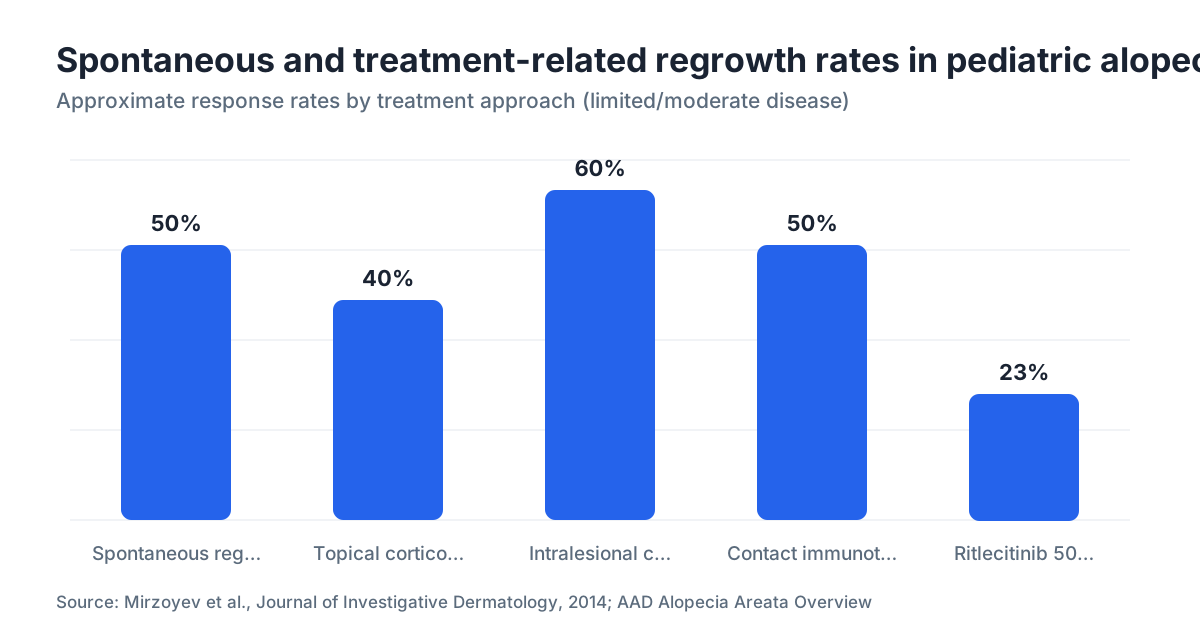
The good news for families: studies suggest roughly 50% of children with limited alopecia areata (one or two small patches) will regrow hair on their own within a year, no treatment needed [4]. The less good news: children with extensive scalp involvement, loss of eyebrows and lashes (alopecia totalis or universalis), or nail pitting are statistically less likely to have full spontaneous recovery and more likely to have a chronic relapsing course.
How is alopecia areata diagnosed in a child?
A pediatric dermatologist can usually diagnose alopecia areata by examining the scalp directly. The clinical picture is distinctive: smooth, coin-shaped patches with no scaling, occasional "exclamation point" hairs (short broken hairs that taper near the root) at the patch border, and normal skin underneath [1].
Dermoscopy, a handheld magnification tool, lets the doctor look at the follicle openings without a biopsy. A scalp biopsy is occasionally done when the diagnosis is genuinely uncertain, but most children do not need one.
Blood work is often ordered to rule out associated autoimmune conditions. A thyroid panel (TSH, free T4), complete blood count, ferritin, and ANA are reasonable first-line tests. Low ferritin is worth knowing about because iron deficiency can independently slow regrowth, even if it did not cause the alopecia.
For tinea capitis, a Wood's lamp exam glows green with some Microsporum species, and a KOH preparation of a scraped hair or scale confirms fungal elements under the microscope. Dermatophyte culture, while slow (2 to 3 weeks), gives species identification that sometimes guides antifungal choice [2].
What are the treatment options for alopecia areata in children?
Treatment choice depends on the child's age, the extent of hair loss, how long the patches have been present, and the family's tolerance for risk and side effects. Pediatric dermatologists generally organize options by severity.
Watchful waiting For a child under 10 with one or two small patches of recent onset, many dermatologists recommend observation for 3 to 6 months before starting any treatment. Spontaneous regrowth in this group is genuinely common, and avoiding unnecessary medications in young children is reasonable [4].
Topical corticosteroids The most widely used first-line treatment for mild to moderate alopecia areata in children. High-potency steroids (clobetasol propionate 0.05% foam or solution) applied directly to patches suppress local immune activity. The evidence is modest but consistent: studies show partial to complete regrowth in 20 to 60% of treated patches, though results vary widely and relapse is common when treatment stops [4]. Long-term use carries a risk of skin thinning (atrophy), so periodic breaks are standard practice.
Intralesional corticosteroid injections Triamcinolone acetonide injected directly into the scalp is one of the most effective treatments for adults, but most pediatric dermatologists reserve it for children old enough to tolerate the discomfort, generally age 10 and up. Sessions run every 4 to 6 weeks. Side effects include temporary skin depression at injection sites [4].
Topical minoxidil Often used as an add-on to corticosteroids rather than as a standalone. The 5% formulation (originally approved for adult androgenetic alopecia) is used off-label in children to stimulate follicle activity. It does not address the autoimmune cause, but it can encourage the hair the immune attack has spared to grow more visibly. Review the full minoxidil side effects profile before starting; facial hair growth (hypertrichosis) is the most common complaint in young children.
Contact immunotherapy (DPCP or SADBE) For extensive disease, topical immunotherapy with chemicals like diphencyprone (DPCP) is used at specialized centers. The idea is to provoke a controlled allergic reaction that distracts or resets the immune response targeting the follicles. Response rates of 30 to 70% have been reported in children in small series, but these are off-label, not widely available, and require careful monitoring [4].
JAK inhibitors (newest option) This is where the field has moved fastest. Ritlecitinib (Litfulo), a JAK3/TEC family kinase inhibitor, received FDA approval in June 2023 specifically for alopecia areata in patients 12 years and older, making it the first approved systemic treatment for this age group [5]. The main trial (ALLEGRO) showed that 23% of patients on the 50 mg dose reached at least 80% scalp hair coverage at 24 weeks, versus 2% on placebo [5]. That sounds modest. But for a child with severe alopecia universalis who has had no regrowth in years, it is meaningful. Baricitinib (Olumiant) is FDA-approved for adults with severe alopecia areata but not yet indicated for children under 18 [6].
JAK inhibitors carry real risks: higher susceptibility to infection (including serious infections), elevated lipids, and a boxed warning about malignancy and thrombosis based on data from other diseases where higher doses are used [5]. These are not casual medications and require regular blood monitoring.
How is tinea capitis treated in children?
Tinea capitis cannot be treated with topical antifungals alone. The fungus lives inside the hair shaft itself, beyond where creams and shampoos can reach, so oral antifungal therapy is required [2].
Griseofulvin has been the standard treatment for decades and is still widely used. Typical dosing is 20 to 25 mg/kg/day (microsize) for 6 to 12 weeks. It needs a fatty meal for absorption, which complicates adherence in young children.
Terbinafine has largely replaced griseofulvin in many guidelines because it needs a shorter course (4 to 6 weeks) and works against Trichophyton species, now the dominant dermatophyte in the United States [2]. Dosing is weight-based: 62.5 mg/day for children under 20 kg, 125 mg/day for 20 to 40 kg, 250 mg/day for over 40 kg.
Fluconazole and itraconazole are alternatives when griseofulvin and terbinafine fail or are not tolerated.
Antifungal shampoos (ketoconazole 2% or selenium sulfide 2.5%) are used as adjuncts to reduce shedding of infectious spores and limit spread to household contacts, but they do not cure the infection on their own [2].
Hair regrowth after tinea capitis treatment is usually complete once the infection clears, though it can take several months. A kerion (a boggy, painful inflammatory mass on the scalp) may cause some permanent scarring in severe cases; a short course of oral corticosteroids is sometimes added alongside antifungals to reduce inflammation and scarring risk.
Can minoxidil be used safely in children?
Minoxidil is not FDA-approved for use in anyone under 18 [7]. That fact is frequently misunderstood. It means the FDA has not reviewed safety and efficacy data in children specifically, not that dermatologists never use it in kids. Off-label prescribing is legal and common in pediatric medicine.
In practice, pediatric dermatologists sometimes use topical minoxidil (2% solution in younger children, 5% in older adolescents) as an add-on for alopecia areata or androgenetic alopecia in teenagers. The main concern in young children is systemic absorption. Hypertrichosis (unwanted hair growth on the face and body) happens because some minoxidil absorbs through the skin and enters the bloodstream. It's more pronounced in younger children with thinner skin.
Oral minoxidil is used off-label in adults at very low doses (0.25 to 5 mg) for hair loss, described fully in our overview of oral minoxidil, but there is almost no controlled data in children and it carries cardiovascular effects (tachycardia, fluid retention) that make pediatricians and cardiologists cautious.
If a dermatologist recommends topical minoxidil for your child, the practical guidance is simple: apply it to the scalp only, wash hands after application, keep the child from touching the treated area until it dries, and report any increased heart rate, dizziness, or unexpected hair growth on the face or body [7].
Are finasteride or DHT blockers appropriate for children?
No. Finasteride and dutasteride work by blocking the conversion of testosterone to DHT, a mechanism that has no meaningful role in childhood alopecia areata and could cause serious hormonal disruption in a developing child or adolescent [8]. These drugs are approved for adult men only. The FDA label for finasteride explicitly states it is not for use in women or children [8].
For reference, finasteride and related DHT blockers matter only for androgenetic hair loss driven by DHT sensitivity, which is essentially an adult concern. A teenager with early male-pattern hair loss might eventually be a candidate for finasteride once fully through puberty and under endocrinology guidance, but that decision requires careful discussion with a specialist, not a general practitioner or a parent acting alone.
What does the treatment timeline look like for a child with alopecia areata?
Families consistently underestimate how long this takes. Hair follicles in alopecia areata are dormant, not destroyed. Once immune suppression is achieved (whether by spontaneous remission or treatment), follicles need 3 to 6 months to produce visible hair. That means even a treatment that is working will not look like it's working for months.
Here is a rough timeline based on current clinical practice:
| Stage | Timeframe | What to look for |
|---|---|---|
| Diagnosis and baseline labs | Weeks 1 to 4 | Dermoscopy, blood work, confirm diagnosis |
| Initial treatment trial (topical steroids +/- minoxidil) | Months 1 to 6 | Fine vellus hairs in patches = encouraging sign |
| Reassessment | Month 6 | Is there >20% regrowth? Continue; if not, escalate |
| Second-line therapy (intralesional steroids, DPCP, or JAK inhibitor) | Months 6 to 18 | Slower, more extensive regrowth expected |
| Long-term monitoring | Ongoing | Relapse is common; watch for new patches |
Relapse after stopping treatment is the rule, not the exception, particularly with topical corticosteroids. JAK inhibitors appear to hold remission while the drug is taken, but data on what happens after stopping is still accumulating [5].
If your child has been losing hair for less than a year and has limited involvement, the honest odds are on your side. If they have alopecia totalis or universalis that has been present for more than 2 years, the realistic expectation shifts toward management rather than cure.
What about psychological support for children with hair loss?
Treatment guidelines from the American Academy of Dermatology consistently note that alopecia areata carries a significant psychological burden, including higher rates of anxiety, depression, and social withdrawal in affected children [1]. This is not a cosmetic inconvenience. For a 9-year-old who loses all their hair, the social fallout at school can be severe.
Psychological support is not optional for children with moderate to severe disease. Referral to a pediatric psychologist or therapist with experience in chronic skin conditions is appropriate alongside any dermatological treatment. The National Alopecia Areata Foundation (naaf.org) runs support groups for children and families, including peer networks and summer camps.
Practical options to consider while hair regrows: medical-grade scalp prostheses (wigs) designed for children are covered by some insurance plans under durable medical equipment codes when prescribed by a physician. Scalp cooling caps, hats, and headscarves are smaller-scale options. Some families find that normalizing the appearance rather than hiding it lowers anxiety long-term.
If your child is also pulling their hair (trichotillomania), that requires behavioral therapy (habit reversal training is the first-line treatment) and possibly collaboration with psychiatry. Treating the scalp without addressing the behavior will not work.
At some point in your research, you may want a second opinion or an objective picture of what's actually happening on the scalp. Tools like the free AI hair analysis at MyHairline are not a substitute for a dermatologist, but they can help track changes in coverage over time, something that's genuinely hard to judge from memory or bathroom mirror photos.
Are there any promising new treatments being studied for pediatric alopecia?
The JAK inhibitor story is the biggest development in alopecia areata treatment in decades, and pediatric data is expanding. Ritlecitinib's approval down to age 12 came directly from including adolescents in the ALLEGRO trial [5]. Several ongoing trials are investigating JAK inhibitors in younger age groups and in combination with other agents.
Platelet-rich plasma (PRP) has been studied in adults and a small number of adolescents. Evidence is thin and inconsistent; no rigorous pediatric trials exist as of 2025. It's not standard of care.
Low-level laser therapy (LLLT) devices are marketed for hair loss but lack pediatric evidence. The adult evidence is weak and effect sizes are small [9]. Spending several hundred dollars on a laser cap for a child is not something the current data supports.
Biologics targeting specific immune pathways (IL-4/IL-13 via dupilumab, for example) are being studied in alopecia areata, though this is mostly adult data with pediatric trials just beginning. Dupilumab is already approved for pediatric atopic dermatitis, so there is safety precedent in children [10].
Gene therapy and microbiome interventions come up in research settings but are years away from clinical use in this condition.
For parents who want to track what's enrolling, ClinicalTrials.gov lists all active U.S. trials by condition and age group. Searching "alopecia areata" and filtering to pediatric age ranges gives a real-time picture of what's available [11].
When should a parent take a child to a specialist?
See a pediatric dermatologist (rather than a pediatrician) if any of the following are present: hair loss that hasn't regrown after 3 months, more than two patches, loss of eyebrows or eyelashes, scalp scaling or inflammation, or any hair loss in a child under age 3. A child losing hair before age 3 sometimes signals a genetic condition (like loose anagen syndrome or hypotrichosis) that needs specific workup.
A general dermatologist can handle most cases, but a board-certified pediatric dermatologist or a dermatologist with a specific alopecia subspecialty interest is preferable for severe or unresponsive disease. Academic medical centers affiliated with medical schools tend to have the most experience with JAK inhibitors and contact immunotherapy protocols.
Bring documentation to the first appointment: photos taken over time (including good-lighting close-ups), a timeline of when patches appeared, any family history of autoimmune conditions, and a list of medications and supplements the child takes. The more information you carry in, the faster the diagnostic conversation moves.
One practical note: pediatric dermatology waits are long in much of the United States, often 2 to 4 months. Call early. Ask to be put on a cancellation list. Ask the pediatrician for an urgent referral if the hair loss is progressing fast.
Sources
- American Academy of Dermatology, Alopecia Areata: Overview
- National Alopecia Areata Foundation, About Alopecia Areata
- Mirzoyev SA et al., Lifetime incidence risk of alopecia areata, Journal of Investigative Dermatology, 2014
- FDA, Minoxidil Topical Drug Label (Rogaine and generics)
- FDA, Propecia (finasteride) Prescribing Information
- Avci P et al., Low-level laser therapy for hair loss: a review, Journal of Photochemistry and Photobiology B, 2014
- FDA, Dupixent (dupilumab) Prescribing Information, pediatric atopic dermatitis indication
- ClinicalTrials.gov, U.S. National Library of Medicine
- CDC, Ringworm (Tinea Capitis) Information for Schools