
TL;DR: The right alopecia medicine depends on which type you have. Androgenetic alopecia responds to minoxidil and finasteride, both proven in large trials. Alopecia areata now has three FDA-approved JAK inhibitors. Scarring alopecias need dermatologist diagnosis first. No single drug works for all types, and most take months of steady use before results show.
What is alopecia and why does the medicine differ by type?
Alopecia just means hair loss. That one word covers at least a dozen distinct conditions with different causes, different follicle biology, and very different treatment targets. Use the wrong medicine and you get nothing at best. Sometimes you make it worse.
The broadest split is between non-scarring and scarring alopecias. In non-scarring types, the follicle is still alive and can regrow if you fix the underlying trigger. In scarring (cicatricial) alopecias, permanent fibrosis has already replaced the follicle, so the medical goal shifts from regrowth to halting further destruction.
The three types you'll meet most often are androgenetic alopecia (AGA, male and female pattern hair loss), alopecia areata (AA, an autoimmune condition), and telogen effluvium (temporary shedding triggered by stress, illness, or nutritional deficiency). Each has its own treatment ladder. Understanding what causes hair loss in your specific case is the first step before choosing any medicine.
This article covers medicines: prescription and OTC drugs, biologics, and emerging therapies. Hair transplant surgery is a separate decision and comes up briefly where it's relevant.
What medicines are FDA-approved for androgenetic alopecia?
Androgenetic alopecia is by far the most common type, affecting roughly 50 million men and 30 million women in the United States [1]. Two medicines carry formal FDA approval for AGA, and they work through completely different mechanisms.
Minoxidil started life as a blood pressure drug. Applied topically, it extends the anagen (growth) phase and widens blood vessels near the follicle. The 2% and 5% solutions are OTC, and the 5% foam is too. Oral minoxidil (0.25 mg to 5 mg daily) is prescribed off-label with solid clinical evidence behind it. A 2021 review in the Journal of the American Academy of Dermatology found oral minoxidil at 5 mg produced hair count increases comparable to topical 5% with better scalp coverage [2]. There's a full breakdown in our minoxidil for men guide and a separate piece on oral minoxidil.
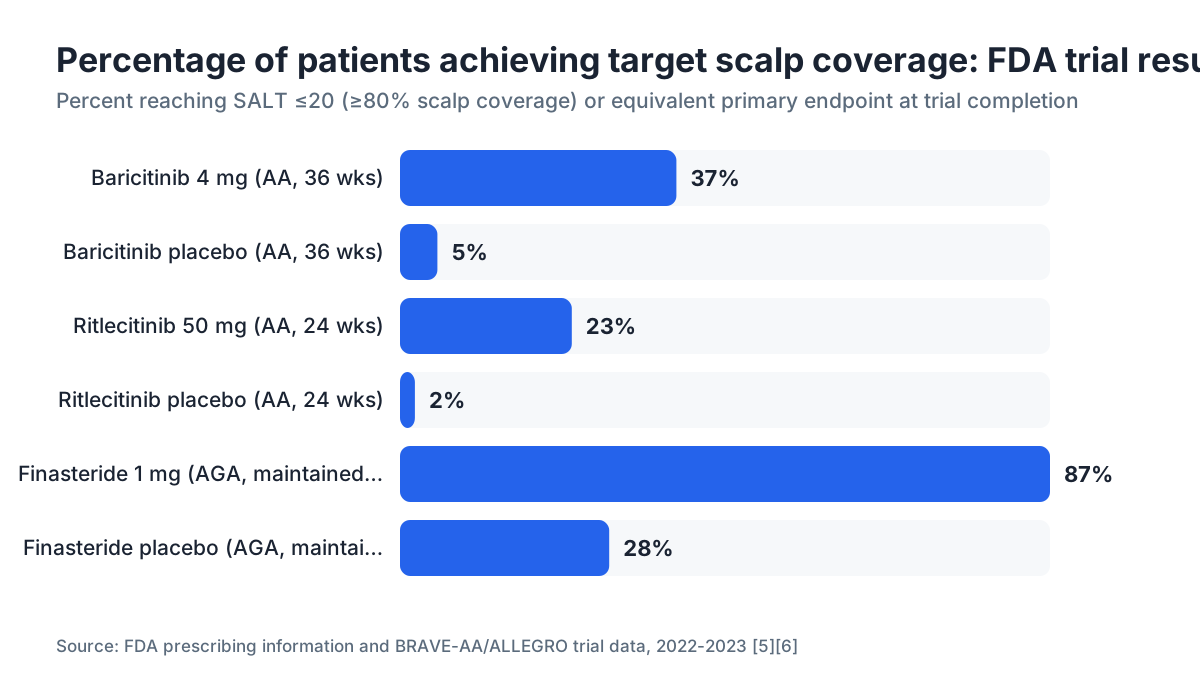
Finasteride (1 mg daily, brand name Propecia) is a 5-alpha reductase inhibitor approved for men in 1997 [3]. It blocks the conversion of testosterone to dihydrotestosterone (DHT), the androgen that miniaturizes follicles in genetically susceptible scalps. The original Phase III trials showed 83-87% of men maintained or improved hair count at two years, against 28% on placebo [3]. Finasteride is not FDA-approved for women of childbearing potential because of teratogenicity risk, though it's used off-label in post-menopausal women. Our finasteride guide covers how it works, and the finasteride and minoxidil article covers what stacking the two looks like.
Dutasteride (0.5 mg daily, brand name Avodart) blocks both type 1 and type 2 5-alpha reductase enzymes, so it suppresses DHT more strongly than finasteride. It's FDA-approved for benign prostatic hyperplasia and used off-label for AGA. Several randomized trials show bigger hair count gains than finasteride, though head-to-head data is still thin [4]. Both are DHT blockers with similar sexual side effect profiles worth discussing with your prescriber.
Timeline matters. Minoxidil usually shows visible change at 3 to 6 months. Finasteride often takes 6 to 12 months for meaningful density change. Expect a round of shedding when you start minoxidil, which is normal and passes. Stop either drug and hair loss returns to its prior trajectory within months.
What are the new FDA-approved medicines for alopecia areata?
Alopecia areata (AA) is an autoimmune condition where T-cells attack the hair follicle. For decades, the only options were corticosteroids (intralesional, topical, or systemic) with modest and often temporary results. That changed fast between 2022 and 2024.
The FDA approved three Janus kinase (JAK) inhibitors for moderate-to-severe alopecia areata in adults:
- Baricitinib (Olumiant, 2 mg or 4 mg daily oral) approved June 2022 [5]
- Ritlecitinib (Litfulo, 50 mg daily oral) approved June 2023 [6]
- Deuruxolitinib (Leqselect, 8 mg or 12 mg daily oral) approved July 2024 [7]
JAK inhibitors block the intracellular signaling pathways (JAK1, JAK2, TYK2, JAK3) that immune cells use to keep attacking the follicle. The BRAVE-AA1 and BRAVE-AA2 trials for baricitinib showed 35-39% of patients on 4 mg reached a SALT (Severity of Alopecia Tool) score of 20 or less, meaning at least 80% scalp coverage, at 36 weeks, against 5% on placebo [5].
The FDA label for baricitinib carries a boxed warning for serious infections, malignancies, major adverse cardiovascular events, and thrombosis, consistent with the class [5]. These are not casual drugs. They need a dermatologist who knows the risk profile, baseline labs, and ongoing monitoring.
Ritlecitinib is approved down to age 12, making it the first approved systemic treatment for adolescents with severe AA [6]. The ALLEGRO trial showed 23% of patients reached SALT ≤20 at week 24 on 50 mg, against 2% on placebo.
For milder AA (small patches), dermatologists still tend to start with intralesional triamcinolone acetonide injections, which have decades of use and a well-understood local side effect profile (skin atrophy at injection sites). Topical minoxidil often gets added to stimulate regrowth once immune suppression is underway.
Be direct with yourself here. JAK inhibitors control AA while you take them. Relapse rates after stopping are high. These are not cures.
How effective is each medicine? Comparing response rates
Putting the efficacy numbers in one place makes the landscape clearer. The table below uses primary trial data from the citations. Response definitions differ between studies, so read across rows with caution.
| Medicine | Condition | Key efficacy result | Trial / Source |
|---|---|---|---|
| Topical minoxidil 5% | AGA (men) | 45% increase in hair count vs. baseline at 48 weeks | Olsen 2002 [10] |
| Finasteride 1 mg | AGA (men) | 87% maintained or improved vs. 28% placebo at 2 years | Merck Phase III trials [3] |
| Oral minoxidil 5 mg | AGA (men) | Similar hair count gain to topical 5%; better compliance reported | Randolph & Tosti 2021 [2] |
| Baricitinib 4 mg | Alopecia areata | 35-39% reached SALT ≤20 at 36 weeks vs. 5% placebo | BRAVE-AA1/AA2 [5] |
| Ritlecitinib 50 mg | Alopecia areata | 23% reached SALT ≤20 at 24 weeks vs. 2% placebo | ALLEGRO trial [6] |
| Intralesional triamcinolone | Patchy AA | 60-70% regrowth in small patches (observational data) | AAD guidelines [8] |
| Topical corticosteroids | Patchy AA | Variable; 25-50% response in mild disease | AAD guidelines [8] |
One clean fact worth keeping: in the BRAVE-AA trials, baricitinib 4 mg produced complete or near-complete scalp coverage in 35-39% of adults with severe AA at 36 weeks, a result that would have seemed impossible before JAK inhibitors existed [5].
For AGA, nobody has good head-to-head data comparing oral minoxidil to topical at scale in a blinded randomized trial. The closest evidence is a network meta-analysis published in JAMA Dermatology in 2021, which ranked oral minoxidil higher than topical for hair regrowth, though the authors flagged high heterogeneity across the included studies.
What medicines work for female pattern hair loss specifically?
Female pattern hair loss (FPHL) follows a different distribution than male AGA. It usually shows up as diffuse thinning over the crown with the frontal hairline preserved. The hormonal drivers overlap with AGA but run more complicated, and fewer drugs carry formal approval in women.
Topical minoxidil 2% is the only FDA-approved treatment for women with AGA, though the 5% formulation gets used off-label with good tolerability [1]. Many dermatologists now reach for oral minoxidil at low doses (0.25 mg to 1 mg daily) in FPHL because it sidesteps scalp application headaches, and unwanted facial hair is less of a problem at low doses [2].
Spironolactone (25 mg to 200 mg daily) is a potassium-sparing diuretic with anti-androgen activity. It's used widely off-label for FPHL, especially when there's evidence of androgen excess. No large randomized controlled trials exist specifically in FPHL, but retrospective data and dermatologist consensus back its use. It can't be used in pregnancy.
Finasteride 1 to 5 mg gets used off-label in post-menopausal women, sometimes with minoxidil. Dutasteride sits in the same off-label spot. Neither is appropriate for pre-menopausal women without reliable contraception, because of the risk of feminizing a male fetus.
When hair loss ties to thyroid disease, iron deficiency, or another systemic cause, treating that condition is the actual medicine. A ferritin below 30 ng/mL is often cited by dermatologists as the threshold below which iron supplementation is worth trying for shedding, though the trial evidence for that exact cutoff is thin. If you're dealing with diffuse shedding too, our telogen effluvium article walks through the reversible triggers.
What medicines treat scarring (cicatricial) alopecias?
Scarring alopecias are conditions where inflammation destroys the follicle permanently. The common subtypes are lichen planopilaris (LPP), frontal fibrosing alopecia (FFA), discoid lupus erythematosus (DLE), and folliculitis decalvans.
No FDA drug is approved specifically for any cicatricial alopecia. Treatment runs on expert consensus, case series, and small trials.
For LPP and FFA, the first-line medicines are hydroxychloroquine (200-400 mg daily), topical or intralesional corticosteroids, and tetracycline-class antibiotics (doxycycline, minocycline) used for their anti-inflammatory effect rather than antibiotic action. Oral retinoids (acitretin, isotretinoin) are second-line [8]. FFA has drawn interest in dutasteride and pioglitazone (a PPAR-gamma agonist) off small case series, but the evidence is too early to call either standard of care.
For DLE-related hair loss, treatment overlaps with systemic lupus management. Hydroxychloroquine is first-line, with dapsone or oral retinoids for stubborn cases.
Folliculitis decalvans, a neutrophilic scarring alopecia, usually responds to combined rifampicin and clindamycin for 10 to 12 weeks, though relapse is common.
Here's the blunt part. With scarring alopecias, catching them early is everything. Once the follicle is fibrosed, medicine can only preserve what's left. If you notice progressive hairline recession that looks smooth and pale (classic FFA), or linear scarring at the scalp edge, see a dermatologist quickly instead of self-treating.
Are there any medicines in development or recently approved that I should know about?
The alopecia pipeline is more active now than at any point in the last 30 years, driven mostly by how well JAK inhibitors worked in AA.
Topical JAK inhibitors are in late-stage trials for both AGA and AA. Ruxolitinib cream (approved for atopic dermatitis as Opzelura) has been studied in AA with encouraging phase 2 results. The appeal is drug exposure at the scalp without systemic immunosuppression, which would change the risk-benefit math a lot.
CTP-543 (deuterated ruxolitinib, now deuruxolitinib/Leqselect) got FDA approval in July 2024 for moderate-to-severe AA [7]. It's JAK1/2 selective and posted a response rate comparable to baricitinib in its THRIVE-AA trials.
Clascoterone (Winlevi), a topical androgen receptor inhibitor, is FDA-approved for acne and has drawn interest for AGA because it blocks androgens locally at the scalp without systemic DHT suppression. Phase 2 AGA data exists. No FDA approval for hair loss yet.
Stem cell and exosome-based therapies get marketed hard at hair clinics but lack rigorous phase 3 data. Don't spend real money on these without demanding peer-reviewed efficacy data specific to your alopecia type.
Platelet-rich plasma (PRP) injections stay popular and have some positive small-trial data, particularly as an add-on to minoxidil in AGA. The protocols vary so much across studies that a confident efficacy number is hard to give. The AAD lists it as a possible option, not a standard first-line treatment [8].
If you're trying to work out where you stand before picking a path, the free AI hair analysis at MyHairline can help you document your current pattern and track it over time. That's genuinely useful before your first dermatology visit.
What are the real side effects and risks of these medicines?
Every effective alopecia medicine carries a real risk profile. Here's the honest version.
Minoxidil (topical): Most common are scalp irritation and contact dermatitis, usually from the propylene glycol in solutions (the foam avoids this). Shedding in the first 2 to 8 weeks is normal and reflects follicle cycling, not failure. Some women get unwanted facial hair. Serious cardiovascular effects are rare at topical doses but possible in people with existing heart disease. Our minoxidil side effects guide has the full breakdown.
Oral minoxidil: Fluid retention and lower-leg edema show up in a meaningful minority, especially above 2.5 mg. Pericardial effusion is rare but documented. Hypertrichosis (body hair growth) is common and dose-dependent. Not appropriate for people with certain cardiac conditions.
Finasteride/Dutasteride: The most-discussed risk is post-finasteride syndrome, a cluster of persistent sexual, neurological, and psychological symptoms reported by a subset of users after stopping. The FDA updated the Propecia label in 2012 to note that libido decrease, ejaculation disorders, and orgasm disorders may persist after discontinuation [3]. The absolute frequency of lasting symptoms is disputed in the literature. The honest answer: nobody has a clean randomized dataset on long-term post-discontinuation outcomes. Men with a history of depression or anxiety should have an explicit conversation with their doctor before starting.
Spironolactone: Hyperkalemia (elevated potassium) is the main systemic risk, so baseline labs and monitoring are standard. Menstrual irregularity is common at higher doses. Not for use in pregnancy.
JAK inhibitors (baricitinib, ritlecitinib, deuruxolitinib): Boxed warnings cover serious infections (including reactivation of tuberculosis and herpes zoster), lymphoma and other malignancies, major adverse cardiovascular events (MACE), deep vein thrombosis, and pulmonary embolism [5][6]. These risks are real and are why FDA approval was held to moderate-to-severe disease. Routine labs (CBC, lipids, liver enzymes) and tuberculosis screening are required before starting.
Hydroxychloroquine: Retinal toxicity with long-term use means annual ophthalmology screening at doses above 5 mg/kg/day.
How much do alopecia medicines cost in the US?
Cost swings hard depending on whether a drug is generic, brand-name, or needs insurance authorization.
| Medicine | Typical monthly cost (out of pocket, US) | Notes |
|---|---|---|
| Topical minoxidil 5% (generic) | $10-$20 | OTC, widely available |
| Finasteride 1 mg (generic) | $15-$40 | Requires prescription; very affordable |
| Dutasteride 0.5 mg (generic) | $25-$60 | Requires prescription |
| Oral minoxidil (compounded) | $20-$50 | Off-label; varies by pharmacy |
| Spironolactone (generic) | $10-$30 | Requires prescription |
| Baricitinib 4 mg (Olumiant) | $2,500-$3,000 without insurance | Manufacturer patient assistance programs exist |
| Ritlecitinib 50 mg (Litfulo) | $3,000-$3,500 without insurance | Similar assistance programs |
| Deuruxolitinib (Leqselect) | Not yet widely listed; expected similar to other JAK inhibitors | Pfizer patient assistance |
Insurance coverage for JAK inhibitors in alopecia areata is improving but not universal. Prior authorization is standard, and many plans want documented failure of at least one prior therapy. GoodRx and manufacturer copay cards can cut out-of-pocket cost a lot for commercially insured patients.
For AGA, the math is simple. Generic finasteride plus topical minoxidil runs under $60 a month and has the best efficacy evidence of anything you can get without a specialist. That's where most people should start before spending on anything pricier.
When does medicine stop being enough and surgery becomes the right call?
Medicine and surgery aren't competing options. They usually run in sequence or side by side.
Hair transplant surgery moves DHT-resistant follicles from the back and sides of the scalp to areas of loss. It doesn't stop ongoing miniaturization elsewhere. A 30-year-old who gets a transplant without also taking finasteride will likely keep losing the native hair around the transplanted area and eventually look odd. Standard of care pairs medical therapy to stabilize loss with surgery to restore density where follicles are already gone.
Surgery becomes the right conversation when the loss pattern is stable (not racing forward), enough donor hair exists at the back and sides, and medicine has had a fair trial (usually 12 months minimum). For alopecia areata, transplant results are poor, because the autoimmune attack can destroy transplanted follicles too. JAK inhibitors first, and only consider transplant after sustained remission.
Realistic transplant costs in the US run $4,000 to $15,000 or more depending on graft count and technique (FUT vs. FUE). Our hair transplant article covers how to vet a surgeon and what the procedure actually involves.
The receding hairline guide pairs well with this if you're trying to work out whether what you're seeing is a Norwood progression worth treating medically now.
What should you actually do first if you think you have alopecia?
The most common mistake is spending money on the wrong treatment because the diagnosis was never confirmed. Androgenetic alopecia, alopecia areata, and telogen effluvium can all look alike early on and need completely different medicines.
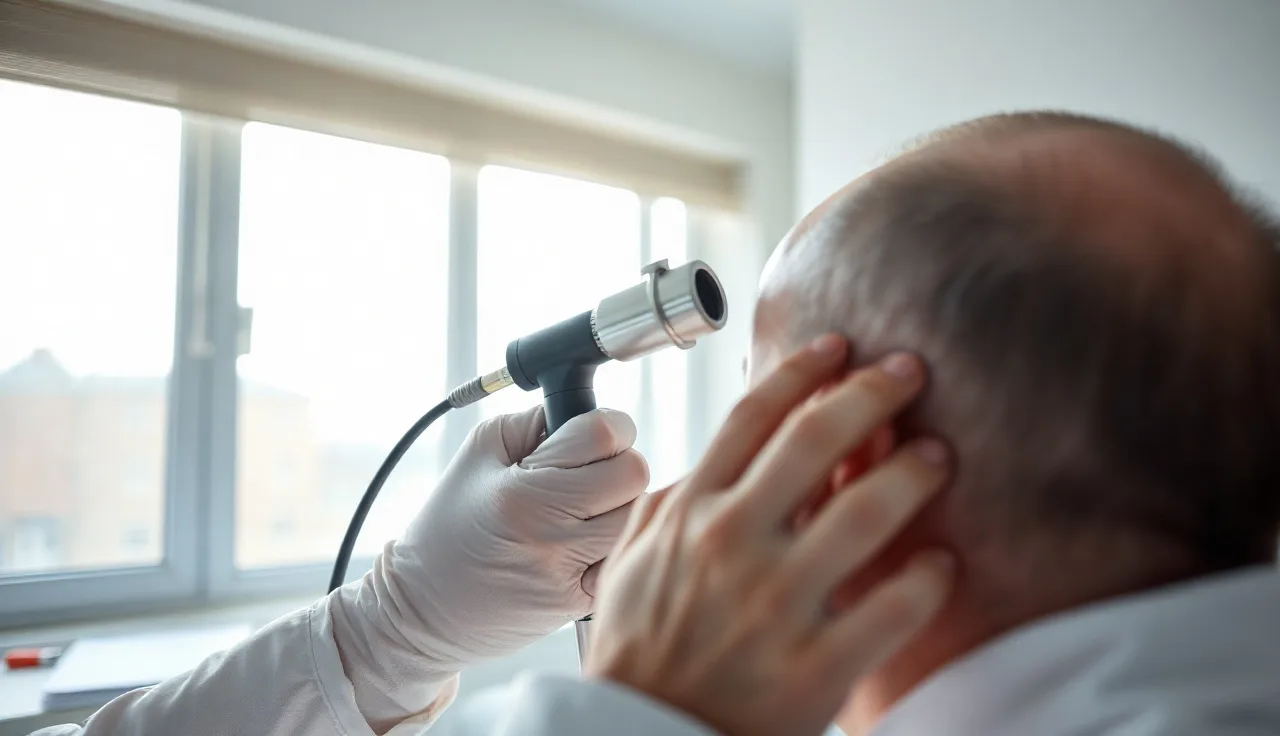
Start with a board-certified dermatologist who does scalp work regularly. Dermoscopy (a magnified scalp exam) takes 10 minutes and tells you far more than a visual look alone. Blood work to rule out thyroid disease, iron deficiency, and hormonal imbalance (in women) should be standard at the first visit.
For straightforward male pattern hair loss, a GP or family medicine doctor can reasonably prescribe finasteride and minoxidil without a specialist. But if the diagnosis is uncertain, or there's any chance of scarring, a dermatologist is worth the co-pay.
Photographic documentation matters more than most people think. Hair loss is slow and continuous, and memory is unreliable. Standardized photos every 3 months under the same lighting give you real data on whether treatment is working. A quick baseline through the free AI scan at MyHairline can anchor your starting point before you begin any medicine.
Don't let the supplement market eat your budget while you delay real treatment. The evidence for biotin in people without a biotin deficiency is essentially absent. Saw palmetto has weak mechanistic plausibility and no solid RCT data. Our hair loss supplements article goes through the evidence tier by tier. Supplements are not medicine for alopecia.
Sources
- American Academy of Dermatology, Hair loss: Who gets and causes
- Randolph M & Tosti A, Journal of the American Academy of Dermatology 2021 - Oral minoxidil treatment for hair loss review
- FDA, Propecia (finasteride) Prescribing Information, accessed via Drugs@FDA
- Eun HC et al., JAAD 2010, Dutasteride vs finasteride RCT in AGA
- FDA, Olumiant (baricitinib) Prescribing Information, accessed via Drugs@FDA
- FDA, Litfulo (ritlecitinib) Prescribing Information, accessed via Drugs@FDA
- US Food and Drug Administration, Drugs@FDA database (Leqselect / deuruxolitinib approval record)
- American Academy of Dermatology, Alopecia Areata: Diagnosis and Treatment Guidelines
- MedlinePlus / NIH, Minoxidil Topical
- Olsen EA et al., JAAD 2002, Randomized controlled trial of 5% topical minoxidil in men with AGA