

TL;DR: Men with androgenetic alopecia (male pattern baldness) have two FDA-approved first-line treatments: finasteride (oral) and minoxidil (topical or oral). Alopecia areata now has FDA-approved JAK inhibitors. Transplants work for stable hair loss. No treatment cures alopecia permanently, but several stop progression and regrow real hair.
What type of alopecia do most men actually have?
The word alopecia just means hair loss. It is not one disease. The type you have decides every treatment choice, so getting this right before spending a dollar saves you money and months.
Androgenetic alopecia (AGA), or male pattern hair loss, is the most common form. About 50% of men have it by age 50 and roughly 80% by age 70 [1]. It follows the Norwood scale, starting at the temples or crown, driven by dihydrotestosterone (DHT) shrinking follicles over years. This is what finasteride and minoxidil are built for. If you are noticing a receding hairline or crown thinning, AGA is the likely culprit. Understanding what causes hair loss at a biological level explains why treatments target DHT or blood flow.
Alopecia areata (AA) is an autoimmune disease where your immune system attacks hair follicles. It creates round, patchy bald spots and affects roughly 2% of the global population at some point in their lives [2]. The follicle itself is not destroyed, which is why regrowth is possible. Alopecia totalis (loss of all scalp hair) and alopecia universalis (all body hair) are the severe subtypes.
Telogen effluvium is diffuse shedding triggered by stress, illness, surgery, or nutritional deficiency. It is usually temporary. Traction alopecia comes from tight hairstyles pulling on follicles. Scarring alopecias (like lichen planopilaris) permanently destroy follicles and need urgent dermatologist referral.
Not sure which type you have? See a board-certified dermatologist before buying anything. A diagnosis costs far less than months of the wrong treatment.
Which alopecia treatments for men are FDA-approved?
FDA approval matters here. It means a treatment went through controlled trials in real patients and the agency reviewed the evidence independently. Most of the hair loss market is not approved for anything.
For androgenetic alopecia:
- Minoxidil topical solution and foam (OTC). Originally a blood pressure drug, it was the first FDA-approved topical hair loss treatment. The 5% solution is approved for men. It works by prolonging the anagen (growth) phase and increasing follicle size [3].
- Finasteride 1 mg oral (prescription). FDA approved for men in 1997 under the brand Propecia. It blocks 5-alpha reductase type II, cutting scalp DHT by roughly 60% [4]. Read the full breakdown at finasteride and the combined approach at finasteride and minoxidil.
- Oral minoxidil (low-dose, prescription). Not FDA-approved specifically for hair loss, but widely used off-label at 0.625 mg to 5 mg daily. Dermatologists prescribe it when topical tolerability is a problem. More detail is at oral minoxidil.
For alopecia areata:
- Baricitinib (Olumiant), a JAK1/JAK2 inhibitor, was FDA-approved in June 2022 for severe alopecia areata in adults, the first systemic approval for AA in the US [5].
- Ritlecitinib (Litfulo), a JAK3/TEC inhibitor, was FDA-approved in June 2023 for severe AA in patients 12 and older [5].
Nothing else on the market for hair loss carries FDA approval for these uses. That includes biotin supplements, keratin treatments, laser combs, and most marketed "hair growth" shampoos.
| Treatment | Type | FDA Status | Condition | Rx Required |
|---|---|---|---|---|
| Minoxidil 5% topical | Topical | Approved | AGA | No |
| Finasteride 1 mg | Oral | Approved | AGA (men) | Yes |
| Oral minoxidil | Oral | Off-label | AGA | Yes |
| Baricitinib | Oral | Approved | Alopecia areata | Yes |
| Ritlecitinib | Oral | Approved | Alopecia areata | Yes |
| Corticosteroid injections | Injectable | Off-label | Alopecia areata | Yes |
| Hair transplant | Surgical | N/A (procedure) | AGA | N/A |
How well does finasteride work for male hair loss?
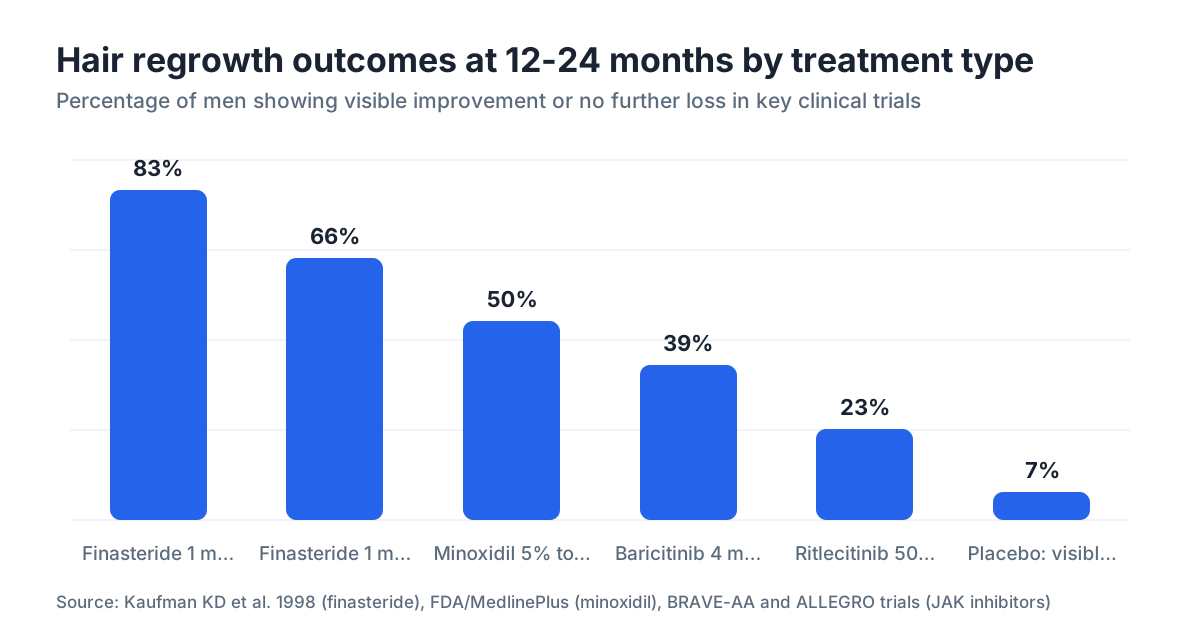
Finasteride 1 mg daily is probably the single most effective medical option for androgenetic alopecia in men. In the registration trial, 83% of men taking finasteride had no further hair loss after two years, and 66% had visible regrowth, against 7% in the placebo group [4]. Those numbers come from the New England Journal of Medicine study that supported FDA approval, not from a marketing deck.
It takes 3 to 6 months before you see results and up to 12 months for full effect. Stop taking it and the hair loss usually resumes within 6 to 12 months. This is a long-term commitment, not a short course.
The sexual side effects are real but less common than many men fear. The FDA label reports them in about 3.8% of men versus 2.1% on placebo [4]. Post-finasteride syndrome, where side effects persist after stopping the drug, is reported anecdotally and debated in the literature. The risk looks low but is not zero. Talk it through honestly with a prescribing doctor before starting. Finasteride is flatly contraindicated in women who are or may become pregnant because it can harm a male fetus.
Generic finasteride 1 mg costs roughly $15 to $30 per month at most US pharmacies. Brand-name Propecia runs much higher. The DHT blocker page covers the mechanism in more depth if you want to understand why lowering DHT matters.
One thing worth knowing: finasteride roughly halves PSA (prostate-specific antigen) test results. If you get PSA screening, tell your doctor you are on finasteride, because the standard reference ranges no longer apply.
Does minoxidil actually regrow hair or just slow loss?
Both, in most users. Minoxidil slows the miniaturization of follicles and it can wake up follicles that have gone dormant. How much regrowth you get depends heavily on how long you have been losing hair and how much follicle function remains.
The classic 5% topical solution applied twice daily is the approved regimen for men. Foam formulations (also 5%) skip the propylene glycol that irritates some scalps. Trials typically show meaningful coverage improvement in roughly 40 to 60% of men after 12 months of consistent use [3].
The shedding in weeks 2 to 8 is real and predictable. Minoxidil pushes resting follicles into an active growth phase, and the old hairs drop first. This is normal. Most men who quit during this window quit for no reason.
Oral minoxidil at low doses (typically 2.5 mg in men) shows promising results in open-label trials and is catching on with dermatologists for patients who find daily topical application a chore. Fluid retention and unwanted facial or body hair are the main concerns at higher doses. The minoxidil for men guide covers dosing and timing in detail, and minoxidil side effects covers what to watch for.
Minoxidil topical costs $20 to $40 per month for generic. Stop, and any hair you regained usually sheds within 3 to 6 months. Like finasteride, this is a lifelong commitment if you want to keep the results.
What are the treatment options for alopecia areata in men?
Alopecia areata is a different animal from pattern baldness. The follicles are not dead. They are under attack by T-cells. That is why treatment targets the immune system, not hormones.
Corticosteroid injections are still the first-line treatment for mild-to-moderate AA, recommended by the American Academy of Dermatology [2]. Triamcinolone acetonide is injected straight into bald patches every 4 to 8 weeks. Response rates run 60 to 70% for patchy AA, but this approach is impractical for extensive disease and does nothing to prevent new patches.
Topical corticosteroids and minoxidil are often used together as adjuncts, especially for patients who cannot tolerate injections. Evidence for topical steroids alone in AA is modest.
JAK inhibitors are the biggest shift in AA treatment in decades. Baricitinib (Olumiant) 2 mg or 4 mg daily got 35-39% of patients to SALT50 (50% or more scalp coverage) at 36 weeks in the BRAVE-AA trials [5]. Ritlecitinib 50 mg daily showed similar results in the ALLEGRO trial, with 23% of patients reaching SALT90 (90% scalp coverage) at week 48 [5]. These are real numbers in patients with severe disease who had already failed other treatments. They are not miracle drugs for everyone. For men with severe or total alopecia areata, they are the most meaningful advance in a generation.
JAK inhibitors carry a class-wide FDA black box warning for serious infections, malignancy, thrombosis, and cardiovascular events, largely from higher-dose use in rheumatoid arthritis trials. The risk at doses used for AA appears lower but is still under active surveillance [5].
Topical JAK inhibitors are in trials and may offer a lower-risk option for limited disease. Ruxolitinib cream has shown activity in studies.
Contact immunotherapy (DPCP or SADBE) is an older, off-label approach used at some academic centers: a chemical sensitizer applied to the scalp triggers a local immune response that, oddly, can restore hair in some patients. Response rates vary widely and it is only available at specialized clinics.
Anthralin (dithranol) is another older, off-label topical, applied and then rinsed off, used mainly in children and mild adult cases.
For men in Singapore, the treatment landscape for alopecia areata mostly mirrors international guidelines. JAK inhibitors are available through specialist dermatologists, though access and subsidy eligibility depend on disease severity and the prescriber's institution. The National Skin Centre in Singapore follows AAD-aligned protocols for AA.
Is a hair transplant a good option for men with alopecia?
For men with stable androgenetic alopecia, a hair transplant can be genuinely effective and permanent. The key word is stable. Transplant into an area where you are still actively losing native hair and you end up with a patchy look years later as those untransplanted hairs fall out.
FUE (follicular unit extraction) and FUT (follicular unit transplantation, the strip method) are the two main techniques. FUE leaves no linear scar. FUT yields a larger graft harvest per session. Graft survival runs 90-95% in experienced hands.
Hair transplants are not appropriate for alopecia areata. Because AA is autoimmune, transplanted follicles can be attacked just like native ones. Surgeons generally won't operate during active AA and stay cautious even in remission.
Cost in the US runs roughly $4,000 to $15,000 per session, depending on graft count and location. Costs in Turkey, Thailand, and some other countries are much lower, though surgical quality varies. There is no insurance coverage for cosmetic hair transplants.
The honest limitation: a transplant moves existing hair, it does not create new hair. Thin donor area, limited supply. Most men need to keep taking finasteride or minoxidil after a transplant to protect the hair that wasn't moved.
What role do lasers and PRP play in treating male hair loss?
Low-level laser therapy (LLLT) devices, including the FDA-cleared HairMax LaserBand and similar products, have some evidence behind them. A randomized controlled trial published in the American Journal of Clinical Dermatology found a statistically significant increase in hair density with LLLT versus sham devices [6]. The effect size is modest and the evidence base is smaller than for finasteride or minoxidil. It is not a replacement for first-line treatment but might add marginal benefit.
Platelet-rich plasma (PRP) injections mean drawing your blood, concentrating the platelets, and injecting them into the scalp. The theory is that growth factors in platelets stimulate follicles. The evidence is mixed. Some randomized trials show improvement, others show effects no better than placebo injections. Nobody has good standardized data on this because PRP preparation protocols vary wildly between clinics, which makes trial comparisons nearly impossible. A 2018 systematic review in Dermatologic Surgery concluded results were promising but standardization was lacking [7].
PRP costs $1,500 to $4,000 for a typical course of 3 to 4 sessions. I would not spend that money before trying finasteride and minoxidil for 12 months. If you are already on both and want to explore add-ons, it is a reasonable conversation to have with a dermatologist.
Do hair loss supplements and DHT-blocking shampoos work?
Supplements are a crowded space with weak evidence. Biotin is the most over-sold product in hair care. Biotin deficiency does cause hair loss, but true deficiency is rare in men who eat normally. Supplementing biotin in people who are not deficient does not produce meaningful hair growth [8]. At high doses it also interferes with thyroid and cardiac troponin lab tests, which is a real clinical problem.
Saw palmetto is the most studied herbal DHT blocker. A small randomized trial found it produced hair count increases, though far smaller than finasteride [8]. The evidence is weak and the mechanism is plausible. It is not unreasonable as an adjunct, but it should not replace proven treatments. The hair loss supplements guide covers the full evidence landscape.
Ketoconazole 2% shampoo has some evidence as an adjunct. A randomized trial found it increased hair shaft diameter and reduced shedding, likely from mild DHT-blocking and anti-inflammatory effects. It is available OTC at 1% or by prescription at 2%.
DHT-blocking shampoos with saw palmetto, pumpkin seed oil, or zinc are marketed hard. Here is the truth: shampoo sits on your scalp for a couple of minutes. Systemic DHT reduction from a rinse-off product is close to zero. Some may cut scalp inflammation a little. None should be the centerpiece of a treatment plan. See the DHT blocker page for a fuller breakdown.
If you want to sort out which products are worth your time before booking a dermatologist visit, the free AI scan at MyHairline (myhairline.ai/scan) can analyze your hairline and scalp pattern and give you a starting point for the conversation.
How does treatment differ based on Norwood stage?
Where you sit on the Norwood scale changes what treatments are realistic.
Norwood 1-2 (early recession): Medical treatment started here has the best prognosis. Finasteride and minoxidil together can hold and even restore early loss very effectively. Most men in this range do not need a transplant.
Norwood 3-4 (moderate recession and crown thinning): Medical treatment still works well for slowing progression and can produce noticeable regrowth. A transplant becomes a reasonable option at this stage for men who want coverage faster, but it should be paired with ongoing medical treatment to protect native hair.
Norwood 5-6 (significant hair loss): Medical treatment can stabilize what remains. Transplants can restore meaningful coverage, but donor supply becomes a planning question. Results depend heavily on the surgeon's design skills and on realistic expectations.
Norwood 7 (extensive loss, rim of hair only): The donor pool is limited. Transplants can provide some frontal framing, but full coverage is not realistic. Scalp micropigmentation (SMP) is a non-surgical option that mimics the look of a shaved head with good density. Medical treatment at this stage mainly protects the remaining rim.
The receding hairline article covers Norwood progression in more detail and helps you place your stage.
What is the typical cost of alopecia treatments for men?
Costs matter, and they add up over years. Hair loss treatment is almost always out-of-pocket because most insurers call it cosmetic, with the exception of alopecia areata treatments where medical necessity can sometimes be argued.
| Treatment | Monthly Cost (US) | Annual Cost (US) | Notes |
|---|---|---|---|
| Generic finasteride 1 mg | $15-$30 | $180-$360 | GoodRx/pharmacy discount |
| Minoxidil 5% topical (generic) | $20-$40 | $240-$480 | OTC |
| Oral minoxidil (Rx) | $15-$40 | $180-$480 | Off-label |
| Baricitinib (Olumiant) | $2,500-$3,000 | $30,000-$36,000 | Manufacturer assistance programs exist |
| Ritlecitinib (Litfulo) | $3,000-$3,500 | $36,000-$42,000 | Copay cards reduce out-of-pocket |
| PRP (course) | N/A | $1,500-$4,000 | Per course, not monthly |
| LLLT device | N/A | $200-$800 | One-time device cost |
| FUE hair transplant | N/A | $4,000-$15,000 | One-time, per session |
For men with alopecia areata considering JAK inhibitors, the list price is steep, but manufacturer patient assistance programs (Eli Lilly for baricitinib, Pfizer for ritlecitinib) can reduce or eliminate costs for eligible patients. Ask the prescribing dermatologist about assistance programs before you assume the drug is out of reach.
For most men with AGA, starting with generic finasteride and generic minoxidil costs under $600 per year. That is the evidence-backed, low-cost starting point before you spend on anything fancier.
What should men expect from alopecia treatment timelines?
Timeline expectations are where most men get frustrated and quit too early.
Minoxidil takes 4 to 6 months to show visible improvement and up to 12 months for peak effect. The shedding phase in weeks 2 to 8 is normal. Many men read it as the treatment making things worse and stop. It is not.
Finasteride takes 3 to 6 months to meaningfully change scalp DHT levels and 6 to 12 months before regrowth is visible. The 12-month mark is the right time to judge whether it is working.
Combining finasteride and minoxidil gives faster and better results than either alone, across multiple trials [9]. If you are going to commit to medical treatment, most dermatologists would combine them from the start for men with moderate or progressive AGA.
For alopecia areata, corticosteroid injections can produce regrowth within 4 to 8 weeks in responsive cases. JAK inhibitors take longer, with real improvement typically seen at 24 to 36 weeks in trials [5].
Hair transplant results follow their own clock: transplanted grafts shed at 2 to 4 weeks post-op. New growth starts at 3 to 4 months, and full results show at 12 to 18 months. Density builds gradually. Do not judge a transplant at 6 months.
Photograph your hairline consistently and changes become clearer. The MyHairline AI scan tool (myhairline.ai/scan) can help you track progression objectively between dermatologist visits.
One honest observation: men who stick with first-line treatments for a full year report better outcomes than those who hop between products every few months. Patience is not optional here.
Are there lifestyle or dietary changes that help with hair loss in men?
Lifestyle changes rarely reverse established AGA, but they can influence hair cycling and shed rate.
Iron deficiency (measured by low ferritin, the storage form, more than anemia) is linked to increased hair shedding, especially in men who donate blood often or restrict their diet [10]. Dermatologists often cite a serum ferritin below 40 ng/mL as a threshold to address before blaming all shedding on AGA. Get it tested before supplementing. Excess iron is not benign.
Vitamin D deficiency correlates with alopecia areata in several observational studies. Whether supplementing vitamin D changes the AA course in people already deficient is an open question, but correcting a deficiency is sound general health practice [10].
Zinc deficiency causes hair loss. Excess zinc, from overzealous supplementing, can also cause hair loss by displacing copper. The dose matters.
Chronic stress drives telogen effluvium (the diffuse shedding type) and may aggravate AA through immune dysregulation. Stress management is not a hair loss cure, but easing a trigger that is actively causing shedding is sensible. The telogen effluvium article explains the mechanism and recovery.
Protein intake matters for hair structure. Hair is mostly keratin. Men eating below 1 g of protein per kg of body weight per day may see shed rate rise, especially during caloric restriction. Crash dieting is a documented trigger for telogen effluvium.
Creatine and its alleged link to DHT comes up constantly. The honest answer: one small study found elevated DHT-to-testosterone ratios with creatine loading, and nobody has replicated it with hair loss endpoints. More detail is at does creatine cause hair loss.
Sources
- National Library of Medicine, MedlinePlus: Androgenetic alopecia
- American Academy of Dermatology, Hair loss types: alopecia areata
- National Library of Medicine, MedlinePlus: Minoxidil Topical
- Kaufman KD et al., Journal of the American Academy of Dermatology 1998; Finasteride 1 mg for male pattern hair loss
- U.S. Food and Drug Administration, Drugs (baricitinib approved June 2022; ritlecitinib approved June 2023 for severe alopecia areata)
- Lanzafame RJ et al., American Journal of Clinical Dermatology 2013; Low-level laser therapy RCT
- Giordano S et al., Dermatologic Surgery 2018; PRP for androgenetic alopecia systematic review
- Patel DP et al., Journal of Clinical and Aesthetic Dermatology 2017; A Review of the Use of Biotin for Hair Loss
- Khandpur S et al., Journal of Dermatology 2002; Comparative efficacy of finasteride and minoxidil
- Almohanna HM et al., Dermatology and Therapy 2019; The Role of Vitamins and Minerals in Hair Loss