

TL;DR: Yes, acute telogen effluvium almost always goes away on its own. Once the trigger (illness, surgery, crash diet, stress) is removed, normal hair cycling resumes and shedding slows within 3 to 6 months. Full regrowth typically takes 6 to 12 months total. Chronic telogen effluvium lasting more than 6 months needs a workup to find a persistent cause.
What is telogen effluvium and why does it cause so much shedding?
Telogen effluvium is a shift in the hair growth cycle, not a destruction of follicles. Normally, roughly 85 to 90% of your scalp hairs are in the anagen (growth) phase at any given time, and about 5 to 10% are resting in the telogen phase before shedding. A significant physical or emotional stressor pushes a much larger fraction of growing hairs into telogen all at once. When those hairs hit the end of their resting period, they release together. That's the scary shower drain moment: 200 to 400 hairs a day instead of the usual 50 to 100 [1].
The follicle itself is still alive. Nothing has been permanently damaged. This is the single most important thing to understand, because most of the anxiety around telogen effluvium comes from confusing it with androgenetic alopecia, where the miniaturization is real and progressive. With telogen effluvium, the machinery is fine. The schedule got disrupted.
Common triggers include: fever over 103°F (a classic two-to-three month delay exists between the illness and peak shedding), major surgery, significant weight loss or restrictive dieting, childbirth (postpartum effluvium is the most common form), thyroid dysfunction, iron deficiency, and severe psychological stress. The delay happens because it takes six to eight weeks for a hair that enters telogen to physically shed. So you get sick in March, and the hair falls out in May. That timeline confuses a lot of people.
Does telogen effluvium actually go away, or does it become permanent?
Acute telogen effluvium resolves completely in the vast majority of cases. Dermatologists generally define acute as lasting under six months. The research supports a good prognosis. A widely cited review in the Cleveland Clinic Journal of Medicine describes acute telogen effluvium as self-limiting, with an excellent prognosis once the precipitating cause is identified and corrected [2].
The honest caveat is that nobody has a large randomized controlled trial showing exact recovery percentages. The studies that exist are mostly observational, and they consistently describe resolution once the trigger is gone. Clinical experience matches. Postpartum hair loss, post-COVID shedding, and post-surgical effluvium all follow the same arc. Shedding peaks, then tapers.
Chronic telogen effluvium (more than six months of daily diffuse shedding) is different. It can persist for years in some people, particularly middle-aged women. It rarely causes complete baldness, because at any point only a fraction of hairs are in telogen, but it can meaningfully reduce overall density [10]. Chronic cases almost always have an ongoing trigger, whether that's an untreated thyroid issue, persistent low ferritin, or ongoing crash dieting. Find and fix the trigger, and even chronic cases usually improve.
The one scenario where telogen effluvium does not fully reverse is when it sits on top of androgenetic alopecia (the genetic, DHT-driven kind). The effluvium resolves, but the underlying miniaturization was always there. Many people discover their genetic pattern only after a telogen effluvium episode strips away the density buffer they didn't know they had.
How long does telogen effluvium last before hair grows back?
The timeline has two distinct phases you need to track separately.
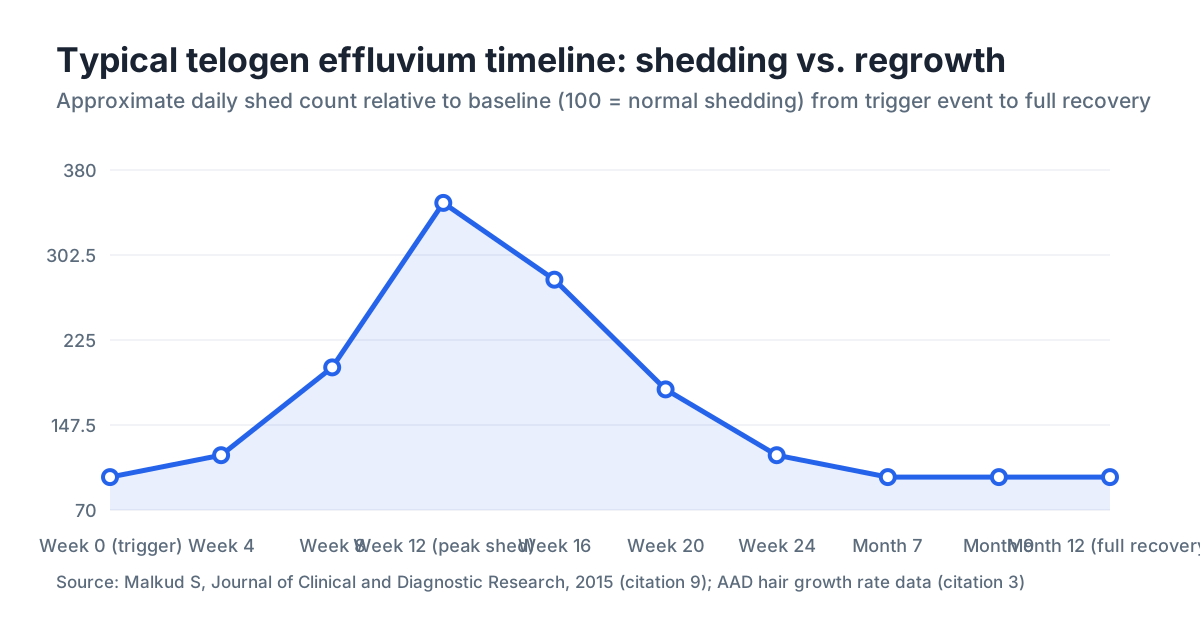
First, the shedding phase. Active heavy shedding usually peaks around two to three months after the triggering event and then begins tapering off. By three to six months from the trigger, shedding typically returns to baseline for most people.
Second, the regrowth phase. New hairs have to grow from scratch. Scalp hair grows roughly half an inch per month [3]. So even once the shedding stops at month three, you're looking at another six to twelve months before the new hair is long enough to visibly restore thickness. That gap, where shedding has stopped but regrowth isn't visible yet, is where most people lose hope or start buying expensive products.
| Phase | Typical timing from trigger | What you notice |
|---|---|---|
| Trigger event | Week 0 | Illness, surgery, birth, diet change |
| Hair enters telogen | Weeks 2 to 8 | Nothing visible yet |
| Peak shedding | Months 2 to 4 | 200 to 400 hairs/day, panic |
| Shedding tapers | Months 3 to 6 | Drain hair reduces |
| New growth visible | Months 5 to 9 | Short regrowth hairs at hairline/part |
| Full density restored | Months 9 to 18 | Hair matches pre-event thickness |
These ranges are loose. A short, sharp trigger like a two-week fever tends to produce a shorter episode than a three-year stretch of restrictive eating. If the trigger is still active at month six, the clock hasn't started.
What causes telogen effluvium to last longer than it should?
The most common reason telogen effluvium drags on is a trigger that hasn't actually been removed. People assume they've recovered from a stressor, but their body hasn't. Ferritin (stored iron) is the classic example. Serum ferritin can stay low for months after you start iron supplements. Some dermatologists consider ferritin under 30 ng/mL suboptimal for hair growth, and under 70 ng/mL a possible contributor to ongoing effluvium in susceptible people, though the exact threshold is debated in the literature [4].
Thyroid disorders are another frequent culprit. Both hypothyroidism and hyperthyroidism can drive telogen effluvium. If your TSH is only slightly out of range and your doctor hasn't treated it aggressively, hair may keep shedding. Get both TSH and free T4 checked.
Nutritional gaps matter more than people expect. Protein restriction, zinc deficiency, biotin deficiency (rare in people eating normally, but real in those with eating disorders or on aggressive elimination diets), and very low-calorie diets can each keep shedding going. Crash diets below about 1,200 calories a day are a reliable trigger [5].
Some medications maintain telogen effluvium as a side effect for as long as you take them. Beta-blockers, certain anticoagulants, isotretinoin, and some antidepressants are well-documented offenders. If you started a new medication and the hair loss never stopped, review the timing with your doctor. For a broader look at what causes hair loss, the categories go well beyond effluvium.
What does telogen effluvium recovery actually look like?
Recovery is not sudden. People expect their shedding to go from heavy to zero overnight. It doesn't. It steps down gradually, with some days worse than others, over a period of weeks.
The first sign of recovery most people notice isn't fewer hairs in the drain. It's new growth. Short, fine hairs, sometimes called baby hairs, appear along the hairline and on the crown. Run your hand across your scalp and you'll feel a slightly stubbly texture where new anagen hairs are coming in. If you see those, the follicles are working.
On days when stress spikes (a bad week, a minor illness, a change in diet), shedding can temporarily increase even during recovery. This is normal and does not mean you're relapsing. The telogen pool still has some hairs from the original episode working their way out.
One real marker of completed recovery: overall density at the part, temples, and crown returns to roughly where it was before the trigger. If it doesn't, and the hair that grew back seems thinner in caliber than before, that's worth a dermatologist visit to assess for androgenetic alopecia running in parallel.
Should you use minoxidil or other treatments to speed up recovery?
This is genuinely contested, and honest dermatologists disagree.
Minoxidil, the FDA-approved topical (and now oral) treatment for hair loss, works by prolonging the anagen phase [12]. In androgenetic alopecia, that's the whole point. In telogen effluvium, the argument for using it is that it might shorten the time the follicle spends in telogen and speed the return to anagen. A few small studies support the idea. No large randomized trials in telogen effluvium patients confirm it.
The practical problem: minoxidil causes its own initial shedding when you start it, because it forces hairs stuck in mid-telogen into anagen, which first requires them to fall out. Adding that to an already heavy shed is distressing. And if you start minoxidil during a telogen effluvium episode, then stop when the episode ends, the hair you gained from minoxidil will also shed. Some people then get stuck on it indefinitely.
My honest take: for acute telogen effluvium with a clear, removable trigger, fix the trigger first and wait three to six months before adding any treatment. If at month six there's still active shedding or density isn't recovering, then minoxidil for men or oral options make more sense. The minoxidil side effects page covers the initial shed and other things worth reading before you start.
Finasteride isn't typically indicated for telogen effluvium, since it targets DHT-driven miniaturization, not cycle disruption. It matters if androgenetic alopecia is co-occurring. For that overlap, the combined approach in finasteride and minoxidil is worth understanding.
What supplements actually help telogen effluvium (and which are a waste of money)?
If your bloodwork shows a deficiency, correcting it is the only supplement strategy with real evidence behind it. Iron (with vitamin C to improve absorption), zinc, and vitamin D all have reasonable support when levels are demonstrably low [4][6].
Biotin is the supplement most aggressively marketed for hair loss. The evidence for biotin in people without a biotin deficiency is essentially zero. The FDA has warned that high-dose biotin can interfere with lab tests, including thyroid and cardiac troponin assays [7]. Skip it unless you have a confirmed deficiency.
Collagen peptides and marine proteins are popular. The published trials are small and mostly industry-funded. Nobody has proven they speed effluvium recovery specifically.
Nutritional support through food (adequate protein, iron-rich foods, leafy greens) is less flashy than supplements but more consistently supported. Aim for at least 50 grams of protein per day, likely more. The hair loss supplements page breaks down the evidence tier for each ingredient if you want the detail.
One thing that's genuinely useful: if your telogen effluvium came from a restrictive diet, simply eating enough is more therapeutic than any capsule.
When does telogen effluvium become something more serious?
Four scenarios push this beyond wait-and-see.
First, shedding that continues past six months with no clear remaining trigger. That needs a full labs workup: CBC, ferritin, TSH, free T4, vitamin D, zinc, and ideally a scalp biopsy to rule out conditions like lichen planopilaris or alopecia areata.
Second, patchy loss. Telogen effluvium is diffuse, meaning it's even across the whole scalp. If you're losing hair in discrete bald patches, that points toward alopecia areata, tinea capitis, or traction alopecia, not effluvium.
Third, a receding hairline or temple thinning with miniaturized hairs. The miniaturization (where terminal hairs gradually become finer and shorter) is the hallmark of androgenetic alopecia. Telogen effluvium doesn't cause miniaturization. If you're seeing that pattern, particularly in men, a receding hairline assessment is worth doing.
Fourth, burning, itching, or scalp tenderness alongside hair loss. Scarring alopecias cause irreversible follicle destruction, and they hurt. Early treatment matters a lot for those conditions. Don't wait six months if the scalp itself feels symptomatic.
If you want a free starting point to understand what kind of hair loss you're looking at, the AI analysis at MyHairline can help separate diffuse shedding from patterned loss based on photos before you book a dermatologist.
Can telogen effluvium come back after it has resolved?
Yes. There's no immunity. Every significant physiological stressor is a potential new trigger. Some people have two or three distinct episodes over a decade, each tied to a separate event: a surgery in their 30s, a second pregnancy, a stretch of intense work stress and poor sleep.
This does not mean something is wrong with your follicles. It means your hair cycle is sensitive to systemic disruption, which is a normal human variation. People who've had one episode do sometimes become more anxious about their hair and hypervigilant to shedding, which can make later episodes feel worse than they are.
If you're prone to recurrences, the best prevention is boring maintenance: adequate protein and iron, managed thyroid levels if you have thyroid disease, no extreme caloric restriction, and minimal exposure to drugs that list hair loss as a side effect.
How is telogen effluvium diagnosed, and what labs should you get?
Diagnosis is largely clinical. A dermatologist does a pull test (gently tugs 40 to 60 hairs from different scalp regions) and a trichoscopy (dermoscopy of the scalp). In active telogen effluvium, the pull test yields more than 10% telogen hairs, confirmed by a club-shaped root on the shed hairs rather than a pointed anagen root [2].
Labs aren't used to diagnose effluvium directly. They're used to find the cause. The minimum useful panel:
- Complete blood count (to screen for anemia)
- Serum ferritin (more useful than serum iron, which can read normal when ferritin is low)
- TSH and free T4
- 25-hydroxyvitamin D
- Zinc
- Metabolic panel
In women, DHEA-S and free testosterone are sometimes added if androgen excess (PCOS, for example) is suspected. A scalp biopsy is reserved for cases where the clinical picture is uncertain, particularly to tell chronic telogen effluvium apart from early androgenetic alopecia or a scarring process. The biopsy in telogen effluvium shows an increased percentage of telogen follicles with no miniaturization and no scarring.
Cost note: the full lab panel above typically runs $150 to $400 in the US without insurance, depending on where it's ordered. Many primary care doctors will order it, which may cut your out-of-pocket cost compared with a dermatology visit plus labs.
Does stress alone cause telogen effluvium, and does managing stress help recovery?
Psychological stress can trigger telogen effluvium, though it's a weaker trigger than physiological stressors like surgery or fever. The mechanism is thought to involve cortisol and neuropeptide signaling at the follicle, which can push hairs into the telogen phase [8]. Most published case reports involve extreme stress (grief, trauma, severe burnout), not ordinary work pressure.
The honest answer on whether reducing stress speeds recovery: nobody has a clean randomized trial on it. What's true is that ongoing high cortisol can theoretically sustain the trigger, so if psychological stress is the cause, managing it should help, and won't hurt.
Sleep deprivation and poor nutrition usually ride along with high-stress periods, and they're more direct contributors to effluvium than the emotional state itself. Prioritizing sleep and eating enough during a stressful stretch is likely more impactful than any stress-reduction technique alone, though there's no reason not to do both.
Mindfulness, exercise, and therapy may help by lowering cortisol, improving sleep, and improving nutrition habits. Reasonable things to do. Just go in with realistic expectations about timelines.
What happens if telogen effluvium and androgenetic alopecia occur together?
This overlap is very common and the source of a lot of confusion. Androgenetic alopecia (AGA) progresses slowly, often invisibly, until a density threshold gets crossed. A telogen effluvium episode can push someone past that threshold fast, revealing the underlying pattern in a way that feels sudden.
When this happens, the effluvium component resolves as described above. The androgenetic component does not. The pattern that emerged (thinning crown, receding temples in men, diffuse thinning at the part in women) is permanent unless treated.
This is the scenario where starting a treatment like minoxidil or finasteride makes the most sense from the beginning, rather than waiting. If there's any sign of miniaturization on trichoscopy alongside the diffuse shedding, that changes the calculus. For men weighing the DHT-blocking approach, the DHT blocker and finasteride pages cover what the medications actually do and what evidence exists.
For severe combined cases where density never fully recovers and medical treatment doesn't restore it, a hair transplant is sometimes the right long-term answer. But transplants should never be done during an active effluvium episode, and most surgeons want at least a year of stable, non-shedding hair before they'll operate.
What should you actually do if you think you have telogen effluvium right now?
Step one: identify the trigger. Go back three to four months from when the shedding started. What happened? Fever? Major life change? New medication? Crash diet? Childbirth? Most of the time, if you look honestly, the trigger is there.
Step two: get basic labs. Even if the trigger is obvious, checking ferritin and thyroid rules out a second concurrent cause that could drag out the episode.
Step three: fix what you find. Treat iron deficiency with supplementation. Get thyroid levels managed. Eat adequate protein. Stop the crash diet.
Step four: wait. This is the hardest part, because the hair doesn't come back immediately. Set a realistic six-to-nine-month timeline before judging whether the episode has resolved.
Step five: see a dermatologist if shedding hasn't tapered by month six, if you see patchy loss, if the scalp itches or burns, or if you notice the miniaturization pattern of androgenetic alopecia. A scalp exam with trichoscopy can clarify what you're actually dealing with.
For a fast starting point, MyHairline's AI hair scan can help you sort whether your shedding looks diffuse (consistent with effluvium) or patterned (consistent with AGA) before your appointment.
Skip the expensive hair loss shampoos, supplements, and devices for now. None of them has been shown to resolve telogen effluvium faster than removing the trigger. The money is better spent on the lab work.
Sources
- American Academy of Dermatology, Hair loss types: Telogen effluvium overview
- Harrison S, Bergfeld W. Diffuse hair loss: its triggers and management. Cleveland Clinic Journal of Medicine, 2009
- American Academy of Dermatology, Hair loss: tips for managing
- Trost LB, Bergfeld WF, Calogeras E. The diagnosis and treatment of iron deficiency and its potential relationship to hair loss. Journal of the American Academy of Dermatology, 2006
- Rushton DH. Nutritional factors and hair loss. Clinical and Experimental Dermatology, 2002
- NIH Office of Dietary Supplements, Zinc Fact Sheet for Health Professionals
- FDA, Biotin (Vitamin B7) Safety Communication on interference with lab tests
- Peters EMJ et al. Stress and the hair follicle: exploring the connections. American Journal of Pathology, 2006
- Malkud S. Telogen Effluvium: A Review. Journal of Clinical and Diagnostic Research, 2015
- Shapiro J. Clinical practice: hair loss in women. New England Journal of Medicine, 2009
- NIH MedlinePlus, Hair loss overview
- FDA, Drugs@FDA database (minoxidil labels and approvals)