
TL;DR: Telogen effluvium (TE) does not reliably cause itching. Some people report a mild scalp tingle or tenderness during the shedding phase, likely from scalp inflammation or a coexisting condition, but itch is not a defining feature of TE. Real, persistent itching usually points to something else: scalp dermatitis, androgenetic alopecia, or a fungal infection. Get the diagnosis right before you spend a dollar on treatment.
What is telogen effluvium and why does the scalp feel different during it?
Telogen effluvium is diffuse hair shedding that starts when a large share of follicles shift early from the growth phase (anagen) into the resting phase (telogen). Two to four months after a physical or emotional shock, those hairs let go in a wave. The triggers are broad. Childbirth, surgery, rapid weight loss, high fever, thyroid disruption, iron deficiency, and severe psychological stress are all documented causes. [1]
A healthy scalp keeps roughly 85 to 90% of follicles in anagen at any moment, with about 10 to 15% in telogen, and sheds up to 100 hairs a day [1]. During a TE episode that ratio moves sharply. More follicles enter telogen at once, and when those hairs finally release, the scalp can react in ways that feel new.
Some people describe tenderness, a prickling feeling, or a general sensitivity that wasn't there before. That's real. It's also not the same thing as persistent itch. The scalp carries a dense nerve supply, and a sudden mass of follicles cycling at once may briefly sensitize those nerve endings. That's the leading working explanation, but the direct evidence for it is thin. Nobody has run a controlled trial on TE-related scalp sensation specifically. Most of what we have comes from case series and patient-reported outcomes buried in broader hair-loss studies.
Does telogen effluvium actually cause itching?
Itch is not a primary symptom of telogen effluvium in the American Academy of Dermatology's hair-loss guidance [2]. The defining symptom is shedding: handfuls on the pillow, hair clogging the shower drain, strands wrapped around the comb. That's the whole clinical picture.
So why do so many people search this exact question? A few reasons.
Stress, the most common TE trigger, independently drives scalp inflammation. Psychological stress raises cortisol and can activate mast cells in the scalp dermis, releasing histamine that genuinely causes itch. The TE and the itch share a cause. They are still separate events.
People who watch their hair fall out start inspecting their scalp constantly. Sensations that were always there suddenly get noticed.
The practical reason: TE frequently overlaps with other scalp conditions. Androgenetic alopecia (pattern hair loss) and seborrheic dermatitis often ride along with TE, and both itch. Figuring out which condition owns the itch is the actual clinical job. [2]
A 2017 review in the Journal of the American Academy of Dermatology noted that scalp dysesthesia (abnormal scalp sensation including tingling, burning, and itch) shows up across multiple hair-loss disorders and is not specific to any single diagnosis [3]. That's an honest read of where the science sits.
What does scalp itching during hair loss actually signal?
If you're losing hair and your scalp itches, the itch is often the more useful clue. Here are the conditions worth ruling out.
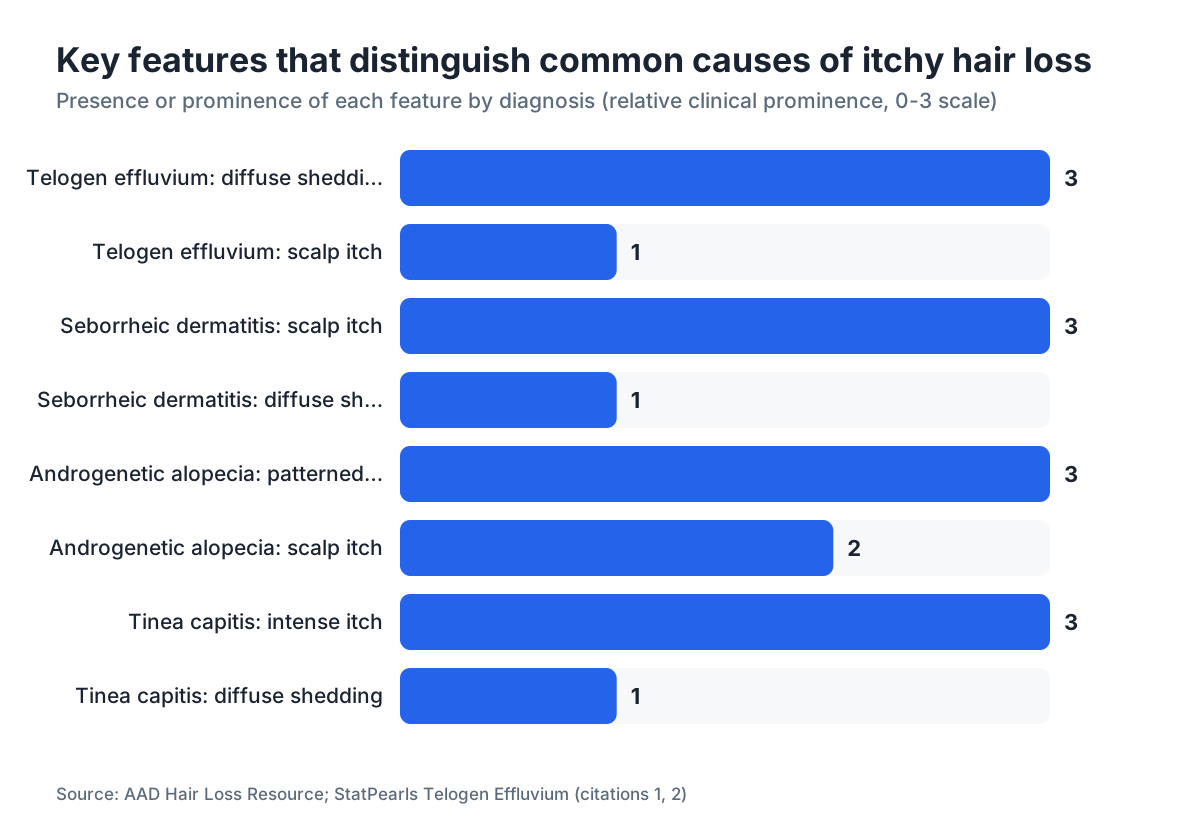
Seborrheic dermatitis is the most common cause of a flaky, itchy scalp in adults. Overgrowth of Malassezia yeast drives it, and it produces greasy yellow scales along the hairline and at the crown. It can speed up shedding in anyone who already has TE or androgenetic alopecia.
Androgenetic alopecia (AGA) often carries low-grade inflammation around the follicle. Roughly 30 to 50% of people with AGA report some scalp itch or sensitivity, and that inflammation may itself push follicle miniaturization along [4]. If the itch clusters at the crown or temples where the hair is thinning, AGA is a better bet than TE.
Tinea capitis (scalp ringworm) is a fungal infection that causes scaly patches, intense itch, and hair breakage. It's more common in children but shows up in adults too. A Wood's lamp exam or fungal culture confirms it.
Alopecia areata, an autoimmune condition that causes patchy loss, sometimes brings tingling or itch at the patch margins before the hair falls out [10].
Contact dermatitis from a new shampoo, dye, or topical treatment (minoxidil included) can cause acute itch and set off a TE episode on top of the allergic reaction. If you started minoxidil recently and your scalp itches, check the formulation. Propylene glycol, found in many topical minoxidil solutions, is a common irritant. More on that in our guide to minoxidil side effects.
The table below lays out the distinguishing features.
How do doctors tell telogen effluvium apart from other causes of itchy hair loss?
A dermatologist or trichologist works from history, a scalp exam, and a few targeted tests. Getting this right matters because treating TE (fix the trigger, wait it out) looks nothing like treating AGA, seborrheic dermatitis, or tinea.
The history questions center on timing. Was there a stressor 2 to 4 months before the shedding started? Is the shedding diffuse across the whole scalp, or concentrated at the crown and temples? TE sheds diffusely. AGA sheds in a pattern.
A pull test, done by gently grasping about 40 to 60 hairs near the root and pulling with steady tension, is positive in active TE if more than 6 hairs come out, most of them showing the telogen (club) root shape [2]. A positive pull test loaded with anagen roots instead points somewhere else, like a scarring alopecia.
Dermoscopy (a handheld magnifier with polarized light) can show follicle miniaturization in AGA, perifollicular scaling in seborrheic dermatitis, or the yellow dots typical of alopecia areata. TE shows none of these specific signs.
Blood work usually covers ferritin, thyroid-stimulating hormone (TSH), a complete blood count, and sometimes zinc and vitamin D. Iron deficiency is one of the most overlooked TE triggers, and it's fixable. A 2013 study in the Journal of Investigative Dermatology found that women with TE had significantly lower serum ferritin than controls [5].
When itch is prominent, a scalp biopsy with special staining can count mast cells, identify fungi, or reveal the perifollicular lymphocyte infiltrate that marks AGA-associated inflammation. A biopsy isn't routine for straightforward TE. It earns its place when the diagnosis stays murky after the first workup.
Can the stress that causes telogen effluvium also cause scalp itching?
Yes. This is probably the cleanest explanation for why TE and itch travel together.
Skin and the nervous system grow from the same embryonic tissue (ectoderm), and they stay wired to each other for life. Psychological stress fires the hypothalamic-pituitary-adrenal (HPA) axis and raises cortisol. It also activates the sympathetic nervous system and prompts local release of neuropeptides like substance P from nerve fibers in the skin. Substance P degranulates mast cells directly, releasing histamine, one of the main mediators of itch [6].
So one severe stressor can produce two separate results: a spike in telogen conversion that shows up as shedding 2 to 4 months later, and a histamine-driven itch from mast cell activation in the scalp skin. Same root cause, different pathways.
That also means treating the itch means treating the itch, not the TE. Cutting stress helps both. Topical antihistamines or low-potency corticosteroids hit the itch mechanism directly. Waiting for the TE to burn out won't necessarily clear the itch if mast cell activity is still running hot.
What does a normal telogen effluvium timeline look like?
Acute TE follows a fairly predictable arc once the trigger is gone.
Shedding usually starts 2 to 3 months after the trigger, because that's how long the pushed-out hairs take to finish their telogen rest and release. Peak shedding runs 1 to 3 months, then eases off. Most cases clear completely within 6 months of the trigger, and density returns to baseline within 12 months [1].
Chronic TE is a different animal. Some people, more often women in their 30s to 50s, shed for longer than 6 months with no single trigger anyone can name. The mechanism isn't fully worked out. The reassuring part: chronic TE rarely causes permanent thinning, because it doesn't miniaturize follicles. [2]
If your shedding hasn't improved after 6 months, or if the new growth looks thinner or shorter than before, the diagnosis needs a second look. You may have concurrent AGA, an ongoing internal trigger (persistent iron deficiency, uncontrolled thyroid disease), or something else entirely.
Seeing the full picture of what causes hair loss helps at this stage, because TE is rarely the whole story in chronic cases.
Does scalp itch predict whether you'll keep losing hair?
Not reliably, at least not for TE. But itch that lingers or worsens after the TE episode resolves, or itch parked over the areas of heaviest thinning, is worth chasing as a possible sign of AGA-related inflammation.
The trichology literature carries a hypothesis that chronic perifollicular inflammation, the kind that itches in AGA, feeds follicle miniaturization and speeds pattern loss. The evidence is suggestive, not settled. A 2020 paper in Dermatology and Therapy reviewed scalp inflammation in AGA and concluded that anti-inflammatory approaches (ketoconazole shampoo, low-level laser therapy, topical steroids) may slow progression in inflamed scalps, though controlled trials remain limited [4].
Here's the practical call. If you had a clear TE trigger, the shedding has slowed, and you still itch, see a dermatologist. That itch might be flagging something that responds to early treatment, especially with a family history of pattern loss. Effective AGA options exist, including finasteride, which blocks DHT conversion, and minoxidil for men, which stretches out the anagen phase. Neither treats TE directly. If you have both TE and early AGA, treating the AGA makes sense once the TE trigger is handled.
What can you actually do about scalp itch during or after telogen effluvium?
The move depends entirely on what's causing the itch, which is exactly why the diagnosis comes before the shopping cart.
Itch from seborrheic dermatitis: zinc pyrithione shampoos (Head and Shoulders and similar), ketoconazole 1% shampoo (over the counter) or 2% (prescription), or selenium sulfide shampoos are first-line, backed by dermatology guidance [2]. Use them 2 to 3 times a week and leave the lather on for 5 minutes before rinsing.
Itch from scalp inflammation or AGA: a short course of topical corticosteroid solution (fluocinolone or clobetasol, prescription only) cuts inflammation fast. Ketoconazole shampoo also has weak anti-androgen action at the follicle and gets used in AGA management partly for that.
Itch from a contact reaction to a product (minoxidil's propylene glycol included): switch to a propylene-glycol-free formulation, or ask about oral minoxidil under medical supervision, which skips scalp contact altogether.
Itch that's stress-driven and mild: oral antihistamines (cetirizine, loratadine) can help, alongside actually addressing the stress. No trial I know of tested antihistamines specifically for TE-related scalp itch, but the histamine pathway makes the reasoning sound.
Basic habits that help: skip daily harsh shampooing (it strips the scalp's lipid barrier), keep sulfate-heavy products off an already irritated scalp, and lay off hot water, which dilates blood vessels and releases histamine.
Want a baseline read on your current pattern before booking the appointment? MyHairline's free AI hair scan (/scan) characterizes the distribution of thinning and shedding from a photo, which sharpens the conversation with your doctor.
When should you see a doctor about hair loss and scalp itch together?
See a dermatologist promptly if any of these fit.
You're losing more than about 150 to 200 hairs a day, consistently, for more than 6 weeks. (Normal shedding tops out around 100 hairs a day [1].)
The itch is intense rather than mild and comes with visible scaling, redness, crusting, or patches of breakage near the scalp surface. Those signs point to an active inflammatory or infectious condition that won't clear on its own.
The hair grows back finer or shorter than before. That's follicle miniaturization, a sign of AGA, not TE.
You have a family history of early pattern loss on either parent's side and you're in your 20s or 30s. TE can unmask underlying AGA by accelerating shedding in genetically susceptible follicles. Starting the DHT-blocker conversation early buys better outcomes. A DHT blocker like finasteride works best while follicles haven't fully miniaturized.
You're pregnant or recently postpartum. Postpartum TE is extremely common and usually self-resolves, but severe shedding and persistent itch in that window still deserve evaluation to rule out postpartum thyroiditis, which needs its own treatment.
You've changed nothing in your routine but symptoms keep getting worse past 6 months. Something is still driving the shedding, and it needs to be found.
Can minoxidil or other hair loss treatments cause scalp itch?
Yes, and it's worth naming which treatments do it and why.
Topical minoxidil solution (the liquid, usually 2% or 5%) commonly causes scalp itch and dryness in a real minority of users. The main culprit is propylene glycol, the penetration enhancer in the solution. The minoxidil foam drops the propylene glycol and comes with fewer scalp reactions [2]. The FDA label for topical minoxidil lists scalp irritation and local allergic contact dermatitis as known adverse effects [7].
Oral minoxidil at low doses (0.625 to 2.5 mg for women, 2.5 to 5 mg for men) sidesteps the scalp entirely, but it carries systemic considerations of its own, including fluid retention and facial hair growth. Different trade-off, not a free pass.
Finasteride (oral 1 mg daily for hair loss, 5 mg for BPH) doesn't commonly cause scalp itch. Its side effects sit mostly in sexual function. The FDA label lists decreased libido, erectile dysfunction, and ejaculatory disorder in 1 to 2% of users in clinical trials [8]. Scalp symptoms aren't a documented pattern.
Ketoconazole shampoo gets paired with minoxidil and finasteride and can calm scalp inflammation. The combination of finasteride and minoxidil is a common AGA approach, and the two sit well together. If itch shows up, it's usually the minoxidil vehicle, not the finasteride.
Are there any supplements that help with telogen effluvium and scalp itch?
The evidence here is thin and gets oversold in marketing.
Iron and ferritin: if your ferritin sits below 40 ng/mL (some labs set 30 ng/mL as the lower limit of normal, but a 2006 review in the Journal of the American Academy of Dermatology argued 40 ng/mL is a more useful threshold for hair-loss patients), iron supplementation may shorten TE duration [9]. This is one of the better-supported supplement moves in hair loss. It does nothing for itch directly.
Zinc: low zinc links to TE in some populations, and zinc supplementation showed modest benefit in small trials. Over-supplementing zinc can paradoxically cause hair loss, so test before you dose.
Biotin: real biotin deficiency is rare in people eating normally. Without a deficiency, high-dose biotin won't speed regrowth. The AAD is direct on this: there is no evidence that biotin supplements benefit people without a proven deficiency [2].
Vitamin D: some studies tie low vitamin D to various forms of alopecia, but causation is unclear and the TE-specific link isn't established.
For itch specifically, no supplement has good evidence as a direct treatment in TE. Omega-3 fatty acids have anti-inflammatory properties and get recommended for general scalp health, but controlled data in this setting is sparse.
Before you buy hair loss supplements, get a basic blood panel to find out whether you actually have a deficiency. Correcting a proven deficiency works. Broad supplement stacks with no identified gap have weak evidence at best.
Sources
- StatPearls (NCBI Bookshelf), Telogen Effluvium
- American Academy of Dermatology, Hair Loss Resource Center
- Journal of the American Academy of Dermatology, Scalp Dysesthesia (2017)
- Dermatology and Therapy, Scalp Inflammation in Androgenetic Alopecia (2020)
- Journal of Investigative Dermatology, Iron and Hair Loss (2013)
- NCBI PMC, Psychological Stress and Skin (mast cell-substance P pathway)
- FDA, Minoxidil Topical Solution Drug Label
- FDA, Finasteride (Propecia) Drug Label
- Journal of the American Academy of Dermatology, Serum Ferritin and Hair Loss (2006)
- NCBI StatPearls, Alopecia Areata