
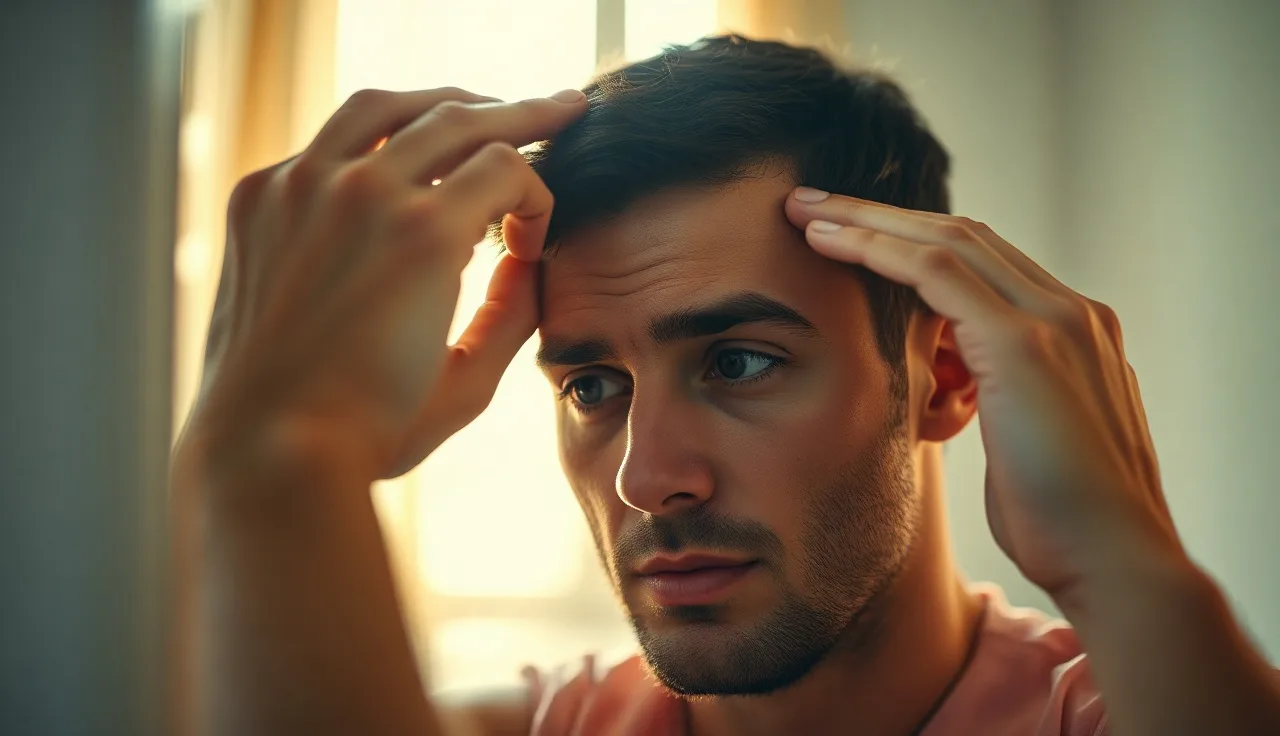
TL;DR: A receding hairline can grow back in some cases, but it depends heavily on the cause and how early you start treatment. Androgenetic alopecia (male or female pattern baldness) rarely fully reverses, but FDA-approved treatments like minoxidil and finasteride can halt shedding and produce real regrowth in 40 to 60% of users. Stress-related or nutritional hair loss is far more reversible.
Does a receding hairline actually grow back?
The honest answer: sometimes, partially, and almost never completely on its own.
The reason matters more than anything else. A receding hairline caused by androgenetic alopecia (the genetic, DHT-driven kind behind the large majority of male hair loss) does not reverse without medical treatment [1]. The follicles shrink over time through a process called miniaturization. Once a follicle miniaturizes completely, it stops producing visible hair. Let enough time pass and the follicle can quit functioning altogether. At that point no topical or oral treatment brings it back.
Here's the part people miss. "Completely miniaturized" is rarer than most people fear, especially in the early Norwood stages. Many follicles at a receding hairline are still alive, just producing thin, short, almost invisible vellus hairs. Those follicles are treatable. The window is real. It closes faster than most people act.
Non-androgenetic causes are a different story. Telogen effluvium (the mass shedding triggered by stress, illness, surgery, or nutritional deficiency) usually reverses on its own within 6 to 12 months once the trigger clears [2]. Traction alopecia from tight hairstyles can also recover if you catch it before scarring sets in. So before you assume the worst, figure out what causes hair loss in your specific case.
What causes a receding hairline in the first place?
The most common driver is dihydrotestosterone (DHT), a hormone converted from testosterone by the enzyme 5-alpha reductase. In people genetically primed for pattern baldness, DHT binds to receptors in scalp follicles and shrinks them over successive hair cycles. The hairline retreats at the temples first, then the frontal scalp, following the Norwood scale from stage 1 to stage 7 [1].
Other causes:
- Alopecia areata: an autoimmune attack on hair follicles. It can hit the hairline and is treated nothing like androgenetic alopecia.
- Traction alopecia: repeated mechanical tension from braids, weaves, or tight ponytails. Common in women and athletes.
- Frontal fibrosing alopecia: a scarring alopecia that goes after the hairline specifically. Poorly understood and it does not respond well to standard hair loss drugs.
- Nutritional deficiencies, particularly low ferritin (iron stores), vitamin D, or zinc. These cause diffuse shedding that can mimic a receding hairline.
- Thyroid dysfunction. Both hypothyroidism and hyperthyroidism can trigger significant hair loss that looks like a receding hairline but is actually diffuse.
Getting this right matters because finasteride does nothing for alopecia areata. Minoxidil alone does little for traction alopecia if the tension continues. Treatment that matches the cause is the only treatment that works.
How does DHT cause hair loss and can that be reversed?
DHT works on follicles slowly. Each hair cycle (typically 2 to 6 years for scalp hair), DHT-sensitive follicles push out a slightly shorter, thinner strand. After several cycles, the hair barely breaks the skin surface. That's miniaturization.
The good news is that miniaturization is not immediately permanent. A partially miniaturized follicle that still has some blood supply and living dermal papilla cells can respond to treatment. A DHT blocker like finasteride cuts DHT at the scalp by roughly 70% [3], which removes the hormonal pressure driving the shrinkage. Some follicles then return to producing terminal (visible) hairs. That regrowth takes time, usually 6 to 12 months before you see it clearly.
The less good news: once a follicle has sat dormant for years and the dermal papilla cells have scattered or died, no amount of DHT reduction brings it back. This is why dermatologists say the same thing over and over. Start early. Stay consistent.
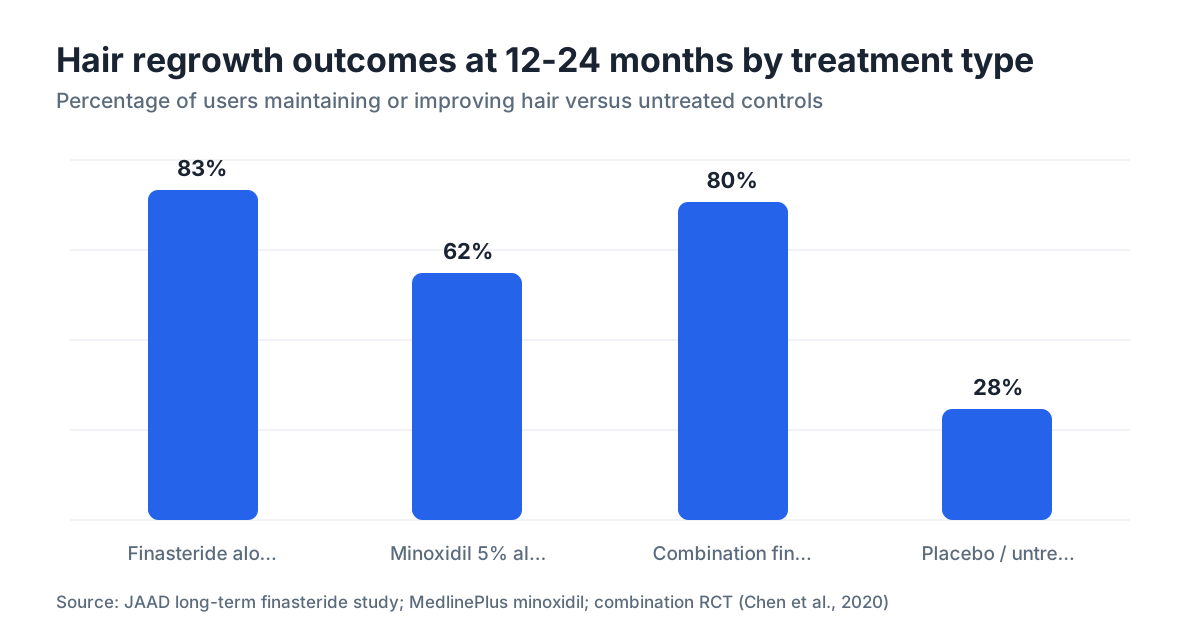
A 2019 study in the Journal of the American Academy of Dermatology reported that among men using finasteride 1 mg daily, 83% maintained or improved their hair after 5 years, while the placebo group kept losing [4]. That's maintenance more than reversal, but maintaining a receding hairline is worth a lot.
Which treatments can actually grow back a receding hairline?
Three options have real evidence behind them. Everything else is weaker.
Minoxidil
Minoxidil is an FDA-approved topical vasodilator that lengthens the anagen (growth) phase of the hair cycle and widens blood vessels around follicles [5]. It's over the counter in 2% and 5% concentrations. The 5% formula works faster and produces more regrowth. The tradeoff in women is a slightly higher risk of unwanted facial hair.
Regrowth at the hairline runs modest compared to the crown. Minoxidil was first studied on the vertex (top of scalp), and that's where it shines. Hairline regrowth happens, but slower and less dramatic. Slowing recession at the temples is still a real clinical result. For how to use it and what to expect, see minoxidil for men.
Oral minoxidil at low doses (0.625 mg to 2.5 mg daily) has posted strong results in recent trials and may beat the topical version for scalp coverage. The evidence base is growing fast. Detail at oral minoxidil.
Finasteride
Finasteride 1 mg daily is FDA-approved for men with androgenetic alopecia and is the only oral drug specifically approved for pattern hair loss in men [5]. It inhibits 5-alpha reductase, which lowers DHT. It does not work in postmenopausal women and is contraindicated in women of childbearing potential because of teratogenicity risk.
At the hairline, finasteride has shown regrowth in clinical photos, though the effect at the frontal scalp is smaller than at the crown. Its strongest evidence is for slowing progression. Most dermatologists treat it as the backbone of androgenetic alopecia care in men. Full overview at finasteride.
Combination therapy
Minoxidil plus finasteride beats either drug alone. A 2021 randomized controlled trial in the Journal of Drugs in Dermatology found the combination produced significantly greater hair count improvement than either drug used by itself over 24 weeks [6]. If you're treating a receding hairline seriously, this is the approach with the most support. See finasteride and minoxidil for the practical details.
Hair transplant surgery
A hair transplant moves DHT-resistant follicles from the back and sides of the scalp to the receding areas. Done well, it produces permanent, natural-looking hairline restoration. The catch: it doesn't stop ongoing loss in the areas you didn't transplant, so most surgeons want patients on medical therapy before and after surgery. Cost runs roughly $4,000 to $15,000 depending on graft count and clinic location [7]. Not a first move, but the most permanent one for the right candidate.
How long does it take to regrow a receding hairline?
Longer than most people expect, and that gap is exactly why people quit too soon.
Hair grows about half an inch per month (roughly 6 inches per year) [8]. Even if a treatment reactivates a dormant follicle the day you start, you won't see a visible strand for weeks and you won't see meaningful coverage for 4 to 6 months. Most clinical trials measure results at 12 to 24 months because that's when the real outcome becomes clear.
With minoxidil, standard guidance is to judge effectiveness at 12 months. Finasteride studies typically run 1 to 2 years. The first few months of minoxidil often include a "shedding phase," where existing weak hairs fall out as follicles reset into a new anagen phase. This scares people into stopping. It shouldn't. Shedding in the first 6 to 8 weeks of minoxidil use is a recognized pharmacological effect, not a sign the drug is making things worse [5].
A rough timeline for combination therapy:
- Months 1 to 3: Possible shedding, no visible regrowth yet. Loss may slow.
- Months 4 to 6: Thin new hairs may appear. Recession may stabilize.
- Months 6 to 12: Regrowth becomes visible. Coverage improves.
- Month 12 and beyond: Full assessment. Some patients keep improving through month 24.
Quit at month 3 because you see nothing and you've given up before the drug had a fair shot. Most people who quit early say it "didn't work" when the honest answer is they didn't wait long enough.
Can a receding hairline grow back without treatment?
For androgenetic alopecia, no. The follicles sit under constant hormonal pressure. Without intervention, the recession continues. It may slow with age in some men as DHT levels stabilize, but it does not reverse on its own.
For other causes, spontaneous recovery is possible and common. Telogen effluvium set off by a major stressor (surgery, high fever, crash diet, the postpartum period) usually self-resolves within 6 to 12 months of removing the trigger [2]. The hairline fills back in without drugs. The same goes for reversible nutritional causes: if severe iron deficiency is driving the loss, correcting ferritin often restores a real amount of hair within 6 to 12 months.
This is why a blood panel is worth doing before you spend money on finasteride or minoxidil. A full thyroid panel, ferritin (better than total iron), vitamin D, and a complete blood count can flag reversible causes that need no prescription drugs at all. A dermatologist or your GP can order these easily.
Traction alopecia is conditionally reversible. Change the styling patterns before scarring sets in and follicles can recover. Once the scalp scars (fibrosis), hair does not regrow in those spots.
Are there any supplements that help a receding hairline grow back?
For most people, no. For people with a specific deficiency, correcting that deficiency helps.
The supplement industry sells a lot of hair loss products, and the evidence for most of them is thin. Biotin gets marketed hardest. No clinical evidence shows biotin supplementation improves hair loss in people who aren't biotin-deficient, and true deficiency is rare [9]. Spending $30 a month on biotin gummies while your ferritin sits at 8 ng/mL is the wrong priority.
Supplements with some legitimate evidence:
- Iron (when ferritin is low): getting iron stores above 40 ng/mL (some researchers argue above 70 ng/mL for optimal hair growth) can produce meaningful regrowth, in women especially.
- Vitamin D: deficiency links to hair loss across several observational studies, though causation isn't firmly established [9].
- Saw palmetto: a weak DHT inhibitor with some evidence from small trials. Nowhere near finasteride, but lower side-effect risk. See hair loss supplements for the full comparison.
- Pumpkin seed oil: one small randomized trial (76 men, 24 weeks) found 40% more hair counts versus placebo. The study is small and unreplicated.
Supplements support treatment. They don't replace it. If you want something that meaningfully regrows a receding hairline, the evidence doesn't get you past minoxidil and finasteride.
Does the Norwood stage affect whether regrowth is possible?
Yes, a lot. This is probably the single biggest factor after age of onset.
Norwood stages 1 and 2 (minimal temple recession) have the best prognosis with medical treatment. The follicles are newly miniaturized, many still produce thin hairs, and medical therapy has a real shot at visible regrowth. Starting treatment here is the highest-return decision you can make.
Norwood stage 3 to 4 (clear recession into the temples, frontal scalp thinning) still responds to treatment, but calibrate your expectations. You're more likely to stop the recession from worsening than to fully restore the original hairline. Partial regrowth at the temples is realistic. Full restoration is not.
Norwood stages 5 to 7 (extensive loss across the top and front) mean advanced miniaturization over a large area. Medical therapy rarely produces meaningful visible coverage at this stage, though it can protect what's left. Hair transplant becomes the main option, and even then donor supply limits what's possible.
The practical takeaway: every year you wait at stages 2 to 3 is a year of follicles sliding from treatable to untreatable. This is the part of hair loss treatment that's genuinely urgent. Not in a salesy way. In a biological-timeline way.
If you want an objective read on where your hairline sits right now, MyHairline's free AI scan at /scan can match your photos against the Norwood scale and give you a starting point before you talk to a dermatologist.
What does a realistic treatment outcome actually look like?
Managing expectations honestly is part of good medical information.
For men with early androgenetic alopecia using both minoxidil and finasteride consistently:
- Hair loss stops or slows in most users. The 5-year finasteride data shows 83% with maintained or improved hair [4].
- Visible regrowth shows up in roughly 40 to 66% of users, depending on the study and the area measured [3][4].
- Hairline specifically: regrowth is less predictable than crown regrowth. Some men see the temples fill in noticeably. Others see mostly stabilization.
- Treatment continues indefinitely. Stop and you return to the pre-treatment loss trajectory within 6 to 12 months.
For women, minoxidil (2% or 5% topical, or low-dose oral) is the primary FDA-approved option. Finasteride is not FDA-approved for women and needs off-label use with proper contraception guidance from a physician [5].
Hair transplant patients can expect a more dramatic and permanent result at the treated hairline, but the outcome hinges on surgeon skill, the number of grafts used, and the patient's natural hair characteristics. A well-done FUE or FUT procedure can restore a natural-looking hairline that grows and behaves like native hair.
Nobody should expect to look exactly like they did at 20. That's not a realistic medical outcome for anyone past Norwood stage 2. What treatment offers is slower loss, some regrowth, and meaningful cosmetic improvement with sustained effort.
How to grow back a receding hairline: a step-by-step approach
Want a plan instead of more theory? Here it is.
Step 1: Rule out reversible causes first. Get bloodwork (ferritin, thyroid panel, vitamin D, complete blood count). One appointment. It either saves you from unnecessary medication or confirms you need it.
Step 2: See a dermatologist or trichologist. A scalp exam, ideally with dermoscopy, can assess follicle miniaturization directly and give you a clearer picture of what's salvageable. This is the step people skip most, and it's the most important one.
Step 3: Start medical therapy early if it's androgenetic alopecia. For most men under 50, the first-line approach is topical minoxidil (5%) once or twice daily plus finasteride 1 mg daily. If finasteride side effects worry you, talk them through with your prescriber before deciding against it. The actual rate of persistent sexual side effects is low but real, and it's worth understanding before you start [3].
For women, topical minoxidil 2% twice daily (or 5% once daily) is standard first-line. Low-dose oral minoxidil is increasingly used off-label with good results in women.
Step 4: Give it 12 months minimum. Re-photograph your hairline in consistent lighting at the start, then every 3 months. Comparison photos beat memory for tracking change.
Step 5: Reassess at 12 months. If medical therapy has stabilized loss and produced some regrowth, keep going. If results are minimal and the hairline matters to you, see a hair transplant surgeon at this point. The two approaches complement each other. They don't compete.
Patience and consistency are the mechanism. The drugs don't work faster because you want them to. They work at the speed of the hair cycle, and there's no shortcut to that.
What doesn't work for regrowing a receding hairline?
Worth covering plainly, because the internet is full of expensive nonsense.
Scalp massages: small studies suggest daily massage may modestly increase hair thickness over 24 weeks, but the evidence doesn't support meaningful hairline regrowth from massage alone [10]. It won't hurt. It won't restore your temples.
Essential oils (rosemary, peppermint): one small randomized trial found rosemary oil performed about as well as 2% minoxidil at 6 months for androgenetic alopecia [10]. The study (50 patients per arm) is interesting but far from definitive. Rosemary oil as a sole therapy for a receding hairline is a low-probability bet.
Laser caps and LLLT devices: low-level laser therapy (LLLT) has FDA clearance for hair growth (clearance, not approval, which is a meaningful distinction). The evidence shows modest benefit for some users. Results are generally weaker than minoxidil and finasteride, and devices cost $200 to $900. Worth considering as an add-on, not a primary treatment [11].
Caffeine shampoos: in-vitro (cell culture) evidence shows caffeine can stimulate hair follicles. Human trial evidence for actual regrowth is weak. Use it if you like it. Don't count on it.
Microneedling as a standalone: used with minoxidil, microneedling (dermarolling at 0.5mm to 1.5mm) may improve minoxidil absorption and outcomes in some trials. Without minoxidil underneath, the evidence for hairline regrowth is minimal.
Same pattern across all of these. They might contribute at the margins, but none reliably regrows a genuinely receding hairline driven by androgenetic alopecia. The treatments that work are the ones with the most rigorous evidence, and they happen to be the cheapest: generic minoxidil and generic finasteride.
When should you see a doctor about a receding hairline?
Sooner than most people go. The average person waits years after noticing recession before seeking treatment, and that delay carries a direct biological cost.
See a dermatologist if:
- Your hairline has moved back noticeably in the last 12 months.
- You're shedding more than 100 hairs a day consistently (normal daily shedding is 50 to 100 hairs [8]).
- Your hairline is receding unevenly or patchy, or you have scalp redness or irritation (which could point to alopecia areata, scarring alopecia, or fungal infection).
- You're a woman with a receding hairline, because the differential diagnosis is broader and the treatment approach differs.
- You've tried over-the-counter minoxidil for 6 months with no response.
Primary care physicians can evaluate and prescribe for hair loss, but a board-certified dermatologist has more specific expertise and the tools (dermoscopy, scalp biopsy if needed) to give you a confident diagnosis.
Not ready for an appointment yet and want a first look? MyHairline's /scan tool uses AI analysis of your photos to assess hairline recession and give you a baseline before you walk into a doctor's office. It's not a diagnosis, but it beats guessing.
Sources
- American Academy of Dermatology Association, Hair Loss: Overview
- American Academy of Dermatology Association, Hair Loss: Diagnosis and Treatment
- National Library of Medicine, MedlinePlus: Finasteride
- Journal of the American Academy of Dermatology, long-term finasteride outcomes
- National Library of Medicine, MedlinePlus: Minoxidil Topical
- PubMed, Chen et al., combination minoxidil and finasteride randomized controlled trial (2020)
- American Society of Plastic Surgeons, Hair Transplant
- National Institutes of Health, MedlinePlus: Hair Loss
- National Institutes of Health Office of Dietary Supplements, Biotin Fact Sheet for Health Professionals
- PubMed, Panahi et al., rosemary oil versus minoxidil 2% randomized trial (2015)
- U.S. Food and Drug Administration, Devices home