

TL;DR: Yes, low-carb and ketogenic diets can cause temporary hair shedding, most often through a condition called telogen effluvium. The body reads severe calorie or carb restriction as physical stress, pushing hair follicles into a resting phase early. Shedding usually peaks around 3 months after starting keto and stops on its own within 6 months in most people, provided nutritional gaps are fixed.
Does a keto or low-carb diet actually cause hair loss?
Yes, and it happens more often than most keto advocates admit. Surveys and clinical reports keep finding that a meaningful minority of people starting very low-carb or ketogenic diets notice heavy shedding within one to three months [1]. A 2021 cross-sectional survey published in the journal Nutrients found that roughly 27% of participants following a ketogenic diet reported noticeable hair loss during the first six months [1].
The good news is that it's almost always temporary. This isn't male-pattern or female-pattern baldness, where follicles shrink for good. Keto-related shedding is usually telogen effluvium, a reversible condition where follicles drop out of their growth phase into a resting phase too early, then shed in a wave weeks later [2].
The distinction matters. Androgenetic alopecia (pattern baldness) needs ongoing treatment to halt. Diet-driven telogen effluvium corrects itself once you fix the trigger. That said, a genetic sensitivity to hair loss can be pushed along by the nutritional stress of a strict diet, so the picture isn't always clean.
Why does keto specifically trigger hair shedding?
Several mechanisms are at work, and they don't all run through the same pathway.
Caloric restriction and physical stress. Plenty of people entering keto eat far fewer calories in the early weeks, by accident or on purpose. The body reads a sharp calorie deficit as a threat. Physical stress, whether from surgery, illness, crash dieting, or extreme carb restriction, can shove a large batch of follicles into the telogen (resting) phase at once [2]. Hair falls out roughly 2 to 4 months after the trigger, because the resting phase lasts about that long before shedding happens.
Protein deficiency. Hair is roughly 95% keratin, a protein. A badly planned keto diet, especially one that slashes calories while cutting carbs, can quietly cut protein too. The American Academy of Dermatology lists inadequate protein as a recognized cause of diffuse hair loss [3]. Keto done well runs high in protein. Keto done carelessly often doesn't.
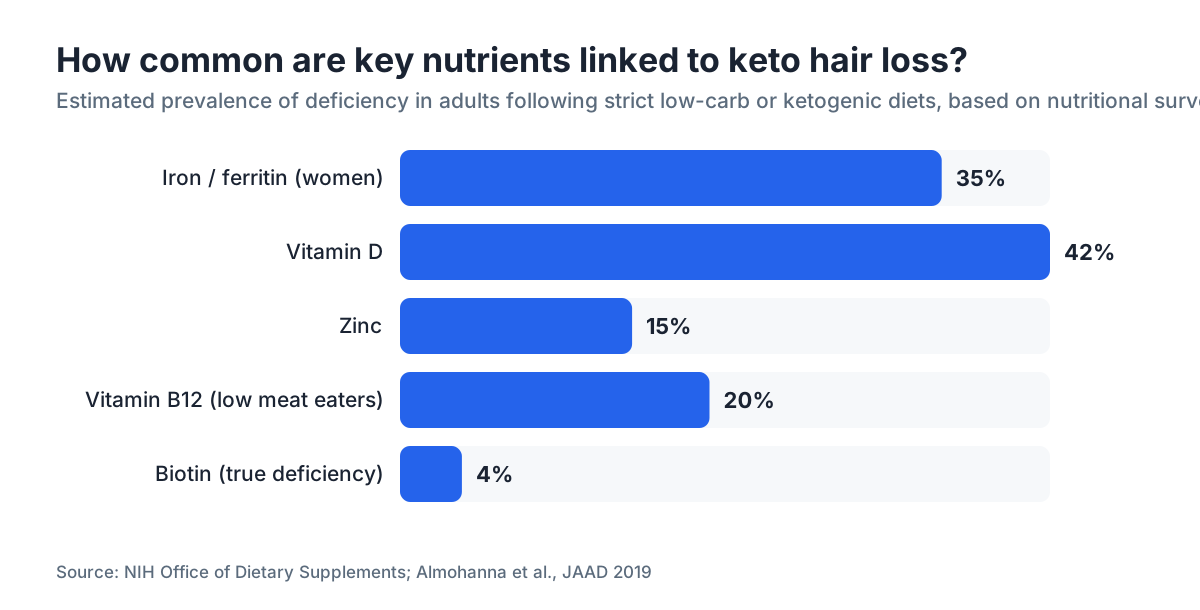
Micronutrient gaps. Cut entire food groups and you open gaps. Iron, zinc, biotin, selenium, and B vitamins (especially B7 and B12) all feed normal hair cycling [4]. Whole grains, legumes, and certain fruits, all of which vanish on keto, supply several of these. Someone who doesn't compensate will drain those stores over weeks to months.
Possible DHT elevation. This is the shakiest mechanism. Some researchers have proposed that very high fat intake could modestly raise dihydrotestosterone (DHT), the androgen most responsible for follicle miniaturization in androgenetic alopecia [5]. The evidence is thin and contested, but worth knowing if you already carry genetic hair loss risk. See the section on DHT below.
How much hair loss is normal on keto, and when does it peak?
The average person loses 50 to 100 hairs a day under normal conditions [3]. On a new ketogenic diet, that number can climb well past it, sometimes to several hundred a day during the peak shedding window. It looks alarming in the shower or on a brush, but it usually costs less total density than it feels like.
The timeline is predictable because it tracks the telogen effluvium cycle. The stressor (starting keto) hits at week zero. Follicles shift into resting phase. Two to four months later, those resting hairs let go. Shedding typically peaks around months 2 to 4 after the diet begins [2].
After the peak, shedding slows and new growth starts. Most people see visible improvement within 6 months of the peak, and full recovery by 9 to 12 months, assuming the nutritional problem gets fixed. If shedding keeps going past 6 months at the same rate, see a dermatologist, because something else may be driving it: a different deficiency, thyroid dysfunction, or a genetic loss pattern the diet stress exposed.
If you want a clearer read on your hair beyond the shed count, a free AI hair analysis at MyHairline can help you tell diffuse telogen shedding from early signs of a receding pattern.
Does keto raise DHT and speed up pattern hair loss?
People ask this constantly, and the honest answer is: possibly, in some people, but the evidence is weak.
DHT (dihydrotestosterone) is converted from testosterone by an enzyme called 5-alpha reductase. In people with genetic sensitivity, DHT binds to follicle receptors and shrinks them over time. That's the core of androgenetic alopecia, the most common form of what causes hair loss in both men and women [5].
The keto-DHT hypothesis runs like this: dietary fat raises total testosterone, which raises DHT. Some high-fat diet studies show modest bumps in androgen levels in men [6]. A 1984 study in the American Journal of Clinical Nutrition found men on high-fat diets had higher testosterone than men on low-fat diets [6]. Whether that translates into meaningful DHT exposure at the follicle is unclear, and no large trial has directly shown keto speeds up androgenetic alopecia.
Here's the practical read. No family history of hair loss, follicles that aren't DHT-sensitive? This probably doesn't matter to you. Already showing early signs of a receding hairline and eyeing aggressive keto? It's a fair precaution to talk to a dermatologist about a DHT blocker like finasteride before you start. Not because the keto-DHT link is proven, but because pattern loss keeps progressing and early treatment matters.
Which nutrients should you specifically check if keto is causing hair loss?
Not every nutrient gap hits hair equally. These are the ones with real evidence behind them:
| Nutrient | Why it matters for hair | Keto risk | Good keto sources |
|---|---|---|---|
| Iron (ferritin) | Required for DNA synthesis in follicle cells; low ferritin is one of the most common correctable causes of diffuse shedding [4] | High, especially in women | Red meat, oysters, dark leafy greens |
| Zinc | Supports 5-alpha reductase regulation and protein synthesis; deficiency causes diffuse shedding [4] | Moderate | Beef, pumpkin seeds, shellfish |
| Biotin (B7) | Cofactor in keratin synthesis; true deficiency is rare but real | Low-moderate | Eggs, liver, almonds |
| Selenium | Antioxidant role in follicle cycling; excess causes hair loss too [4] | Low | Brazil nuts (limit to 1-2/day) |
| B12 | Needed for red blood cell production and follicle nourishment | Higher for those eating less meat | Meat, fish, eggs |
| Vitamin D | Low levels associated with hair follicle cycling disruption [4] | Low-moderate | Fatty fish, sunlight, supplement |
| Protein (total) | Hair is keratin; insufficient protein directly reduces hair growth [3] | Moderate if calories are cut | Meat, eggs, fish, dairy |
The single most useful test is ferritin, not hemoglobin. Standard blood panels miss iron deficiency because hemoglobin stays normal until the deficiency is severe. A ferritin level below 30 ng/mL has been linked to telogen effluvium in multiple studies, even when standard iron panels look fine [4]. Ask your doctor to order ferritin by name.
For a broader look at which supplements actually have evidence behind them (and which are mostly marketing), the breakdown at hair loss supplements is worth reading.
How do you prevent hair loss when starting a keto diet?
Prevention comes down to not giving your body a reason to declare a nutritional emergency.
Don't crash into keto. Drop carbs gradually over two to four weeks instead of overnight, and your metabolism has time to adjust without firing off a sharp stress signal. Shedding risk runs highest with extreme, sudden restriction [2].
Hit your protein targets. Most evidence supports a floor of 1.2 grams of protein per kilogram of body weight per day, and more (1.6 to 2.0 g/kg) if you're in a calorie deficit [4]. That's easy on keto if you're eating meat, eggs, and fish, and easy to miss if you're loading up on butter, cream, and nuts without a thought for protein.
Don't slash calories and carbs at the same time. Stacking aggressive calorie restriction on top of ketogenic eating is a double stressor. If weight loss is the goal, a moderate deficit (500 calories or fewer below maintenance) triggers telogen effluvium less often than a severe one.
Get bloodwork before you start. Baseline ferritin, B12, vitamin D, zinc, and a thyroid panel (TSH at minimum) tell you whether you were already depleted, so you can supplement on facts instead of guessing.
Consider a solid multivitamin covering the gaps above for the first six months. The evidence for multivitamins in hair loss is mixed, but filling known micronutrient gaps clearly helps and costs little.
If keto-related shedding has already started, how do you stop it?
Once shedding starts, the hair already in telogen (resting) phase will fall out no matter what. You can't yank a follicle back into anagen mid-cycle. What you can do: stop adding new triggers, fix nutritional gaps, and give your body 3 to 6 months to reset.
The practical steps, in order of evidence:
-
Get blood tests to find and fix specific deficiencies (ferritin especially). This is the single highest-yield move.
-
Raise protein intake if it's been low.
-
Ask whether you've been running a calorie deficit and ease up if so. You can hold ketosis at maintenance calories.
-
Manage stress. Psychological stress compounds physical stress, and many people starting a strict diet are also anxious about body image, compliance, and food. Both kinds of stress can drag out a telogen effluvium episode.
-
If shedding is dramatic or still going past six months, see a board-certified dermatologist. They can run a scalp exam, trichoscopy, and bloodwork to rule out other causes.
Minoxidil is sometimes used to speed regrowth after telogen effluvium, though it's not FDA-approved for this condition specifically. It works by stretching out the anagen (growth) phase. If you're weighing it, the minoxidil for men overview covers the evidence and the practical notes, and the minoxidil side effects article covers what to watch for. For those open to an oral form, oral minoxidil is an emerging option under dermatologist oversight.
What you probably don't need: expensive biotin megadoses (unless you're actually deficient), collagen powders (protein is protein), or topical caffeine shampoos. None of these have strong trial evidence for stopping telogen effluvium.
Does hair grow back after keto-related loss?
Yes, in the large majority of cases. Telogen effluvium from a dietary trigger reverses as long as the follicles haven't been permanently miniaturized by something else [2].
You'll usually spot the first regrowth as short, fine hairs along the hairline and crown within 3 to 6 months of the peak shedding. Full density restoration often takes 12 to 18 months, because hair grows only about half an inch a month on average [3].
The cases where hair doesn't fully return are usually ones where keto stress landed on top of early androgenetic alopecia that was already creeping along quietly. The diet didn't cause the pattern loss, but it may have sped it up or made it obvious sooner. This part matters: if your father or mother has real hair loss and you're thinning in a pattern rather than a diffuse shed, get a dermatologist evaluation instead of waiting on dietary recovery.
If there's any worry about permanent thinning, the combination of finasteride and minoxidil is still the most evidence-backed approach for androgenetic alopecia in men. Finasteride on its own is covered in detail at finasteride.
Is hair loss more common on strict keto versus moderate low-carb?
Almost certainly yes. The more extreme the restriction, the louder the stress signal to the body.
Strict keto usually means under 20 to 50 grams of carbohydrates a day [7]. Moderate low-carb runs 50 to 130 grams a day. The stricter version induces ketosis more reliably, but it also more reliably creates the caloric and micronutrient disruption that drives telogen effluvium.
Carnivore diets (zero carb, all animal products) seem to have similar or possibly higher rates of reported shedding, though no large controlled trials exist. Dropping all plant foods removes several micronutrient sources and the fiber that shapes gut absorption of nutrients.
If you're mostly after metabolic benefits and hair preservation matters to you, a moderate low-carb approach (50 to 100 grams a day of carbohydrates from whole foods) may hand you most of the benefit with less follicle disruption. You might not reach full ketosis, but the gains in insulin sensitivity and inflammation are real even without it [7].
People also ask about other diet and supplement choices that touch hair. The article on does creatine cause hair loss tackles a related question about another popular fitness supplement.
When should you see a doctor about diet-related hair loss?
See a dermatologist if any of these apply.
Shedding stays heavy beyond 6 months after starting keto. Telogen effluvium is self-limiting by definition; persistence points to a different or additional cause.
You notice a distinct pattern: recession at the temples, thinning at the crown, or a widening part rather than diffuse all-over shedding. Pattern changes point to androgenetic alopecia, not telogen effluvium.
You have other symptoms riding along with the hair loss: fatigue, cold intolerance, irregular periods, rapid weight changes, or skin changes. These can flag thyroid dysfunction, autoimmune conditions, or other systemic issues that need medical management, not a diet tweak.
Bloodwork shows multiple significant deficiencies despite supplementation.
You're a woman of reproductive age with irregular cycles and acne alongside thinning hair. That raises the possibility of polycystic ovary syndrome (PCOS) or elevated androgens, which keto may actually help metabolically but which still need proper evaluation.
A dermatologist can use dermoscopy (scalp magnification) to separate telogen effluvium from early androgenetic alopecia with high accuracy. That matters because the treatments differ. If pattern loss is underway, tools like finasteride or a hair transplant consultation come into play, and waiting doesn't help.
For a non-clinical starting point to understand your shed pattern, the free AI hair analysis at MyHairline can tell whether your hairline and density look more like diffuse shedding or early androgenetic changes. It's not a substitute for an in-person medical exam.
Sources
- Nutrients journal (MDPI), 2021, Lorenzo et al., ketogenic diet side effects survey
- American Academy of Dermatology (AAD), Hair loss types: telogen effluvium
- American Academy of Dermatology (AAD), Hair loss causes overview
- Journal of the American Academy of Dermatology, Nutritional deficiencies and hair loss review (Almohanna et al., 2019)
- NIH National Library of Medicine, Androgenetic alopecia overview
- American Journal of Clinical Nutrition, 1984, Dietary fat and sex hormones in men
- NIH National Library of Medicine, StatPearls: Ketogenic diet (Freeman et al.)
- Journal of Clinical Endocrinology and Metabolism, Low T3 syndrome and carbohydrate restriction
- NIH Office of Dietary Supplements, Zinc fact sheet for health professionals
- NIH Office of Dietary Supplements, Iron fact sheet for health professionals
- NIH Office of Dietary Supplements, Vitamin D fact sheet for health professionals