

TL;DR: Yes. A moderate-to-severe flu infection is a recognized physiological stressor that can push hair follicles into the resting (telogen) phase, causing diffuse shedding roughly 6 to 12 weeks later. The shed is temporary in most people. Hair typically regrows within 3 to 6 months once the trigger is gone, though recovery can stretch longer if nutrition or stress compounds the cause.
What is telogen effluvium and why does the body cause it?
Telogen effluvium (TE) is diffuse, temporary hair shedding that happens when a major physical stressor forces a large share of your growing follicles into the resting phase all at once. Six to twelve weeks later, they shed together. The follicle is not destroyed. The root stays alive. That is the whole story in one paragraph, and it is the reason the prognosis is usually good.
Here is the mechanism, because the timing only makes sense once you see it. Every follicle cycles through three phases: anagen (active growth, lasting 2 to 6 years), catagen (a brief transition, roughly 2 weeks), and telogen (resting, about 3 months), followed by exogen, when the old hair physically sheds [1]. At any normal moment, around 85 to 90 percent of your scalp follicles are in anagen. The other 10 to 15 percent are in telogen, and you lose 50 to 100 hairs a day without noticing anything wrong.
A systemic shock changes those ratios fast. It shoves a chunk of anagen follicles into premature telogen at the same time [2]. The body is triaging. Hair growth is metabolically expensive, so it gets downregulated to redirect resources toward whatever threat is happening. Weeks later, all those synchronized follicles reach the end of the resting phase and release their hairs together, and the volume coming out in the shower suddenly looks alarming.
TE is one of the most common causes of diffuse, non-scarring hair loss in adults. Because the shed spreads evenly across the scalp, it looks different from androgenetic alopecia, which follows the Norwood or Ludwig patterns. If you want the wider picture of what else can start shedding, the full explainer on what causes hair loss covers the landscape.
TE is a response, not a disease. Hold onto that distinction. It changes how you should think about everything that follows.
Can the flu specifically trigger telogen effluvium?
Yes, and it is documented in the dermatology literature, more than anecdote. Acute febrile illness, which is exactly what influenza produces, is a classic precipitant of acute telogen effluvium in multiple dermatology textbooks and review papers [2][3]. The 2021 surge in reported TE after COVID-19 infection (itself a febrile respiratory illness) produced a wave of new data that re-confirmed the mechanism, but the flu-to-TE link predates COVID by decades.
A 2022 review in the Journal of the American Academy of Dermatology found that post-COVID hair loss fit the classic TE pattern: diffuse shedding beginning 4 to 16 weeks after acute illness, with most patients recovering on their own [3]. The biology does not care whether the febrile illness is influenza A, influenza B, or SARS-CoV-2.
Three things about the flu make it a real trigger. Fever above 38.5°C (101.3°F) is a documented independent driver of follicle arrest, separate from the immune response itself [4]. The systemic cytokine surge that comes with flu (interleukin-6, TNF-alpha, and others) may act directly on the hair cycle through dermal papilla signaling. And flu often kills your appetite for several days, creating a short-term nutritional dip, especially in iron and protein, that stacks on top of the febrile stress.
So it is probably not one mechanism but three working together: fever, immune activation, and nutritional disruption. Any one alone can start TE. All three at once make it more likely.
How long after the flu does hair shedding start?
Expect the first heavy shedding 6 to 12 weeks after the illness, not during it. That delay is the most disorienting part of this condition. You feel recovered in a week or two, life goes back to normal, and then two to three months later the hair starts coming out. People blame stress, a new shampoo, or their diet, never the flu they had back in January.
Here is why 6 to 12 weeks is the textbook range. When a follicle is forced prematurely into telogen, it still has to finish the roughly three-month resting period before the club hair (the old hair with the white bulb at the root) releases. The lag between trigger and visible shed is basically the length of that compressed telogen phase [2].
In real life the range is wider. Some people notice shedding as early as 4 weeks after the illness. Others do not see it until month 4 or 5. The timeline depends on how many follicles got hit (how severe the flu was), your baseline nutrition, and plain individual variation in hair cycling.
Peak shed usually runs 4 to 8 weeks, then tapers. The whole episode typically lasts 3 to 6 months from onset [2]. After that, follicles re-enter anagen and new growth starts. Because new hairs come in short and fine, regrowth can feel slow even when it is happening exactly on schedule.
What does flu-triggered hair shedding actually look like?
It looks like even thinning everywhere, not a receding hairline or a bald crown. With TE the shedding spreads diffusely across the entire scalp. You lose hair evenly from all of it, which is the single most useful clue for telling it apart from other hair loss.
Classic signs people report:
- A dramatic jump in hairs on the pillow, in the shower drain, and on the brush. What was 50 to 100 a day may feel like 200 to 400.
- Hairs with a white bulb at the root (club hairs), which is normal. These are telogen hairs that finished their cycle, not hairs snapped off from damage.
- Thinning that shows up more under bright light or when the hair is wet.
- No scalp redness, scaling, or itching (those point elsewhere).
- No clearly defined bald patches (those suggest alopecia areata, not TE).
The scalp pull test, where a dermatologist grasps about 60 hairs and pulls firmly, is positive in active TE if more than 6 hairs come away [2]. At home you can do a rough version: grab 40 to 60 hairs near the temples and pull with moderate force. More than 4 to 6 club hairs suggests active shedding.
Shedding that is patterned at the hairline or crown points toward androgenetic alopecia instead. The two can happen together, which muddies the picture. A receding hairline plus diffuse shedding after illness is worth a conversation with a dermatologist to separate the causes. The guide on receding hairlines breaks that pattern down on its own.
What is the timeline from flu to hair regrowth?
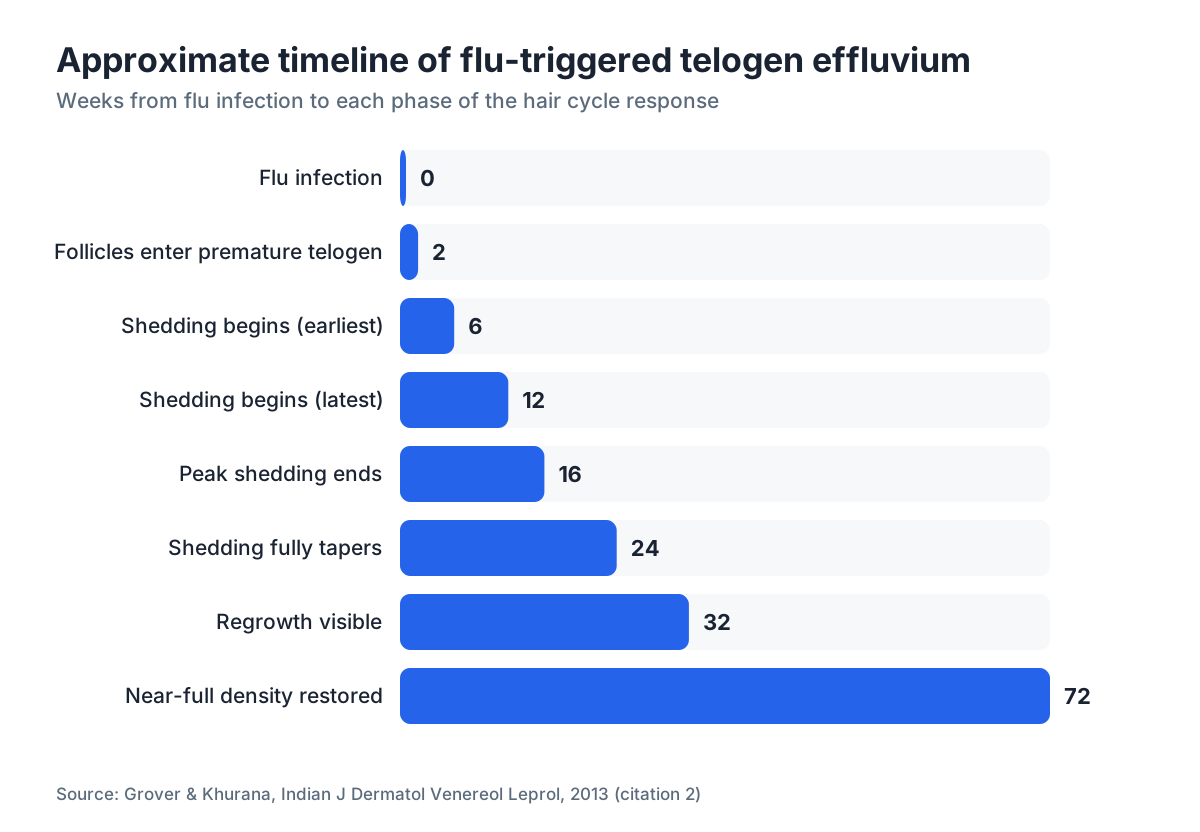
Full cosmetic recovery usually takes 12 to 18 months, far longer than most people expect. The shedding itself is short. The regrowth is what drags. Here is an honest timeline for the typical acute TE after a febrile illness.
| Phase | Approximate timing after flu |
|---|---|
| Flu infection | Week 0 |
| Follicles enter premature telogen | Week 0 to 3 |
| Shedding begins | Week 6 to 12 |
| Peak shedding | Week 8 to 16 |
| Shedding tapers | Month 4 to 6 |
| New growth visible (short hairs) | Month 5 to 8 |
| Near-full density restoration | Month 9 to 18 |
The last row is the one that catches people off guard. Hair grows roughly half an inch per month [1]. Even if the follicle re-enters anagen at month 5, a new hair has to reach several inches before it adds any visible density. So cosmetic recovery trails biological recovery by a long way. Most people feel their hair is almost back around the 12-month mark and fully back by 18 months, assuming nothing new is triggering it.
Still shedding heavily past 6 months? No sign of regrowth by month 8 or 9? That is the point to get bloodwork. Persistent TE can flag an ongoing trigger: iron deficiency, thyroid dysfunction, or an underlying autoimmune condition.
Why do some people shed after flu and others don't?
Two things decide it: how hard the illness hit you, and how much reserve your follicles had going in. Not everyone who gets the flu loses noticeable hair. Nobody has clean prospective data on exactly what fraction of flu cases lead to TE, so the honest answer is a set of risk factors rather than a percentage.
What appears to raise the risk:
Severity of illness. A mild 48-hour flu with low-grade fever is a weaker stressor than a severe week-long illness with fever over 39°C (102.2°F) and real body-weight loss from not eating.
Nutritional status at the time of illness. Ferritin (stored iron) below 30 ng/mL is associated with worse TE; some dermatologists set their threshold higher at 70 ng/mL, though the evidence for the higher cutoff is debated [5]. Low ferritin does not reliably cause TE by itself, but it can lower the bar for a febrile illness to do it.
Concurrent psychological stress. Being sick, missing work, and worrying about your health is its own stressor. Psychological stress is a documented TE trigger, and it can amplify the physical one [2].
Prior hair cycle disruption. If you recently went through another trigger (pregnancy, crash diet, surgery) and your follicles are still recovering, a flu can restart the cycle before it finished.
Genetics and baseline androgenetic alopecia. People with underlying pattern hair loss often find that TE unmasks thinning that was already there but subclinical. The shed looks worse and regrowth is less complete, because miniaturized follicles from androgenetic alopecia cannot bounce back the way healthy ones do.
How is telogen effluvium after flu diagnosed?
Diagnosis is mostly clinical: a careful history and scalp exam, plus targeted bloodwork to rule out ongoing triggers [2][6]. No single blood test confirms TE. It is a diagnosis of pattern, timing, and exclusion.
A good clinical workup includes:
- Detailed timeline: when was the flu, when did shedding start, is it slowing or worsening?
- Scalp exam to confirm diffuse (not patterned) thinning, no scarring, no folliculitis.
- Pull test to check whether shedding is still active.
- Trichoscopy (dermoscopy of the scalp) to look for follicle miniaturization, which would point to androgenetic alopecia layered on top of TE.
Bloodwork a dermatologist usually orders:
- Complete blood count (CBC)
- Ferritin and serum iron
- Thyroid stimulating hormone (TSH)
- Vitamin D (25-OH)
- Zinc
- ANA if an autoimmune cause is suspected
A skin biopsy is rarely needed for straightforward acute TE, but it can separate chronic TE from early alopecia areata or lupus-related hair loss when the picture is murky.
If you want to track what is happening on your scalp before you see a dermatologist, the free AI hair analysis at MyHairline can help you document baseline density and pattern, so you walk into the appointment with something concrete instead of memory.
Does telogen effluvium from the flu need treatment?
For most people, no specific treatment is needed. Acute TE after a resolved febrile illness clears on its own. The trigger is gone, the follicles recover, and your main job is to avoid piling on new stressors during the recovery window. That said, a few things are worth doing and a few are worth skipping.
Worth doing:
Correct nutritional deficiencies. If bloodwork shows low ferritin or iron, supplementing under a doctor's guidance is reasonable. A 2006 review in the Journal of the American Academy of Dermatology concluded that iron deficiency should be treated in patients with hair loss, though clean proof of causality is hard to get [5]. Keep protein adequate too: hair is roughly 95 percent keratin, and chronic low protein is a documented TE amplifier.
Be gentle with the hair. Tight ponytails, hard brushing, and heat styling do not cause TE, but they can make a thin scalp look worse during recovery.
Manage ongoing stress. Losing hair is genuinely distressing, and that distress is its own trigger. Addressing it lowers the risk of stress alone keeping the cycle going.
Worth skipping, at least for now:
Minoxidil sometimes gets used to shorten TE recovery. There is limited but real evidence it can speed re-entry into anagen, and the American Academy of Dermatology includes topical minoxidil among its TE treatment options [6]. The catch: starting minoxidil sets off its own initial shed as old club hairs push out, a documented side effect that can feel brutal stacked on top of an existing shed. Read the full breakdown of minoxidil side effects before you commit.
Finasteride and other DHT blockers treat androgenetic alopecia, not TE. They do nothing for a flu-triggered shed and are not indicated unless pattern hair loss is also confirmed.
Can the flu make permanent hair loss worse?
A single flu episode does not cause permanent follicle damage in a healthy scalp. That is the reassuring answer, and it holds. The follicle stays structurally intact and just needs time to cycle back.
The less reassuring answer is about people who already have androgenetic alopecia. A severe or drawn-out TE episode can temporarily unmask thinning that was already progressing silently. Follicles miniaturized by DHT exposure cannot recover as fully as healthy ones, so the post-TE regrowth can feel incomplete. Not because the flu damaged those follicles, but because they were compromised before the flu ever showed up.
This is exactly the scenario where treating the underlying pattern loss matters. Options run from topical minoxidil (see minoxidil for men) to oral finasteride (finasteride) to combination therapy (finasteride and minoxidil together) to hair transplant in advanced cases. None of those reverse TE itself. They address the separate androgenetic process.
Practical read: if your post-flu shedding resolves everywhere except the temples and crown, get evaluated for androgenetic alopecia. The two happening together is common.
How is flu-triggered TE different from COVID hair loss?
The mechanism is essentially identical. COVID-19 and influenza are both febrile illnesses that produce systemic inflammatory stress, and both can trigger acute TE with the same 6-to-12-week lag and the same diffuse pattern. The difference is scale, not biology.
COVID hair loss got far more attention because tens of millions of people had moderate-to-severe infections in a compressed window, which created a visible wave of TE that drew research and media coverage. A 2021 Lancet cohort study found hair loss among the most commonly reported symptoms persisting after acute COVID-19, affecting roughly 22 percent of patients at a 6-month follow-up after hospital discharge [7].
Influenza can be severe enough to do the same thing. The 1918 influenza pandemic left historical accounts of widespread post-illness hair shedding, though obviously no controlled data survives from that era. Seasonal flu rarely reaches the severity of a hospitalized COVID case, which is probably why flu-triggered TE gets discussed less. But a bad flu week with high fever, poor eating, and real weight loss can absolutely produce a meaningful TE episode.
If you had COVID hair loss and you are wondering whether flu can do the same: yes, it is the same biology. The TE explainer at telogen effluvium goes deeper on the mechanism.
When should you see a doctor about post-flu hair loss?
Most acute TE after flu resolves without any medical help. But specific signs turn a dermatology appointment from optional into worthwhile.
See a doctor if:
- Shedding is still heavy 6 months after it started.
- You see no regrowth (no new short hairs) by 9 months post-shed.
- There is scalp itching, scaling, redness, or tenderness alongside the shedding.
- You notice distinct bald patches rather than diffuse thinning.
- Shedding comes with fatigue, cold intolerance, or rapid weight change (these suggest thyroid dysfunction).
- Hair is falling out in non-scalp areas too: eyebrows, eyelashes, body hair (this suggests alopecia areata or another systemic process).
- You are female and also have irregular periods, acne, or unexplained weight gain (these can point to PCOS, which carries its own hormonal hair loss).
A dermatologist is the right specialist. A GP can order the initial bloodwork but may not have the scalp exam skill to separate TE from other causes. The American Academy of Dermatology runs a physician finder at aad.org if you need a starting point [6].
To document your density before the appointment, the MyHairline AI scan produces a structured report you can bring in. It is not a diagnostic tool, but a baseline image and density estimate give a dermatologist more to work with than memory.
Can you prevent telogen effluvium if you get the flu?
You cannot fully prevent it, but you can shrink the severity. The honest lever is upstream: don't get hit as hard in the first place.
Get the flu vaccine. This is the one genuine upstream move. The CDC recommends annual influenza vaccination for everyone 6 months and older [8]. A vaccinated person who still catches flu tends to have a shorter, milder illness with a lower peak fever, which means a smaller physiological insult to the hair cycle.
Keep iron and protein stores up. Heading into flu season with ferritin already low (below 30 to 40 ng/mL) leaves you a thin buffer against TE. Getting bloodwork in autumn and fixing deficiencies before flu season is a practical step, especially for women, who run a higher risk of iron deficiency to begin with.
During a flu illness:
- Keep eating protein even when your appetite is gone. Eggs, Greek yogurt, and protein shakes go down easier than a full plate.
- Stay hydrated. Dehydration during fever may not cause TE on its own, but it adds systemic stress.
- Manage fever appropriately. Acetaminophen or ibuprofen for high fever is standard care and shortens the peak of the febrile insult, which in theory softens the signal to the hair cycle, though no controlled study has tested that specifically on TE rates.
After recovery, focus on nutritional repletion over the following weeks instead of waiting to see whether shedding starts. You cannot stop a shed that was already set in motion, but good nutrition supports faster re-entry into anagen once the follicles are ready.
Sources
- American Academy of Dermatology, Hair loss types: overview
- Grover C, Khurana A. Telogen effluvium. Indian J Dermatol Venereol Leprol. 2013;79(5):591-603.
- Marcov A et al., Post-COVID-19 telogen effluvium, J Am Acad Dermatol, 2022.
- Rebora A. Telogen effluvium: a comprehensive review. Clin Cosmet Investig Dermatol. 2019;12:583-590.
- Trost LB et al. The diagnosis and treatment of iron deficiency and its potential relationship to hair loss. J Am Acad Dermatol. 2006;54(5):824-844.
- American Academy of Dermatology, Hair loss: diagnosis and treatment
- Huang C et al. 6-month consequences of COVID-19 in patients discharged from hospital: a cohort study. Lancet. 2021;397(10270):220-232.
- CDC, Influenza (Flu): Vaccine Information
- Phillips TG et al. Alopecia. Am Fam Physician. 2017;96(6):371-378.
- National Institutes of Health, MedlinePlus: Telogen Effluvium