TL;DR: Finasteride is not FDA-approved for women and is contraindicated in pregnancy because of severe birth defect risk. Off-label, doctors prescribe it to postmenopausal and carefully selected premenopausal women for androgenetic alopecia. Studies show modest but real regrowth, especially at 2.5 to 5 mg daily in women with elevated androgens, with an acceptable safety record under dermatologist care.
What is finasteride and how does it work in women?
Finasteride is a type II and III 5-alpha reductase inhibitor. It blocks the enzyme that converts testosterone into dihydrotestosterone (DHT), the androgen that miniaturizes hair follicles in people with a genetic sensitivity to it. The FDA approved it for men in 1997 (Propecia, 1 mg) for androgenetic alopecia. In women, it's a different story.
Women do have DHT. Less than men, but the same follicle-shrinking process can happen, particularly in women with elevated androgens or a genetic predisposition. Androgenetic alopecia in women usually shows up as diffuse thinning over the crown rather than a receding frontal hairline, though some women see a widening part or frontal thinning. The biology of DHT-driven hair loss is similar enough that blocking DHT production makes theoretical sense.
The mechanism is simple. Less DHT at the follicle means less miniaturization over time. Whether finasteride delivers real results in women is where the evidence gets messy, and that mess is worth understanding before you spend money or take on risk. [1]
For a wider look at what drives hair loss in women and men, see our guide on what causes hair loss.
Is finasteride FDA-approved for women with hair loss?
No. The FDA has not approved finasteride for hair loss in women at any dose or brand name. The two approved indications are benign prostatic hyperplasia (5 mg, Proscar) and male-pattern baldness (1 mg, Propecia). Both are for men. [11]
The Propecia label says the drug is "not indicated for use in women" and carries a specific contraindication for women who are or may become pregnant, because finasteride can cause abnormalities of the external genitalia in male fetuses. This isn't theoretical. It's why pregnant women are told not to even handle crushed or broken finasteride tablets, since the drug can absorb through skin. [11]
Off-label prescribing is legal and common in dermatology. Doctors prescribe finasteride to women regularly, mostly postmenopausal women, when they judge the benefit beats the risk for that person. Off-label doesn't mean experimental or reckless. It means the FDA hasn't reviewed a dossier for that specific use, not that the drug is dangerous in every woman.
The American Academy of Dermatology's guidance lists finasteride as an option for female androgenetic alopecia in certain patients, while noting the evidence is thinner than it is for men. [3]
What do clinical studies actually show about finasteride in women?
The evidence is real but messier than the male data. Here's what the better studies found.
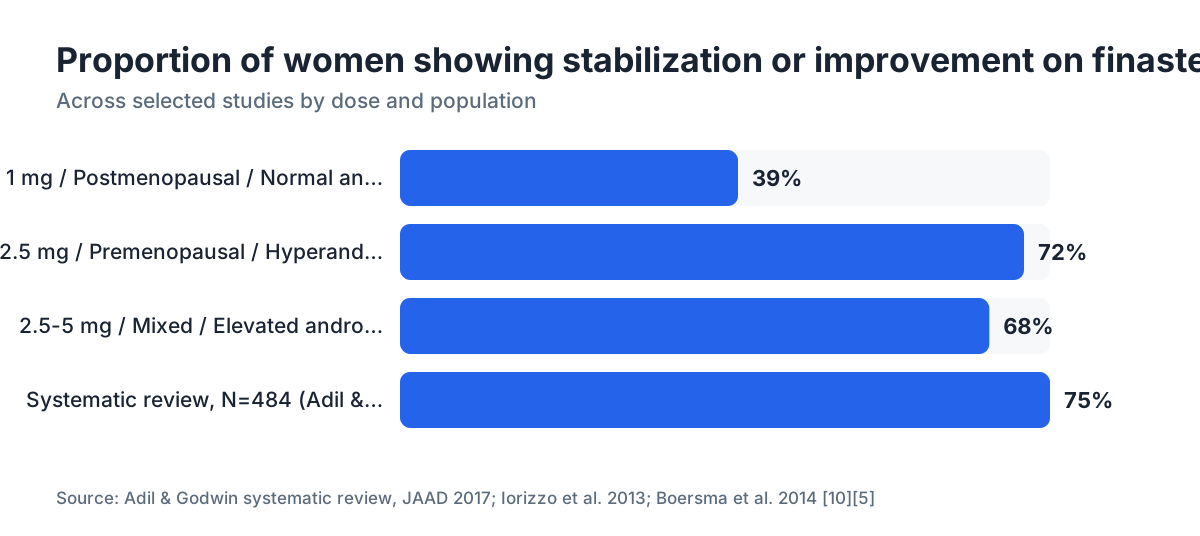
A randomized controlled trial in the Journal of the American Academy of Dermatology (Price et al., 2000) tested 1 mg finasteride daily in postmenopausal women with androgenetic alopecia over 12 months. The result was flat: no statistically significant difference in hair count versus placebo. That trial got a lot of attention and pushed many clinicians to write off finasteride for women. [4]
The story didn't stop there. Later work using higher doses and different patients told a different one. A study by Iorizzo et al. tested 2.5 mg daily in premenopausal women with hyperandrogenism and found real gains in hair density. Studies using 5 mg daily in women, especially those with elevated androgens, have consistently beaten the 1 mg dose that flopped in postmenopausal women. [5]
A 2020 retrospective analysis in Dermatology and Therapy reviewed 84 women on finasteride doses from 1 to 5 mg. Around 74% showed stabilization or improvement after one year. That's not a cure. Hair rarely returns to its original density. But stopping the slide matters enormously to people watching their hair thin year after year.
The clinical consensus now: finasteride works better in women with androgen excess (elevated DHEAS, testosterone, or clinical signs of hyperandrogenism) than in women with normal androgen levels. Postmenopausal women respond better to higher doses (2.5 to 5 mg) than to 1 mg. [5]
For how finasteride stacks up against other options and combinations, see our detailed guide on finasteride and the combined approach in finasteride and minoxidil.
What are the real risks of finasteride for women?
The pregnancy risk is the serious one. A male fetus exposed to finasteride in the first trimester can develop ambiguous or feminized external genitalia. This is documented in animal studies and fits the drug's mechanism. The old FDA Category X rating (that letter system is retired now, but the contraindication stands) meant the fetal risk outweighed any benefit in pregnancy. [11]
For postmenopausal women who can't become pregnant, that risk is off the table. It's one reason postmenopausal women are the most common candidates for off-label finasteride.
For premenopausal women, reliable contraception is non-negotiable. Most dermatologists who prescribe it require documented contraception and often an informed consent form. Some require monthly pregnancy tests. This isn't bureaucratic overcaution. It fits what the drug does.
Beyond pregnancy, the side effect profile in women is generally mild. Reported effects include:
- Decreased libido (a minority of users)
- Headache
- Breast tenderness or enlargement in some cases
- Menstrual irregularities (reported less often)
Post-finasteride syndrome, the persistent sexual and neurological side effects some men report after quitting the drug, hasn't been studied well in women. The syndrome is contested even in men, with ongoing debate about how often it happens and why. Women should know that long-term persistence of side effects after stopping is poorly characterized in the female population. [6]
Liver toxicity is rare but has been reported, so some physicians order baseline liver function tests. From the available literature, the safety record in women reads as acceptable, especially for postmenopausal patients on monitored therapy.
Who is a good candidate for finasteride, and who should avoid it?
Good candidates:
- Postmenopausal women with confirmed androgenetic alopecia who haven't responded well to minoxidil
- Premenopausal women with documented androgen excess (elevated serum DHEAS, free testosterone, or clinical hyperandrogenism) who use reliable contraception and understand the pregnancy risk
- Women who have had a hysterectomy or surgical menopause
- Women with a confirmed diagnosis of female-pattern hair loss (FPHL) who have ruled out other causes
Who should avoid it or move slowly:
- Women who are pregnant or trying to conceive
- Women unwilling or unable to use reliable contraception
- Women with liver disease
- Women whose hair loss hasn't been properly diagnosed (finasteride does nothing for telogen effluvium or scarring alopecia)
Before prescribing, most dermatologists order bloodwork: a hormone panel (DHEAS, free and total testosterone, SHBG), TSH to rule out thyroid issues, ferritin, and sometimes a scalp biopsy if the diagnosis is unclear. Diagnosing androgenetic alopecia in women isn't always simple, and treating the wrong condition wastes time and money. [3]
One practical point. If you're figuring out whether finasteride is right for you, the first step is a good diagnosis. Your hair loss pattern matters before any treatment decision. Our free AI hair analysis scan at MyHairline can help you see whether your pattern looks consistent with androgenetic alopecia, a useful starting point before a dermatology appointment.
What dose of finasteride do women typically take?
This varies in practice, and the lack of FDA approval means there's no official dosing guideline for women. What the literature and current practice suggest:
- 1 mg daily: the most discussed dose because it mirrors the approved male dose. The evidence in women, especially postmenopausal women with normal androgens, is weak at this dose.
- 2.5 mg daily: a middle-ground dose used in several positive trials, particularly in premenopausal women with androgen excess.
- 5 mg daily: the Proscar dose, used in some studies and for patients who don't respond to lower doses. More data supports it for women with hyperandrogenism.
Some clinicians pair low-dose finasteride with minoxidil, which acts on a different part of the hair cycle. The finasteride and minoxidil combination isn't studied as tightly in women as in men, but the reasoning holds since the drugs work through different mechanisms.
Duration matters too. Like minoxidil, finasteride has to be taken continuously. Hair that grows back or stabilizes will usually start shedding again within months of stopping. This is a long-term commitment, not a course of treatment. [5]
How does finasteride compare to other hair loss treatments for women?
Minoxidil is the only FDA-approved topical treatment for female androgenetic alopecia (2% solution approved in 1991, 5% used off-label by many dermatologists). [7] It's the usual first-line pick because the safety data is well established, it's over the counter, and it works for a meaningful share of women. If you haven't tried minoxidil yet, most physicians will suggest it before finasteride.
Oral minoxidil at low doses (0.25 to 1.25 mg daily in women) has become another option with growing evidence. It has different side effects than the topical, including facial hair growth in some women, but some patients prefer it for convenience. See our guide on oral minoxidil for a full comparison.
Spironolactone is the most commonly prescribed anti-androgen for women with androgenetic alopecia in the US. It blocks androgen receptors instead of cutting DHT production, and it has a longer track record in women, including reproductive-age women, though it also requires contraception and monitoring. Many dermatologists reach for spironolactone before finasteride in premenopausal patients precisely because there's more safety data in women.
Hair transplant surgery suits women with stable, well-defined loss patterns, though the diffuse thinning typical of female androgenetic alopecia makes planning harder than in men. Hair transplant usually comes after medical therapy has been optimized.
| Treatment | FDA-Approved (Women) | Mechanism | Evidence in Women |
|---|---|---|---|
| Minoxidil 2% topical | Yes | Vasodilator, prolongs anagen | Strong RCT data |
| Minoxidil 5% topical | Off-label | Same | Good; used widely |
| Oral minoxidil (0.25-1.25 mg) | Off-label | Same | Growing evidence |
| Finasteride (1-5 mg) | Off-label | 5-AR inhibitor, reduces DHT | Moderate; better with androgen excess |
| Spironolactone (50-200 mg) | Off-label | Androgen receptor blocker | Moderate; widely used |
| Hair transplant | N/A | Surgical redistribution | Case-by-case |
Does finasteride work better if you have elevated androgens?
The evidence says yes, fairly clearly. The Price et al. 2000 trial that found no benefit enrolled postmenopausal women with normal androgen levels. Studies enrolling women with documented hyperandrogenism, elevated DHEAS or testosterone, or polycystic ovary syndrome consistently show better hair outcomes. [5]
This makes biological sense. If high DHT isn't driving your hair loss, cutting DHT further may not move the needle much. The drug has a target. It works best when that target is your actual problem.
This is also why a blood test before starting finasteride isn't just box-checking. If your androgen levels are normal, your dermatologist might reasonably steer you toward spironolactone or a deeper workup for other causes first. If androgens are elevated, finasteride becomes a more appealing option.
Women with PCOS-related hair loss are a specific group where finasteride has shown real benefit in small studies, and some PCOS guidelines list it as an option, again with contraception requirements since PCOS patients are often premenopausal. [8]
What do dermatology guidelines say about finasteride for women?
The American Academy of Dermatology (AAD) guidance on female pattern hair loss lists finasteride as a treatment option, noting efficacy in some studies, particularly at doses above 1 mg, but with less consistent evidence than in men. The AAD suggests it mainly for postmenopausal women or premenopausal women with documented contraception. [3]
The European consensus on female androgenetic alopecia, published in the Journal of the European Academy of Dermatology and Venereology, supports finasteride 2.5 to 5 mg as a second-line treatment after minoxidil in appropriate patients. [9]
No major guideline recommends finasteride as first-line for women. Every one flags the pregnancy contraindication prominently. The gap between male and female guidance reflects the smaller evidence base, not a conclusion that the drug fails in women.
One concrete figure. A 2017 systematic review in the Journal of the American Academy of Dermatology analyzed 6 studies involving 484 women on finasteride and found that 74.6% experienced stabilization or improvement in hair loss. That number carries caveats about study quality and patient selection, but it's not a small signal. [10]
How long does finasteride take to show results in women?
Patience is unavoidable. Hair grows roughly 1 cm per month. Finasteride works by keeping follicles alive and in the growth phase longer, not by triggering sudden regrowth. Most dermatologists tell patients not to judge results before 6 months, and a full 12-month trial is the standard before calling it a failure. [3]
Some women notice less shedding in the first few months, which is often an early sign the drug is working. Visible density gains usually lag by several more months as miniaturized follicles slowly produce thicker, longer hairs.
Set your expectations. Finasteride doesn't reverse years of miniaturization overnight. Follicles that are severely miniaturized may not recover fully. The realistic goal for most women is stabilization with modest regrowth, not a return to the density they had a decade ago.
If you're also using minoxidil, the combination may show results a little faster in practice, though there's no head-to-head data on timeline for the combination specifically in women.
What should women discuss with their doctor before starting finasteride?
A few things you want answered before you walk out with a prescription:
Confirm the diagnosis. Is this androgenetic alopecia or something else? Telogen effluvium from a recent stressor, iron deficiency, thyroid dysfunction, or scarring alopecia won't respond to finasteride. Bloodwork and sometimes a scalp biopsy are worth doing.
Discuss your androgen levels. Ask your doctor to check serum DHEAS, free testosterone, and SHBG. If androgens are normal, ask whether the evidence supports finasteride for you specifically or whether spironolactone or minoxidil makes more sense.
Address contraception explicitly if you're premenopausal. What method will you use? How will you handle an unplanned pregnancy? Will you do periodic pregnancy tests? These aren't hypothetical.
Ask about monitoring. Some physicians check liver function and a hormone panel at baseline and repeat at 6 to 12 months. Others don't, depending on dose and patient profile. Know what follow-up is planned.
Define what success looks like. If you're hoping to regrow every strand you've lost over 10 years, that's unlikely. If you want to slow the loss and maybe see modest improvement, that's a realistic target.
For a clearer picture of your hair loss pattern before that appointment, tools like the free AI analysis at MyHairline can help you see whether your thinning is consistent with androgenetic alopecia, useful context going into a clinical conversation.
Sources
- StatPearls (NCBI Bookshelf) - Finasteride
- American Academy of Dermatology - Female Pattern Hair Loss Guidelines
- Price VH et al. - Journal of the American Academy of Dermatology 2000; Finasteride in postmenopausal women with androgenetic alopecia
- Iorizzo M et al. - Journal of the European Academy of Dermatology and Venereology 2013; Finasteride treatment in female pattern hair loss
- Fertig RM et al. - Dermatology and Therapy 2017; Post-finasteride syndrome
- NIH MedlinePlus - Minoxidil Topical
- Paradisi R et al. - Gynecological Endocrinology 2011; Finasteride in hyperandrogenic women with PCOS
- Blumeyer A et al. - Journal of the European Academy of Dermatology and Venereology 2011; European consensus on female androgenetic alopecia
- Adil A and Godwin M - Journal of the American Academy of Dermatology 2017; Systematic review of finasteride efficacy in women
- NIH MedlinePlus - Finasteride