
TL;DR: Topical finasteride does cause sexual side effects in some men, but at significantly lower rates than the oral pill. Clinical trials show sexual adverse events in roughly 0.9 to 2% of topical users versus 4 to 8% with 1 mg oral finasteride. Systemic DHT suppression is lower with topical application, which is likely why. The risk is real but meaningfully smaller.
What is topical finasteride and how does it differ from the pill?
Topical finasteride is a scalp-applied solution or gel that delivers finasteride directly to hair follicles. The oral 1 mg tablet (Propecia and generics) goes through your gut, liver, and bloodstream before reaching the scalp. Topical goes straight to the tissue you want to treat and, in theory, less of it escapes into circulation.
The key question is always how much gets into the blood. With oral finasteride, peak serum levels after a 1 mg dose reach roughly 9 ng/mL [1]. Topical formulations aiming for local effect deliberately try to limit that. A 2021 pharmacokinetic study published in the Journal of the American Academy of Dermatology measured serum finasteride after topical 0.25% solution and found levels roughly 4 to 8 times lower than those seen with the oral pill [2].
Lower blood levels mean lower systemic DHT suppression. That matters because the sexual side effects of finasteride, reduced libido, erectile dysfunction, ejaculatory problems, are believed to be driven by DHT suppression in tissues outside the scalp, including brain, testes, and prostate [3]. Less systemic exposure should translate to fewer side effects. The evidence suggests it does, though it does not bring the risk to zero.
Topical finasteride is not currently FDA-approved as a standalone product in the United States for androgenetic alopecia. Oral finasteride (1 mg) carries FDA approval for that indication since 1997 [1]. Topical versions are available through compounding pharmacies under a physician's prescription, and one combination product (topical finasteride plus minoxidil) has been reviewed in some regulatory markets. If you want to understand the full finasteride picture before deciding, that's a reasonable starting point.
What do clinical trials actually show about sexual side effects from topical finasteride?
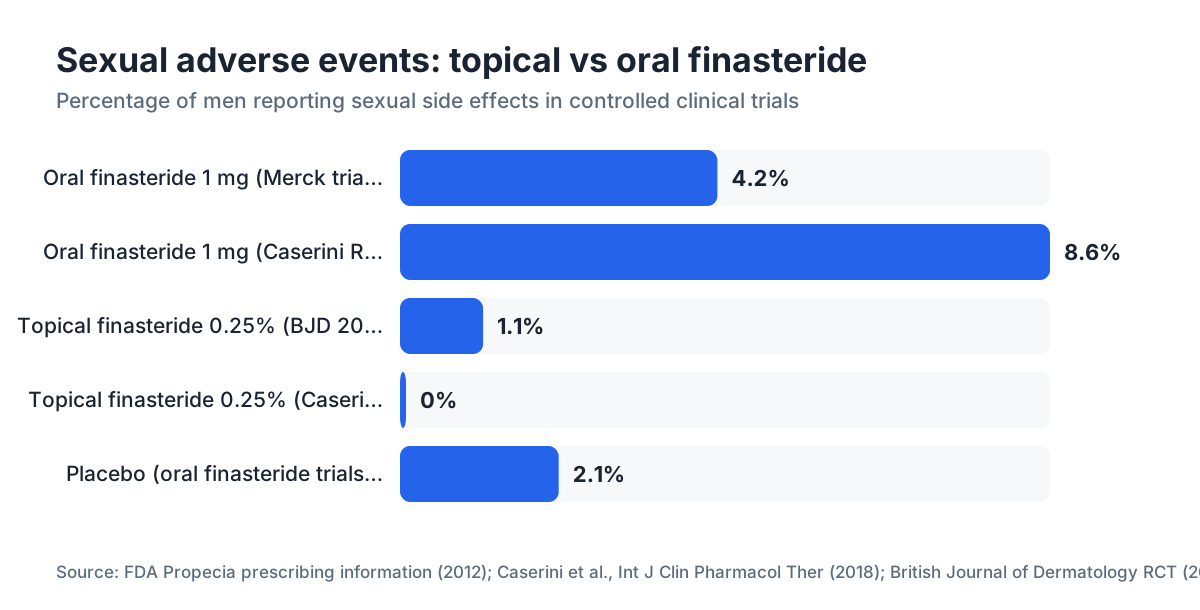
The most cited trial is a 2018 randomized controlled study by Caserini et al., published in the International Journal of Clinical Pharmacology and Therapeutics. It compared topical finasteride 0.25% solution (applied once daily) against oral finasteride 1 mg in 71 men with androgenetic alopecia over 12 months. Sexual adverse events occurred in 0% of the topical group versus 8.6% in the oral group, a statistically significant difference [4].
That single trial is small and should not be overread. Other data paint a slightly more nuanced picture. A larger 2023 phase 2/3 randomized trial published in the British Journal of Dermatology evaluated a topical finasteride/minoxidil spray in roughly 900 men and women. Sexual side effects in men were reported in about 1.1% of the topical finasteride group [5]. That's still well below the 4 to 6% range consistently seen in oral finasteride trials from the original Merck registration studies [1].
Scalp DHT suppression with topical finasteride is comparable to oral, studies show 50 to 60% reduction at the scalp with well-formulated topicals, while serum DHT drops only around 20 to 30%, compared to roughly 65 to 70% suppression with 1 mg oral finasteride [2][4]. Hair growth efficacy in these trials was similar between routes, which makes topical an interesting trade-off: roughly equivalent scalp effect, less systemic suppression, fewer systemic side effects.
| Measure | Oral finasteride 1 mg | Topical finasteride 0.25% |
|---|---|---|
| Serum DHT suppression | ~65 to 70% | ~20 to 30% |
| Scalp DHT suppression | ~50 to 60% | ~50 to 60% |
| Sexual AEs in trials | ~4 to 8% | ~0 to 2% |
| Serum finasteride levels | ~9 ng/mL peak | ~1 to 3 ng/mL |
| FDA approval (US) | Yes (1997) | No (compounded) |
The table above draws on the Caserini pharmacokinetic data [4] and the original Merck prescribing information [1]. These are real numbers, not estimates.
Can topical finasteride still cause sexual side effects at all?
Yes. The honest answer is that topical finasteride does get into the bloodstream to some degree, so the theoretical risk is not zero. A 2020 systematic review of compounded topical finasteride studies found sexual adverse events reported in 0.9 to 2% of subjects across included trials, real, if rare [6].
Post-finasteride syndrome, a contested condition where sexual and cognitive symptoms persist after stopping the drug, has been reported almost exclusively with oral use. Whether topical use can trigger it is unknown. There are no published case series of persistent post-finasteride syndrome attributed specifically to topical-only use. That absence of data is not reassurance; it may reflect lower usage rates or under-reporting. Anyone experiencing sexual side effects, with either form, should discuss stopping or switching with their prescribing doctor immediately.
Men who are highly sensitive to DHT suppression may experience effects even at the lower systemic exposure from topical application. Nobody currently has a good predictive test for this sensitivity. The closest thing is a trial period, with close attention to symptoms in the first few months.
There is also an applicator variable. Topical formulations vary in vehicle (ethanol, propylene glycol, film-forming solutions), concentration (0.1%, 0.25%, 1%), and dosing frequency. Higher concentrations or larger application volumes increase systemic absorption. A 1% topical applied twice daily will expose you to more finasteride systemically than a 0.25% solution applied once. Ask your prescribing physician specifically what concentration and volume they are recommending.
How does topical finasteride compare to oral for hair regrowth?
This is the question that makes topical finasteride worth considering at all. If it were meaningfully weaker for hair, the side-effect advantage wouldn't matter much.
The Caserini 2018 trial found comparable hair count improvements between topical and oral at 12 months, with total hair count increases that were not statistically different between groups [4]. The 2023 British Journal of Dermatology trial saw similar responder rates between topical finasteride/minoxidil and oral finasteride/minoxidil groups [5]. A 2022 meta-analysis in Dermatology and Therapy reviewed nine studies and concluded that topical finasteride showed "comparable efficacy to oral finasteride for androgenetic alopecia" while producing significantly less systemic DHT suppression [7].
So the scalp DHT suppression story checks out. Follicles on your scalp see similar DHT reduction regardless of route. What's different is everything downstream in your body, prostate, brain, testes, which see much less DHT suppression with topical. For hair, that's fine. Those tissues don't need DHT blocked to grow hair.
If you're weighing options alongside minoxidil for men or considering combining the two, know that topical formulations of both drugs together exist and are commonly compounded. The evidence on combination versus monotherapy is covered separately in finasteride and minoxidil.
Who is most at risk for sexual side effects from finasteride, topical or oral?
The honest answer is that no reliable clinical predictor exists right now. Age, baseline testosterone, or DHT levels at baseline do not consistently predict who will have sexual side effects. The original Merck trials showed the ~1.8% erectile dysfunction rate with oral finasteride was similar across age groups in the 18 to 41 year study range [1].
Some risk factors are worth noting even if the evidence is limited. Men with pre-existing sexual dysfunction may not notice drug-related changes as clearly, but that doesn't mean they're protected. Men with anxiety about side effects show higher reported rates in some unblinded studies, which has led to debate about nocebo effects (a symptom caused by the expectation of a symptom, not the drug itself). A 2017 study in JAMA Dermatology found that men who were aware of finasteride's potential sexual side effects reported them roughly three times more than men who weren't informed, suggesting nocebo is a real confounder [8].
That nocebo finding doesn't mean the side effects aren't real for many men. It means that trial data from blinded studies is more reliable than anecdotal reports from open-label use or online forums. The blinded trial rate for oral finasteride sits consistently around 1.8 to 4.6% for any sexual adverse event [1]. For topical, the blinded data shows roughly 0 to 2% [4][5].
Men who have experienced sexual side effects on oral finasteride and switched to topical represent a small but real clinical group. Some report resolution of symptoms on topical. There's no large trial on this switch; it's anecdote-level evidence. If this applies to you, have that conversation with a dermatologist or urologist who knows finasteride literature.
What does the FDA label say about finasteride sexual side effects?
The FDA-approved prescribing information for oral finasteride 1 mg (Propecia) lists the following sexual adverse events from the controlled clinical trials: decreased libido (1.8%), erectile dysfunction (1.3%), and ejaculation disorder (1.2%), all in the finasteride group versus 1.3%, 0.7%, and 0.7% in the placebo group respectively [1]. These are the differences that matter: the drug effect above placebo, not the absolute numbers.
The FDA label also notes: "In a 5-year placebo-controlled clinical trial, 1.1% of subjects taking PROPECIA reported sexual dysfunction which resolved in men who discontinued therapy" [1]. That resolution data is relevant. For most men who stop, side effects go away. Persistent cases exist but are not the norm in trial data.
There is no FDA-approved topical finasteride product in the US, so there is no FDA label to cite for topical-specific side effect rates. That's an information gap. Compounding pharmacies are not required to conduct trials or report side effects systematically. What you have is investigator-initiated research and the Caserini and similar studies rather than a manufacturer's label with thousands of patient-years behind it.
The FDA's website on finasteride notes ongoing safety monitoring for post-finasteride syndrome and persistent sexual adverse events following the advocacy of groups including the Post-Finasteride Syndrome Foundation [9]. This monitoring is primarily focused on oral use.
Are there other side effects of topical finasteride beyond sexual ones?
Scalp-related side effects are the most commonly reported with topical formulations. Irritation, itching, contact dermatitis, and scaling at the application site show up in roughly 3 to 5% of users in trials, driven largely by the vehicle (ethanol, propylene glycol) rather than the finasteride molecule itself [4][7]. Switching to a different vehicle or compounding formula often resolves this.
Systemic side effects other than sexual are uncommon but possible. Finasteride inhibits 5-alpha-reductase, which is involved in prostate, breast, and neurological tissue. Gynecomastia (breast tissue growth) is a rare reported adverse event with oral finasteride, appearing in less than 1% of users in trials. Whether topical exposure is enough to trigger this is unknown from current data.
For women, particularly those who are pregnant or could become pregnant, finasteride of any form is contraindicated. Fetal exposure to a 5-alpha-reductase inhibitor can cause genital abnormalities in male fetuses. Topical finasteride can be absorbed through the skin and should not be handled by pregnant women [1]. This is the same warning on oral finasteride and applies regardless of the route.
If you're comparing the side effect profiles of other topical hair treatments, the minoxidil side effects article gives a fair account of what that option brings.
How is topical finasteride prescribed and what concentrations are available?
In the United States, topical finasteride is compounded by licensed compounding pharmacies under a physician's prescription. Common concentrations range from 0.1% to 1%, with 0.25% being the most studied in published trials. Some formulations combine finasteride with minoxidil (typically 5% minoxidil + 0.1% or 0.25% finasteride) in a single spray or solution.
Pricing varies considerably because this is compounded rather than mass-manufactured. Expect to pay roughly $40 to $90 per month depending on the pharmacy and formulation, compared to $10 to $30 for generic oral finasteride [10]. That cost difference is meaningful over years of treatment.
A few international markets have approved specific topical finasteride products. Spain, Italy, and several other European countries have approved topical finasteride 0.1% under various brand names. These products have gone through regulatory review in those countries, which provides a somewhat cleaner evidence base than purely compounded products. The data from European approved products is part of what informs the meta-analyses available today.
If you want a broader picture of how DHT blockers work and what your alternatives are, dht blocker covers the mechanism in plain terms.
Should you switch to topical finasteride if you had side effects on oral?
Here's an honest opinion rather than a hedge: if you had sexual side effects on oral finasteride and otherwise responded to the drug, topical finasteride is a reasonable clinical conversation to have. The pharmacokinetic rationale is sound, and the available trial data supports lower systemic exposure and fewer sexual adverse events.
What I'd caution against is expecting a guarantee. A small number of men report sexual side effects with topical too. And if you experienced post-finasteride-syndrome-type symptoms that persisted after stopping oral, topical finasteride is almost certainly not the right next step. Nobody has studied topical in that specific population, and the cautious path is to avoid all 5-alpha-reductase inhibitors.
For men who want to avoid finasteride entirely, minoxidil is the other well-established option. It works through a completely different mechanism and has no sexual side effects. It's less effective for hairline recession specifically, more effective for crown thinning. The receding hairline article goes into what actually works for hairline cases.
If you're trying to figure out which stage you're at and what treatment makes sense for your pattern, MyHairline's free AI scan (/scan) can give you a visual Norwood stage estimate before your dermatology appointment. It doesn't replace a physician but it shortens the conversation.
The decision between topical and oral finasteride should involve a physician who can assess your sexual health baseline, your DHT levels, and your medical history. That's not a box-ticking exercise; it genuinely changes the risk-benefit calculation.
What does the research still not know about topical finasteride safety?
Honest gaps matter here. The longest published trials for topical finasteride run 12 to 24 months. Oral finasteride has data from 5-year controlled trials and decades of post-market surveillance. Long-term scalp absorption rates, cumulative systemic exposure over five or ten years of daily topical use, and the impact of skin condition on absorption are all not well characterized.
Post-finasteride syndrome has not been studied in topical-only users. Given the lower systemic exposure, the theoretical risk is lower, but "lower" and "zero" are different things. The syndrome itself remains contested in the literature; a 2020 review in the Journal of Sexual Medicine noted significant methodological heterogeneity across studies claiming to document it [11]. What's not contested is that some men do have persistent symptoms; what's debated is the mechanism and incidence.
Nobody has good data on topical finasteride in men over 65, men with liver impairment, or men on medications that affect 5-alpha-reductase activity. These populations weren't well represented in the trials.
For anyone doing their own research: the most reliable source for ongoing trial data is ClinicalTrials.gov, where you can search active and completed trials for topical finasteride [12]. The FDA's MedWatch program accepts voluntary adverse event reports for compounded products, which is where post-market safety signals for topical formulations would eventually accumulate [9].
What should you actually do with this information?
The evidence is clear enough to say this: topical finasteride is not the same risk as oral finasteride for sexual side effects. The difference is real and statistically supported across multiple trials. If sexual side effects are the main reason you've avoided finasteride, topical is worth a conversation with your dermatologist.
Get the lowest effective concentration first. Most trial evidence supports 0.25% once daily as a reasonable starting point. Ask your prescribing physician explicitly what concentration, vehicle, and dose frequency they're recommending, and why.
Pay attention to your baseline before you start. If you notice changes in libido or erectile function in the first three months, report them immediately rather than waiting to see if they resolve. Most drug-induced sexual side effects from finasteride reverse on stopping; acting early is better than hoping it improves.
For hair loss that has already progressed significantly, finasteride alone (topical or oral) may not address the cosmetic outcome you want. At that point, a hair transplant is what most dermatologists and surgeons recommend as the most definitive option. Finasteride is typically continued after a transplant to protect non-transplanted follicles from further DHT-driven loss.
If you want to track whether a treatment is working, a structured photo comparison at 0, 3, 6, and 12 months is the only honest way to do it. MyHairline's AI scan (/scan) can give you a consistent baseline and comparison framework. That's a useful tool, not a diagnosis.
Finasteride, topical or oral, is a long-term commitment. The hair you keep while on it tends to shed again if you stop. Go in with that expectation clearly understood.
Sources
- Journal of the American Academy of Dermatology, Topical finasteride pharmacokinetics (2021)
- Endocrine Society, Androgen physiology and DHT mechanisms
- British Journal of Dermatology, Topical finasteride/minoxidil spray phase 2/3 RCT (2023)
- Systematic review, Compounded topical finasteride adverse events (2020)
- Dermatology and Therapy, Meta-analysis of topical vs oral finasteride efficacy (2022)
- JAMA Dermatology, Nocebo and finasteride sexual side effects (2017)
- FDA MedWatch, Safety reporting for drugs and compounded products
- GoodRx, Generic finasteride price data
- Journal of Sexual Medicine, Post-finasteride syndrome systematic review (2020)
- ClinicalTrials.gov, US National Library of Medicine trial registry