

TL;DR: Oral minoxidil is almost completely absorbed into your bloodstream (roughly 90-95%). Topical minoxidil delivers only about 1-2% systemically. That gap explains why oral causes more whole-body side effects like fluid retention and unwanted hair growth, while topical mostly causes local scalp problems. Both grow hair. Their risk profiles are not close.
Why does systemic absorption matter for minoxidil side effects?
How much of a drug reaches your bloodstream decides which side effects you actually feel. With minoxidil this matters more than with almost any other hair loss treatment, because the molecule started life as an oral blood pressure drug. Its effect on the heart and blood vessels doesn't vanish when you rub it on your scalp. It just gets turned way down by how little of it crosses the skin.
Systemic absorption is the share of a dose that enters general circulation and can act on tissues throughout the body, not only where you applied it. A drug with 90% systemic absorption behaves almost the same swallowed or injected. A drug with 1-2% systemic absorption is mostly local, with only trace amounts reaching organs like the heart.
The FDA approved the oral tablet in 1979 for hypertension, at doses of 5 to 40 mg daily [1]. The topical solution came nine years later, in 1988, built specifically to hold down systemic exposure and contain the cardiovascular effects that made the oral version rough for blood pressure patients. That history explains almost everything about why the two forms carry such different risks.
How much minoxidil actually gets absorbed orally vs topically?
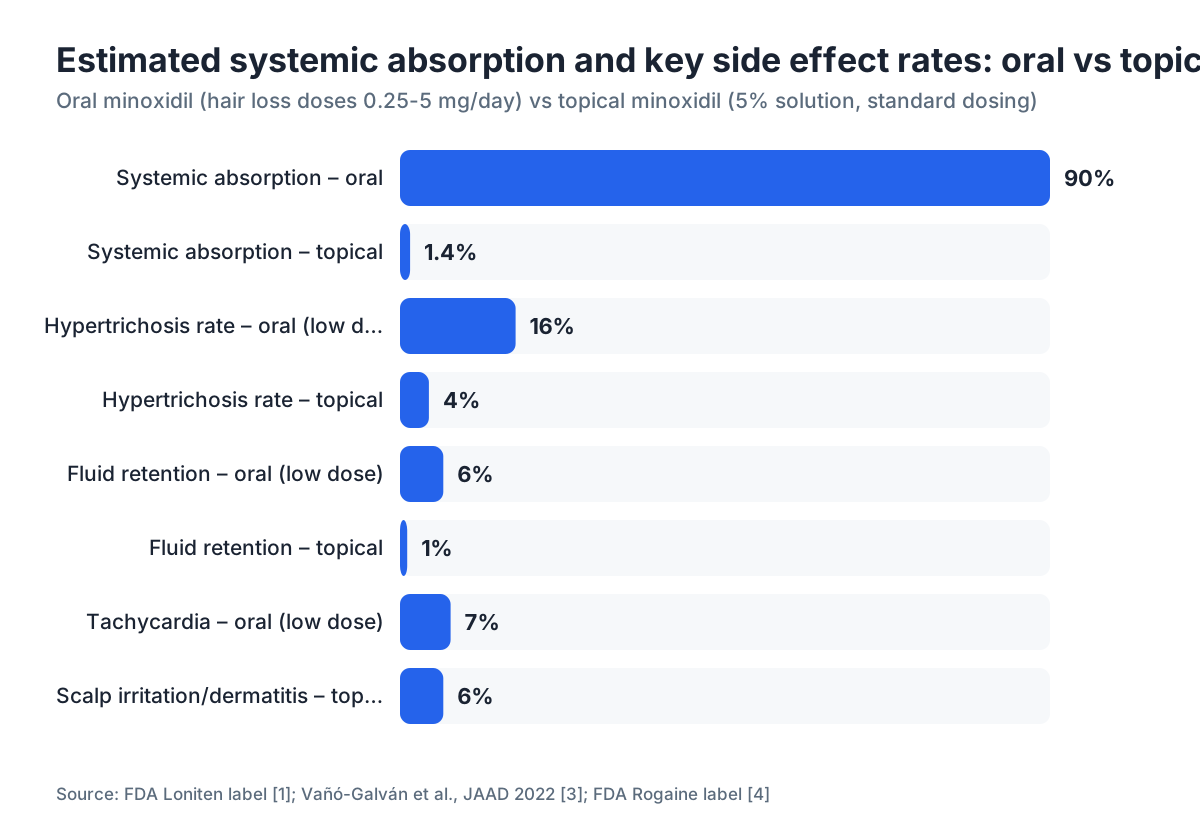
Oral minoxidil is absorbed fast and almost completely from the gut. The FDA prescribing information for oral minoxidil (Loniten) states bioavailability is at least 90% [1]. Peak plasma concentration arrives within about one hour. The liver metabolizes it, the kidneys clear it, and the plasma half-life runs roughly 4.2 hours.
Topical minoxidil is a different animal. Studies of percutaneous absorption keep landing on the same number: only about 1.4% of a topical dose reaches circulation from an intact, healthy scalp [2]. Some studies push that slightly higher, up to around 2%, depending on scalp condition, inflammation or abrasion, and formulation. The foam uses a different vehicle than the solution, which nudges absorption a bit, though the gap is small in practice.
So the real-world spread is huge. A man on 1 mg oral minoxidil daily (a common off-label hair loss dose) gets roughly 0.9 mg into his blood. A man applying 1 mL of 5% topical solution twice daily, laying down about 100 mg on the scalp, gets roughly 1.4 to 2 mg into circulation. The doses land close only because oral hair loss dosing is set low on purpose. The dose-response curve and its predictability differ sharply between routes.
| Route | Typical hair loss dose | Estimated systemic exposure | Time to peak plasma |
|---|---|---|---|
| Oral tablet | 0.25 to 5 mg/day | ~90-95% of dose | ~1 hour [1] |
| Topical solution (5%) | 1 mL twice daily (~100 mg topical) | ~1.4% of applied dose | ~1-2 hours [2] |
| Topical foam (5%) | 0.5 mL twice daily (~50 mg topical) | ~1-2% of applied dose | ~1-2 hours [2] |
What side effects are more common with oral minoxidil?
More drug in the blood means more drug reaching your organs. For oral minoxidil, the side effects that show up first trace straight back to its blood pressure roots.
Fluid retention is the biggest one. Oral minoxidil holds onto sodium and water, which can cause edema (swelling, often around the ankles), weight gain from fluid, and in serious cases pericardial effusion (fluid around the heart) or pulmonary edema at higher doses [1]. The FDA label carries a boxed warning about exactly these cardiovascular risks. At hair loss doses (typically 0.25 to 5 mg daily) these effects are far less common than they were at the 10 to 40 mg hypertension doses. Less common is not the same as gone.
Reflex tachycardia is real too. Minoxidil opens potassium channels in vascular smooth muscle, blood pressure drops, and the body answers by speeding up the heart. Patients on low-dose oral minoxidil for hair loss often see resting heart rate climb 5 to 10 beats per minute, though it varies a lot.
Hypertrichosis, unwanted body hair, is the side effect patients dread most for cosmetic reasons. It hits roughly 80% of people using oral minoxidil at hypertension doses [1]. Low-dose hair loss studies put it somewhere between 15 and 30% at 1 to 5 mg, depending on the study [3]. The hair tends to show up on the face, arms, and legs. For women especially, it's often enough to stop treatment.
Dizziness and lightheadedness from lower blood pressure can happen, mostly in people who already run low or take blood pressure medication. Rarer reports at hair-loss doses include headache and palpitations.
For every documented side effect across both forms, the minoxidil side effects guide walks through the clinical data.
What side effects are more common with topical minoxidil?
Topical minoxidil's tiny systemic absorption keeps most trouble local. The scalp is where things go wrong.
Contact dermatitis and scalp irritation top the list. The 5% solution uses propylene glycol as its vehicle, and a real chunk of users, roughly 5 to 7% in clinical trials, react to it with allergy or irritation [4]. Redness, itching, flaking, burning. Switching to the 5% foam, which has no propylene glycol, usually clears it up. The 2% solution used more often by women also contains propylene glycol and carries the same irritation risk.
Shedding in the first 2 to 8 weeks blindsides almost everyone. It's telogen effluvium: the drug pushes resting hairs into the growth phase and ejects the old resting hairs on the way. It's temporary. It's actually the drug working. It still feels awful. The telogen effluvium article breaks down the mechanism.
Scalp dryness and flaking from the alcohol in solutions is common, more annoyance than medical problem. Some users get facial hair growth near the temples when the solution runs or spreads during sleep. That's a local effect, not true hypertrichosis, and it stops once application technique tightens up.
One systemically driven effect survives even here: unwanted facial hair, reported mostly by women. Even at 1-2% absorption, circulating minoxidil can wake up facial follicles in susceptible people. Less common than with the oral form. Not impossible.
Sexual side effects are not a minoxidil mechanism in either form. Unlike finasteride, which blocks DHT, minoxidil leaves androgens alone. If you're weighing the two, the finasteride and minoxidil comparison walks through the differences.
Which form causes more cardiovascular side effects?
Oral minoxidil carries measurably more cardiovascular risk. This isn't a close call.
The FDA's boxed warning on oral minoxidil (Loniten) flags three cardiovascular risks: fluid retention with possible cardiac tamponade, pericardial effusion, and worsening of angina [1]. All are dose-dependent, so far more likely at hypertension doses (10 to 40 mg) than at hair loss doses (0.25 to 5 mg). The mechanism doesn't disappear at low doses. It's turned down, not off.
At hair loss doses, the 2022 systematic review in the Journal of the American Academy of Dermatology found cardiovascular effects at 1 to 5 mg oral minoxidil were uncommon but not rare, with fluid retention reported in some studies at rates up to 6% [3]. Most doctors now check a baseline blood pressure and ask about cardiac history before prescribing.
Topical minoxidil at standard doses, in people without heart disease, produces no meaningful cardiovascular effect for most users. The systemic exposure is simply too small. If you have heart failure, hard-to-control hypertension on several drugs, or severe kidney impairment, even that trace exposure from topical is worth a talk with a physician first.
People who already run low blood pressure should be more careful with oral than topical. That includes some premenopausal women and anyone on beta blockers or ACE inhibitors.
Does oral minoxidil actually work better for hair loss than topical?
This is the practical question, and the honest answer is: probably yes for some people, but head-to-head evidence is still thin.
Low-dose oral minoxidil (0.25 to 5 mg) has posted strong results in several open-label trials. A 2020 retrospective study by Sinclair and colleagues in the Journal of the American Academy of Dermatology found 82% of 213 female patients improved on global photographic assessment after 0.25 mg oral minoxidil daily [5]. A 2021 review found similar response rates in men at 2.5 to 5 mg daily, sometimes beating the numbers seen in the original topical registration trials.
The theoretical edge for oral is delivery consistency. Topical has to hit a dry scalp, dry without touching, and get used twice a day without misses. Real-world adherence to that is spotty. Oral is one pill, absorbed almost fully, once a day.
Then there's activation. Minoxidil is a prodrug. The enzyme sulfotransferase has to convert it to minoxidil sulfate, the molecule that actually works. Sulfotransferase activity in scalp follicles varies person to person, which is one reason topical is a non-responder story for maybe 30-40% of users [6]. Oral gets converted to minoxidil sulfate partly in the liver and delivers some pre-activated drug, which may reach some of those topical non-responders.
For men mapping their options, the minoxidil for men guide covers dosing, timelines, and what real results look like.
Who should avoid oral minoxidil?
Oral minoxidil isn't right for everyone. It's off-label for hair loss in most countries, meaning doctors prescribe it on clinical evidence rather than a specific hair loss approval. That doesn't make it dangerous at low doses. It does make patient selection matter.
Avoid oral minoxidil, or use it only under close medical supervision, if you have any of these: pheochromocytoma (a rare adrenal tumor that makes cardiovascular stimulation dangerous), significant heart failure, active angina, a recent heart attack, severe kidney disease (the kidneys clear minoxidil), or pulmonary hypertension.
Anyone with a history of pericardial effusion should not use oral minoxidil without specialist oversight. On kidney impairment, the FDA label states that "minoxidil should be used under close supervision" because the drug can accumulate [1].
Pregnancy is a hard no for oral minoxidil. Animal studies showed teratogenic effects, and while topical is also avoided in pregnancy, the risk from oral is much higher given how much gets absorbed.
Any woman of reproductive age not on reliable contraception should sort that out with her prescriber before starting oral minoxidil.
One twist: if you react to topical minoxidil formulations (usually a propylene glycol problem), switching to oral is sometimes the fix, because the oral tablet doesn't need a propylene glycol vehicle.
How does hypertrichosis differ between oral and topical forms?
Hypertrichosis, hair growing where you didn't ask it to, is the side effect that separates oral from topical most clearly in practice.
At hypertension doses (10+ mg), oral minoxidil causes hypertrichosis in nearly everyone, around 80% of users [1]. At hair loss doses of 0.25 to 2.5 mg, published case series report rates between 15% and 30%, mostly on the face, arms, and legs [3]. For women, facial hair on the upper lip or cheeks is the most reported complaint. It's dose-dependent, so dropping from 2.5 mg to 1 mg often shrinks or clears it.
With topical, hypertrichosis happens but less often and over a smaller area. Facial hair growth in women using 2% or 5% topical has been reported in clinical trials at rates around 3-5% [4]. Usually it's transfer: the solution migrates from scalp to face during sleep, or spreads from hands that weren't washed well.
True systemic hypertrichosis from topical (body hair in spots the solution never touched) is far rarer than with oral, and when it shows up it's almost always in women with higher sensitivity or people slathering on too much.
If hypertrichosis is your main worry, start with topical. If you're a woman already managing unwanted facial hair, take oral minoxidil to a dermatologist for a careful conversation first.
Can you switch from topical to oral minoxidil if topical isn't working?
Yes, and it's a recognized clinical move. Dermatologists sometimes shift topical non-responders to the oral form, betting that better bioavailability and steady systemic delivery reaches follicles that topical application misses.
The sulfotransferase argument shows up again here. Some people just have lower sulfotransferase activity in their scalp follicles, so topical minoxidil doesn't get converted efficiently to minoxidil sulfate at the follicle. Oral gets partly converted in the liver before it ever reaches the scalp, which may skip the local enzyme bottleneck [6].
If you've genuinely used topical correctly for 12 months with no response, raising oral minoxidil with a dermatologist is reasonable. The switch should include a baseline cardiovascular check, a blood pressure reading, and a review of your full medication list.
Before you assume topical failed, confirm your hair loss pattern and cause were nailed down correctly. Androgenetic alopecia responds to minoxidil. Loss from nutritional deficiency, thyroid disease, or scalp conditions often doesn't. The what causes hair loss article is a good place to rule out other causes.
Myhairline.ai offers a free AI hair scan (/scan) that can flag your hair loss pattern before you pick a treatment route. Useful, because starting the wrong one burns months.
What does the research say about low-dose oral minoxidil safety long-term?
Long-term safety data for oral minoxidil at low hair loss doses (under 5 mg daily) is still piling up. The drug has decades of data at hypertension doses, but that's a different patient and a different dose.
A 2022 systematic review in the Journal of the American Academy of Dermatology pooled 16 studies covering 634 patients on low-dose oral minoxidil for hair loss. Serious adverse events were rare, with fluid retention in roughly 6% of patients, hypertrichosis in around 16%, and tachycardia in roughly 7% [3]. Most adverse events were mild and cleared with a lower dose or stopping.
Nobody has genuinely long-term data, meaning 10+ years, at hair loss doses specifically. The closest comparison is hypertension patients, where the safety profile at 5 to 10 mg daily is well documented. But that group is usually on a diuretic (spironolactone or hydrochlorothiazide) prescribed alongside to counter fluid retention. Hair loss patients usually aren't, so the comparison isn't clean.
Topical minoxidil has the stronger long-term record, with over 5 years of safety data and use since 1988. Long-term topical use looks safe in people without underlying heart disease, with no sign of cumulative toxicity from the low systemic exposure [4].
The honest read: low-dose oral minoxidil for hair loss looks reasonably safe at the doses being used, but it's a newer habit without decades of hair-loss-specific data. Topical has the longer track record. Factor that in, not as a reason to skip oral, but as a reason to start at the lowest effective dose and get annual checkups.
If you're also weighing whether to add a DHT blocker, the DHT blocker article covers how those mechanisms differ.
Oral vs topical minoxidil: which should you actually choose?
It depends on your situation, and there's no universal right answer. Here's how I'd actually reason through it.
Choose topical if you're healthy with no cardiovascular concerns, you're just starting treatment, you react badly to systemic medications, you're pregnant or might become pregnant, or you're seriously worried about body hair. Topical has decades of safety data, low systemic exposure, and works for most people with androgenetic alopecia. When people fail on topical, it's usually adherence (forgetting the twice-daily dose, not letting it dry, washing it off too soon) rather than the drug flopping.
Consider oral if you've genuinely failed topical after 12 months of correct use, you're a confirmed topical non-responder, twice-daily scalp application doesn't fit your life, or you want potentially stronger results and accept higher systemic risk under medical supervision. Oral at 0.25 to 2.5 mg is also used more and more in women who can't tolerate propylene glycol in topical formulations.
For men with pattern baldness who haven't tried anything yet, starting with topical and adding finasteride if needed is still the most evidence-backed first move. The combination has stronger efficacy data than either drug alone [7].
If your loss has progressed far and you're asking whether medical treatment is even worth it, a hair transplant consultation alongside medical therapy might be the more realistic conversation. Minoxidil in either form maintains and partially regrows hair. It doesn't rebuild a fully receded hairline on its own. The receding hairline guide sets realistic expectations by Norwood stage.
A free AI hair scan at myhairline.ai can tell you your likely Norwood stage and pattern of loss before you commit to a route.
Sources
- FDA prescribing information for oral minoxidil (Loniten), accessed via FDA Drugs@FDA database
- Olsen EA et al., Journal of the American Academy of Dermatology, 2002 – minoxidil pharmacokinetics review
- Vañó-Galván S et al., Journal of the American Academy of Dermatology, 2022 – systematic review of low-dose oral minoxidil for hair loss
- FDA prescribing information for topical minoxidil (Rogaine 2% and 5%), accessed via FDA Drugs@FDA database
- Sinclair R et al., Journal of the American Academy of Dermatology, 2020 – oral minoxidil 0.25 mg in women
- Goren A et al., Dermatology and Therapy, 2014 – sulfotransferase activity and minoxidil response
- Kaufman KD et al., Journal of the American Academy of Dermatology, 2003 – finasteride and minoxidil combination trial
- American Academy of Dermatology, Hair Loss: Diagnosis and Treatment guidance
- National Institutes of Health, MedlinePlus – Minoxidil oral drug information
- FDA, Drug Approval History for Minoxidil (Loniten approved 1979; Rogaine approved 1988), accessed via FDA Drugs@FDA database