
TL;DR: Oral dutasteride drops serum DHT by roughly 90% and causes sexual side effects in about 6 to 9% of users over four years. Topical dutasteride (0.1 to 0.5% solutions) drops serum DHT by only 3 to 18% while still cutting scalp DHT hard. That points to fewer systemic side effects, but long-term safety data on the topical form barely exist yet.
What does dutasteride actually do in your body?
Dutasteride blocks both Type I and Type II 5-alpha reductase, the two enzymes that turn testosterone into dihydrotestosterone (DHT). DHT is the hormone most directly tied to androgenetic alopecia, the pattern baldness that affects an estimated 50 million men and 30 million women in the United States [1]. Finasteride, the drug most people know, blocks only Type II. That one difference makes dutasteride a more complete DHT suppressor, and it's why researchers keep testing it for hair loss even though the FDA has never approved it for that.
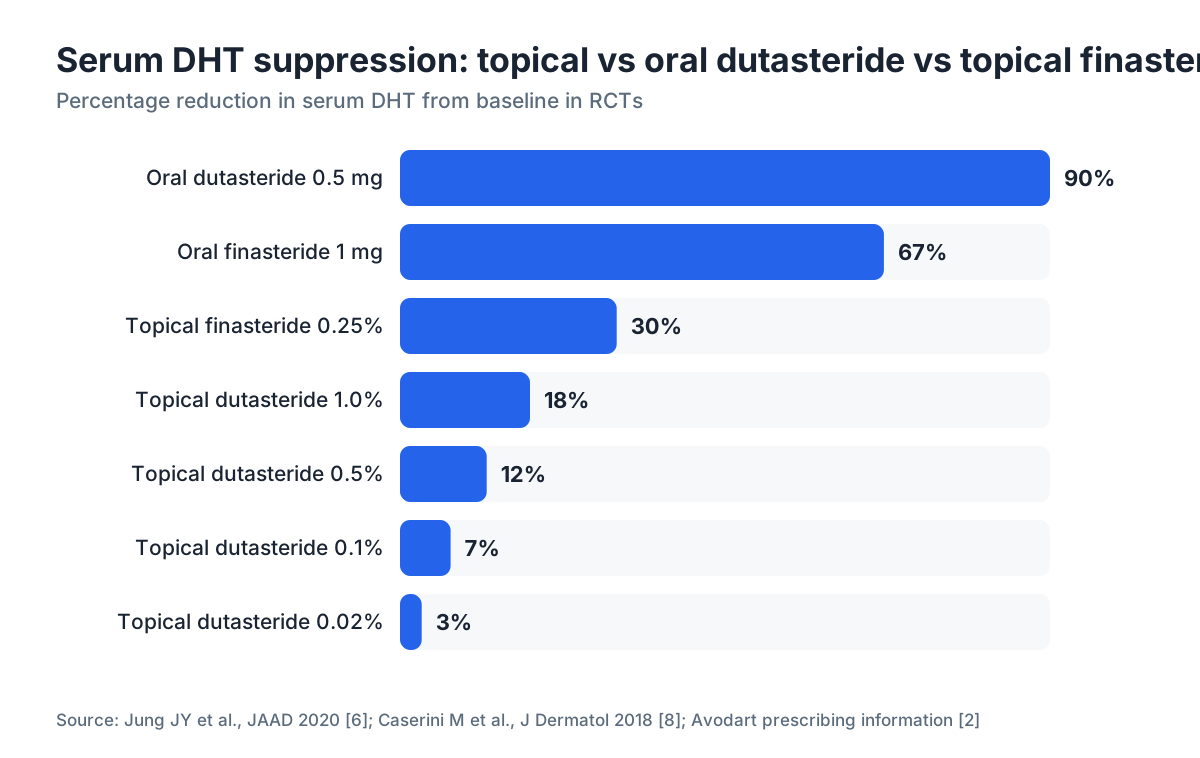
The trouble with oral dutasteride is the trouble with shutting DHT down everywhere at once. DHT does things you want it to do, including keeping libido, erectile function, and ejaculatory volume where they should be. Swallow a 0.5 mg capsule daily and the drug goes everywhere. Serum DHT drops by roughly 90% within a few weeks [2]. That's not a subtle number, and it's the reason sexual side effects turn up in the trials.
Topical dutasteride is a different game. You put it on your scalp. The point is to knock down DHT inside the follicle while keeping as little of the drug as possible in your blood. If that works, you get most of the hair benefit for a fraction of the systemic exposure. Whether it works that way is the whole question here. The dht blocker article shows how all these drugs fit together.
What sexual side effects does oral dutasteride cause?
The FDA prescribing information for Avodart (oral dutasteride 0.5 mg) lists three sexual adverse events from a two-year placebo-controlled trial of 4,325 men: decreased libido in 3.0% versus 1.7% on placebo, ejaculation disorders in 1.4% versus 0.5%, and erectile dysfunction in 1.4% versus 0.7% [2]. Those numbers come from men taking the drug for an enlarged prostate, not hair loss.
Longer real-world estimates run higher. A pooled analysis of large dutasteride trials reported sexual adverse events in roughly 6 to 9% of oral users over four years [3]. The drug also carries an FDA warning about a possible link to high-grade prostate cancer in some studies, though urologists still argue about what that finding actually means.
Then there's post-finasteride syndrome, reported for finasteride and, anecdotally, for dutasteride. It describes sexual and neurological side effects that stick around after you quit the drug. The evidence for persistent post-drug effects is thin and contested, but it's honest to mention it, because some men report it and the FDA updated the finasteride label about persistent sexual side effects in 2012 [4]. Whether dutasteride carries the same risk is unknown. No comparable large study exists.
One number to sit with: oral dutasteride's half-life is about five weeks [10]. Stop the drug because of side effects and it stays in your system at detectable levels for months. Finasteride clears in about six hours. That gap matters a lot if you want to try the drug cautiously and back out fast.
How much DHT does topical dutasteride suppress compared to oral?
This is where the data get interesting. Several small and medium trials have measured both scalp DHT and serum DHT after people applied topical dutasteride.
A 2021 randomized trial in the Journal of the American Academy of Dermatology tested a topical dutasteride 0.1% solution in 90 men with androgenetic alopecia over 24 weeks. Serum DHT fell about 7% from baseline in the topical group, against roughly 90% in a group on oral 0.5 mg dutasteride. That paper didn't directly quantify scalp DHT suppression, but the hair count gains were statistically significant [5].
A 2020 Korean phase 2 randomized controlled trial tested four concentrations of topical dutasteride (0.02%, 0.1%, 0.5%, and 1%) against vehicle and oral 0.5 mg dutasteride in 153 men. Serum DHT suppression ran from about 3% at the 0.02% concentration to 18% at 1%. The oral group hit roughly 87%. Hair regrowth at 0.5% and 1% topical matched oral [6].
That 3 to 18% serum suppression versus 87 to 90% for oral is the comparison that matters most in this article. It says topical dutasteride works hard at the follicle while leaving most of your bloodstream alone. Whether 3 to 18% serum suppression is low enough to spare sexual function in practice isn't settled, because none of these trials were built or powered to catch a side effect that shows up in a few percent of users.
| Formulation | Serum DHT suppression | Sexual AEs reported in trials |
|---|---|---|
| Oral dutasteride 0.5 mg | ~87-90% | 6-9% over 4 years [3] |
| Topical dutasteride 0.5% | ~9-12% | None reported in phase 2 [6] |
| Topical dutasteride 1.0% | ~16-18% | None reported in phase 2 [6] |
| Oral finasteride 1 mg | ~65-70% | ~3-8% in trials [4] |
The "none reported" in phase 2 topical trials is partly a sample size story. A trial of 153 men over 24 weeks won't reliably catch a side effect that hits 3% of users.
Is topical dutasteride actually safer for sexual function?
Probably yes. The evidence to prove it beyond doubt doesn't exist yet.
Here's the logic. Sexual side effects from 5-alpha reductase inhibitors are thought to come mainly from systemic DHT suppression hitting the hypothalamic-pituitary axis, penile smooth muscle, and peripheral nerve function. If topical dutasteride keeps systemic exposure at 3 to 18% of what the oral version does, the odds of those downstream effects should drop too. That's a fair inference from mechanism, not a proven clinical fact.
The Korean phase 2 trial reported zero sexual adverse events in any topical group [6]. The 2021 JAAD trial reported none in the topical cohort either [5]. But these trials weren't designed to catch rare events. A proper safety trial of topical dutasteride aimed at sexual function would need hundreds of participants tracked for at least two years. Nobody has published that study.
Skin absorption varies person to person, and that changes the picture. People with a compromised scalp barrier (dermatitis, psoriasis, sunburn, raw skin from an aggressive dermaroller) may absorb more drug into the blood. Application technique, the vehicle in the formulation, and the state of your scalp all push the serum number up or down. The tidy 3 to 18% range came from controlled trials. Real bathrooms are messier.
What did the largest trials find on dutasteride hair growth?
The ARIA study was a six-month randomized controlled trial of 917 men with androgenetic alopecia comparing oral dutasteride 0.5 mg against oral finasteride 1 mg and placebo. Dutasteride beat finasteride on hair count at 24 weeks. Mean change in target area hair count was +12.2 hairs per square centimeter for dutasteride, +7.3 for finasteride, and +2.3 for placebo [3]. GlaxoSmithKline funded the study, which is worth flagging, though the methodology went through peer review.
On the topical side, the 2020 Korean phase 2 trial found that topical dutasteride 0.5% and 1% produced hair count gains statistically comparable to oral dutasteride 0.5 mg after 24 weeks [6]. That's the finding that turned topical dutasteride into a real subject of interest. Hair density, thickness, and patient self-assessment all trended together between the best topical concentrations and oral.
None of these trials ran past six months. Hair loss is a long game. A drug that looks good at six months may or may not hold that edge at two years or five. Keep that ceiling in mind.
For where dutasteride sits against the drugs most people actually start on, the finasteride and finasteride and minoxidil articles cover the standard oral options in detail.
Is topical dutasteride FDA-approved?
No. As of mid-2026, topical dutasteride is not FDA-approved for anything. Oral dutasteride (Avodart, 0.5 mg) is FDA-approved only for benign prostatic hyperplasia, not hair loss [2]. When a doctor prescribes oral dutasteride for pattern baldness, that's off-label.
Topical dutasteride is available in the US through compounding pharmacies, in various concentrations and vehicles (usually propylene glycol or ethanol-based solutions). Compounded drugs aren't FDA-approved and don't meet the same manufacturing standards as commercial products. Potency and purity can differ from one pharmacy to the next.
Regulatory status splits by country. South Korea's Ministry of Food and Drug Safety approved a topical dutasteride 0.1% solution (Duta Plus, Pharmbio Korea) in 2022 for androgenetic alopecia, the first such approval anywhere [7]. That green light rested on the phase 2 data above. Japan and parts of Europe are at various review stages. US approval, if it ever lands, would need more trial data meeting American standards.
So the practical read: if you're in the US and a compounding pharmacy is selling you topical dutasteride, you're getting an unapproved formulation. That's not automatically a reason to avoid it, plenty of useful treatments start here, but there's no FDA label to check for dosing or safety.
How does topical dutasteride compare to topical finasteride for side effects?
Topical finasteride has the deeper safety record. A 2018 randomized trial in the Journal of Dermatology tested a topical finasteride 0.25% solution daily in 323 Italian men over 52 weeks. Serum DHT fell 21 to 39% in the topical finasteride groups depending on formulation, against 62% for oral finasteride 1 mg. Sexual adverse events showed up in 0% of topical finasteride users versus about 2.5% for oral in that study [8].
Topical dutasteride's serum DHT suppression (3 to 18%) sits even lower than topical finasteride's (21 to 39%), which suggests less systemic impact still. But dutasteride blocks both Type I and Type II reductase, while finasteride blocks only Type II. That wider reach lets dutasteride clear more DHT inside the scalp even at lower serum concentrations. Low blood levels, high follicle effect. That's exactly the combination researchers want.
If sexual side effects are your top worry and you're choosing between topical options, topical finasteride has more data behind it right now. Topical dutasteride looks more promising on efficacy and thinner on long-term safety. That tradeoff is real, and it's worth talking through with a dermatologist before you start either one.
What's the actual risk if you try oral dutasteride for hair loss?
A few things are genuinely known. The sexual side effect rate in controlled trials runs roughly 3 to 6% for any single event (decreased libido, erectile dysfunction, ejaculation disorder) at two years [2]. Small, but not tiny. A 3% rate means about 1 in 33 users reports a problem.
Dutasteride is also teratogenic. The FDA label states the oral capsule is contraindicated in women who are or may become pregnant, because DHT is needed for normal male fetal genital development [2]. Women handling the capsules are told to wear gloves. That contraindication is written for the oral form. The risk profile for topical dutasteride in women of reproductive age has never been formally established, which matters because some dermatologists do prescribe topical dutasteride off-label for female pattern hair loss.
For men trying to preserve fertility, oral dutasteride cuts sperm count and motility. A study of 27 men found significant drops in semen parameters during oral dutasteride use [9]. Levels usually recover after you stop, but the five-week half-life means recovery takes months, not days.
The receding hairline guide covers how to judge whether your loss has reached the stage where a prescription oral drug makes sense, versus topical or non-drug routes.
Who is a good candidate for topical dutasteride instead of oral?
Men who had sexual side effects on oral finasteride or oral dutasteride are the clearest candidates. If your libido dropped or erections changed on an oral 5-alpha reductase inhibitor, a topical formulation that keeps most of the drug out of your blood is worth raising with a dermatologist.
Men who are anxious about sexual side effects but have never touched a 5-alpha reductase inhibitor are another fair group. Starting with the lower-exposure option makes sense on instinct, even if the topical evidence is thinner.
Men trying to conceive should probably skip oral dutasteride entirely. Topical dutasteride's effect on semen parameters isn't studied, but lower serum levels point to lower risk. No published trial has looked at sperm parameters with topical application.
Women with pattern hair loss are the messiest case. Topical dutasteride gets used off-label in women. The teratogenic risk of the oral form makes topical potentially more appropriate for premenopausal women, but there's essentially no published RCT data in women for either oral or topical dutasteride in hair loss. That's a real gap, not a footnote.
If you want a data-driven read on your own pattern before you pick a route, the free AI scan at MyHairline can estimate your Norwood or Ludwig stage, which frames how aggressive your treatment actually needs to be.
For what pairs well alongside it, see the minoxidil for men article, since minoxidil often runs together with a 5-alpha reductase inhibitor.
What should you ask your doctor before starting dutasteride in any form?
Ask whether they've prescribed topical dutasteride before, and from which compounding pharmacy. Formulation matters. The vehicle that carries the drug into your skin changes both absorption and how well your scalp tolerates it. Some formulations use alcohols or penetration enhancers that irritate the scalp.
Ask about baseline testing. Some dermatologists and urologists order a baseline PSA (prostate-specific antigen) before oral dutasteride, because the drug cuts PSA by about 50%, which can throw off prostate cancer screening [2]. If you're over 40, this is worth doing.
Ask about the monitoring plan. What sign would push you from topical to oral, or from oral to stopping? Have that conversation before you start, not under pressure later.
Ask about combination therapy. Most hair loss specialists run a 5-alpha reductase inhibitor alongside minoxidil. The finasteride and minoxidil pairing has the best evidence, and the same additive logic carries over to dutasteride. Adding oral minoxidil at a low dose (1.25 to 2.5 mg per day) is increasingly common and works through a different mechanism, so it doesn't just double up the effect.
And ask straight about the evidence limits. Any physician who calls topical dutasteride proven safe without a caveat is overstating what we know. The data are promising and mechanistically sound. The long-term safety trial hasn't been run.
How long does it take to see results with topical or oral dutasteride?
Pattern hair loss moves slow in both directions. You lose it slowly, you regrow it slowly. Expect no visible change for the first three to four months. The 24-week trials showing statistically significant hair counts are measuring changes most people can't see in a mirror. Those trials count individual hairs inside a fixed target area with instruments.
Most clinicians tell patients to judge any 5-alpha reductase inhibitor at 12 months. By then you should have a clear read on whether the drug is holding your loss steady, growing hair back, or doing nothing. Take photos, same lighting, same angle, every month. The gap between month one and month twelve reads much clearer than month to month.
Oral dutasteride's long half-life means it takes longer to reach steady blood levels. Full serum DHT suppression from the oral form typically arrives around four weeks of daily dosing. Topical formulations don't have the same steady-state scalp data, but there's no reason to expect the follicle effect to kick in faster or slower.
If you shed more hair in the first month or two on any 5-alpha reductase inhibitor, that's likely telogen effluvium, a known early reaction to hormonal shifts at the follicle. The telogen effluvium article explains the mechanism and why it doesn't mean the drug is failing.
Are there any alternatives if you want DHT reduction without the side effect risk?
Nothing blocks DHT as well as a 5-alpha reductase inhibitor without carrying some systemic hormonal effect. Saw palmetto, the natural alternative people cite most, has weak evidence for mild 5-alpha reductase inhibition, but no peer-reviewed RCT has shown it grows hair counts anywhere near oral finasteride or dutasteride. The hair loss supplements article walks through the evidence, and the lack of it, for saw palmetto and the rest.
Minoxidil doesn't block DHT at all. It works through a different pathway involving blood flow and potassium channels, so it carries no sexual side effects. If DHT-blocking side effects are a serious concern for you, high-dose minoxidil (topical 5% or low-dose oral) without a 5-alpha reductase inhibitor is a legitimate route, especially for men whose loss hasn't gone far enough to demand DHT blockade. See the minoxidil side effects guide for what minoxidil does and doesn't do systemically.
For severe or advanced loss that hasn't answered medical treatment, a hair transplant is the other option, though a transplant treats the missing hair rather than the hormonal process underneath.
The free AI scan at MyHairline (myhairline.ai/scan) can map your current loss pattern and give you a starting point for these conversations with a dermatologist.
Sources
- American Academy of Dermatology, Hair loss types: androgenetic alopecia
- FDA prescribing information, Avodart (dutasteride) 0.5 mg capsules
- Eun HC et al., British Journal of Dermatology, 2010 (ARIA trial and pooled dutasteride analysis)
- FDA, finasteride (Propecia) label update on sexual side effects, 2012
- Randolph M et al., Journal of the American Academy of Dermatology, 2021: topical dutasteride 0.1% in androgenetic alopecia
- Jung JY et al., Journal of the American Academy of Dermatology, 2020: topical dutasteride phase 2 RCT, Korea
- Ministry of Food and Drug Safety (South Korea), approval notice for Duta Plus topical dutasteride 0.1%, 2022
- Caserini M et al., Journal of Dermatology, 2018: topical finasteride 0.25% RCT, Italy
- Amory JK et al., Journal of Clinical Endocrinology and Metabolism, 2007: dutasteride and semen parameters
- FDA, Drug Development and Drug Interactions: Table of Substrates, Inhibitors and Inducers