
TL;DR: Yes, topical finasteride and oral minoxidil work together. They hit different targets, so the effects add up instead of overlapping. Early clinical data show better density with the combination than either drug alone. The two risks to watch: low blood pressure from oral minoxidil, and some systemic DHT drop from topical finasteride. Have a doctor set the doses.
What do topical finasteride and oral minoxidil actually do?
One drug protects your follicles from a hormone. The other pushes those follicles to grow. That's why combining them isn't redundant.
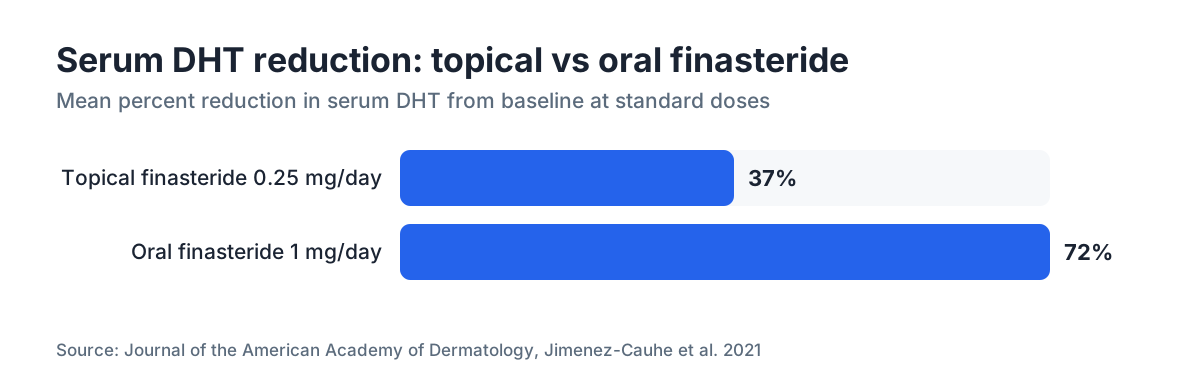
Topical finasteride blocks 5-alpha reductase, the enzyme that converts testosterone into dihydrotestosterone (DHT). DHT is the hormone that shrinks genetically susceptible follicles in androgenetic alopecia. Put finasteride on the scalp instead of swallowing it, and you cut local DHT hard while dropping serum DHT less than the oral 1 mg pill does. That gap is the whole reason dermatologists started using the topical version. A 2021 study in the Journal of the American Academy of Dermatology found 0.25 mg topical finasteride once daily reduced scalp DHT by roughly 60 percent while reducing serum DHT by only about 37 percent, compared to the oral 1 mg dose cutting serum DHT by around 72 percent [1].
Oral minoxidil works on a completely separate track. It's a potassium channel opener that increases blood flow to hair follicles and stretches out the anagen (growth) phase of the hair cycle. It touches DHT not at all. The FDA approved minoxidil tablets decades ago for high blood pressure. Dermatologists now use it off-label at much lower doses, usually 0.625 mg to 5 mg daily, for hair loss [2].
So one drug guards existing follicles from hormonal damage while the other drives them to grow harder. Two mechanisms, two jobs, no overlap. That's the logic behind pairing them.
For a deeper look at how the oral version works on its own, see oral minoxidil.
Is it safe to combine topical finasteride with oral minoxidil?
Generally yes, at sensible doses and with a doctor involved. No major interaction exists between the two. Topical finasteride goes through the skin and gets processed by the liver. Oral minoxidil goes through the gut and acts on smooth muscle and hair follicles. They don't fight over the same enzymes, and they don't amplify each other's worst risks [3].
Combining any two active drugs still means two sets of side effects can show up at once, even without a direct interaction.
The usual trouble with oral minoxidil is cardiovascular: fluid retention, a faster resting heart rate, and low blood pressure (hypotension), especially standing up fast (orthostatic hypotension). At hair-loss doses these are usually mild. They're still real. A 2022 retrospective study in the Journal of the American Academy of Dermatology tracked 1,404 patients on low-dose oral minoxidil and found side effects in about 14.9 percent, with fluid retention and excess hair growth (hypertrichosis) leading the list [4].
Topical finasteride brings its own issues. Even with less systemic absorption than the pill, some DHT suppression reaches the bloodstream. For most men with androgenetic alopecia that's the point, but it means the sexual side effects tied to finasteride, though less common than with the oral pill, aren't fully off the table. The numbers here are thin because topical finasteride is newer and its trials are small.
Women of childbearing age should not use finasteride in any form. The FDA label carries a pregnancy category X warning, meaning it's contraindicated in pregnancy [5]. Men worried about sexual side effects should read finasteride before starting.
Here's the honest bottom line. For a healthy adult with no cardiac history, the combination is well-tolerated at standard doses. "Well-tolerated" is not "no monitoring needed." Check blood pressure and heart rate when you start oral minoxidil. Tell your prescribing doctor everything you're taking.
What does the clinical evidence say about combining them?
The evidence for this exact pairing is growing but still thin next to the decades of data behind oral finasteride plus topical minoxidil. Nobody has run a large trial on topical finasteride paired specifically with oral minoxidil. The logic is solid and dermatologists use it, but the direct data are limited, and that's worth saying plainly.
Most of the rationale comes from studies on finasteride plus minoxidil in their more established forms. A 2015 randomized controlled trial in Dermatologic Therapy followed 450 men with androgenetic alopecia for 12 months. The group on both oral finasteride 1 mg and topical minoxidil 5% showed significantly greater hair count increases than either drug alone [6]. The combination group gained roughly 20 more hairs per cm² than the finasteride-only group at 12 months.
For the topical route specifically, a 2020 study in JAMA Dermatology tested a compounded solution of 0.25% topical finasteride plus 6% minoxidil in men with androgenetic alopecia. Density improvements matched oral finasteride 1 mg plus topical minoxidil, with less systemic DHT reduction [7].
The American Academy of Dermatology guidelines name minoxidil and finasteride as the two best-evidence medical treatments for androgenetic alopecia and say combination use is reasonable [8].
If you're tracking all the evidence options for male pattern hair loss, finasteride and minoxidil covers the broader research.
How do you use them together, and what doses are typical?
Topical finasteride comes as a compounded solution or spray, usually between 0.1% and 0.3% per mL, applied once daily to the scalp. Some formulations put finasteride and topical minoxidil in the same bottle. If you're taking oral minoxidil separately, you're just adding a once-daily low-dose pill to that routine.
Typical oral minoxidil doses for hair loss, as reported in dermatology practice, run 0.625 mg to 2.5 mg daily for women and 2.5 mg to 5 mg daily for men. Those sit far below the 10 mg to 40 mg doses used for hypertension. Many clinicians start men at 2.5 mg and adjust from there.
Timing doesn't need to line up. Plenty of people apply topical finasteride in the morning and take oral minoxidil with food whenever it fits their day. Take the pill at the same time each day, though, because oral minoxidil has a short half-life of about 4.2 hours in blood even though its hair-growth effect lasts longer [2].
One practical note. Compounded topical finasteride is not an FDA-approved standalone product. The oral finasteride 1 mg tablet (Propecia and generics) is FDA-approved for male androgenetic alopecia. Oral minoxidil for hair loss is off-label use of an approved antihypertensive. Those distinctions matter if insurance is in the picture.
For how men specifically use minoxidil, see minoxidil for men.
Who is a good candidate for this combination?
Men with androgenetic alopecia at Norwood stages 2 through 5 are who dermatologists most often consider for dual therapy. Early-to-mid stages respond best because there are still living follicles to work with. At advanced stages, follicles may be too scarred to respond to either drug, combined or not.
The most natural candidates are people who ran one drug alone for 12 months and got partial results. If topical minoxidil alone wasn't enough and the systemic exposure from oral finasteride feels like too much, topical finasteride plus oral minoxidil is a reasonable pivot.
Women with androgenetic alopecia or diffuse thinning can use oral minoxidil, one of the few well-supported options they have. But finasteride in any form is off the table for women who are pregnant or could become pregnant [5]. Postmenopausal women are sometimes prescribed finasteride off-label, though that's an individual call.
Be cautious or skip oral minoxidil entirely if you have a history of heart disease, pericardial effusion, or renal insufficiency, or you're already on blood pressure medication. Stacking oral minoxidil on top of antihypertensives can drive your pressure too low.
Still sorting out what kind of hair loss you have? What causes hair loss is a good place to start before you pick a treatment.
What are the side effects you should actually watch for?
With oral minoxidil, watch for three things.
Fluid retention, which shows up as puffiness around the ankles or face. It's more common above 5 mg and usually responds to a low dose of a diuretic if it gets annoying. The 2022 retrospective study found fluid retention in about 7.3 percent of patients on low-dose oral minoxidil [4].
Hypertrichosis, meaning unwanted hair on the face, arms, or body. About 14.9 percent of patients in that same large study had some adverse effect, with hypertrichosis the most common. For women, facial hair growth is a real concern and one reason low starting doses matter.
Dizziness or lightheadedness, especially standing up. That's orthostatic hypotension, a leftover from minoxidil's blood pressure origins. Taking it at night with food eases it for most people.
With topical finasteride, watch for two.
Sexual side effects, the same ones tied to oral finasteride but reportedly less often. Decreased libido, erectile dysfunction, reduced ejaculatory volume. The frequency looks lower with topical use because serum DHT suppression is smaller, but controlled data on topical formulations specifically are limited. If any of these show up, talk to your doctor before quitting cold.
Scalp irritation from the carrier vehicle in some compounded solutions. Alcohol-based vehicles can cause dryness or flaking. Switching formulations usually fixes it.
Read minoxidil side effects for a full breakdown of what to expect with minoxidil.
How long does the combination take to work?
Expect nothing meaningful for the first three to four months. Hair loss treatments work on the hair cycle, and the cycle is slow. Some people actually see more shedding in months one and two, a well-documented event called a minoxidil shed: follicles pushed into the growth phase drop their old telogen hairs first. It's alarming if nobody warned you. It doesn't mean the treatment is failing. See telogen effluvium for the mechanics.
Most dermatologists check the combination at 6 months for early signals and 12 months for a real read on whether it's working. The 2015 combination trial used 12 months as its primary endpoint [6]. Photographs under consistent lighting every three months beat everything else for tracking change, because daily mirror checks are useless.
No response after 12 months of consistent use is worth a conversation about whether a hair transplant makes sense next. Medications and surgery aren't either-or. Many people do both.
Does topical finasteride really absorb less than the oral pill?
Yes, and the data back it up, though the picture isn't perfectly clean. This is the whole selling point of the topical version, and it mostly holds.
The 2021 JAAD study found 0.25 mg topical finasteride daily cut mean serum DHT by about 37.0 percent, while oral finasteride 1 mg daily cut it by about 72.4 percent [1]. Scalp DHT reduction was similar between the two, which is exactly what you want: local effect kept, systemic exposure trimmed.
"Reduced" is not "zero," though. Topical finasteride does reach the bloodstream. How much depends on the formulation (the vehicle matters a lot), scalp condition, how much you apply, and whether there's any scalp damage or inflammation. A study in Skin Pharmacology and Physiology showed ethosome-based delivery systems raised skin penetration compared to standard alcohol solutions, which matters if your goal is minimizing systemic exposure [9].
The practical read: topical finasteride is a reasonable pick for men who want less systemic DHT exposure than the pill. It's not a loophole that erases systemic effects. For more on DHT and how blocking it works, dht blocker has the context.
What about using the three-drug combination: topical finasteride, topical minoxidil, and oral minoxidil?
Some compounded products put topical finasteride and topical minoxidil in one bottle, and some people then add oral minoxidil on top. This is more aggressive and, honestly, uncommon in standard practice.
The concern is minoxidil overlap. You'd be getting it both systemically (the pill) and topically. Whether that adds real benefit over either route alone isn't established. The cardiovascular effects of oral minoxidil could tick up if scalp absorption of the topical is also happening, though at hair-loss doses the total absorbed amount is probably small.
If you're using a combination topical solution and thinking about adding oral minoxidil, flag it to your prescribing doctor directly. It's not an obvious contraindication, but it's not standard practice and it deserves oversight.
For most people the cleaner protocol is topical finasteride to the scalp once daily plus oral minoxidil 2.5 mg to 5 mg daily. That's the version with the most real-world use and the closest thing to an evidence base.
To see how this fits managing a receding hairline specifically, receding hairline covers the full range of options.
How does this combo compare to other treatment options for hair loss?
Here's an honest comparison of the main approaches dermatologists recommend for androgenetic alopecia.
| Treatment | Evidence level | Typical monthly cost | Systemic exposure | Works for women? |
|---|---|---|---|---|
| Topical minoxidil 5% (OTC) | Strong (FDA-approved) | $10-20 | Low | Yes (2% approved) |
| Oral finasteride 1 mg | Strong (FDA-approved) | $10-30 | High | No (contraindicated in pregnancy) |
| Topical finasteride 0.25% | Moderate (off-label compounded) | $40-80 | Lower than oral | Off-label only |
| Oral minoxidil 2.5-5 mg | Moderate (off-label) | $10-30 | High | Yes (at 0.625-2.5 mg) |
| Topical finasteride + oral minoxidil | Emerging (off-label) | $50-110 | Moderate | Finasteride not for most women |
| Hair transplant surgery | Strong for surgical outcome | $4,000-16,000 (one-time) | None | Yes |
Cost estimates reflect U.S. cash prices as of 2025 and vary by pharmacy and formulation. Compounded topical finasteride pricing swings a lot depending on which compounding pharmacy fills it.
Topical finasteride plus oral minoxidil sits in the middle of both the evidence and cost spectrum. It's more targeted than oral finasteride (less systemic DHT suppression) and often more convenient than a topical-only regimen for people who keep forgetting to apply solutions.
For context on what supplements people try alongside or instead of medications, see hair loss supplements.
Should you track your progress, and how?
Yes, and be systematic about it.
Baseline photographs before you start matter more than people think. Same lighting (natural window light, same time of day), same camera position, same angles: top-down, both temples, the crown. Repeat every three months.
Some dermatologists use trichoscopy, a dermoscopy technique that counts hair density per square centimeter, for objective numbers. You won't have that at home, but a dermatologist visit every six months makes sense for the first year on combination therapy.
Want a faster initial read before you see a doctor? The free AI scan at MyHairline can characterize your pattern and Norwood stage, which is useful context to bring to a clinical visit.
Blood pressure checks, especially in the first 4 to 8 weeks on oral minoxidil, are a reasonable precaution. No doctor's office needed. A pharmacy machine or home cuff works. You're confirming your resting pressure isn't dropping too low, generally defined as systolic below 90 mmHg.
What do dermatologists actually prescribe, and how do you get this combination?
In the United States, topical finasteride is not an FDA-approved standalone product. Getting it means a prescription for a compounded formulation from a licensed compounding pharmacy. Oral finasteride (1 mg) is FDA-approved and cheap as a generic. Oral minoxidil is FDA-approved at hypertension doses and available generically, so a doctor prescribing it at 2.5 mg or 5 mg for hair loss is straightforward.
Telehealth hair loss platforms made access much easier. Many will prescribe compounded topical finasteride and oral minoxidil through an asynchronous online visit. Compounding pharmacy prices and quality vary enough that it's worth asking your prescriber which pharmacy they use and whether it's PCAB-accredited (the Pharmacy Compounding Accreditation Board sets quality standards) [11].
Direct-to-consumer pricing for compounded topical finasteride runs about $40 to $80 per month. Generic oral minoxidil tablets cost roughly $10 to $30 per month at most pharmacies. The combination totals $50 to $110 monthly, far below surgery and in the same range as some subscription-based branded oral finasteride services.
A licensed physician or dermatologist should evaluate you before prescribing, especially with any cardiovascular history. The American Academy of Dermatology has guidance on finding a board-certified dermatologist at aad.org [8].
If you're further along in hair loss and wondering whether medications are still worth starting, hair transplant covers what surgery can and can't do, and when people combine it with ongoing medication.
Sources
- Journal of the American Academy of Dermatology, Jimenez-Cauhe et al. 2021, topical vs oral finasteride DHT reduction
- FDA, minoxidil tablets prescribing information (NDA 018677)
- U.S. National Library of Medicine, DailyMed, finasteride 1 mg tablet label
- Journal of the American Academy of Dermatology, Randolph and Tosti 2022, low-dose oral minoxidil retrospective study, 1404 patients
- FDA, finasteride 1 mg (Propecia) prescribing information, pregnancy category X warning
- Dermatologic Therapy, Hu et al. 2015, randomized trial finasteride plus minoxidil combination vs monotherapy, 450 men, 12 months
- JAMA Dermatology, Vano-Galvan et al. 2020, topical finasteride 0.25% plus minoxidil 6% combination solution
- American Academy of Dermatology, hair loss treatment guidelines and provider finder
- Skin Pharmacology and Physiology, ethosome vehicle vs standard solution for topical finasteride absorption
- FDA, oral finasteride 1 mg (Propecia) approval, NDA 020788
- United States Pharmacopeia (USP), compounding standards