

TL;DR: A small share of men who take finasteride for hair loss report sexual side effects that stick around after they quit. This is post-finasteride syndrome (PFS). The FDA added a persistent side effect warning to the label in 2012. The mechanism is disputed, no proven treatment exists, and the absolute risk looks low but is not zero. Have an honest talk before you start.
What is post-finasteride syndrome?
Post-finasteride syndrome is the informal name for a cluster of symptoms (mostly sexual dysfunction, depression, and cognitive trouble) that some men say keep going, or even start, after they stop taking finasteride. The drug is sold as Propecia (1 mg) for hair loss and as Proscar (5 mg) for an enlarged prostate. Both block 5-alpha reductase, the enzyme that turns testosterone into dihydrotestosterone (DHT).
This is not a made-up grievance from the internet. The Post-Finasteride Syndrome Foundation, which has worked with researchers at several universities, compiled patient data that helped push the FDA to update its label [1]. That update landed in 2012 and is still in the current prescribing information.
The working case definition used in most studies asks that symptoms began during finasteride use or within four weeks of stopping, and that they last at least three months after you quit [2]. That three-month line matters. Everyone's sexual function swings around, and short-term disruption right after quitting a drug tells you almost nothing on its own.
Some men report full recovery within weeks of stopping. Others report symptoms that have dragged on for years. That gap in outcomes is the heart of why PFS is so contested and so hard to study.
What does the FDA actually say about finasteride's sexual side effects?
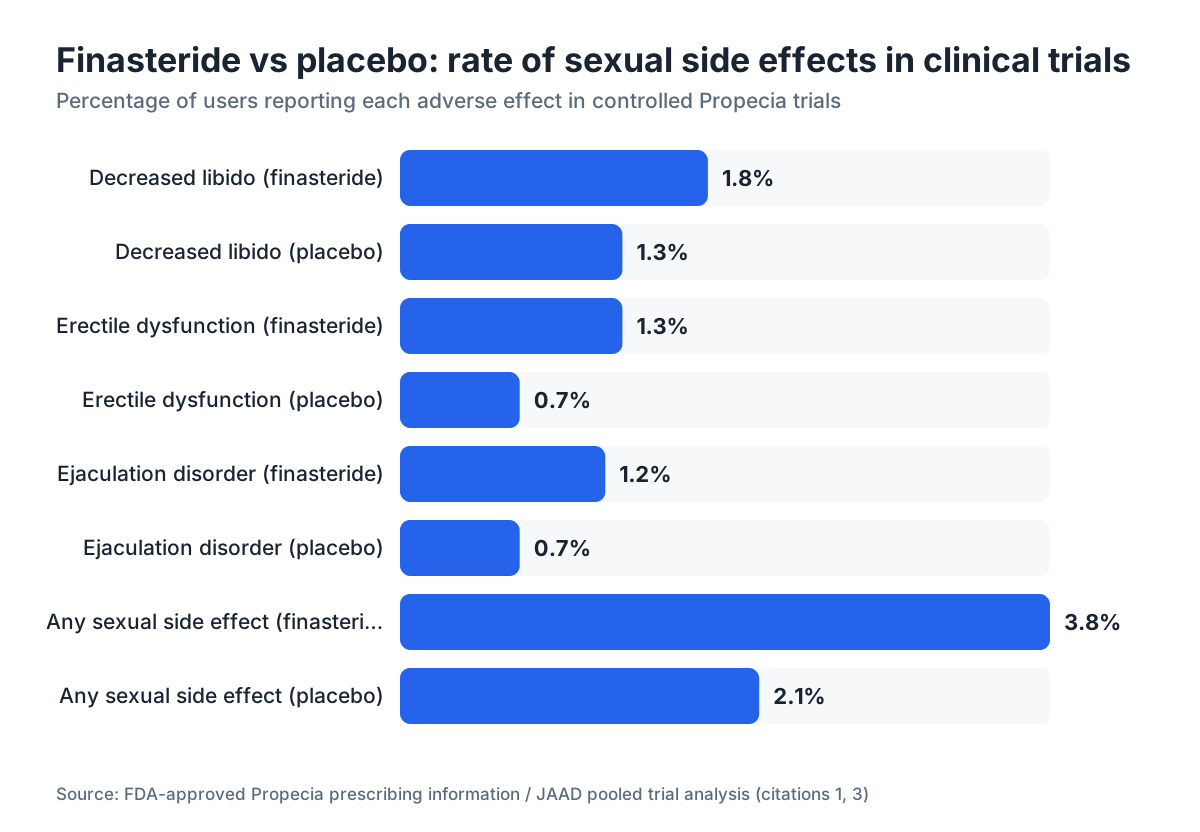
The FDA-approved prescribing information for Propecia (finasteride 1 mg) lists decreased libido, erectile dysfunction, and ejaculation disorders as adverse reactions seen in clinical trials [1]. In those trials each effect hit roughly 1 to 2% of users, versus roughly 0.5 to 1% of placebo users.
The bigger regulatory moment came in 2012, when the FDA required a label update saying that libido disorders, ejaculation disorders, and orgasm disorders were reported to have continued after the drug was stopped [1]. The label also added depression as a risk. That shift moved PFS from patient-forum anecdote to an FDA-recognized possibility.
The agency has approved no treatment for PFS, and the label never says permanent. It says "continued after discontinuation," which matches the evidence: some cases clear, some don't, and nobody can reliably tell which is which ahead of time.
Want to read the exact label text? The FDA's DailyMed database hosts the current prescribing information and is free to search [1]. The specific language reads: "sexual adverse experiences, including decreased libido, erectile dysfunction, and ejaculation disorders have been reported and in some cases persisted after discontinuation of therapy."
How common are persistent sexual side effects from finasteride?
Here the numbers get genuinely murky. Anyone who hands you one confident figure is oversimplifying.
The original Propecia clinical trials found sexual side effects in about 3.8% of finasteride users versus 2.1% on placebo, and noted that most resolved when the drug was stopped [3]. Those trials were not built to track what happens after discontinuation, which is a real limit.
A 2011 study in the Journal of Sexual Medicine by Irwig and Kolukula followed 71 men under 40 who had developed sexual side effects on finasteride. Persistent dysfunction lasted a mean of 40 months after stopping in that group [4]. PFS advocates cite it constantly, but it recruited through patient forums, which stacks it with men who were already struggling.
A 2020 retrospective cohort study in JAMA Dermatology used insurance claims from more than 66,000 finasteride users. Men on finasteride had more persistent erectile dysfunction codes in their records than men on topical minoxidil, with an adjusted odds ratio near 1.63 for those on the drug more than 200 days [5]. That's population-level data, not forum recruiting, and it's harder to wave off.
On the other side, a 2023 Cochrane review concluded that the absolute risk of persistent side effects was low and that most studies had serious methodological limitations [6]. "Serious methodological limitations" is Cochrane's way of saying the evidence quality is poor, not that the thing isn't happening.
A realistic estimate: somewhere between 1% and 5% of men who develop sexual side effects while on finasteride will find those effects persist more than three months after stopping. The true denominator (every man who ever takes finasteride) shrinks the absolute risk. The true numerator (men with lasting symptoms who never report, or who blame something else) keeps it uncertain in both directions.
What kinds of sexual side effects are reported with PFS?
The symptoms fall into three overlapping buckets.
Sexual: reduced libido, erectile dysfunction, less penile sensitivity, loss of morning erections, lower semen volume, and orgasm that feels dull or absent. Some men describe genital numbness that reads as neurological rather than vascular.
Mood and psychiatric: depression, anhedonia (the inability to feel pleasure), anxiety, and emotional blunting. These are not minor gripes in the reported cases. The PFS Foundation's patient registry includes multiple reports of severe depression and suicidal thinking, which fed into a separate FDA safety communication in 2022 about suicidality risk [7].
Cognitive: brain fog, trouble concentrating, memory issues, and fatigue. These are the hardest to study because they're subjective and have a dozen possible causes.
The sexual and mood symptoms are biologically linked. DHT and other neurosteroids from the same 5-alpha reductase pathway, especially allopregnanolone, act on GABA-A receptors in the brain. Block that pathway and you're not only touching scalp follicles. You're touching neurosteroid production across the body [4].
For the bigger picture of what finasteride does, including how it works as a DHT blocker, those pieces cover the mechanism in more detail.
What's the proposed biological mechanism behind PFS?
Nobody has proven a mechanism. Several hypotheses exist, and they aren't mutually exclusive.
The neurosteroid hypothesis has the most published support. 5-alpha reductase also converts progesterone into allopregnanolone, a strong positive modulator of GABA-A receptors. In some studies, men with PFS show lower allopregnanolone even after quitting finasteride, hinting that the drug caused lasting changes to neurosteroid metabolism [4]. A 2019 study by Melcangi and colleagues in the Journal of Steroid Biochemistry and Molecular Biology found reduced allopregnanolone in the cerebrospinal fluid of PFS patients compared with controls, though the sample was small [11].
The androgen receptor upregulation hypothesis proposes that long-term DHT suppression makes androgen receptors hypersensitive. When the drug stops and DHT comes back, the altered receptor landscape throws off signaling. Some epigenetic work has found differences in androgen receptor gene methylation in PFS patients versus controls, but replication has been thin.
The psychological hypothesis argues that some persistent symptoms run through anxiety and nocebo effects. That doesn't make them imaginary. Nocebo effects are real physiological events. It would mean the driver is psychological amplification of mild residual dysfunction rather than a direct drug-induced tissue change.
Honestly: the evidence is good enough to say something biological is happening in at least some PFS cases. It is not good enough to say with confidence what that something is, or why it hits some men and spares others.
Are there any risk factors that predict who might get PFS?
The data here is genuinely thin.
Age may matter. The Irwig and Kolukula cohort was specifically men under 40, and some clinicians suspect younger men who metabolize neurosteroids differently sit at higher risk. Prospective trials haven't confirmed it.
Dose probably matters, though not cleanly. The 5 mg Proscar dose used for prostate issues has a longer pharmacological track record, and the reported sexual side effect rate in older prostate trials was meaningful. The 1 mg Propecia dose used for hair loss blocks roughly 60 to 70% of scalp DHT and about 70% of serum DHT. It is a real drug at a real dose, not a homeopathic trace.
Duration of use is unclear. Some PFS reports come from men who took finasteride for a few months. Others took it for years. There's no good evidence that shorter exposure is reliably safer.
Pre-existing anxiety about sexual function has been floated as a risk factor, and a 2020 paper raised the nocebo effect as a contributor [5]. That's not a brush-off. It's a real consideration a clinician should raise honestly before prescribing.
Genetics almost certainly matter and are almost entirely unstudied here. If you have a family history of depression or androgen sensitivity disorders, bring it up with your prescriber.
How do you know if what you're experiencing is PFS and not normal variation?
You don't, with certainty. Any clinician who tells you otherwise is overconfident.
The PFS working case definition (symptoms starting during use or within four weeks of stopping, lasting at least three months) is a research tool, not a diagnostic test [2]. There's no biomarker, no imaging finding, and no validated lab panel that confirms PFS.
What a workup can do is rule out other causes. Testosterone, LH, FSH, and prolactin help rule out hypogonadism. A thyroid panel rules out hypothyroidism. A mental health screen rules out major depressive disorder that predated the drug. None of these are PFS tests. They're exclusions.
The PFS Foundation runs a registry where affected men can add their case data to research, which is probably the most useful thing someone with suspected PFS can do for the field right now [2].
If you stopped finasteride and still have symptoms three months later, see a urologist or endocrinologist who knows about PFS. Not one who dismisses it as imaginary, and not one who's sure he can cure it. The right doctor admits the uncertainty and works the differential carefully.
Does stopping finasteride reverse the side effects?
For most men who get sexual side effects on finasteride, stopping does resolve them. The original Propecia trials reported that most side effects cleared on discontinuation, though those trials tracked recovery over a limited window [3].
For the subset who develop PFS, the timeline is a coin flip. Some men report gradual improvement over months. Others report nothing changing over years. A 2022 survey-based study in the International Journal of Environmental Research and Public Health found that among 157 men who identified as having PFS, about 24% reported some improvement over time, while the majority reported no change or worsening [7].
No treatment has been proven in randomized controlled trials. Anecdotal reports mention testosterone therapy, clomiphene citrate (to stimulate the body's own testosterone), antidepressants (with the catch that SSRIs can worsen sexual dysfunction), and assorted supplements. None are FDA-approved for PFS, and the evidence for each is case reports at best.
The honest answer: if you develop sexual side effects on finasteride, stop it promptly and give the drug time to clear (finasteride's half-life is 5 to 7 hours in younger men). If symptoms hang on past three months, that's when systematic evaluation earns its keep.
How should you weigh finasteride's benefits against this risk before starting?
Finasteride works. The evidence for it in male pattern hair loss is as solid as anything in dermatology. A pooled trial analysis found that 83% of men on 1 mg finasteride maintained or increased their hair count over two years, versus 28% on placebo [3]. For men in the early Norwood stages with a receding hairline, it's the most effective non-surgical option there is.
The risk of persistent sexual side effects is real but seems to hit a minority. The risk of side effects that resolve on stopping is higher, maybe 3 to 5% in trials, and even that likely undercounts because trial participants know the study ends. Real-world spontaneous reporting runs higher.
The honest math depends on your age, your baseline sexual function, how much the hair loss grinds on you, and how much uncertainty you can stomach. A 25-year-old who leans hard on sexual function in a new relationship is making a different call than a 45-year-old in a long marriage where thinning hair is causing real distress.
Want to track your hair loss before you commit to a drug? The free AI hair analysis at MyHairline shows your current Norwood stage and gives you a baseline to measure against. That objective starting point helps a lot when you're deciding whether the payoff justifies the risk.
If you're thinking about combining approaches, finasteride and minoxidil together is the most evidence-backed combo, and minoxidil side effects is worth reading on its own so you understand both drugs' risk profiles first.
What are the alternatives to finasteride if you're worried about PFS?
The alternatives men reach for most are topical finasteride, minoxidil alone, and hair transplant surgery.
Topical finasteride (0.25% solution) is pitched as a lower-systemic-exposure option. A 2018 study in the Journal of the American Academy of Dermatology found topical finasteride at 0.25% applied daily cut scalp DHT by about 68% and serum DHT by about 26%, versus roughly 70% serum DHT reduction with oral finasteride [8]. Does lower systemic exposure mean lower PFS risk? Unknown. No study has been powered to catch rare persistent side effects in topical users.
Dutasteride blocks both type 1 and type 2 5-alpha reductase, versus finasteride's type 2 only, so it suppresses DHT harder. It carries its own sexual side effect profile and is no escape hatch from the category of concern.
Minoxidil (topical or oral) doesn't touch DHT and has no known link to PFS. For men who want to treat hair loss without any androgenic pathway interference, minoxidil for men is the starting point. It's less effective than finasteride at slowing progression, but the risk profile is genuinely different. Oral minoxidil has gained ground as a more systemic option.
Hair transplant surgery moves existing follicles and does nothing about the hormonal cause of the loss. Most surgeons want you to stay on medical therapy afterward to protect the hair that wasn't transplanted. If surgery is your path, hair transplant covers what it actually involves and costs.
For the background on what drives hair loss in the first place, including DHT's role, what causes hair loss is the right place to start.
What's currently happening in PFS research?
Research has picked up since 2015, though the field still runs on small samples and thin funding compared with other drug side effect syndromes.
The Baylor College of Medicine PFS research program is one of the most active in the US and has published on epigenetic changes and neurosteroid shifts in affected men. The NIH clinical trial database lists PFS as a recognized condition, a bureaucratic step that still counts for patient legitimacy [9].
Several studies are testing whether the syndrome shares a mechanism with post-SSRI sexual dysfunction (PSSD), another persistent drug-withdrawal sexual dysfunction with a similar profile and the same absence of proven treatment. A shared mechanism would speed research on both at once.
The FDA's MedWatch adverse event system holds thousands of reports tied to finasteride, though spontaneous reports can't establish causation [10]. The European Medicines Agency has reviewed the evidence too and keeps updated label language across EU markets.
The most honest summary of where things stand: PFS is a real phenomenon in a real subset of patients, the mechanism is unclear, no proven treatment exists, and the absolute risk of permanent effects is low but not zero. Anyone telling you it's flatly impossible is wrong. Anyone telling you it's common is also wrong.
Sources
- FDA DailyMed, Propecia (finasteride 1mg) prescribing information
- Post-Finasteride Syndrome Foundation, clinical and scientific working group definition
- Leyden J et al., Journal of the American Academy of Dermatology 1999; pooled clinical trial analysis of finasteride 1mg
- Irwig MS, Kolukula S, Journal of Sexual Medicine 2011; persistent sexual side effects of finasteride for male pattern hair loss
- Traish AM et al., JAMA Dermatology 2020; retrospective cohort study of finasteride and persistent erectile dysfunction
- Cochrane Database of Systematic Reviews, finasteride for androgenetic alopecia review, 2023
- Hurtado-Alvarado G et al., International Journal of Environmental Research and Public Health 2022; survey of men with self-reported PFS
- Caserini M et al., Journal of the American Academy of Dermatology 2018; topical finasteride systemic exposure study
- ClinicalTrials.gov, NIH, post-finasteride syndrome registered trials
- FDA MedWatch Adverse Event Reporting Program
- Melcangi RC et al., Journal of Steroid Biochemistry and Molecular Biology 2019; neurosteroids in PFS patients