TL;DR: You can use minoxidil after scalp laser hair removal, but most dermatologists advise waiting at least 48 to 72 hours after each session, and often 7 to 14 days if your skin is visibly irritated or crusting. Applying minoxidil to broken or inflamed skin raises absorption and systemic side-effect risk. Once healed, minoxidil continues working normally.
Why would someone use minoxidil and laser hair removal on the same scalp?
It sounds contradictory. Laser hair removal destroys follicles. Minoxidil keeps them alive and growing. But people run both procedures on the same scalp more often than you'd guess, and not because they're fighting themselves.
The most common reason is pattern baldness sitting next to unwanted hair on a different part of the scalp. Someone uses laser to clear a patchy beard line that crept onto the neck and lower scalp, and uses minoxidil on the crown to slow androgenetic alopecia. Another case: a person getting scalp micropigmentation (a tattoo-based cosmetic procedure) wants smooth, hairless skin in one zone and thicker hair in another. A third case involves trans women removing facial and hairline fuzz with laser while treating hair loss from prior androgen exposure with minoxidil.
The two treatments don't cancel each other out when they hit different follicles in different zones. The issue is timing and skin integrity, not a biological contradiction.
If you're thinking about this combination because you believe laser will somehow make minoxidil work better, drop that idea. There's no evidence for it. Laser hair removal damages follicles permanently. Minoxidil works by prolonging the anagen (growth) phase of existing follicles and increasing follicle size [1]. Kill the follicle with laser and you've removed the exact structure minoxidil would have supported.
What does laser hair removal actually do to scalp skin?
Laser hair removal targets melanin in the hair shaft and follicle with concentrated light, generating heat that damages the follicle's stem cells enough to stop regrowth [2]. On the scalp, that process leaves the surrounding skin in a state of controlled injury for a predictable window.
The first 24 to 72 hours are the inflamed phase. The skin often shows erythema (redness), mild edema (swelling), and sometimes small crusts or scabs around each treated follicle. The stratum corneum, your skin's outer barrier layer, is temporarily compromised. That matters enormously for any topical drug you plan to apply.
Between 3 and 7 days, inflammation resolves in most patients, though darker skin tones or higher fluence settings can stretch recovery to 10 to 14 days [2]. By two weeks, the treated area is generally back to baseline barrier function.
One side effect worth knowing: paradoxical hypertrichosis, meaning laser-stimulated hair growth instead of removal, has been reported in some patients, especially around the edges of the treatment zone [2]. It's rare and poorly understood, but real. If you're also using minoxidil and you see new growth in unexpected areas after laser, you have two possible explanations, and sorting them out takes a dermatologist's eye.
How does damaged skin change minoxidil absorption?
Minoxidil's absorption through intact scalp is already meaningful. The FDA-approved labeling for topical minoxidil 2% solution states that roughly 1.4% of a topical dose is absorbed systemically through normal scalp skin [3]. For the 5% solution and foam, that percentage can run higher depending on vehicle and application area.
Break the barrier, as laser does, and transdermal absorption climbs sharply. There's no laser-specific absorption study I can point you to, but the principle is settled across dermatology: inflamed or denuded skin absorbs topical drugs at rates several times higher than normal [4]. The clinical result is a higher plasma minoxidil level than ordinary use would give you.
More systemic minoxidil means more risk of the drug's known cardiovascular effects. Topical minoxidil is a potent vasodilator. Its label warns of hypotension, tachycardia, and fluid retention, mostly at the doses used orally for hypertension, but these effects scale with dose, they aren't on-or-off [3]. A full dose on post-laser skin isn't the same risk as intravenous minoxidil, but it sits meaningfully above what you'd get on intact skin.
So here's the point: the barrier disruption from laser is the reason you wait. It has nothing to do with interfering with the laser's effect on follicles. It's about keeping your systemic minoxidil exposure predictable and inside the range studied in clinical trials. Our guide to minoxidil side effects covers what the drug does and doesn't do to the body.
How long should you wait to apply minoxidil after a laser session?
No randomized controlled trial has studied this exact pause period. That's an honest gap in the literature. The guidance below comes from FDA labeling, the American Academy of Dermatology's general skin-barrier recommendations, and the clinical reasoning that follows from what we know about each procedure on its own.
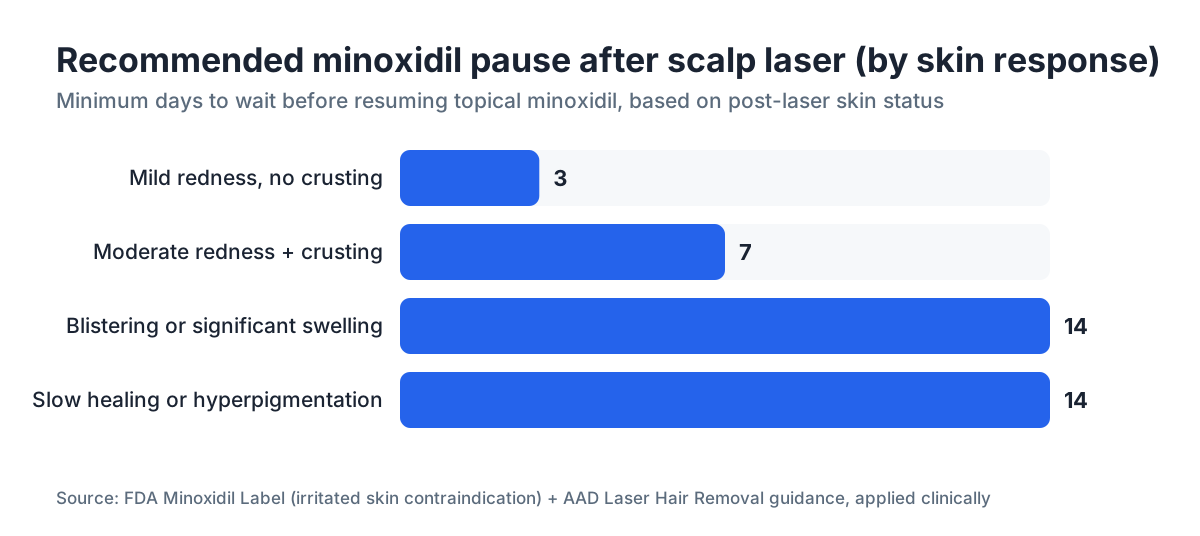
Here's a practical framework:
| Skin Status After Laser | Recommended Wait Before Minoxidil |
|---|---|
| Mild redness only, no crusting | 48 to 72 hours |
| Moderate redness, some crusting | 7 days minimum |
| Blistering, significant swelling | Until fully healed, consult your provider |
| Hyperpigmentation or slow healing | 14+ days, physician guidance recommended |
For most patients on standard fluence with Fitzpatrick skin types I through III, 72 hours is a reasonable minimum. For darker skin tones or anyone who had an aggressive session, a full week is safer.
Missing three to seven days of twice-daily minoxidil will not set back your results in any way you'll notice. Minoxidil's benefit builds over months, not days [1]. Skipping a week around each laser session, and those sessions usually run every four to eight weeks anyway, is a rounding error against a treatment course measured in years.
Tell your laser technician you use minoxidil before your session. Not because it changes their technique in most cases, but because they need to know what's on your scalp so they can give you the right post-care.
Is it dangerous to accidentally apply minoxidil right after laser?
Probably not a medical emergency for a single accidental application. But "probably fine" is not the same as safe practice.
The risk is higher systemic absorption, and too much topical minoxidil looks like its cardiovascular effects: lightheadedness, rapid heartbeat, or fluid retention in the legs [3]. If you put minoxidil on freshly lasered skin and then felt dizzy or noticed your heart racing, stop and call a clinician. Those symptoms deserve attention.
If you applied it and felt nothing off, you probably absorbed a modestly elevated dose and cleared it without trouble. Minoxidil has a short half-life, roughly 22 hours [7]. A single elevated-absorption event is unlikely to cause lasting harm in an otherwise healthy adult.
The case for steady caution isn't that one accident wrecks you. It's that repeated applications on inflamed skin, session after session, add up to a pattern of elevated exposure that no clinical trial ever tested.
Does minoxidil interfere with laser hair removal results?
This is the question most people actually care about: does minoxidil make the laser weaker, or does laser undermine your minoxidil regimen?
On the laser side, minoxidil on the scalp should not change how laser energy targets melanin in the follicle. Minoxidil is a colorless solution or foam with no optical properties relevant to laser targeting. Applying it right before a session is a separate issue, because you want clean dry skin before treatment, but the drug itself isn't touching the physics.
On the minoxidil side, laser destroys follicles in the treated zone. Those follicles can no longer respond to minoxidil. In the zones you're not lasering, minoxidil keeps working on surviving follicles exactly as it would with no laser at all.
The one real concern: if laser's thermal damage spreads past the targeted follicles and briefly disrupts blood flow or stem cell signaling in the surrounding scalp, minoxidil's effect in adjacent zones could dip during healing. This is theoretical. No study has tested it directly. It's one more reason to wait until your scalp is fully healed before resuming.
What about oral minoxidil? Does the same timing rule apply?
Oral minoxidil is a different animal. It's absorbed through the gut, not the skin, so its systemic levels don't care about the state of your scalp's barrier. You do not need to adjust oral minoxidil timing around laser sessions for absorption reasons.
Oral minoxidil for hair loss is prescribed off-label at low doses, typically 0.625 mg to 2.5 mg per day for women and 1.25 mg to 5 mg per day for men, far below the antihypertensive doses studied in the original trials [5]. At those doses it still carries cardiovascular monitoring considerations, particularly fluid retention and hypertrichosis, but a laser session on your scalp changes none of that.
If you're on oral minoxidil and getting laser, the relevant questions are your general health and any medications your laser provider should know about, not a pause in your dosing. Our deeper look at oral minoxidil covers the off-label evidence in more detail.
One note: some patients are switching from topical to oral minoxidil precisely because they'd rather not apply anything to their scalp, which erases the post-laser timing question entirely.
Can laser hair removal cause hair loss beyond the intended area?
Yes, though it's uncommon. Paradoxical hypertrichosis, mentioned earlier, is the stranger effect, but laser-induced hair loss reaching past the treatment zone has also been reported [2]. High-fluence sessions and larger spot sizes increase thermal spread, which can damage follicles next to the target zone.
Say you're using minoxidil on the crown for androgenetic alopecia while lasering the frontal hairline. There's some risk the laser session's thermal spread triggers a temporary effluvium (shedding phase) in follicles near the treated area. To an untrained eye that looks like minoxidil shedding, but the timing ties it to the laser.
This is another argument for picking an experienced laser provider who uses spot sizes and fluences suited to scalp skin, and for talking through your full hair treatment regimen before you start. The scalp has thinner, more vascular tissue than legs or underarms, which changes the parameters needed for safe treatment.
If you get unexpected shedding after a session, it's worth reading about telogen effluvium, since acute physical stress to the scalp can trigger that pattern.
What should your pre- and post-laser skincare routine look like if you use minoxidil?
Before your laser appointment:
Skip minoxidil the morning of your session. Show up with a clean, dry scalp. No oils, serums, or leave-in products. Most laser providers ask you to avoid any topical product 24 hours before treatment anyway. Tell the technician exactly what you use on your scalp, including minoxidil, finasteride foam or spray if applicable, and any other topicals.
Immediately after:
Follow your laser provider's instructions over anything written here. Usually that means cool compresses for the first hour and nothing topical for at least 24 hours. Keep the area clean and dry. No vigorous rubbing. Sunscreen matters if the treated area might see sun.
In the 48 to 72 hour window:
Assess your skin. If it looks and feels close to normal (mild residual redness at most), you can cautiously resume minoxidil. Apply gently. Don't rub hard, which is how the label recommends applying it anyway. If you see crusting, scabbing, or real swelling, give it more time.
At one week:
For most patients the scalp is fully healed and minoxidil can resume at full dose and normal frequency. If you use it twice daily, there's no need to "make up" skipped doses. Just pick the regular schedule back up.
If you're also using finasteride or finasteride and minoxidil together, finasteride is oral and needs no adjustment around laser sessions at all.
Are there any people who should not combine these treatments?
A few groups where the combination calls for extra caution or outright avoidance:
Anyone with a history of contact dermatitis to minoxidil or propylene glycol (a common minoxidil vehicle) should be especially careful about applying the drug to inflamed post-laser skin, since the already-irritated barrier can trigger a harsher reaction [6].
People with cardiovascular conditions for whom even modest bumps in systemic minoxidil are concerning. The FDA label for topical minoxidil says the drug should be used with caution in patients with pre-existing cardiac disease [3].
Patients on medications that interact with minoxidil's vasodilatory effects, including guanethidine and other antihypertensives, because elevated absorption could amplify those interactions.
Pregnant women should not use topical minoxidil at all, per FDA labeling, and pregnancy is a contraindication to most elective laser procedures anyway.
People with active scalp conditions, psoriasis, eczema, or seborrheic dermatitis flares, should not get laser treatment on an active flare, and should not apply minoxidil to broken skin regardless of cause [6].
If you fall into any of these categories, get explicit clearance from a board-certified dermatologist before combining these treatments. This is not an area where online guidance, including this article, replaces individual clinical judgment.
What does the evidence actually say about minoxidil on compromised skin?
The clinical trial evidence for minoxidil on intact skin is deep. The trials behind FDA approval used controlled settings and clean application to healthy scalp [1]. The 5% topical solution trials showed significant hair count improvements over 48 weeks versus placebo, and that remains the core evidence base [1].
For compromised skin, the FDA label gives the key warning: "Do not use on irritated or sunburned scalp, or any other part of your body" [3]. That applies here almost word for word. Post-laser scalp skin, while not diseased, is temporarily irritated in a way that fits the description.
The AAD's patient guidance on laser hair removal notes that treated skin should be protected and that topical medications should be discussed with a provider before use after a procedure [2]. Neither the FDA nor the AAD has a laser-plus-minoxidil guideline, because no dedicated trial has studied the combination. The guidance above is built from the well-documented pharmacology of both products.
If you want to track your hair density before and between laser sessions, the free AI scan at MyHairline gives you a baseline that makes it easier to see whether your minoxidil regimen is still working in the non-lasered zones.
Nobody has good data on exactly how much absorption rises on post-laser skin versus intact skin. The closest analogy in the literature is minoxidil absorption through tape-stripped skin (a lab method for removing the stratum corneum), which shows substantially higher permeation [4]. Tape-stripped skin is an imperfect stand-in for post-laser skin, but the direction is clear: break the barrier and more drug gets through.
Should you tell your hair loss doctor about laser treatments?
Yes, without question. And tell your laser provider about minoxidil.
Your hair loss doctor (dermatologist, trichologist, or prescribing physician) needs the full picture of what's happening to your scalp to make good calls on dosing, timing, and whether your regimen is working. If you're shedding more around your laser sessions, they need to know that to separate it from minoxidil shedding, androgenetic progression, or something else.
Your laser provider needs to know about minoxidil because it's a vasoactive drug. Some providers prefer patients pause topicals 24 to 48 hours before treatment as a precaution. Some adjust their post-care based on the drug's vasodilatory properties.
Good coordination between providers sounds obvious but rarely happens unless the patient drives it. You're the one who knows everything you're using. Write it all down, topicals, orals, supplements, and hand that list over at every appointment. If you're also using a DHT blocker like finasteride, that's relevant too.
If you're still trying to understand why you're losing hair in the first place, before layering on treatments, what causes hair loss is a good starting point.
Sources
- FDA, Minoxidil Topical Solution 5% Drug Label
- American Academy of Dermatology, Laser Hair Removal overview
- FDA, Rogaine (minoxidil) 2% Topical Solution Package Insert
- Journal of Investigative Dermatology, Skin Barrier and Percutaneous Absorption review
- Journal of the American Academy of Dermatology, Oral Minoxidil for Hair Loss (Randolph & Tosti, 2021)
- American Academy of Dermatology, Contact Dermatitis and Topical Drug Reactions guidance
- National Library of Medicine, MedlinePlus: Minoxidil Topical
- FDA, Minoxidil Topical 5% Foam (Rogaine) Drug Label