TL;DR: You can use minoxidil with scalp psoriasis, but the alcohol-heavy liquid formula often irritates or inflames psoriatic skin. Foam minoxidil is better tolerated. Get your psoriasis under reasonable control first, skip actively broken or crusted plaques, and treat worsening redness or itch as a signal to pause. Talk to a dermatologist before you start.
What does minoxidil actually do to scalp skin?
Minoxidil is a topical vasodilator. It widens the blood vessels near the hair follicle, which is thought to hold follicles in their growth phase longer and enlarge them over time. The FDA approved 2% and 5% topical minoxidil for androgenetic alopecia, and it's one of only two treatments the agency has cleared for hair loss [1].
Here's the part that matters for a psoriatic scalp: the minoxidil molecule isn't the only thing in the bottle. Liquid formulas use alcohol (usually propylene glycol and ethanol) as a carrier to push the drug into the skin. Those carriers strip surface lipids, break down the skin barrier, and sting inflamed tissue. On healthy scalp skin that's a minor annoyance. On skin that's already inflamed, thickened, and scaling, it can genuinely make things worse.
Foam minoxidil (Rogaine 5% foam and its generics) uses a different carrier and drops the propylene glycol. That one change matters a lot on compromised skin [2].
Minoxidil does nothing about the reason psoriasis makes hair fall out. If your shedding comes from scalp inflammation rather than pattern baldness, minoxidil is aimed at the wrong target. More on that below.
How does scalp psoriasis cause hair loss in the first place?
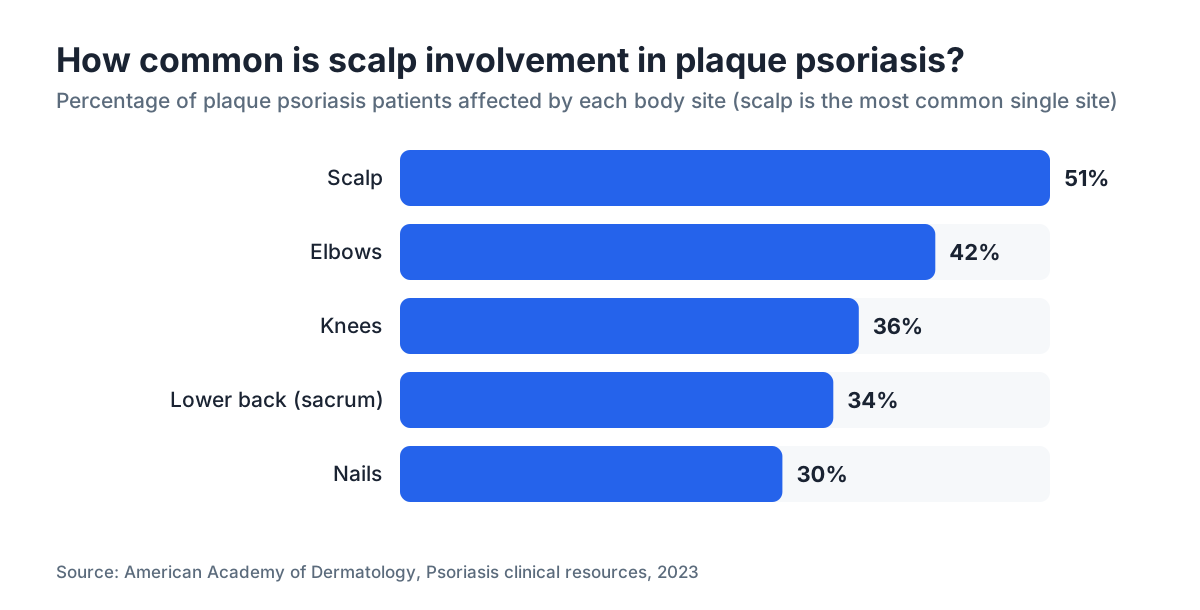
Scalp psoriasis is an autoimmune condition where the immune system speeds up skin cell turnover, piling up thick silvery plaques. The American Academy of Dermatology reports that scalp psoriasis affects roughly 45 to 56 percent of people who have plaque psoriasis [3].
Hair loss from psoriasis runs through two main routes. The scaling and the scratching that comes with it physically damage hair shafts and disrupt follicles. Chronic inflammation is the second route: it pushes follicles into the resting (telogen) phase early, a process called telogen effluvium. That shedding is usually diffuse and reversible once the inflammation calms down. For the full mechanism, the telogen effluvium article walks through how inflammation drives shedding.
The takeaway is simple. If psoriasis is your main hair loss driver, controlling the psoriasis matters more than reaching for minoxidil. If you have both psoriasis and androgenetic alopecia (a receding hairline, a thinning crown), minoxidil may earn a place on top of psoriasis treatment. The two conditions coexist all the time. Psoriasis buys you no protection from pattern baldness.
Is minoxidil safe to use when you have scalp psoriasis?
No FDA rule bans minoxidil in people with psoriasis. But the label tells you to avoid irritated, reddened, or damaged scalp skin, and active plaques fit that description exactly [1]. So the real answer is more layered than a flat yes or no.
A handful of small studies have looked at minoxidil in inflammatory scalp conditions. A 2019 review in the Journal of the American Academy of Dermatology on hair loss in psoriasis patients noted that topical minoxidil is generally treated as an adjunct once inflammation is controlled, while flagging the propylene glycol carrier as a common source of contact irritation that can mimic or worsen a psoriatic flare [4]. Nobody has run a large randomized trial of minoxidil on active scalp psoriasis. The evidence here is thin, and honest people say so.
Most dermatologists land in the same place in practice. Get the psoriasis to a manageable baseline (plaques reduced, active inflammation calmed), then bring in minoxidil foam slowly. Starting on a scalp covered in raw, cracked plaques invites irritation and makes drug absorption unpredictable.
One more thing worth your attention. Topical minoxidil absorbs more through inflamed or broken skin, and propylene glycol pushes that absorption higher still. More absorption isn't automatically dangerous, but it raises the odds of cardiovascular side effects (fluid retention, heart palpitations), especially at 5% [9]. The minoxidil side effects page breaks down what to watch for.
What happens if you apply minoxidil to an active psoriasis plaque?
A few things, none of them good.
The alcohol carriers strip an already-broken skin barrier further and usually produce burning, stinging, or hard itching within minutes to hours. That's not an allergy. It's direct chemical irritation of damaged tissue.
The irritation can also set off the Koebner phenomenon. In psoriasis, physical trauma or chemical irritation to the skin can spawn fresh psoriatic lesions right at that spot. The British Journal of Dermatology describes chemical irritants and physical trauma as reliable triggers for new plaques at injury sites [11]. Pouring an irritating solution onto plaques is exactly the kind of trigger the Koebner response feeds on.
Even if the first application doesn't hurt much, repeated alcohol-based product on inflamed skin tends to keep the inflammatory cycle spinning, which makes the psoriasis harder to control.
Foam carries far less of this risk because it skips propylene glycol, but foam can still sting on fissured plaques. So the practical rule is short: don't apply minoxidil straight over thick, active plaques. Put it on parts of the scalp where plaques are minimal or resolved, and grow your coverage from there.
Which minoxidil formulation is better for a sensitive or psoriatic scalp?
Foam wins. This isn't close.
Both the 2% and 5% liquids contain propylene glycol, the main irritant on sensitive scalps. Studies of contact irritation from minoxidil keep pointing at propylene glycol as the culprit [2]. People with psoriasis, seborrheic dermatitis, or any baseline scalp sensitivity almost always tolerate foam better.
| Formulation | Propylene Glycol | Typical Alcohol Content | Better for Psoriatic Scalp? |
|---|---|---|---|
| Minoxidil 2% liquid | Yes | High (ethanol base) | No |
| Minoxidil 5% liquid | Yes | High (ethanol base) | No |
| Minoxidil 5% foam | No | Lower (isobutane propellant) | Yes |
| Oral minoxidil (0.625-2.5mg) | N/A | N/A | Potentially, if topical is not tolerated |
Oral minoxidil is a growing option worth knowing. At low doses (0.625mg to 2.5mg daily), it never touches the scalp, so the skin irritation problem disappears [8]. The tradeoff is a different set of systemic side effects: facial hair growth in women, fluid retention, and rarely unwanted cardiovascular effects. A dermatologist weighs those against the topical risks. The oral minoxidil article covers dosing and evidence in detail.
What should you treat first, the psoriasis or the hair loss?
Psoriasis first. Always.
Here's the logic. If inflammation is driving your hair loss, treating the hair and ignoring the psoriasis is like mopping a floor with the tap still running. Minoxidil does nothing to slow inflammatory follicle damage. Good psoriasis control, on the other hand, often stops the inflammation-driven shedding and lets follicles recover on their own.
Standard scalp psoriasis treatments include topical corticosteroids (the usual first-line choice), topical calcipotriene (a vitamin D analog), coal tar shampoos, and salicylic acid descaling products [6]. For moderate-to-severe disease, biologics like secukinumab, ixekizumab, and risankizumab have posted strong scalp clearance rates in trials [10].
Once the plaques are largely clear or well-controlled and any acute flare has settled, that's the moment to reassess whether androgenetic alopecia is also in play and whether minoxidil makes sense. If a receding hairline or crown thinning hangs around after the psoriasis improves, you're probably dealing with pattern hair loss layered on top of the inflammatory component. The receding hairline guide helps you figure out if that's what you're seeing.
How do you apply minoxidil safely if you have scalp psoriasis under control?
Say your psoriasis sits at a manageable baseline. Here's a routine most dermatologists would recognize.
Use the foam. Apply it to dry hair. Foam activates best on a dry scalp, and applying to wet hair dilutes it and cuts efficacy. Dispense half a capful per application, twice daily, or follow the once-daily 5% foam schedule your doctor sets.
Only hit areas where the scalp looks close to normal. Skip any plaque that's thick, red, or weeping. You can widen coverage as your psoriasis control improves.
Let the minoxidil dry fully (about 2 to 4 hours) before you apply any psoriasis treatment (topical steroid, calcipotriene). Don't layer them at the same time. If you use a medicated shampoo like coal tar or ketoconazole, wash with it in the shower as usual, dry the scalp completely, then apply minoxidil.
Give it at least four months before you judge results. Minoxidil rarely shows meaningful regrowth before 16 weeks, and the labeling is explicit that results take time [5]. Many people on psoriasis treatment also see natural hair recovery in that same stretch, which makes it genuinely hard to tell what's doing what.
Watch for trouble: more redness or scaling at the application sites, a new itch that wasn't there before, or skin that looks like it's tipping into a fresh flare. If any of that shows up, stop the minoxidil and tell your dermatologist. You may need a different formulation or a different plan entirely.
Can minoxidil help hair loss caused by psoriasis?
Honest answer: sometimes, and it depends entirely on why the hair left.
If the cause is telogen effluvium from scalp inflammation, controlling the psoriasis is what recovers the hair. Minoxidil isn't a proven treatment for inflammation-driven shedding. The trials behind minoxidil mostly enrolled people with androgenetic alopecia, not inflammatory alopecia.
If the cause is androgenetic alopecia running alongside psoriasis, minoxidil fits and the evidence for it is solid. The FDA-approved indication covers androgenetic alopecia, and real-world use shows it slows progression and produces moderate regrowth in a meaningful share of users [1].
If the cause is scarring alopecia (lichen planopilaris, folliculitis decalvans), which differs from psoriasis but gets confused with it, minoxidil does very little and may be off the table depending on the condition. Scarring alopecias kill follicles for good.
So get a real diagnosis. A dermatologist can usually read these patterns by exam, and with a scalp biopsy when needed. Treating the wrong mechanism burns time and money.
Want a preliminary read on your pattern before the appointment? The free AI hair analysis at MyHairline can help you tell whether your thinning looks like pattern loss or something else worth flagging.
Are there alternatives to minoxidil that work better with psoriasis?
A few options are worth knowing.
Finasteride (and dutasteride) are oral DHT blockers that treat androgenetic alopecia from the inside. They never touch the scalp, so scalp irritation stops being a factor at all. If your pattern hair loss is the male (or female, with dutasteride in some countries) androgenetic type, finasteride sidesteps every topical irritation concern. The finasteride article covers who it suits and what the side effect profile looks like.
For women with both psoriasis and pattern hair loss, spironolactone gets used off-label as an antiandrogen, and it too avoids scalp contact.
Nutrient deficiencies drive shedding more than most people expect. Iron, vitamin D, zinc, and B12 shortfalls are common in psoriasis, partly because chronic inflammation messes with absorption and metabolism. Testing and correcting levels is low-risk and sometimes high-reward before piling on more medications. The hair loss supplements page lays out what the evidence actually says about each.
Low-level laser therapy (LLLT) devices (FDA-cleared helmets and combs) get used for androgenetic alopecia and involve no topical product. The evidence is modest, but the devices don't irritate psoriatic skin.
Phototherapy for psoriasis (narrowband UVB) comes with a bonus: UV light calms scalp inflammation, which can ease inflammation-related shedding on its own. Some patients see their hair improve as a side effect of effective psoriasis phototherapy.
Should you tell your dermatologist before starting minoxidil with psoriasis?
Yes. Full stop.
This isn't box-ticking. Your dermatologist runs your psoriasis regimen, and adding minoxidil (especially if you're on topical steroids or calcipotriene) shifts the picture. Some combinations interact. Topical steroids and minoxidil applied to the same broken-skin patch, for instance, can raise absorption of both.
A dermatologist can also tell you whether your hair loss is truly androgenetic alopecia, inflammation-driven telogen effluvium, or something scarring. That diagnosis decides whether minoxidil is even the right tool.
If you're running finasteride and minoxidil together, that combination needs prescription oversight anyway. Minoxidil alone is OTC, so the barrier to starting is low, but the psoriasis context makes the conversation worth having.
Want to understand what's driving your hair loss before that visit? The free AI scan at MyHairline can help you describe your pattern more precisely and ask sharper questions. A photo tool isn't a diagnosis though, and psoriasis-related hair loss needs clinical eyes.
What does the FDA label actually say about applying minoxidil to irritated scalp skin?
The FDA-approved labeling for topical minoxidil (OTC and prescription both) warns against use on "irritated or sunburned scalp" and tells users not to apply it where the scalp is "red, inflamed, infected, irritated, or painful" [1].
Active psoriasis plaques check every box in that sentence. The warning is more than boilerplate. It reflects a real fact: inflamed skin lets significantly more drug through than intact skin, which raises the risk of systemic cardiovascular effects (hypotension, fluid retention, cardiac changes) [9].
The FDA cleared minoxidil for androgenetic alopecia, full stop, not for psoriasis-associated hair loss or any inflammatory alopecia. That doesn't make it wrong to use alongside psoriasis, but it does mean anyone doing so is going off-label in a situation with real nuance, and physician input earns its keep.
For the exact wording, the FDA's Drugs@FDA database carries the full prescribing information, and the consumer-facing 5% foam label sits in the FDA's OTC drug label database [1].
Sources
- FDA, Drugs@FDA: Minoxidil Topical Solution and Foam prescribing information
- Contact Dermatitis journal (Wiley): propylene glycol as a sensitizer and irritant in topical minoxidil
- American Academy of Dermatology, Psoriasis patient resources
- Journal of the American Academy of Dermatology: hair loss in patients with psoriasis (2019 review)
- MedlinePlus Drug Information (NIH): Minoxidil topical
- National Psoriasis Foundation, scalp psoriasis treatment overview
- JAMA Dermatology: low-dose oral minoxidil for hair loss (Randolph and Tosti, 2021)
- NIH National Library of Medicine, StatPearls: Minoxidil
- AAD Clinical Practice Guideline: treatment of psoriasis with biologics
- British Journal of Dermatology (Wiley): Koebner phenomenon in psoriasis review