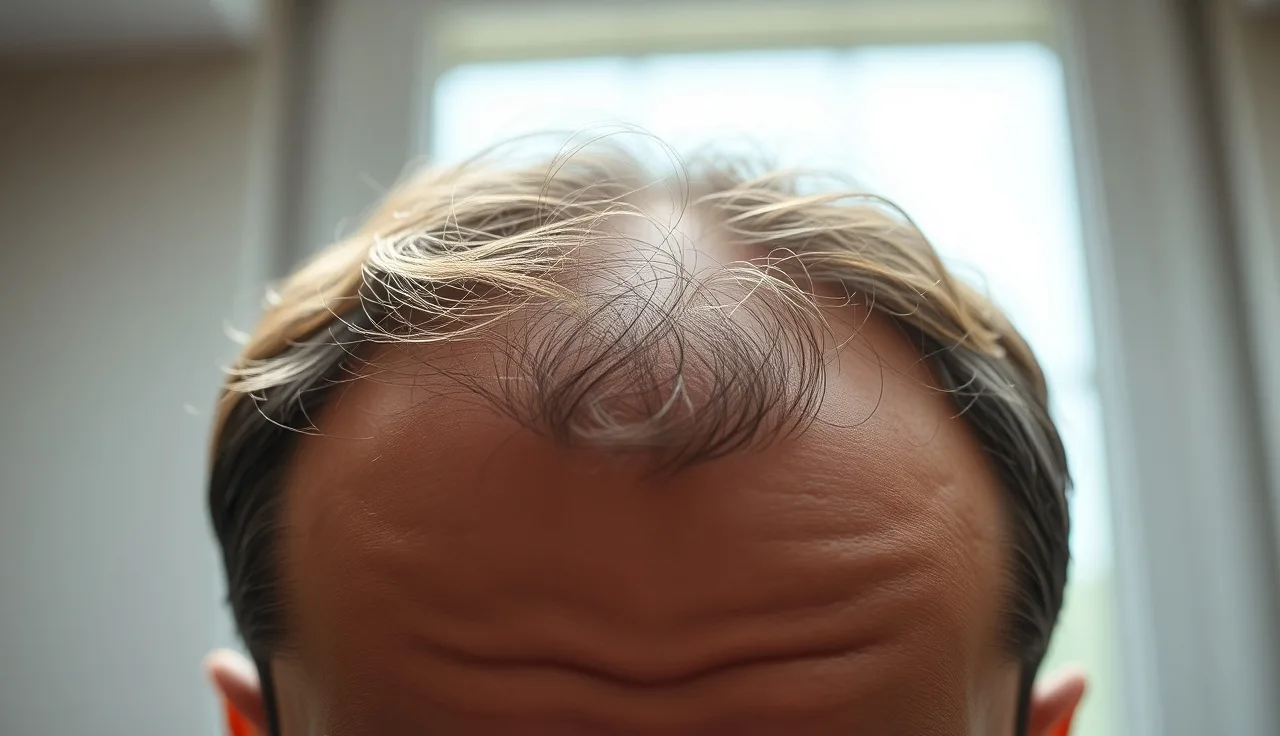
TL;DR: Minoxidil is FDA-approved to slow hair loss and partially regrow hair in areas that are thinning, not completely bald. Once a follicle has been dormant for many years with no visible miniaturized hair, the follicle is likely gone for good and minoxidil cannot bring it back. The drug works by extending the growth phase of follicles that are still alive, even if barely.
What does minoxidil actually do to hair follicles?
Minoxidil is a vasodilator. It started as an oral blood pressure drug in the 1970s, and researchers noticed an odd side effect: hair growth. The topical version won FDA approval in 1988 for androgenetic alopecia, making it the first drug ever cleared for hair regrowth in the United States [1].
The working theory is that minoxidil opens potassium channels in follicle cells, improving blood flow and nutrient delivery to the follicle. It also appears to prolong the anagen (growth) phase of the hair cycle and shorten the telogen (resting) phase. More follicles spend more time actively producing hair, and the hairs they produce tend to come in thicker.
Here's the catch. All of that only works if the follicle is still functional. A follicle has to have cells that can respond to minoxidil's signaling. Think of it like watering a plant. Minoxidil is the water. If the plant is wilting but alive, water helps. If the plant is dead and the roots are gone, no amount of water does anything.
That single distinction, alive-but-struggling versus truly gone, is the whole reason minoxidil works on thinning hair and fails on fully bald scalps.
Can minoxidil regrow hair on a completely bald scalp?
Almost certainly not, if the area has been fully bald for years. The FDA's label for topical minoxidil says it has not been proven effective for a receding hairline or baldness at the front of the scalp, and the trials that led to approval focused on the vertex (crown) in men who still had some hair there [1].
The clinical data from the original approval studies found that roughly 40% of men using 5% minoxidil foam had moderate to dense hair regrowth at 16 weeks, compared to about 7% on placebo [2]. Those participants were selected to have thinning hair, not totally smooth bald scalps. Enrollment criteria excluded men with frontal baldness as their main complaint.
A completely bald area of scalp, especially one bare for more than five years, has gone through follicular miniaturization all the way to follicle death. The follicle unit gets replaced by fibrous tissue. Nothing is left for minoxidil to stimulate. A 2019 review in the Journal of the American Academy of Dermatology reported that response to minoxidil correlates strongly with the presence of miniaturized, vellus-like hairs, which mark a follicle that's dormant but not dead [3].
Here's the test you can run at home. If you can see tiny, fine, colorless hairs when you look very closely at what looks like a bald patch, there may still be something for minoxidil to work with. If the scalp is smooth and shiny with no hair at all, even vellus hairs, expect zero regrowth from minoxidil alone.
How does minoxidil perform on thinning hair versus bald patches? (data comparison)
The gap in outcomes between someone with active thinning and someone with established baldness is big enough to change the entire treatment decision.
| Scalp condition | Visible vellus/miniaturized hair | Typical minoxidil response |
|---|---|---|
| Early thinning, normal density hair still present | Yes | Slows loss, some regrowth likely |
| Significant thinning, scalp visible through hair | Yes (fine hairs) | Moderate regrowth possible in ~40% of users [2] |
| Long-standing bald patch, smooth scalp | No | Minimal to no regrowth expected |
| Completely bald scalp, no hair follicle activity | No | No regrowth; follicles absent |
The FDA label for 5% minoxidil solution specifies that users should have a bald spot no more than 2 inches in diameter and hair loss of no more than 10 years' duration on the vertex. That duration guidance exists precisely because older baldness tracks with follicle death rather than dormancy [1].
For women, the picture is similar. The FDA-approved 2% topical formulation for women was studied in women with diffuse thinning, not complete baldness, and response rates track with how much miniaturized hair remains [4].
If you're trying to figure out where your own scalp sits on this spectrum, a free AI hair scan can help you map your thinning pattern before you start buying products.
Why does the duration of baldness matter so much?
Androgenetic alopecia works by exposing genetically susceptible hair follicles to dihydrotestosterone (DHT). DHT shortens the anagen phase a little more with each hair cycle, so each new hair grows in thinner and shorter than the last. That's miniaturization. Over years, the follicle produces hair that's barely visible, then produces no hair at all, and the follicle itself atrophies [5].
Once that final atrophy happens, connective tissue and sebaceous gland remnants fill in where the follicle used to be. Histological studies of long-term bald scalp show a sharp drop in total follicle count per square centimeter compared with hair-bearing scalp. The follicles aren't asleep. They're structurally gone [3].
Duration of baldness may predict minoxidil response better than anything else. A study published in Dermatology comparing responders and non-responders found that shorter duration of hair loss was one of the strongest predictors of a positive response [6].
The practical takeaway is blunt. Every year you wait after noticing significant thinning is a year in which more follicles cross the point of no return. Start minoxidil early, while you still have obvious hair that's getting thinner, and you get the best realistic shot at holding what you have and recovering some of what you've lost.
Does where on the scalp you're thinning change whether minoxidil works?
Yes, a lot. The FDA approval for topical minoxidil specifically covers the vertex scalp (the crown and top of the head), not the frontal hairline [1]. That distinction matters clinically.
The vertex tends to hold follicles in a miniaturized-but-alive state for longer, which gives minoxidil more to work with. The frontal hairline, especially the temples and the M-shaped recession that defines a receding hairline, is often harder to treat, because follicle loss there tends to be more complete and faster in men with aggressive androgenetic alopecia.
Some men do see frontal improvement, but the data behind it is thinner (no pun intended) than for vertex use. A 2022 study in the Journal of Cosmetic Dermatology found meaningful regrowth at the temples in some men using high-concentration topical minoxidil, but the effect was smaller than at the crown, and responders all had kept some vellus hair in those areas [7].
Oral minoxidil tells a slightly different story. At low doses (typically 1.25 to 5 mg daily for men), oral minoxidil reaches follicles through the bloodstream, which may help frontal areas where topical penetration is less predictable. A 2021 review in the Journal of the American Academy of Dermatology found low-dose oral minoxidil produced meaningful hair count increases in men with androgenetic alopecia, including some frontal improvement, though the study population again had thinning hair, not complete baldness [8]. For how the oral form compares, see oral minoxidil.
What is the shed phase and does it mean minoxidil is failing?
About four to eight weeks after starting minoxidil, many users see a temporary jump in shedding. This is normal and it has a name: dread shed, or more formally a telogen effluvium triggered by resting hairs shifting into a new growth cycle [9].
Minoxidil forces follicles out of telogen and into anagen. When that happens, the old telogen hairs fall out to make room for the new anagen hairs. If you don't know it's coming, it looks exactly like the treatment is making things worse.
The shed usually lasts two to six weeks and then settles. Most users who push through it start to see shedding stabilize at three to four months and measurable regrowth by six months. The FDA label recommends evaluating results at four months minimum [1].
If shedding keeps going past three months with no improvement, bring it up with a dermatologist. It may mean your remaining follicles aren't very responsive, or that something else, including telogen effluvium from a separate cause, is layered on top.
On a completely bald scalp, this shed phase doesn't happen, because there are no telogen hairs to push out. That silence is itself evidence. No shedding when you start minoxidil on a bald area means there are no active follicles to stimulate.
Can minoxidil prevent a thinning scalp from becoming bald?
This is where minoxidil earns most of its reputation. Stopping or slowing loss, rather than reversing complete baldness, is the more realistic and more reliable outcome.
The FDA label states that minoxidil "has been shown to regrow hair in men with androgenetic alopecia," but the clinical studies also make clear that most of the benefit in long-term use is maintenance: stopping the progression of loss that would have happened otherwise [1].
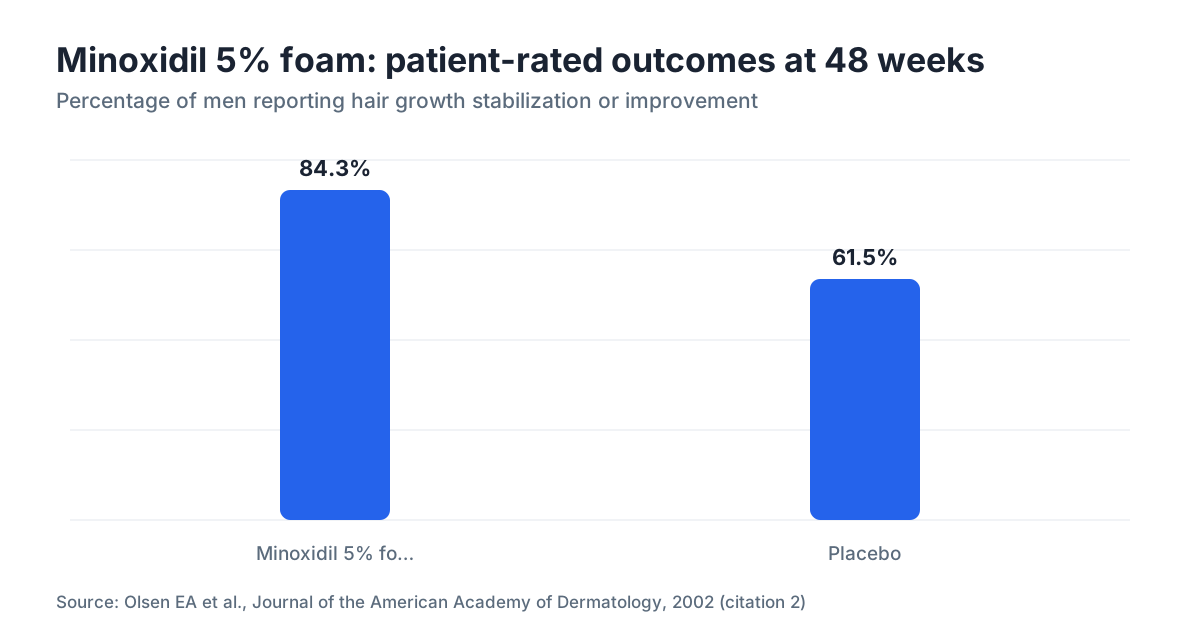
In the 48-week trial that supported the 5% foam approval, 84.3% of men using minoxidil rated themselves as having stopped or reversed hair loss, versus 61.5% on placebo [2]. That gap is real benefit. It's not a cure and it's not a promise of thick hair. It's a meaningful slowing of a process that would otherwise keep going.
So the decision to start minoxidil isn't really about "will I regrow hair." It's about "will I keep the hair I have long enough to matter." For most men with early-stage androgenetic alopecia, the honest answer to that second question is probably yes, with consistent use.
Pairing minoxidil with finasteride, which blocks DHT at the hormonal level, beats either drug alone. A 2015 randomized controlled trial found combination therapy outperformed monotherapy on both hair count and patient-rated improvement [10]. For how to run both together, see finasteride and minoxidil.
What do dermatologists recommend if your scalp is already mostly bald?
If you have large areas of complete baldness with only a little thinning left elsewhere, the standard dermatology guidance is to manage expectations carefully. The American Academy of Dermatology's patient resources on androgenetic alopecia describe topical minoxidil as most effective for the crown and vertex, and note that results depend on how much hair remains [4].
For men already at Norwood stage 5 or higher with extensive crown and frontal loss, the realistic options move away from minoxidil as a primary treatment. At that stage, a hair transplant is often the only intervention with real cosmetic impact on the bald areas themselves, because a transplant physically moves DHT-resistant donor follicles from the back of the scalp to the bald recipient sites.
Even in significantly bald men, dermatologists often recommend continuing or starting minoxidil for a different reason: protecting the remaining hair-bearing areas. If you still have hair at the temples or a band around the sides, minoxidil can help preserve it while you weigh other options. It also improves the density of transplanted hair during recovery, which is why many transplant surgeons build it into post-op care.
If you're unsure where you fall on the spectrum, the MyHairline AI scan at myhairline.ai/scan maps your loss pattern against Norwood stages and gives you a concrete starting point for the conversation with a dermatologist. That's not medical advice, but knowing your stage before the appointment saves time and leads to sharper questions.
Are there any treatments that actually work on completely bald scalp?
Minoxidil isn't alone in struggling with fully bald scalp. Most topical treatments hit the same wall: no living follicle, no response.
Hair transplant surgery is the closest thing to a reliable option for established bald areas, and it works by a different mechanism entirely. It doesn't stimulate existing follicles. It relocates genetically resistant follicles from a donor zone to the bald recipient area. Those transplanted follicles grow as if they were still in the donor site, which is why the results are considered permanent [5].
Platelet-rich plasma (PRP) therapy has some evidence for thinning hair but little for completely bald areas, mirroring the same follicle-presence requirement as minoxidil. A 2019 meta-analysis in Dermatologic Surgery found PRP significantly improved hair density in androgenetic alopecia patients, but again the studies enrolled patients with thinning, not complete baldness [11].
Low-level laser therapy (LLLT) devices (combs, helmets) are FDA-cleared for hair growth promotion. The mechanism is thought to involve photobiomodulation of follicle cells. Same limitation applies: cleared for use in people who still have follicles in a miniaturized state, not for follicle-dead bald scalp.
DHT blockers like finasteride and dutasteride address the hormonal root of androgenetic alopecia, which makes them better at prevention than rescue. On a completely bald scalp, blocking DHT won't restore dead follicles, but it can protect the ones still at risk.
For most people staring at a bald spot that's been there for years, the honest answer is that topical treatments probably won't move the needle much. The real choice is between accepting the current state, a hair transplant, or some mix of hair systems and styling.
How long should you try minoxidil before concluding it's not working?
The FDA guidance sets four months for initial assessment, with six to twelve months of use typically needed to see full results [1]. That timeline fits the biology. Hair grows slowly, averaging about 0.35 millimeters per day or roughly half an inch per month, so even if minoxidil wakes dormant follicles in month one, you won't see visible hair until months four through six.
If you're using minoxidil on a thinning area and see no change at all after six months of consistent use (twice daily for liquid, once daily for foam as directed), that's a fair point to reassess. Some people are simply non-responders. Genetic differences in how the scalp converts minoxidil to its active form (minoxidil sulfate, via the enzyme sulfotransferase) partly explain why response rates vary. A small share of people have low scalp sulfotransferase activity and get little benefit from topical minoxidil regardless of follicle status [6].
On already-bald areas, four months is a fair trial, but set the bar for "working" at noticing any fine vellus growth, not visible terminal hair. If nothing appears at all by month four, the follicles are likely gone.
Before you give up on the drug entirely, ask whether oral minoxidil might work differently for you, since it partly sidesteps the sulfotransferase issue. Talk to a dermatologist before switching, since the side effect profile differs. A read through minoxidil side effects is worth it first.
Does minoxidil work differently for women on bald or thinning areas?
Women experience androgenetic alopecia differently than men. Instead of the defined recession pattern of Norwood stages, women usually see diffuse thinning across the top of the scalp, with the frontal hairline often preserved (Ludwig pattern). Complete focal baldness is less common in women with this type of loss, which changes the math.
For women with diffuse thinning, minoxidil 2% (FDA-approved for women) and minoxidil 5% (used off-label in women) both show meaningful benefit in clinical trials. A randomized trial comparing 2% versus 5% in women found both produced hair count increases, with the 5% solution showing slightly more effect [4].
In women, other causes of diffuse thinning, including thyroid disorders, iron deficiency, and telogen effluvium, are more common and worth ruling out before blaming androgenetic alopecia. Minoxidil won't address those underlying causes.
Scarring alopecias (lichen planopilaris, frontal fibrosing alopecia) destroy follicles through inflammation rather than DHT, and those follicles are just as unresponsive to minoxidil as DHT-destroyed ones. Applying minoxidil to inflamed scarring alopecia without treating the inflammation first can even backfire. See a dermatologist before starting minoxidil if scarring alopecia is a possibility.
The bottom line for women matches the one for men. Minoxidil works on follicles that are struggling, not on follicles that are gone. But because complete baldness is less common in female-pattern loss, more women have follicles that minoxidil can actually reach.
Sources
- FDA, Rogaine 5% Minoxidil Foam prescribing information and label
- Olsen EA et al., Journal of the American Academy of Dermatology, 2002; 5% minoxidil foam clinical trial
- American Academy of Dermatology, androgenetic alopecia clinical review, Journal of the AAD 2019
- American Academy of Dermatology, hair loss in women patient information
- National Library of Medicine, MedlinePlus, androgenetic alopecia overview
- Goren A et al., Dermatology, 2014; sulfotransferase activity and minoxidil response
- Adil A, Godwin M, Journal of Cosmetic Dermatology, 2022; frontal hairline minoxidil outcomes
- Randolph M, Tosti A, Journal of the American Academy of Dermatology, 2021; oral minoxidil low-dose review
- Rebora A, Dermatology, 2002; telogen effluvium and minoxidil shed phase
- Kanti V et al., Journal of the European Academy of Dermatology and Venereology, 2018; combination minoxidil and finasteride randomized trial
- National Institutes of Health, PubMed, PRP for androgenetic alopecia meta-analysis (Dermatologic Surgery, 2019)