

TL;DR: Low-level laser therapy (LLLT) devices, including laser combs and caps, are FDA-cleared for androgenetic alopecia and have real clinical trial data behind them. Studies show statistically significant but modest increases in hair density compared to placebo, typically 15 to 35% more terminal hairs per cm². They are not a cure, they stop working if you quit, and they work best alongside proven treatments like minoxidil or finasteride.
What is low-level laser therapy for hair loss, and how is it supposed to work?
Low-level laser therapy, usually called LLLT, uses red or near-infrared light at wavelengths between 630 and 670 nanometers to penetrate the scalp and theoretically stimulate hair follicles. The proposed mechanism is photobiomodulation: light energy is absorbed by cytochrome c oxidase in the mitochondria of follicle cells, which is thought to increase ATP production, reduce oxidative stress, and shift follicles from the resting telogen phase back into the active anagen phase [1].
The theory is biologically plausible. Nobody has fully proven the exact chain of events in humans, but the same basic mechanism, light absorbed by mitochondrial enzymes changing cell behavior, has been studied in wound healing and other tissue contexts. What makes hair loss different is that you need sustained, repeated stimulation over months to see any cosmetic result.
LLLT devices for home use come in two main forms: laser combs (handheld devices you stroke across the scalp a few times per week) and laser caps or helmets (hands-free devices that cover the whole scalp). Both use low-power laser diodes or occasionally LEDs, though purists argue only true laser diodes count because LEDs produce incoherent light with wider bandwidths. The FDA treats both similarly for clearance purposes.
Every FDA clearance for these devices hangs on one word: "promote" hair growth. Not "regrow." Not "cure." That distinction matters when you're deciding whether to spend several hundred dollars on one.
Is there real clinical evidence that laser combs and caps regrow hair?
Yes, there is real evidence, but the effect size is modest and the study quality varies a lot.
The most-cited device-specific trial for the laser comb is the HairMax LaserComb study published in the American Journal of Clinical Dermatology. A randomized, double-blind, sham-controlled trial of 110 men with androgenetic alopecia found that subjects using the 9-beam LaserComb saw a mean increase of 19.8 terminal hairs per cm² over 26 weeks compared to 7.6 hairs per cm² in the sham group [2]. That is statistically significant. It is also, to be honest, a modest absolute difference.
A separate randomized controlled trial published in Dermatologic Surgery in 2013 examined a laser helmet device across 44 men and 41 women. The treatment group gained an average of 37% more terminal hairs per cm² than baseline versus 2% in the sham group over 16 weeks [3]. That headline number sounds impressive, but the baseline density was low and the absolute count difference was still in the range of 15 to 25 hairs per cm².
A 2014 meta-analysis in the Journal of the American Academy of Dermatology reviewed seven randomized controlled trials of LLLT for androgenetic alopecia and concluded that LLLT significantly increased hair count versus sham controls, with a pooled effect that was consistent but described as "modest" [4]. The authors flagged that most trials were industry-funded, had short durations of 16 to 26 weeks, and used hair count rather than patient-reported satisfaction as the primary outcome.
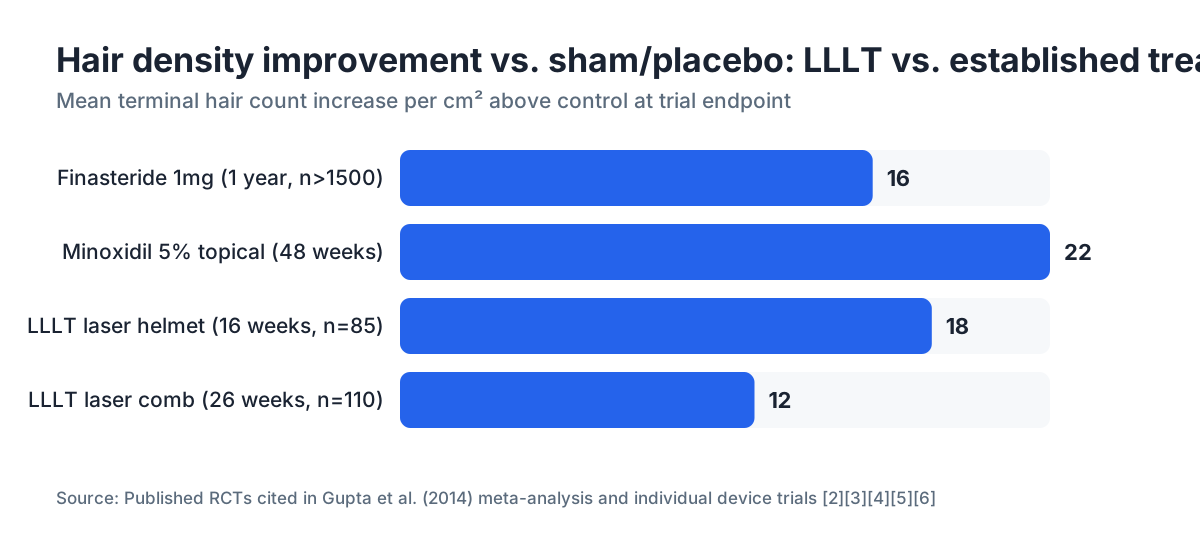
So the honest answer: real trials, real statistical significance, modest effect, industry funding is a legitimate concern. If you want to see how LLLT compares numerically to better-established treatments, the chart below puts the evidence in perspective.
How does LLLT compare to minoxidil, finasteride, and other treatments?
| Treatment | Evidence tier | Typical hair count improvement vs. baseline | FDA status |
|---|---|---|---|
| Minoxidil 5% topical | Very strong (multiple large RCTs) | ~18 to 25 non-vellus hairs/cm² at 48 weeks [5] | Approved (OTC) |
| Finasteride 1mg oral | Very strong (multiple large RCTs) | ~14 to 18% increase in hair count at 1 year [6] | Approved (Rx) |
| LLLT (laser cap/comb) | Moderate (several small-to-mid RCTs) | ~15 to 37% increase vs. baseline; ~12 to 20 hairs/cm² advantage vs. sham [3][4] | Cleared (510k) |
| Hair transplant | Strong (outcomes data, not RCTs) | Permanent redistribution; no net new follicles | Surgical procedure |
| Ketoconazole shampoo | Weak (limited RCTs) | Small, inconsistent | Not approved for hair loss |
| Hair loss supplements | Very weak | No consistent RCT data | Not approved |
A few things stand out from that comparison. First, the FDA status difference matters: minoxidil and finasteride have full drug approvals based on efficacy and safety data. LLLT devices are "cleared" under the FDA's 510(k) pathway, which requires demonstrating safety and substantial equivalence to a predicate device, not the same burden of proof as a drug approval [7].
Second, the best-designed trials for minoxidil and finasteride are larger and longer than most LLLT trials. A 1-year finasteride trial enrolled over 1,500 men [6]. Most LLLT trials top out at around 100 subjects and 26 weeks.
Third, LLLT is the only one of these options you can reasonably combine with everything else without meaningful interaction risk. It does not lower DHT, cause systemic effects, or conflict with topical treatments. Some clinicians use it as an adjunct rather than a primary therapy. Whether the math works out to be worth the cost is a separate question.
What does FDA clearance actually mean for a laser hair device?
"FDA-cleared" and "FDA-approved" are not the same thing, and marketers for LLLT products use the cleared language constantly in ways that can mislead buyers.
The FDA clears medical devices through the 510(k) premarket notification process when a manufacturer can show the device is substantially equivalent to a legally marketed predicate device [7]. The FDA does not independently verify the efficacy data before clearing a 510(k) device. It reviews whether the submissions are internally consistent and whether the device is safe for its intended use. The HairMax LaserComb was the first LLLT device cleared for hair promotion, in 2007, and subsequent devices have pointed to it as a predicate [8].
The FDA's own language on cleared laser hair devices says they are "intended to promote hair growth" in men and women with androgenetic alopecia. The FDA does not say these devices regrow hair to a clinically meaningful degree, prevent further loss, or work as well as pharmacological treatments.
This is not a conspiracy against LLLT. It is just how the device clearance pathway works. Clearance means the device probably will not hurt you, and some evidence supports the claimed use. It does not mean the evidence is as strong as what exists for finasteride or minoxidil.
Does LLLT work for women as well as for men?
Most LLLT trials enrolled both sexes, and the evidence for women is roughly comparable to the evidence for men. The 2013 laser helmet trial that found a 37% increase in terminal hairs included 41 women, and the female subgroup showed improvements similar to the male subgroup [3].
Women with androgenetic alopecia are actually in a situation where LLLT becomes more attractive relative to alternatives. Finasteride is not FDA-approved for women with pattern hair loss, and oral minoxidil for women carries its own set of considerations. LLLT has no known hormonal effects and no systemic absorption, so the risk profile for women is clean.
For women experiencing diffuse shedding from causes other than androgenetic alopecia, the evidence base essentially disappears. Telogen effluvium, for example, has completely different biology, and there are no good trials of LLLT specifically for that condition. Most of the LLLT evidence is explicitly for androgenetic alopecia diagnosed by a clinician.
If you are a woman unsure what type of hair loss you have, that is the first question to answer before spending money on any device.
How long do you have to use a laser cap or comb to see results?
Realistic expectations: most trials showing measurable improvement ran for 16 to 26 weeks with three sessions per week. Do not expect visible change before three to four months of consistent use.
The biology explains the timeline. Hair grows roughly 1 cm per month. Even if you shift follicles from telogen to anagen starting on day one (which you probably do not), those follicles need months to produce visible hair. Many users report increased shedding in the first four to six weeks, which likely reflects older telogen hairs being pushed out as new anagen hairs begin cycling, similar to what happens with minoxidil.
What happens if you stop? The evidence suggests results reverse. LLLT does not address the underlying hormonal cause of androgenetic alopecia, which is DHT's progressive miniaturization of follicles. The moment you stop stimulating follicles with light, the incremental benefit fades. Most manufacturers recommend indefinite use, which is also convenient for them since it keeps people buying devices or replacing batteries. Weigh that against the ongoing cost and time commitment.
Manufacturers typically recommend sessions of 8 to 30 minutes, three to five times per week. Laser caps generally have lower compliance demands than combs because you can wear one while doing something else. That practical difference is real.
What do laser cap and comb devices actually cost, and is it worth the money?
Prices vary significantly. A basic HairMax LaserComb with 9 or 12 diodes runs roughly $200 to $300. Mid-range laser caps (iRestore, Kiierr, Theradome) typically cost $400 to $700. High-diode-count devices marketed to clinics or serious consumers can run $1,500 to $3,000.
For comparison, a year of generic finasteride at most online pharmacies runs $60 to $180, and generic 5% minoxidil foam costs roughly $180 to $360 per year. LLLT has no recurring chemical cost once you own the device, but the upfront investment is considerably higher than starting a topical or oral treatment.
Whether it is worth it depends on why you're buying it. If you want the best return for stopping hair loss progression, finasteride has decades of data showing it works and costs almost nothing monthly. If you cannot or will not take a DHT blocker (a real and valid choice, given finasteride's side effect profile for some people), or you want to add something alongside minoxidil for men, then LLLT is at least backed by real trials and has a favorable safety record.
If you are comparing LLLT to hair loss supplements or unproven topicals, LLLT wins on evidence. If you are comparing it to finasteride and minoxidil combined, LLLT does not come close in evidence strength.
My honest read: LLLT is a reasonable add-on for people already on first-line treatment who want to cover all bases. As a standalone, primary therapy, the cost-to-evidence ratio is shaky.
Are laser hair growth devices safe, and are there any side effects?
Safety data for LLLT devices is one of their strongest points. Across the published trials, adverse effects were rare and minor, mostly scalp warmth, tingling, or temporary redness immediately after use [3][4]. No serious adverse events have been reported in published controlled trials.
The devices cleared by the FDA use power levels low enough that they cannot damage skin or tissue the way high-power lasers used for procedures do. The "low-level" designation means irradiance is typically in the range of 5 to 50 milliwatts per cm², far below thresholds that cause thermal damage.
The one population that should be cautious: anyone with active scalp conditions like seborrheic dermatitis, psoriasis, or open wounds should get a dermatologist's input before using these devices, because the underlying condition could be worsened by heat or light stimulation. People who have had scalp surgery, including hair transplants, should wait for full healing.
Eye safety is worth mentioning because some older laser combs had higher diode counts with more risk of accidental direct eye exposure. Never point any laser device at your eyes. Modern caps designed to sit on the scalp largely eliminate this issue by design.
One more thing: contraindications listed by manufacturers include photosensitivity disorders and use of photosensitizing medications. This is standard caution, not a documented problem in the hair loss population specifically, but worth knowing.
Does the number of laser diodes in a device matter?
This is a genuinely unsettled question with a surprising amount of marketing noise layered on top of it.
The FDA-cleared HairMax LaserComb started with 9 laser diodes. Later models use 12 or 15. Some laser caps market 272 or even 650 diodes. The assumption that more diodes equals better results has not been tested head-to-head at different diode counts in the same study design.
The evidence suggests full scalp coverage matters more than raw diode count. A comb with 9 diodes requires you to methodically pass it over all thinning areas for 8 to 15 minutes. A cap with 200+ diodes covers the entire scalp simultaneously with no user technique involved. The biological dose per follicle (energy delivered in joules per cm²) matters, and coverage area interacts with diode count in that calculation.
The theoretical optimal energy dose for photobiomodulation is around 4 to 6 joules per cm², based on in vitro and small human studies [10]. Whether consumer devices actually deliver that dose uniformly is hard to verify independently. Most manufacturers provide their fluence specs, but consumer-level testing of those claims is limited.
More diodes in a full-coverage cap probably does beat a comb on practical compliance, because consistent use over months is what drives results. The compliance argument is real. The "more diodes = proportionally more regrowth" claim is not proven.
How does LLLT fit into a broader hair loss treatment plan?
The hair loss treatments with the clearest evidence are finasteride, minoxidil, and hair transplant surgery for advanced cases. Understanding what causes hair loss in your specific case is the right starting point before committing to any treatment.
If you have early-stage androgenetic alopecia and a receding hairline, the treatment hierarchy most dermatologists use places finasteride (or another DHT blocker for those who cannot take finasteride) at the top, with minoxidil added alongside it. LLLT fits as a third layer, with a plausible biological rationale and a cleaner safety profile than either drug.
If you want a device-only approach because you prefer to avoid medications entirely, LLLT is the only FDA-cleared non-drug option with real RCT data. PRP (platelet-rich plasma) injections have emerging evidence but require clinic visits and are expensive. Microneedling has small positive trials but even less standardization than LLLT.
One place a tool like MyHairline's free AI hair scan can help is at the decision point before you spend money on a device. Getting an objective baseline picture of where your hairline and density stand, and tracking change over months, is the only way to know if any treatment is working for you specifically. Anecdotal reports from Reddit are not a substitute for knowing your own before-and-after numbers.
For hair loss with a non-androgenetic cause, such as telogen effluvium or alopecia areata, LLLT evidence is essentially nonexistent. Get a diagnosis first.
What should you realistically expect if you try a laser cap or comb?
Be honest with yourself before you buy. The clinical trials show a statistically real but visually modest improvement. In studies, the best responders see noticeable thickening. A meaningful minority see little change. Nobody in the published trials regrew a full head of hair from LLLT alone.
Androgenetic alopecia is a progressive condition driven by DHT. LLLT does not block DHT. Over the long term, even a positive LLLT response can be outpaced by ongoing follicle miniaturization if the hormonal driver is not addressed. That is the fundamental ceiling on what a non-DHT-blocking intervention can achieve for pattern hair loss.
The realistic scenario for a good LLLT candidate: you have Norwood 2 to 4 or Ludwig 1 to 2 hair loss, you use a full-coverage device consistently three times per week for at least six months, and you track density with photos in consistent lighting. You may notice slightly thicker-feeling hair and perhaps mildly reduced shedding. You are unlikely to notice dramatic regrowth in thinning zones without adding a proven drug treatment.
Before buying, check whether the manufacturer's return policy is reasonable (30 to 60 days is standard for LLLT caps), since your personal response is genuinely hard to predict in advance. Companies confident in their devices offer returns. Ones that bury return terms in fine print are a yellow flag.
If you track results carefully with a tool like MyHairline's AI hair scan over six months and see no change, stop spending money on the device and reassess with a dermatologist.
Sources
- Avci P et al., "Low-level laser therapy for fat layer reduction: a comprehensive review," Lasers in Surgery and Medicine, 2013 (also covers photobiomodulation mechanism broadly)
- Leavitt M et al., "HairMax LaserComb laser phototherapy device in the treatment of male androgenetic alopecia," American Journal of Clinical Dermatology, 2009
- Kim H et al., "Low-level light therapy for androgenetic alopecia: a 24-week, randomized, double-blind, sham device-controlled multicenter trial," Dermatologic Surgery, 2013
- Gupta AK et al., "Low-level laser therapy for androgenetic alopecia: a systematic review and meta-analysis," Journal of the American Academy of Dermatology, 2014
- Olsen EA et al., "A randomized clinical trial of 5% topical minoxidil versus 2% topical minoxidil and placebo in the treatment of female pattern hair loss," Journal of the American Academy of Dermatology, 2002
- Kaufman KD et al., "Finasteride in the treatment of men with androgenetic alopecia," Journal of the American Academy of Dermatology, 1998
- U.S. Food and Drug Administration, "Premarket Notification 510(k)," FDA.gov
- U.S. Food and Drug Administration, 510(k) Premarket Notification Database (search HairMax LaserComb)
- Hamblin MR, "Photobiomodulation for the management of alopecia: mechanisms of action, patient selection and perspectives," Clinical, Cosmetic and Investigational Dermatology, 2019
- Jimenez JJ et al., "Efficacy and safety of a low-level laser device in the treatment of male and female pattern hair loss," American Journal of Clinical Dermatology, 2014